ASEAN Macro Daily(Beta Mode)
BI Holds as Rupiah Stability Is Tested
Market Snapshot
| Asset | Level | Change |
|---|---|---|
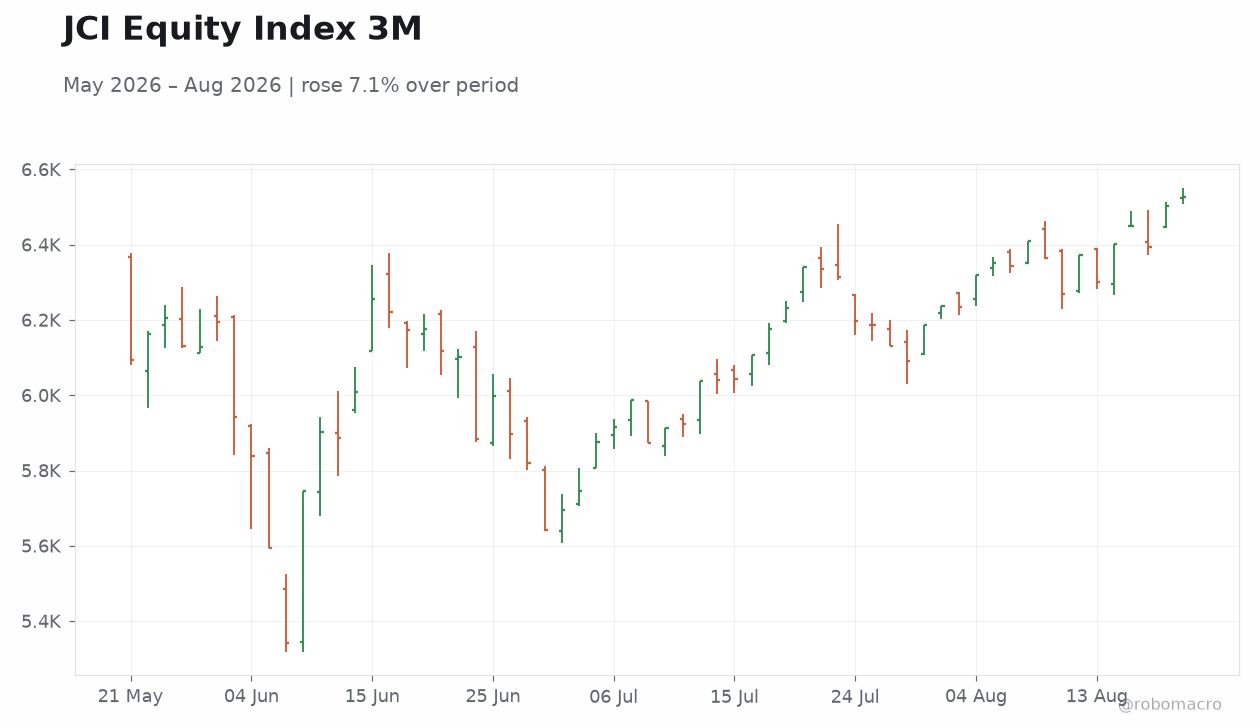
| JCI | 6,525.69 | +0.37% |
| KLCI | 1,736.48 | -0.01% |
| STI | 5,688.96 | +0.30% |
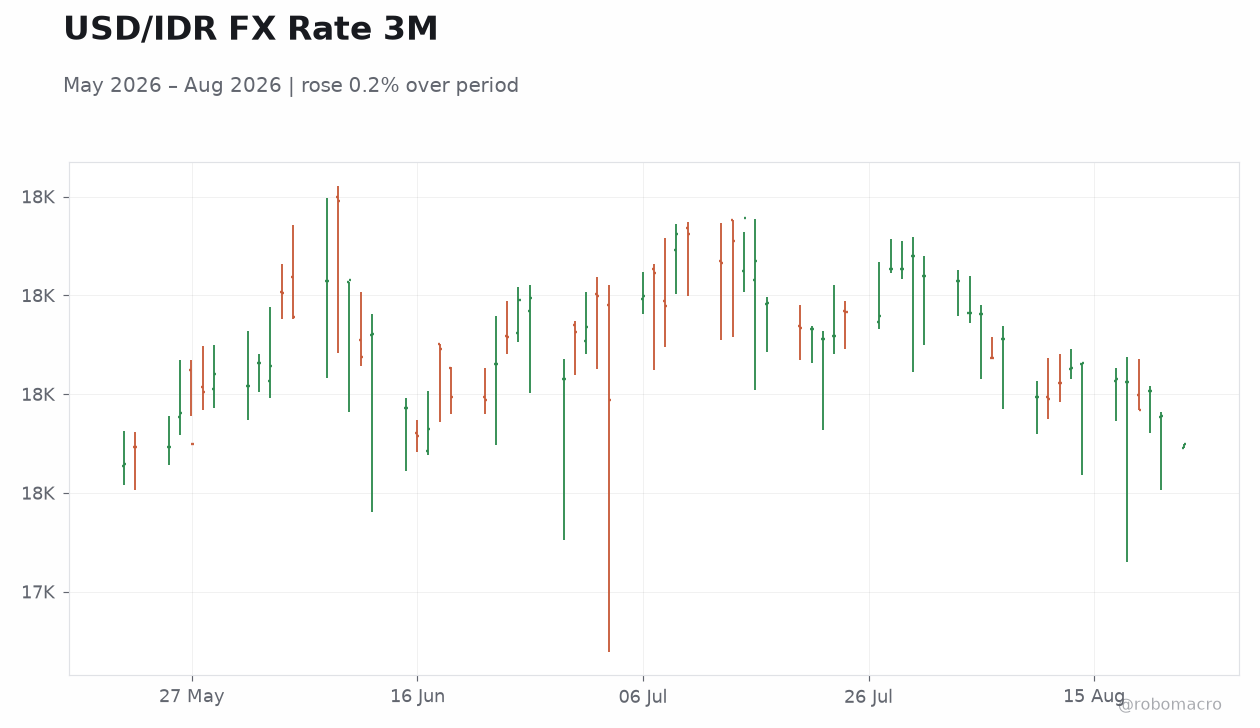
| USD/IDR | 17,700.00 | -0.31% |
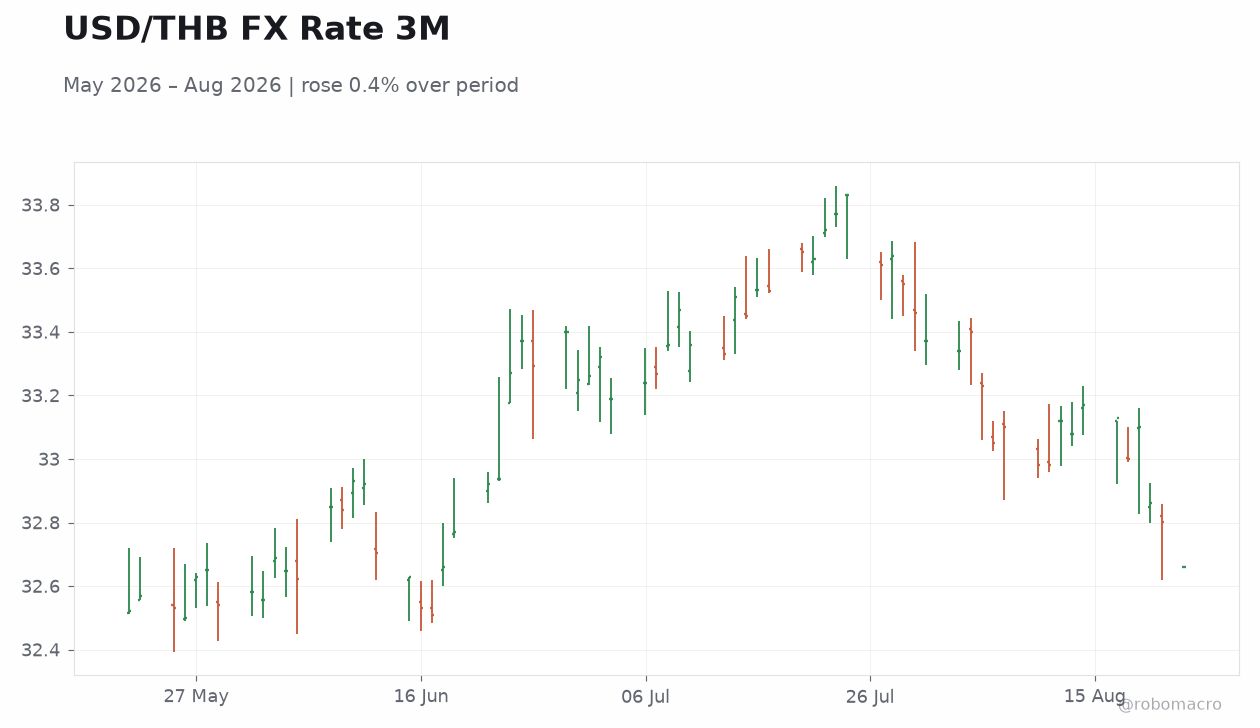
| USD/THB | 32.66 | -0.43% |
| USD/MYR | 4.03 | -0.19% |
| USD/PHP | 61.72 | +0.06% |
| USD/SGD | 1.27 | -0.16% |
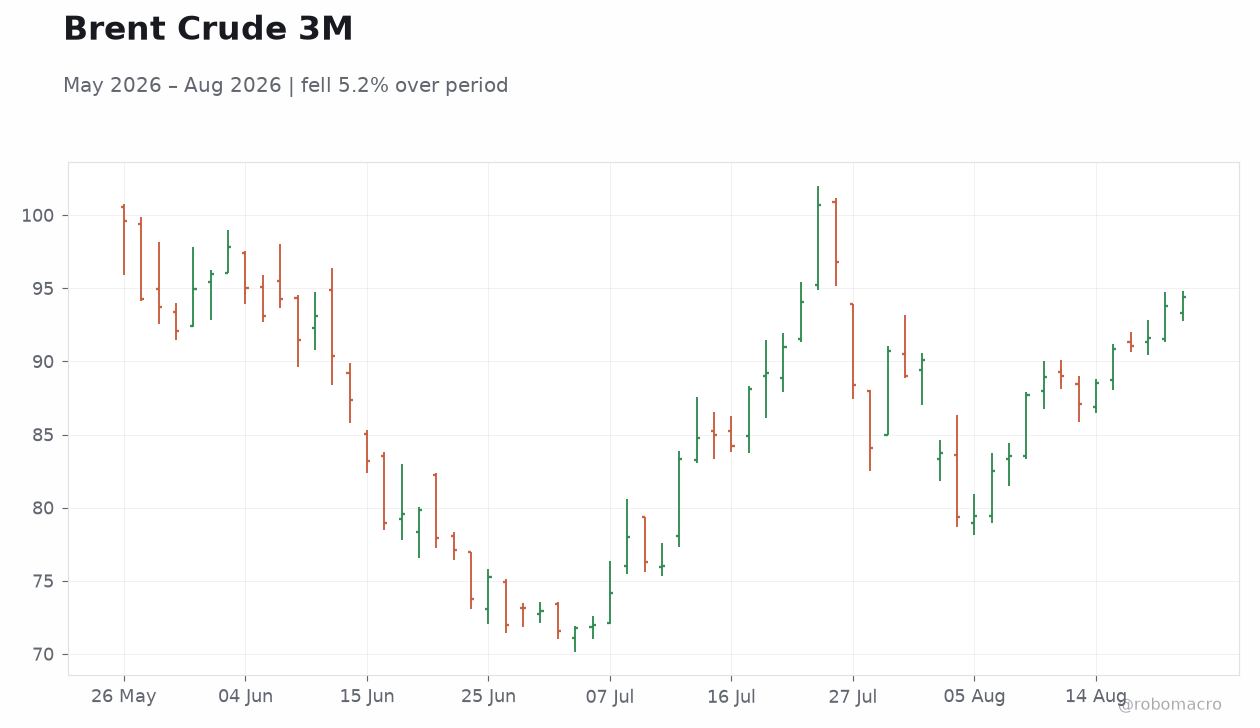
| Brent Crude | 94.39 | +0.65% |
| Gold | 4,680.60 | +3.64% |
| Bitcoin | 77,710.27 | +0.81% |
| Indonesia 10Y Govt Yield | - | - |
| Thailand 10Y Govt Yield | - | - |
Prior Economic Events
| Data | Prior | Cons | Actual |
|---|---|---|---|
| No events available | |||
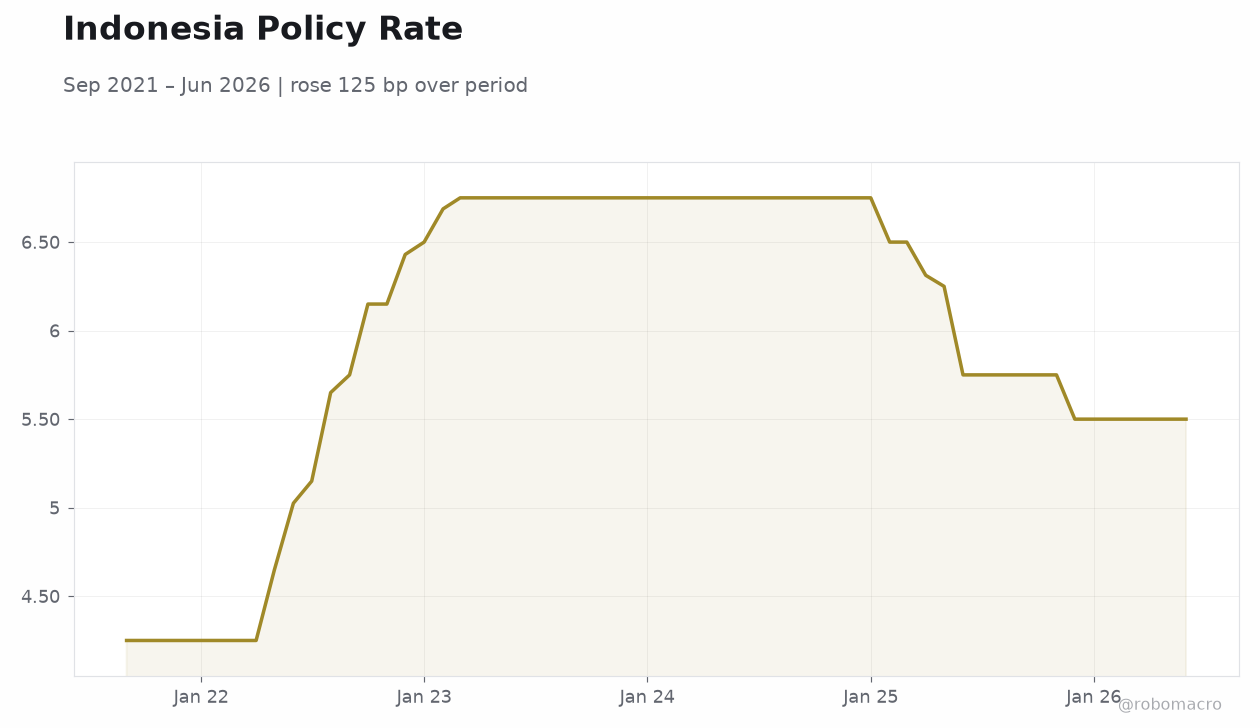 Indonesia Policy Rate | Type: macro_line | Policy Rate %: 5.5 (2026-06-01) | Range: 4.25–6.75 | Trend(5pt): 4.25,6.15,6.75,6.5,5.5
Today's Economic Events
| Data | Prior | Cons | Time |
|---|---|---|---|
| Central Bank Interest Rate Decision | 1 | 1 | 03:00 |
| Central Bank Interest Rate Decision | 4.75 | 5 | 02:30 |
- Indonesian Rupiah advanced modestly despite record current account deficit, with BI prioritizing currency stability over growth.
- Regional equities closed mixed: JCI rose 0.37% while KLCI edged down 0.01% and STI gained 0.30%.
- Thailand’s Bank of Thailand and Philippines’ BSP face rate decisions this week amid divergent inflation and growth outlooks.
Yesterday's Recap
Indonesian markets dominated ASEAN developments on 22 August. The rupiah strengthened 0.31% to 17,700 per USD as Bank Indonesia maintained its focus on currency stability, even after the current account deficit hit a record high. Markets priced in a possible further BI rate hike to anchor the rupiah, according to UOB analysis.
Jakarta’s JCI index rose 0.37% to 6,525.69 on foreign inflows. Thailand’s banking system showed resilience in Q2 2026 data, supporting expectations of an extended policy pause from the Bank of Thailand. The Thai baht gained 0.43% to 32.66 per USD.
Malaysia’s ringgit strengthened 0.19% to 4.03 per USD on solid fundamentals, while the Philippine peso slipped 0.06% to 61.72. Singapore’s STI advanced 0.30% to 5,688.96 amid thin volumes. Brent crude rose 0.65% to 94.39, providing modest support to commodity-linked ASEAN currencies.
Indonesia to scrap the 50 rupiah minimum price for listed stocks, a move aimed at improving market liquidity.
The Day Ahead
Thailand’s central bank is scheduled to announce its policy rate on 26 August, with consensus pointing to an unchanged 1.00% level and an extended pause likely. The Philippines’ BSP will follow on 27 August, where markets now price a possible 25 bp hike to 5.00% after stronger Q2 GDP. No major data releases are due in Indonesia, Malaysia, Singapore or Vietnam over the next two sessions.
Traders will monitor USD moves and US Treasury yields for spillover effects on regional FX. MAS will continue managing its Singapore dollar NEER band without an interest-rate decision. Capital-flow data from Indonesia could influence BI’s near-term stance.
Thailand to resume direct flights to New Zealand and triple trade to boost ties, supporting tourism recovery.
Other Economic Notes
Indonesia’s record current account deficit has not triggered immediate rupiah pressure, reflecting improved capital inflows and BI’s forward guidance. Thailand’s tourism recovery and resilient banking sector provide a buffer against external shocks, though manufacturing exports remain soft. Malaysia continues to benefit from semiconductor supply-chain shifts, with ringgit support from strong FDI commitments.
<i>↓ p.2</i>