ASEAN Macro Daily(Beta Mode)
BoT Holds as Expected; Equities Slip, Rupiah Weakens
Market Snapshot
| Asset | Level | Change |
|---|---|---|
| JCI | 6,501.67 | -0.37% |
| KLCI | 1,736.33 | -0.01% |
| STI | 5,680.46 | -0.15% |
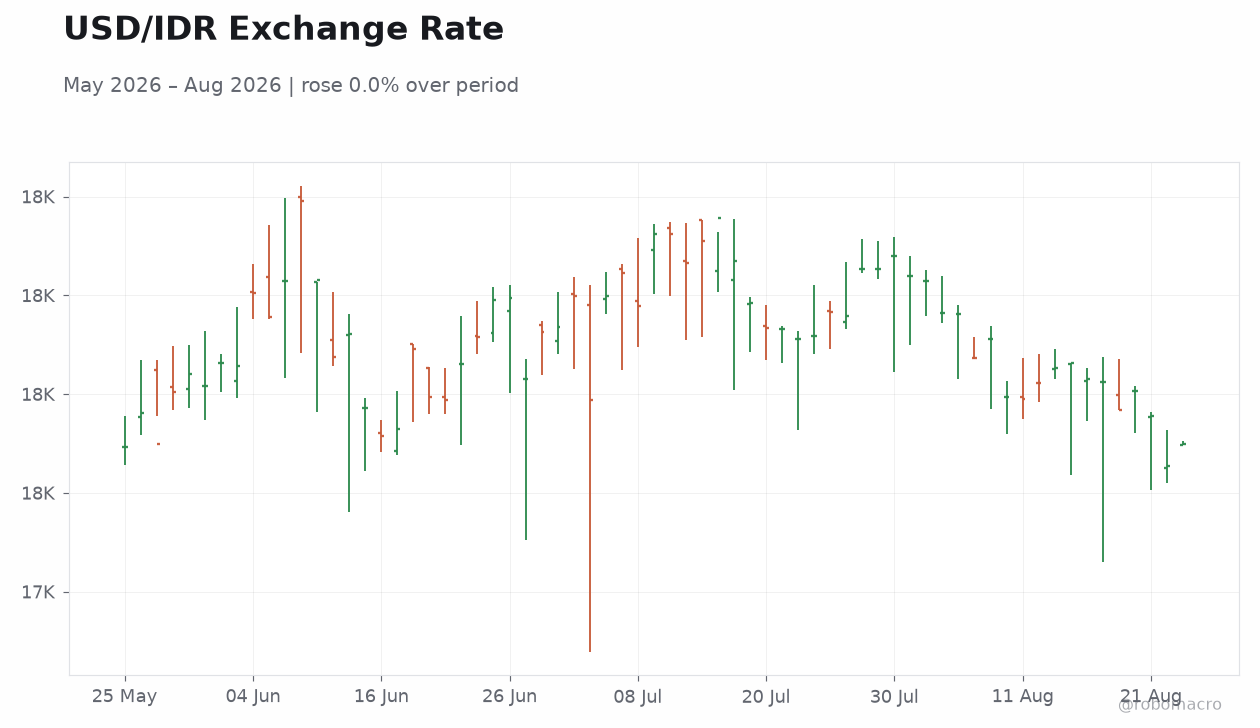
| USD/IDR | 17,699.00 | +0.25% |
| USD/THB | 32.66 | +0.09% |
| USD/MYR | 4.04 | +0.14% |
| USD/PHP | 61.57 | -0.14% |
| USD/SGD | 1.27 | -0.00% |
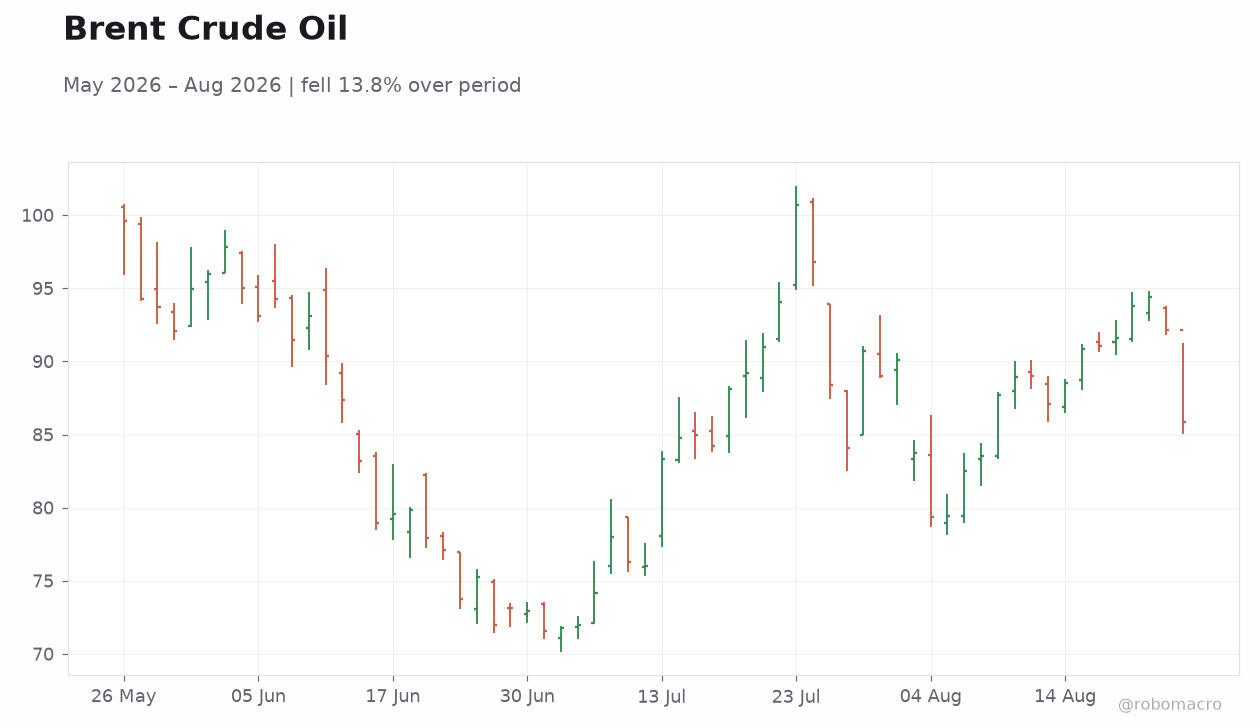
| Brent Crude | 85.86 | -6.85% |
| Gold | 4,715.90 | +1.62% |
| Bitcoin | 78,795.82 | -0.21% |
| Indonesia 10Y Govt Yield | - | - |
| Thailand 10Y Govt Yield | - | - |
Prior Economic Events
| Data | Prior | Cons | Actual |
|---|---|---|---|
| No events available | |||
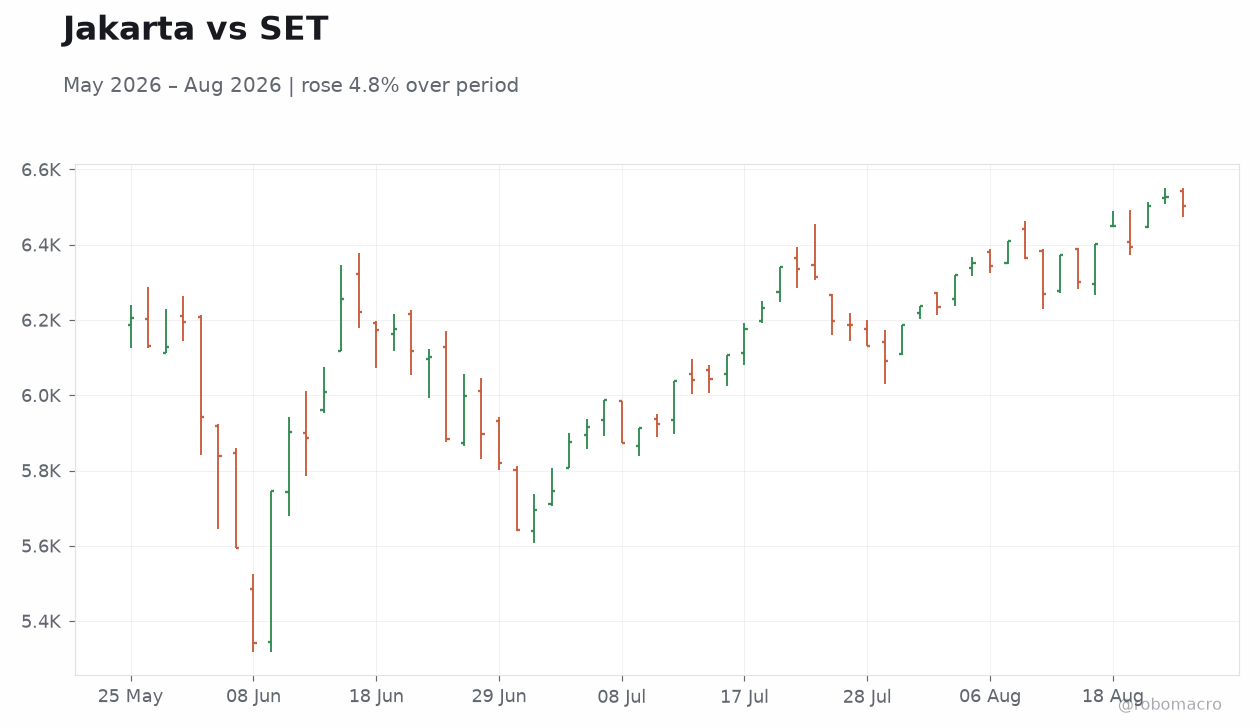 Jakarta vs SET | Type: market_hloc | JCI: 6502 (2026-08-24) | Range: 5342–6526 | Trend(5pt): 6206,6177,5924,6236,6502
Today's Economic Events
| Data | Prior | Cons | Time |
|---|---|---|---|
| Central Bank Interest Rate Decision | 1 | 1 | 03:00 |
| Central Bank Interest Rate Decision | 4.75 | 5 | 02:30 |
| Trade Balance | -450m | - | 00:00 |
| Inflation Rate Year-over-Year | 2.88 | - | 00:00 |
- Regional equities eased with JCI falling 0.37% to 6,501.67 while KLCI and STI posted minor losses amid thin data flow.
- USD/IDR rose 0.25% to 17,699 as Indonesia bonds attracted strong inflows despite currency pressure.
- Thailand’s central bank decision and Philippines rate meeting dominate the near-term calendar with limited volatility expected.
Yesterday's Recap
ASEAN equity markets closed modestly lower on August 24 with Indonesia’s JCI declining 0.37% to 6,501.67, Malaysia’s KLCI slipping 0.01% to 1,736.33 and Singapore’s STI dropping 0.15% to 5,680.46. The Indonesian rupiah weakened 0.25% to 17,699 against the dollar while the Thai baht edged 0.09% weaker to 32.66 and the Malaysian ringgit rose 0.14% to 4.04. Brent crude plunged 6.85% to 85.86 per barrel, weighing on commodity-linked currencies, while gold advanced 1.62% to 4,715.90.
No major macroeconomic releases occurred across the six ASEAN economies, leaving market moves driven by external flows and positioning ahead of central-bank decisions. Indonesia continued to draw bond inflows at the highest pace since 2019, reflecting investor appetite for local-currency debt even as the rupiah faced headwinds. USD/PHP eased 0.14% to 61.57 while USD/SGD held near 1.27; Bitcoin slipped 0.21% to 78,795.82.
The Day Ahead
Thailand’s Bank of Thailand is scheduled to announce its policy rate on August 26 with consensus pointing to a hold at 1.00%. The Philippines’ Bangko Sentral ng Pilipinas follows on August 27 where markets price a possible 25 bp hike to 5.00%. Indonesia will release July trade balance and August inflation figures on September 1, both carrying medium market impact.
Vietnam and Malaysia have no high-frequency indicators due in the immediate window. Singapore’s MAS will next review its exchange-rate band in October, leaving the policy path quiet for now. Traders will monitor any guidance on capital-flow management from the Thai and Philippine meetings.
The calendar shows four medium-impact events clustered in the next week, underscoring a quiet period for fresh data.
Other Economic Notes
Indonesia’s commodity exports remain resilient despite softer coal volumes, while electronics and EV supply-chain FDI continues to lift Vietnam’s manufacturing PMI above 52. Malaysia’s semiconductor exports posted solid July gains, underscoring its integration into global chip cycles. Thailand’s tourism receipts have recovered above 2019 levels, supporting service-sector activity.
<i>↓ p.2</i>