ASEAN Macro Daily(Beta Mode)
BoT Holds, BSP Hikes as Regional FX Weakens
Market Snapshot
| Asset | Level | Change |
|---|---|---|
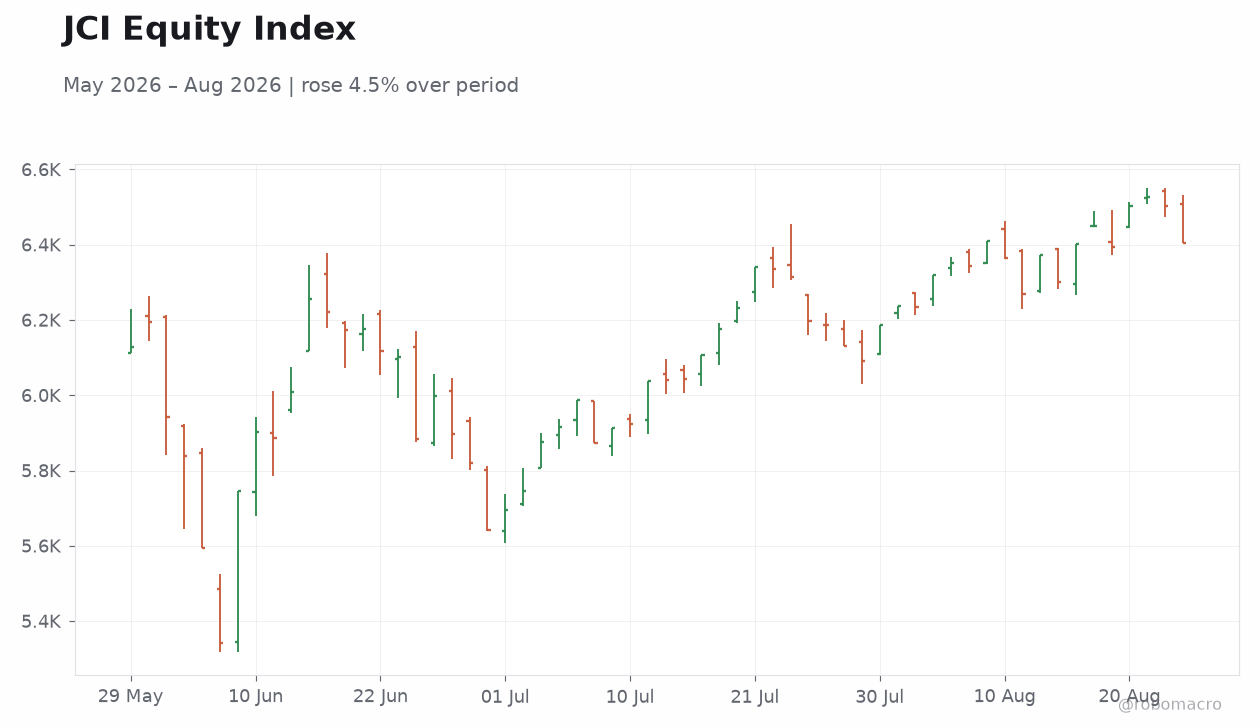
| JCI | 6,405.69 | -1.48% |
| KLCI | 1,748.54 | +0.70% |
| STI | 5,721.59 | -0.25% |
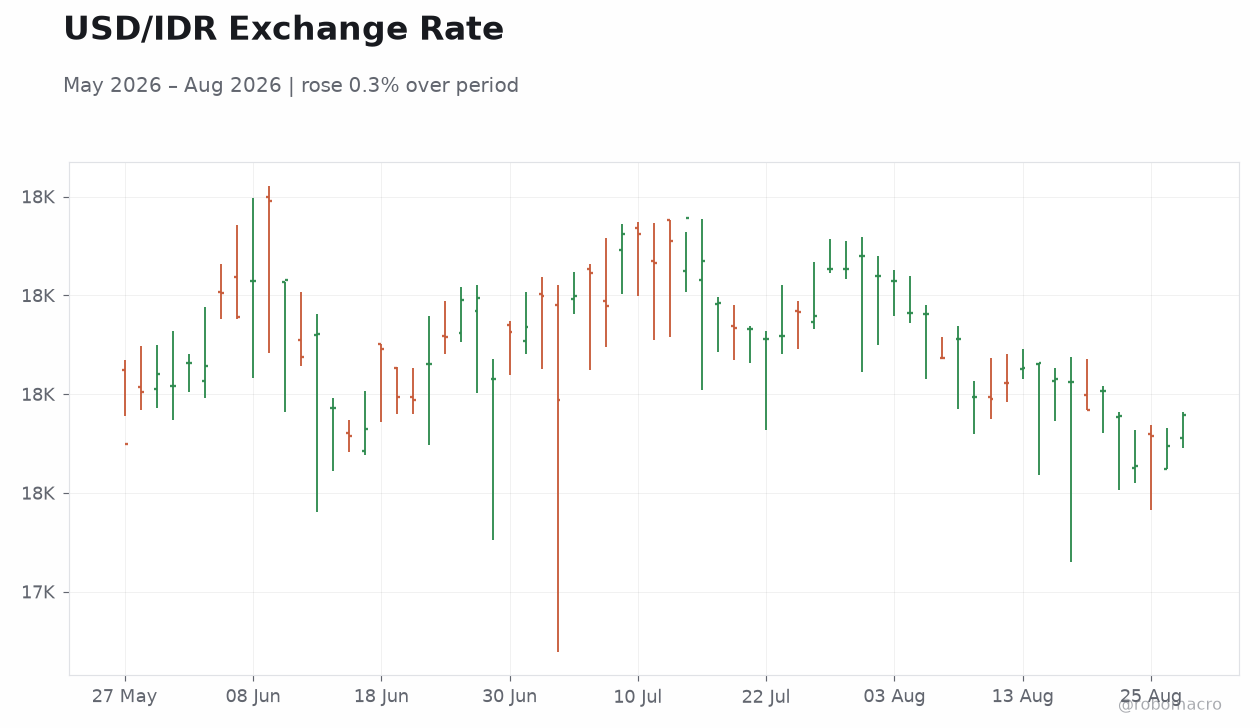
| USD/IDR | 17,757.00 | +0.35% |
| USD/THB | 32.78 | +0.44% |
| USD/MYR | 4.03 | -0.23% |
| USD/PHP | 61.84 | +0.46% |
| USD/SGD | 1.27 | +0.20% |
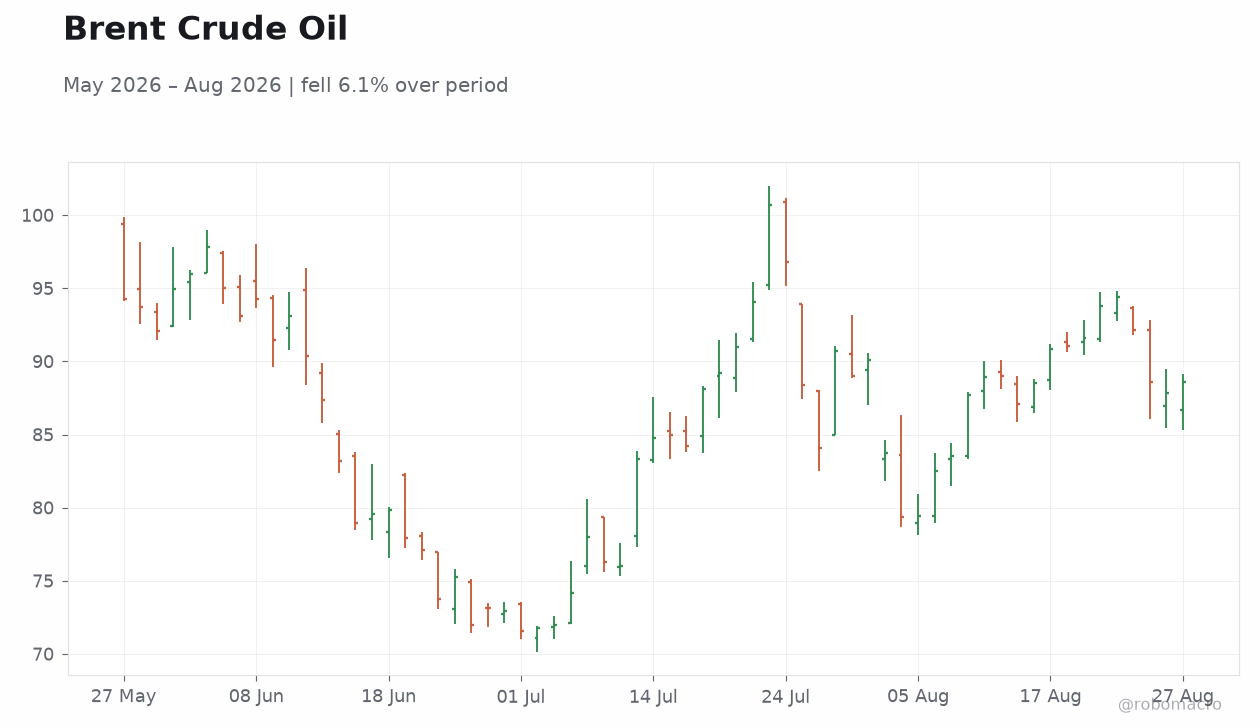
| Brent Crude | 88.56 | +0.82% |
| Gold | 4,654.80 | +1.23% |
| Bitcoin | 80,299.49 | +1.61% |
| Indonesia 10Y Govt Yield | - | - |
| Thailand 10Y Govt Yield | - | - |
Prior Economic Events
| Data | Prior | Cons | Actual |
|---|---|---|---|
| Central Bank Interest Rate Decision | 1 | 1 | 1 |
| Central Bank Interest Rate Decision | 4.75 | 5 | 5 |
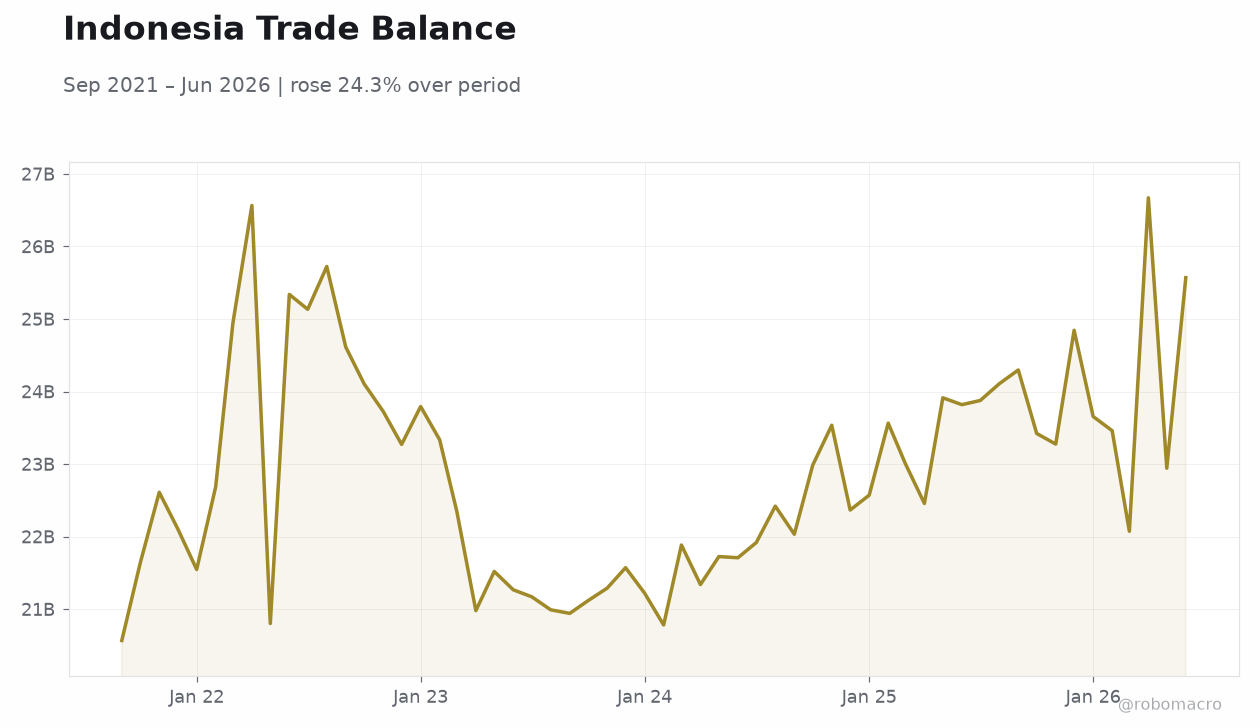 Indonesia Trade Balance | Type: macro_line | USD mn: 2.557e+10 (2026-06-01) | Range: 2.057e+10–2.667e+10 | Trend(6pt): 2.057e+10,2.373e+10,2.122e+10,2.301e+10,2.294e+10,2.557e+10
Today's Economic Events
| Data | Prior | Cons | Time |
|---|---|---|---|
| Trade Balance | -450m | - | 00:00 |
| Inflation Rate Year-over-Year | 2.88 | - | 00:00 |
- Bank of Thailand holds policy rate at 1% for third straight meeting amid weak, uneven growth.
- Bangko Sentral ng Pilipinas raises benchmark rate to 5% from 4.75% to anchor inflation.
- ASEAN equities mixed with JCI falling 1.48% while KLCI gains 0.70%; most regional currencies weaken versus USD.
Yesterday's Recap
Thailand’s central bank kept its key interest rate at 1% as expected, citing persistently weak and uneven economic growth despite modest recovery signs in tourism and manufacturing. The committee highlighted subdued domestic demand and external uncertainties as reasons for maintaining the accommodative stance through at least 2027. In the Philippines, the central bank delivered a 25 basis point hike to 5% in line with consensus after July inflation data showed persistent price pressures in food and energy categories.
Indonesian markets led regional declines as the JCI dropped 1.48% to 6,405.69 amid investor caution ahead of the new Bank Indonesia governor transition and planned protests over corruption and economic policy. The rupiah weakened 0.35% to 17,757 per USD while the baht slipped 0.44% to 32.78 per USD. Malaysia’s KLCI outperformed with a 0.70% gain to 1,748.54 supported by firmer commodity prices, and Singapore’s STI eased 0.25% to 5,721.59.
Brent crude rose 0.82% to $88.56 per barrel while gold advanced 1.23% to $4,654.80 per ounce on safe-haven demand. Thailand’s electronics investment has topped $30.5 billion since 2023, while the baht is seen consolidating in a defined range against the dollar.
The Day Ahead
Indonesia will release August trade balance and inflation year-over-year figures on September 1, with markets watching for signs of widening surplus or contained price pressures that could influence Bank Indonesia’s policy path. No major data releases are scheduled across Malaysia, Singapore, or Vietnam in the immediate session. Thailand’s public and private sectors continue advancing the “Reinvent Thailand” roadmap aimed at attracting foreign investment in electronics and AI-related sectors.
Regional investors will also monitor ongoing electronics FDI flows into Vietnam and Malaysia, where July semiconductor and electrical exports posted solid year-over-year gains. MAS is expected to maintain its current Singapore dollar nominal effective exchange rate band settings without adjustment. Thailand is not planning a gold tax soon, according to the Gold Traders Association.
Other Economic Notes
Vietnam continues to benefit from supply-chain diversification as Samsung and Intel expand semiconductor capacity, lifting July exports 18% year-over-year. <i>↓ p.2</i>