ASEAN Macro Daily(Beta Mode)
Indonesia Ousts FinMin as Rupiah Weakens
Market Snapshot
| Asset | Level | Change |
|---|---|---|
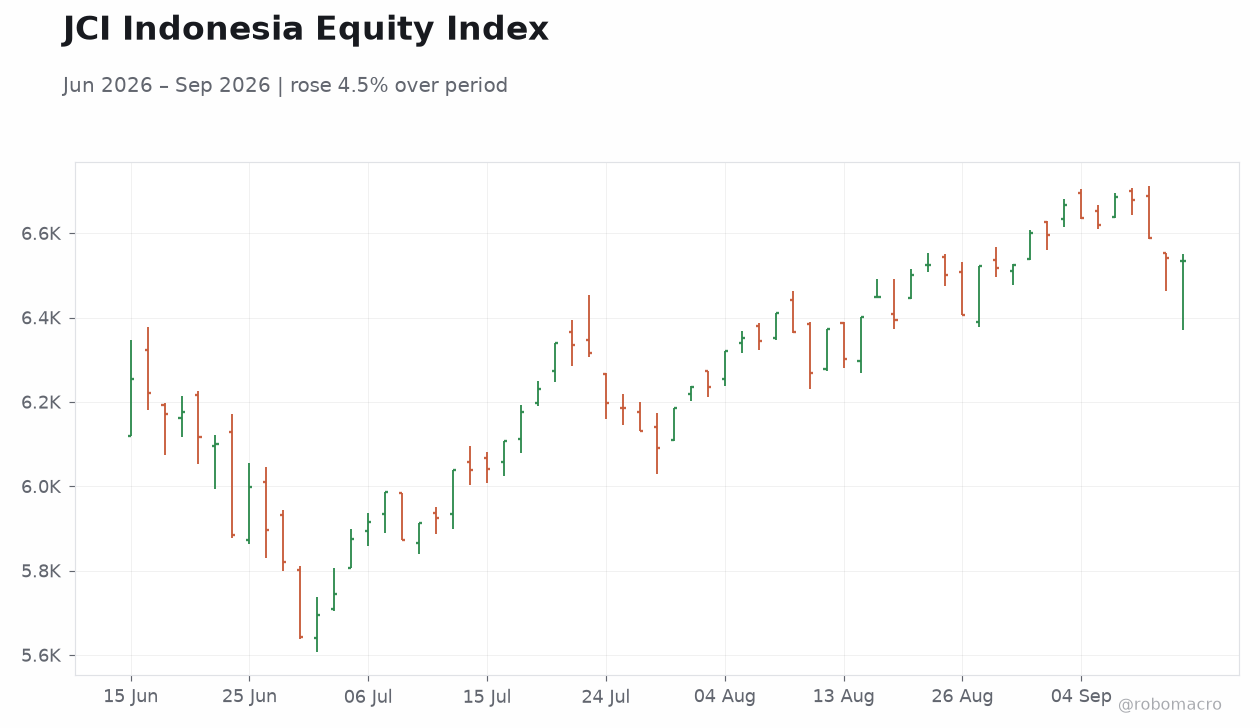
| JCI | 6,534.69 | -0.10% |
| KLCI | 1,698.01 | +0.67% |
| STI | 5,718.02 | +0.39% |
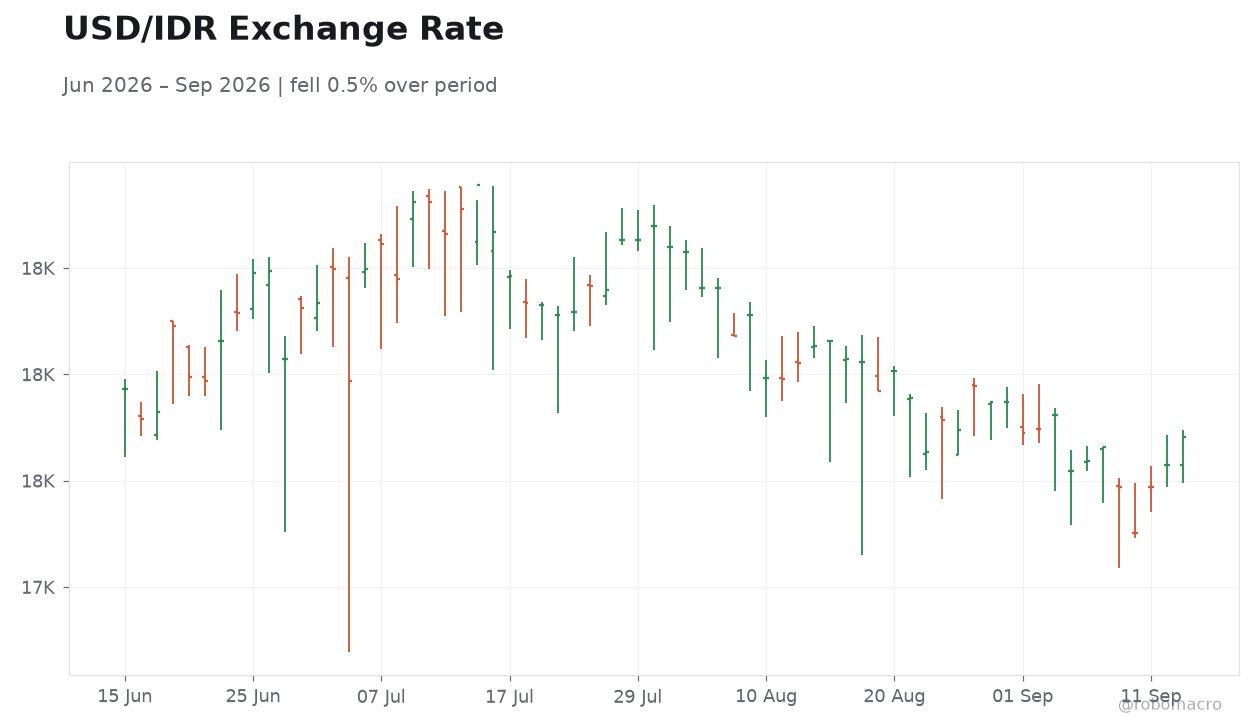
| USD/IDR | 17,682.00 | +0.29% |
| USD/THB | 33.23 | +0.42% |
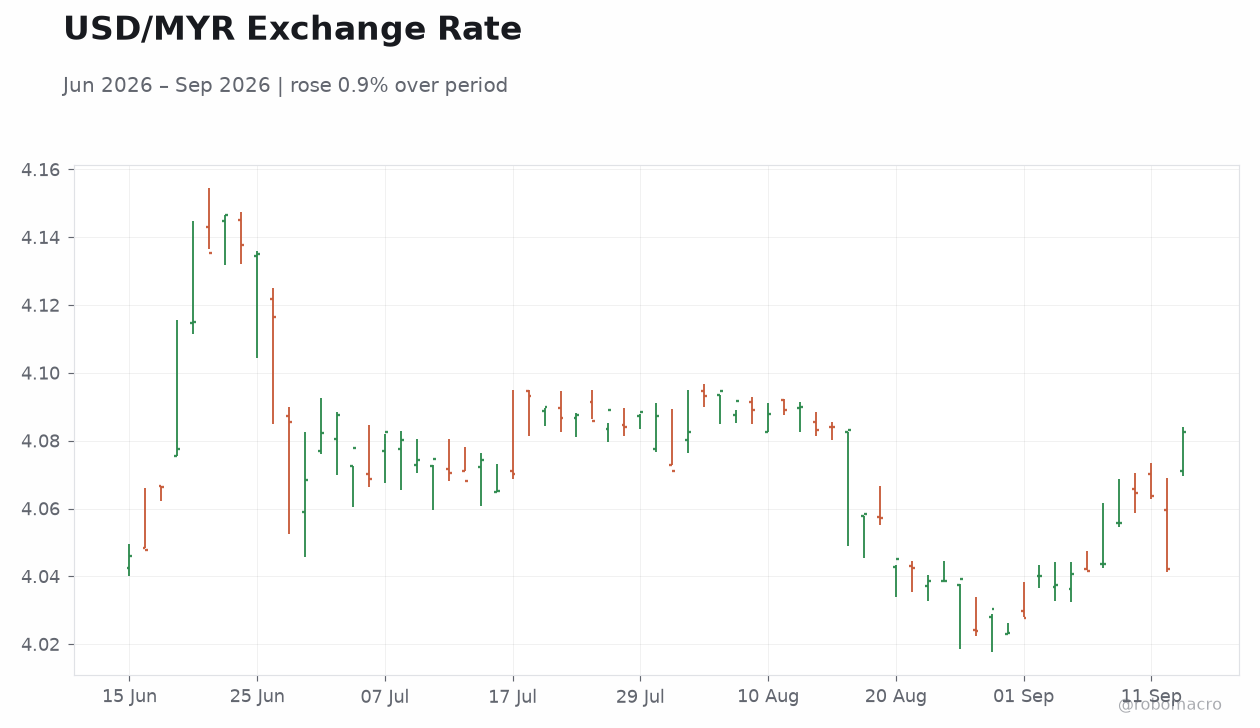
| USD/MYR | 4.08 | +1.00% |
| USD/PHP | 62.77 | +0.12% |
| USD/SGD | 1.27 | +0.41% |
| Brent Crude | 108.50 | +2.67% |
| Gold | 4,333.40 | -0.43% |
| Bitcoin | 75,400.00 | -3.54% |
| Indonesia 10Y Govt Yield | - | - |
| Thailand 10Y Govt Yield | - | - |
Prior Economic Events
| Data | Prior | Cons | Actual |
|---|---|---|---|
| No events available | |||
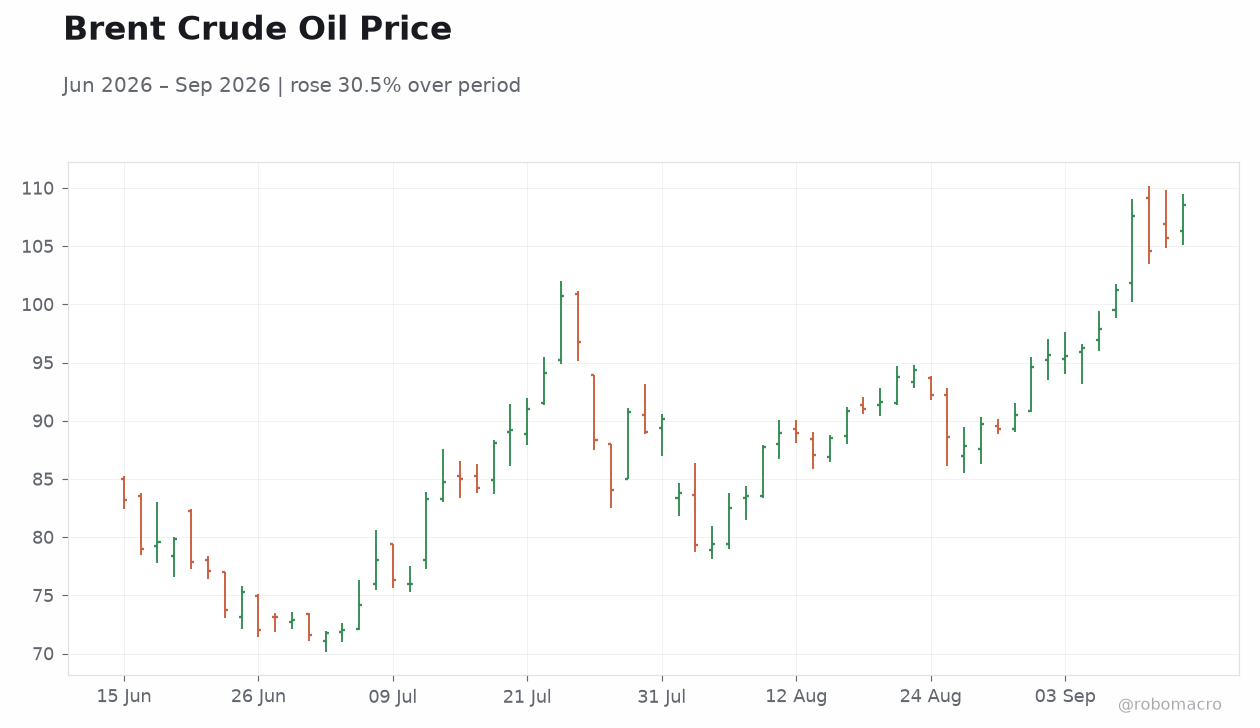 Brent Crude Oil Price | Type: market_hloc | Brent USD/bbl: 108.5 (2026-09-15) | Range: 71.57–108.5 | Trend(5pt): 83.17,76.3,90.12,92.17,108.5
Today's Economic Events
| Data | Prior | Cons | Time |
|---|---|---|---|
| Inflation Rate Month-over-Month | 0 | - | 20:00 |
| Inflation Rate Year-over-Year | 1.80 | 1.80 | 20:00 |
- Indonesia’s president dismisses finance minister, raising policy continuity concerns and pressuring the rupiah.
- Thailand upgrades 2026 growth forecast to 2.5 percent on firmer exports and investment.
- ASEAN currencies weaken broadly against the USD while Brent crude jumps 2.67 percent to 108.50.
Yesterday's Recap
Indonesia dominated regional news flow after President Prabowo removed the finance minister and elevated the deputy, triggering investor questions over fiscal direction. The JCI slipped 0.10 percent to 6,534.69 while USD/IDR rose 0.29 percent to 17,682 amid the political shift and higher oil prices. Malaysia’s KLCI advanced 0.67 percent to 1,698.01 and Singapore’s STI gained 0.39 percent to 5,718.02, providing limited offset.
USD/MYR jumped 1.00 percent to 4.08, USD/THB climbed 0.42 percent to 33.23, USD/PHP added 0.12 percent to 62.77 and USD/SGD rose 0.41 percent to 1.27 as the dollar strengthened. Thailand’s 2026 growth projection was lifted to 2.5 percent from 2 percent on stronger exports and investment inflows. Indonesia’s external debt reached US$454.8 billion in July, keeping external financing needs in focus.
No macro data releases occurred across the six ASEAN economies on 14 September. Regional equities showed mixed performance while Brent crude surged 2.67 percent to 108.50, adding pressure on oil-importing economies, and gold fell 0.43 percent to 4,333.40.
The Day Ahead
Malaysia will release August inflation figures on 17 September, with the year-over-year rate expected to hold at 1.8 percent. No central-bank meetings, bond auctions or major data prints are scheduled for 15-16 September across Indonesia, Thailand, Philippines, Singapore or Vietnam. Traders will monitor any follow-up statements from Jakarta on fiscal leadership changes.
Regional equity and FX desks remain focused on oil-price volatility and US dollar direction. MAS will continue managing the Singapore dollar NEER band without an interest-rate decision. Thailand’s upgraded growth outlook highlights improving external demand that could support manufacturing and tourism recoveries while Malaysia’s renewed currency-swap arrangement with Japan and stablecoin testing underscore efforts to deepen local-currency settlement channels.
Other Economic Notes
Indonesia’s political transition arrives as external debt and oil-import costs rise, testing capital-flow management. Thailand’s upgraded growth outlook highlights improving external demand that could support manufacturing and tourism recoveries. Malaysia’s renewed currency-swap arrangement with Japan and stablecoin testing underscore efforts to deepen local-currency settlement channels.
↓ p.2