ASEAN Macro Daily(Beta Mode)
Indonesia Stays the Course; Fitch Upgrades Thailand
Market Snapshot
| Asset | Level | Change |
|---|---|---|
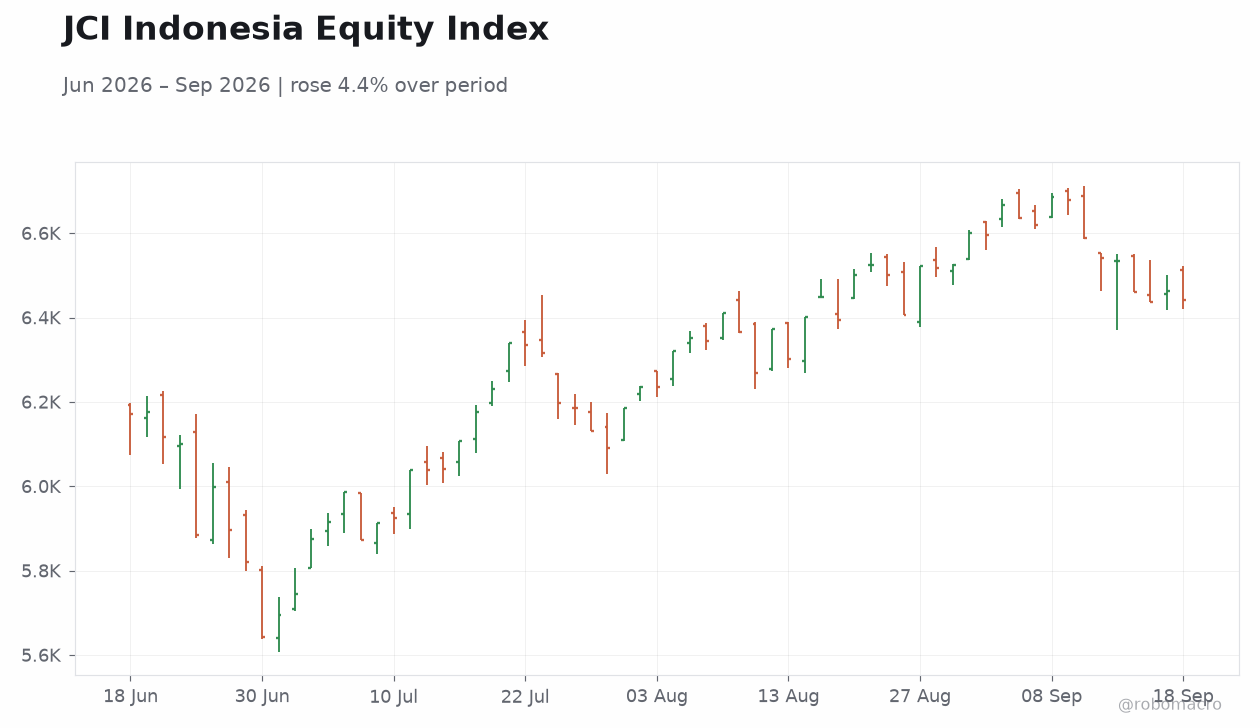
| JCI | 6,441.16 | -0.33% |
| KLCI | 1,665.56 | -0.55% |
| STI | 5,656.11 | -0.08% |
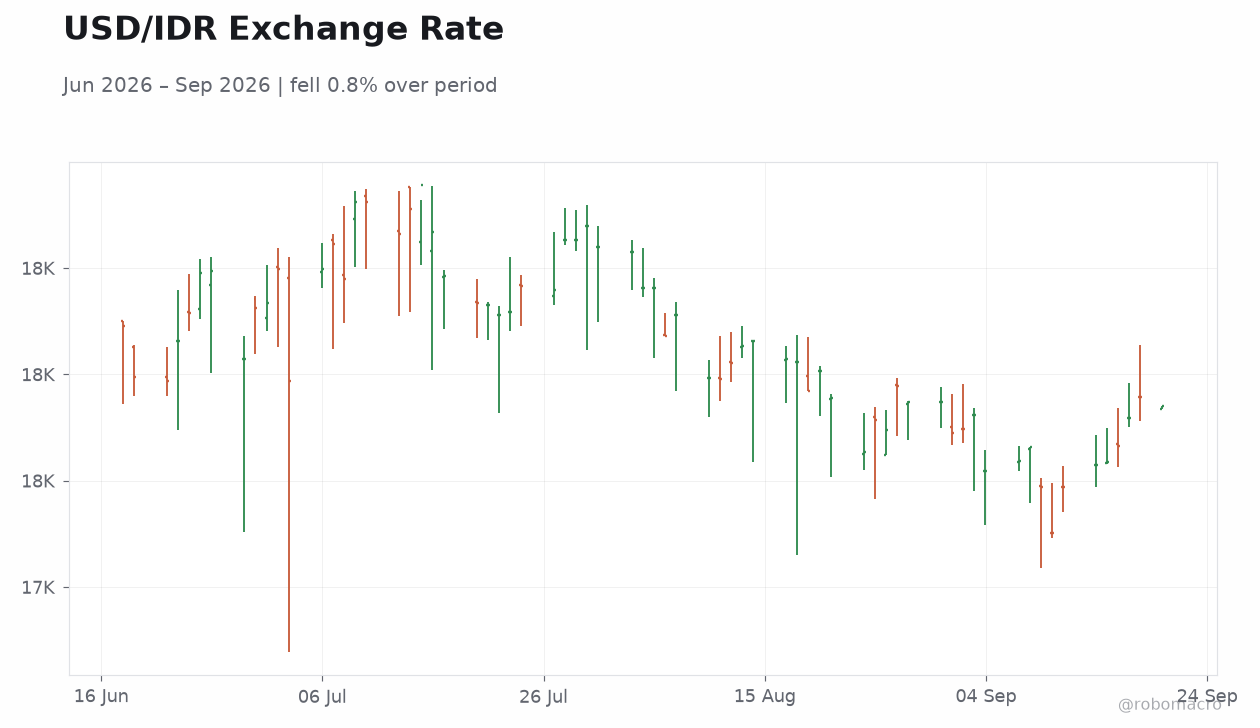
| USD/IDR | 17,740.00 | -0.10% |
| USD/THB | 33.29 | +0.06% |
| USD/MYR | 4.08 | -0.52% |
| USD/PHP | 62.92 | +0.49% |
| USD/SGD | 1.28 | +0.00% |
| Brent Crude | 99.83 | -3.89% |
| Gold | 4,417.50 | -0.17% |
| Bitcoin | 81,112.50 | -0.15% |
| Indonesia 10Y Govt Yield | - | - |
| Thailand 10Y Govt Yield | - | - |
Prior Economic Events
| Data | Prior | Cons | Actual |
|---|---|---|---|
| No events available | |||
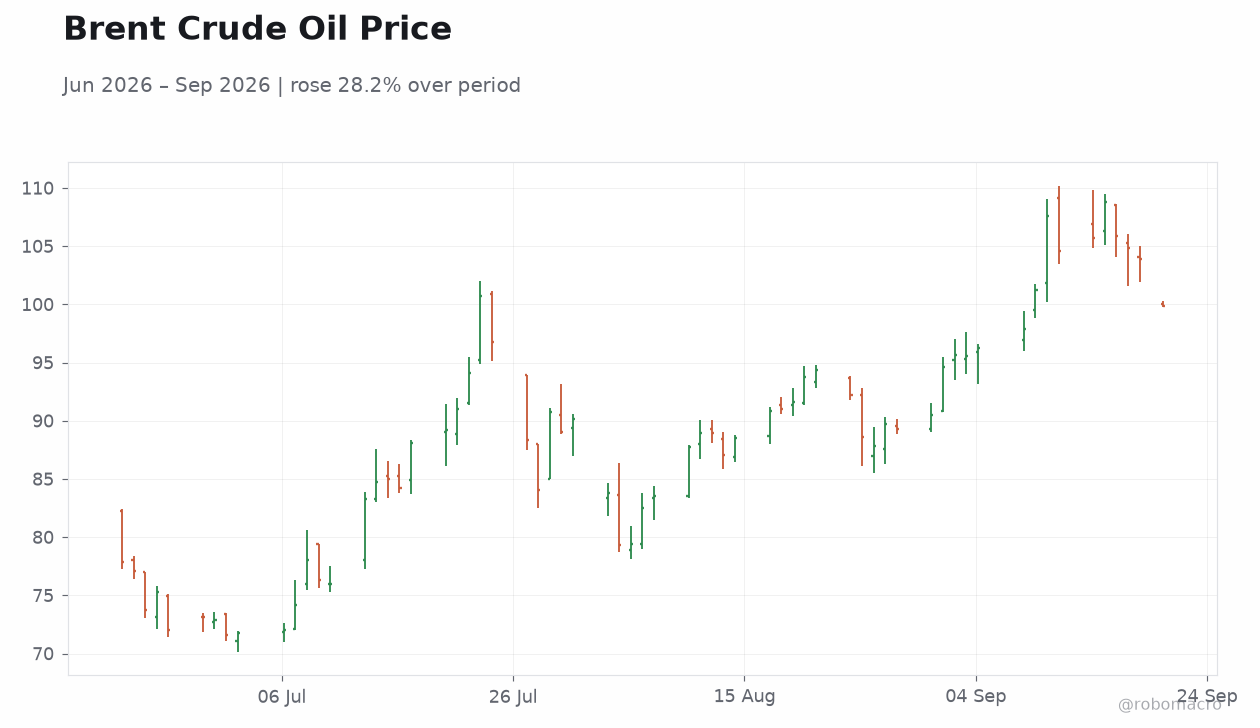 Brent Crude Oil Price | Type: market_hloc | USD per Barrel: 99.83 (2026-09-20) | Range: 71.57–108.8 | Trend(5pt): 77.9,84.95,82.49,89.31,99.83
Today's Economic Events
| Data | Prior | Cons | Time |
|---|---|---|---|
| Central Bank Interest Rate Decision | 5.75 | - | 03:30 |
- Indonesia's new finance minister pledges policy continuity and retains $17 billion in state banks.
- Fitch revises Thailand's sovereign outlook to stable from negative on improved debt prospects.
- Regional equities decline while Brent crude falls 3.89% to 99.83 amid easing oil-price pressure on ASEAN importers.
Yesterday's Recap
Indonesia dominated regional news flow on 19 September. The new finance minister confirmed policy continuity, maintained the existing deficit target, and kept US$17 billion on deposit in state banks. Government revenue rose 25% year-on-year, which some analysts linked to an underlying economic rebound.
The rupiah gained ground as Brent crude retreated sharply, reducing immediate fuel-import cost risks. Thailand received a ratings boost when Fitch upgraded the sovereign outlook to stable from negative, citing stronger debt-stabilisation prospects. The Bank of Thailand stated that net reserves exceed US$300 billion and that recent rate differentials with the US have triggered only limited outflows, with 50 billion baht flowing into Thai assets.
Equity markets closed lower across the region: JCI fell 0.33% to 6,441.16, KLCI dropped 0.55% to 1,665.56, and STI eased 0.08% to 5,656.11. Currencies were mixed, with USD/MYR declining 0.52% while USD/PHP rose 0.49%. Weakening rupiah and prior high oil prices had threatened to widen Indonesia’s fuel import bill, but the crude retreat eased that pressure.
The Day Ahead
Bank Indonesia’s policy meeting on 23 September remains the sole scheduled event of note. Markets will assess whether the central bank adjusts its 5.75% benchmark rate in response to recent rupiah softness and the sharp drop in oil prices. No other data releases are listed for Indonesia, Thailand, Malaysia, Philippines, Singapore or Vietnam over the next two sessions.
Regional investors will continue to monitor capital-flow data and any comments from the Bank of Thailand on baht stability. MAS is expected to maintain its current NEER band settings absent fresh inflation surprises. Thailand’s stable outlook and reserve buffer above US$300 billion support expectations of contained volatility in regional funding markets.
Other Economic Notes
Indonesia’s revenue surge points to firmer domestic demand that could support tax collections through year-end. Thailand’s upgraded outlook improves the scope for further foreign direct investment into manufacturing and tourism-related projects. Lower global oil prices ease current-account pressure on net importers Indonesia, Thailand and the Philippines while trimming input costs for Vietnam’s export factories.
↓ p.2