ASEAN Macro Daily(Beta Mode)
BI Readies Rupiah Intervention as Oil Retreats
Market Snapshot
| Asset | Level | Change |
|---|---|---|
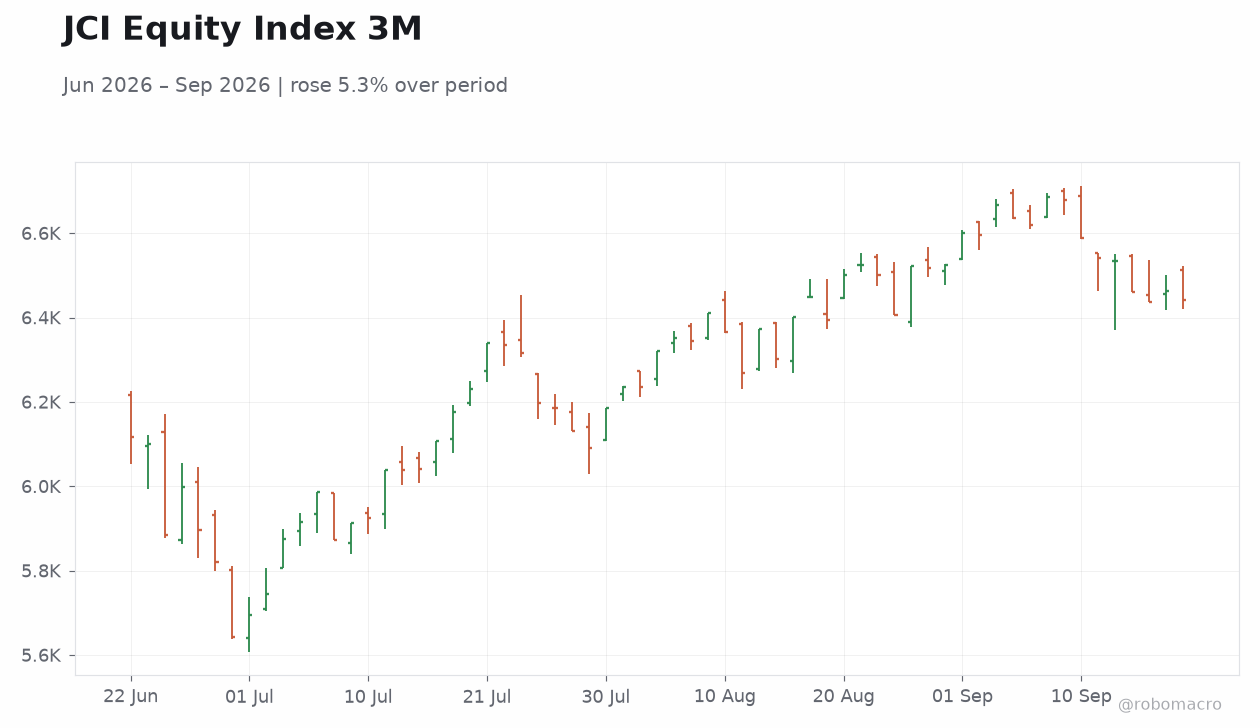
| JCI | 6,441.16 | -0.33% |
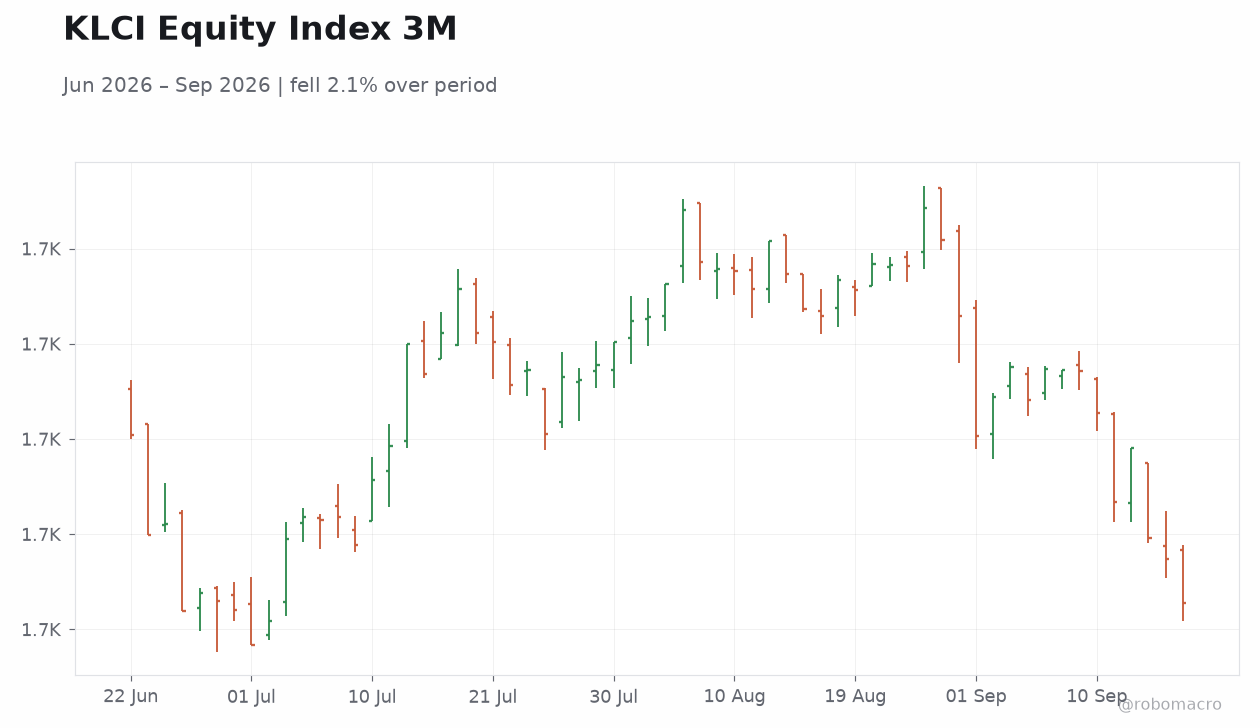
| KLCI | 1,665.56 | -0.55% |
| STI | 5,656.11 | -0.08% |
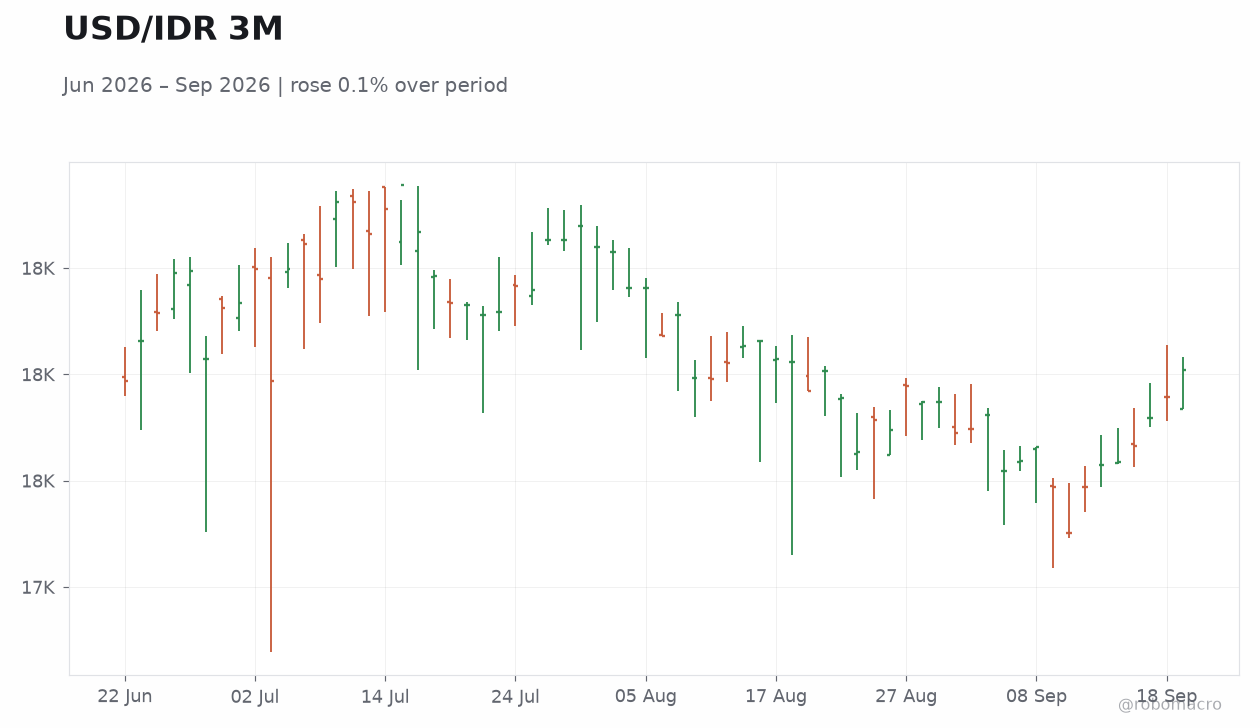
| USD/IDR | 17,808.00 | +0.29% |
| USD/THB | 33.22 | -0.15% |
| USD/MYR | 4.07 | -0.55% |
| USD/PHP | 62.72 | +0.17% |
| USD/SGD | 1.28 | +0.03% |
| Brent Crude | 95.87 | -7.70% |
| Gold | 4,387.00 | -0.86% |
| Bitcoin | 86,506.61 | +6.61% |
| Indonesia 10Y Govt Yield | - | - |
| Thailand 10Y Govt Yield | - | - |
Prior Economic Events
| Data | Prior | Cons | Actual |
|---|---|---|---|
| No events available | |||
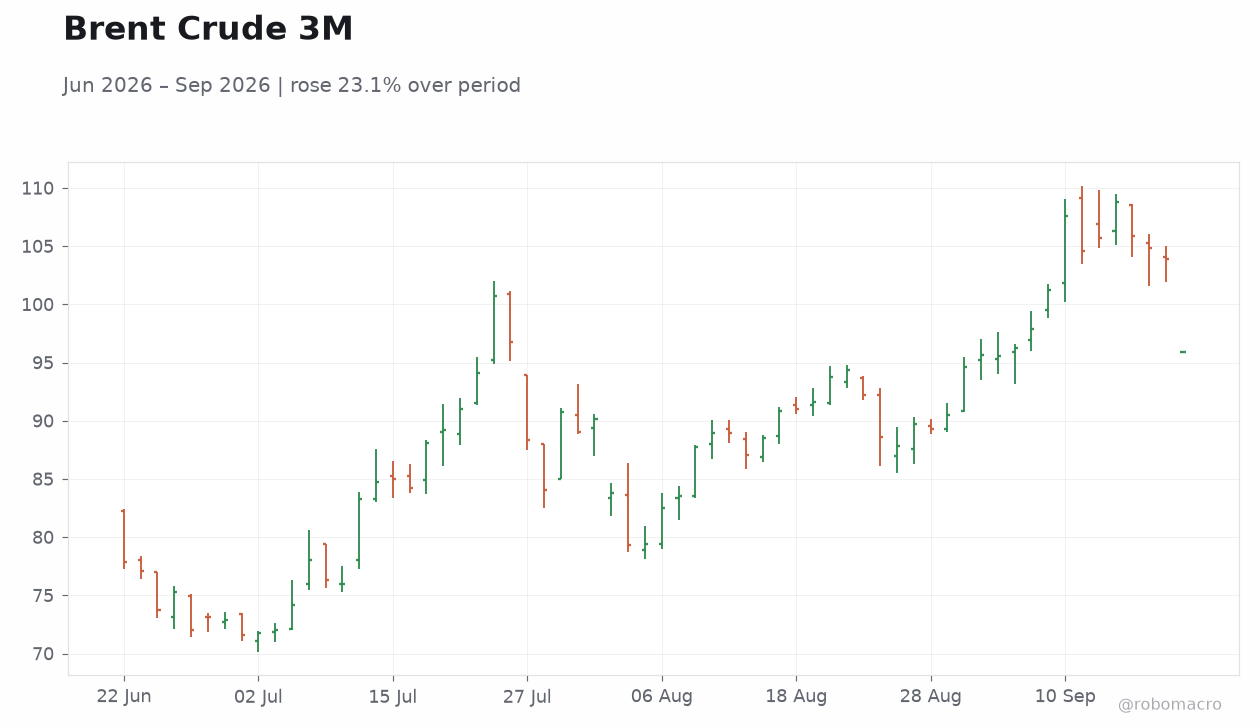 Brent Crude 3M | Type: market_hloc | Brent $/bbl: 95.87 (2026-09-21) | Range: 71.57–108.8 | Trend(5pt): 77.9,84.95,82.49,89.31,95.87
Today's Economic Events
| Data | Prior | Cons | Time |
|---|---|---|---|
| Central Bank Interest Rate Decision | 5.75 | - | 23:30 |
- Bank Indonesia readies forex and bond intervention to defend the rupiah at 17,808.
- Regional equities fall, led by KLCI’s 0.55% decline to 1,665.56.
- Brent crude plunges 7.70% to 95.87, easing import cost pressures for Indonesia.
Yesterday's Recap
ASEAN equity markets closed lower on 20 September with no major data releases across the six economies. The JCI declined 0.33% to 6,441.16 while the STI eased 0.08% to 5,656.11. The KLCI posted the largest drop at 0.55% to 1,665.56.
Currencies moved mixed against the dollar: USD/IDR rose 0.29% to 17,808 while USD/MYR fell 0.55% to 4.07 and USD/THB declined 0.15% to 33.22. Indonesia’s 25% revenue increase was cited as a possible signal of underlying economic rebound even as weak rupiah and prior high oil prices raised concerns over the fuel import bill. Thailand received a Fitch outlook upgrade to stable from negative, reflecting improved debt stabilisation prospects.
No CPI, GDP or trade figures were published for Malaysia, Philippines, Singapore or Vietnam. Bank Indonesia officials signalled readiness to intervene in forex and bond markets to stabilise the rupiah amid foreign outflows and a hawkish Fed tone. Thailand’s BOT noted limited outflow pressure from the US rate gap, with net reserves above US$300 billion and 50 billion baht inflows into local assets supporting baht stability.
The Day Ahead
The sole high-impact event is Bank Indonesia’s interest-rate decision scheduled for 22 September at 23:30 ET. No other data releases, auctions or policy meetings are listed for Thailand, Malaysia, Philippines, Singapore or Vietnam on 21 or 22 September. Market focus will remain on any accompanying statement regarding rupiah stabilisation measures.
Regional investors will also monitor follow-through flows after the recent 50 billion baht inflow into Thai assets. Brent’s sharp decline may reduce near-term imported inflation risks for Indonesia and the Philippines. Indonesia’s new finance chief pledged policy continuity while retaining US$17 billion in state-bank deposits to support liquidity.
Thailand’s stable baht and ample reserves continue to limit capital outflow risks despite the US rate differential.
Other Economic Notes
Indonesia’s new finance chief pledged policy continuity and confirmed retention of US$17 billion in state-bank deposits, supporting liquidity. Thailand’s baht stability and net reserves above US$300 billion limited outflow risks despite the US rate differential. ↓ p.2