ASEAN Macro Daily(Beta Mode)
BI Steps Up Rupiah Defence as Outflows Mount
Market Snapshot
| Asset | Level | Change |
|---|---|---|
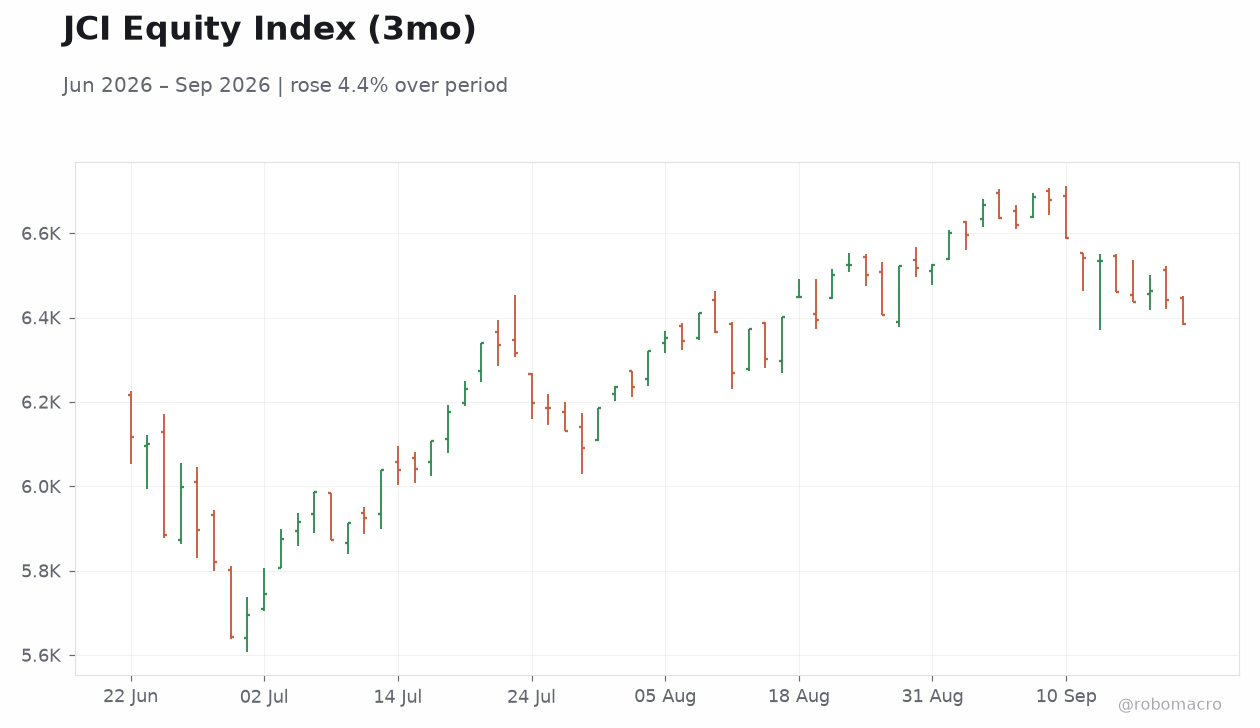
| JCI | 6,384.73 | -0.88% |
| KLCI | 1,666.94 | +0.08% |
| STI | 5,675.23 | +0.34% |
| USD/IDR | 17,878.00 | +0.40% |
| USD/THB | 33.08 | -0.84% |
| USD/MYR | 4.07 | -0.27% |
| USD/PHP | 62.52 | -0.58% |
| USD/SGD | 1.28 | -0.06% |
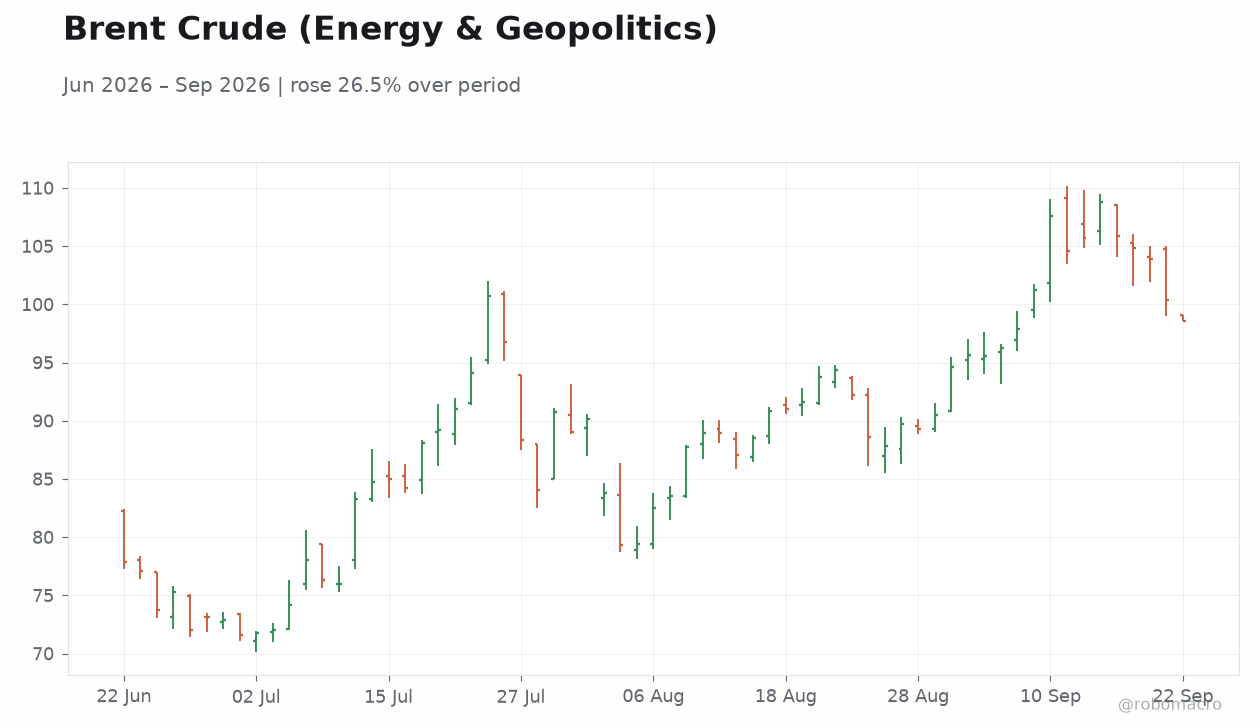
| Brent Crude | 98.53 | -1.80% |
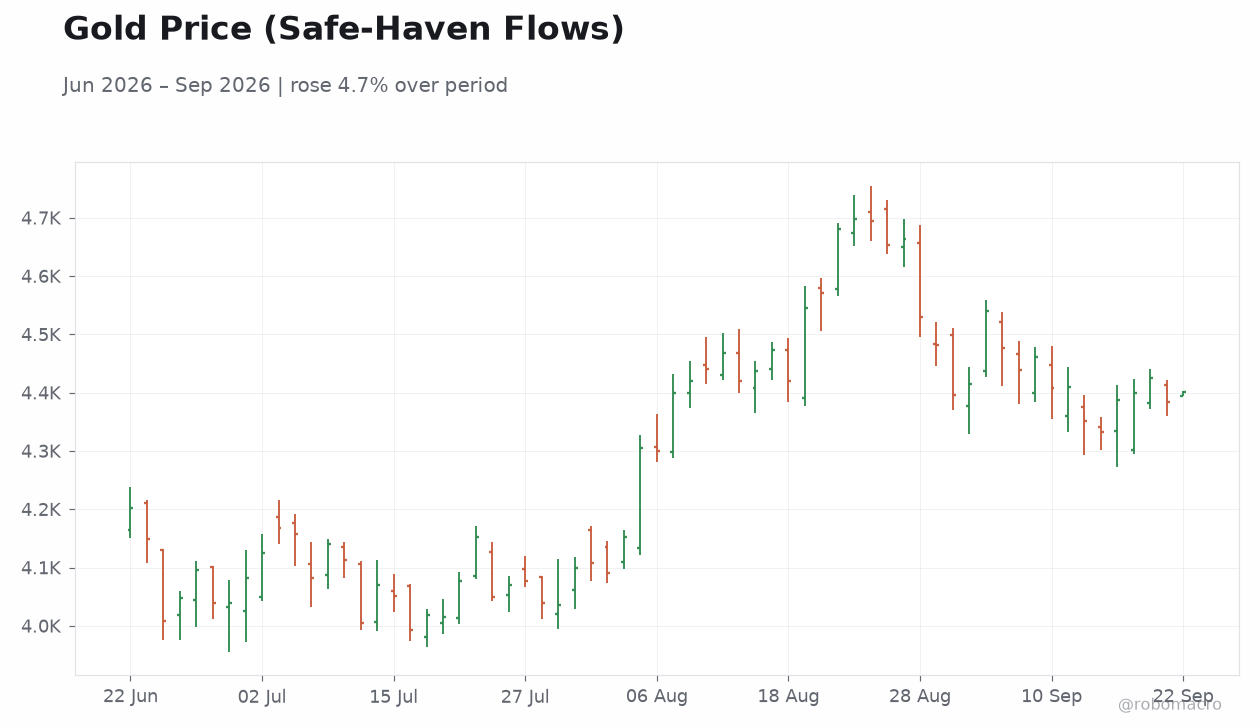
| Gold | 4,401.30 | +0.40% |
| Bitcoin | 86,179.46 | -0.49% |
| Indonesia 10Y Govt Yield | - | - |
| Thailand 10Y Govt Yield | - | - |
Prior Economic Events
| Data | Prior | Cons | Actual |
|---|---|---|---|
| No events available | |||
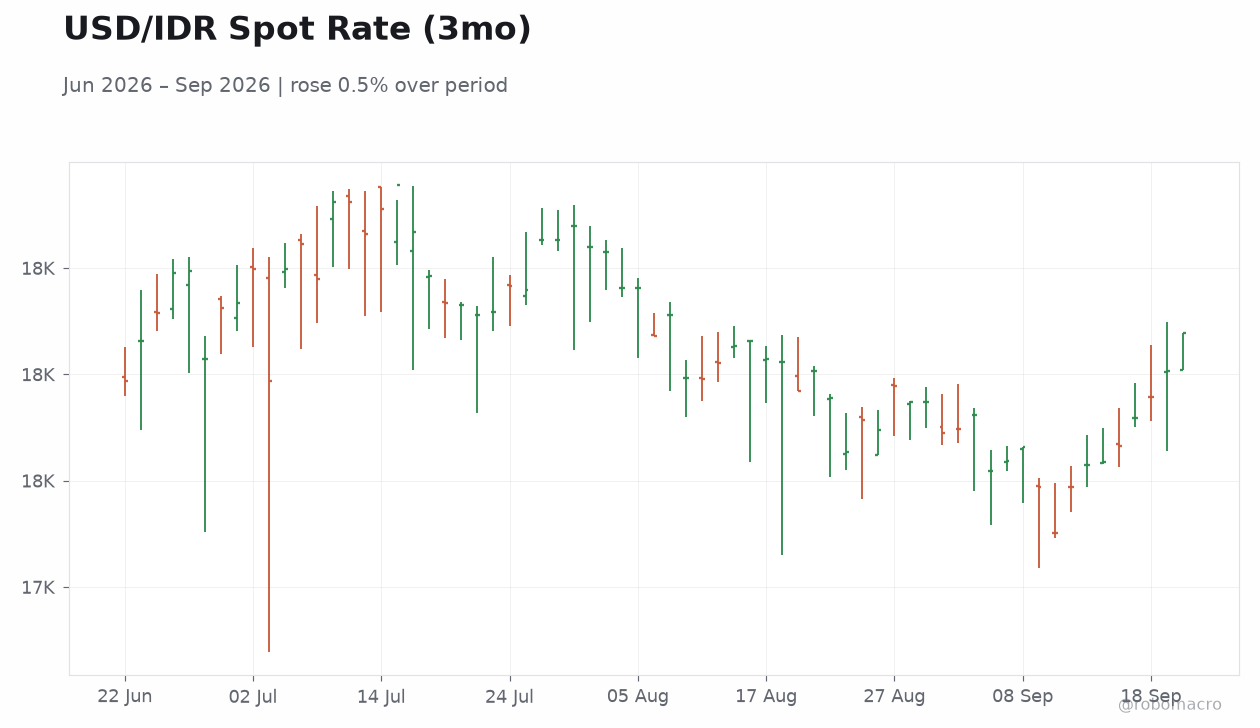 USD/IDR Spot Rate (3mo) | Type: market_hloc | USD/IDR: 1.788e+04 (2026-09-22) | Range: 1.75e+04–1.816e+04 | Trend(6pt): 1.779e+04,1.811e+04,1.796e+04,1.778e+04,1.776e+04,1.788e+04
Today's Economic Events
| Data | Prior | Cons | Time |
|---|---|---|---|
| No events available | |||
- Indonesia’s rupiah breached 17,800 per USD amid Middle East risks and foreign outflows, prompting BI to signal forex and bond-market intervention.
- Regional equities diverged: JCI fell 0.88% while KLCI and STI posted modest gains of 0.08% and 0.34%.
- Brent crude dropped 1.80% to 98.53, easing imported inflation pressures for net importers Thailand and Philippines.
Yesterday's Recap
Indonesia dominated ASEAN market action on 21 September. The rupiah weakened 0.40% to 17,878 per USD, driven by hawkish Fed rhetoric, capital outflows and Middle East geopolitical tensions. Bank Indonesia officials announced plans to intervene in both forex and bond markets to stabilise the currency, while also confirming that household gold mobilisation of 1,800 tons would support rupiah liquidity.
JCI closed 0.88% lower at 6,384.73 as investors positioned ahead of the next BI policy meeting. In contrast, Malaysia’s KLCI edged 0.08% higher to 1,666.94 and Singapore’s STI rose 0.34% to 5,675.23, supported by milder currency moves. USD/THB fell 0.84% to 33.08 and USD/MYR eased 0.27% to 4.07, reflecting reduced dollar demand outside Indonesia.
No macroeconomic data were released across the six ASEAN economies.
The Day Ahead
Markets enter a data-light period with zero scheduled releases for 22–23 September across Indonesia, Thailand, Malaysia, Philippines, Singapore and Vietnam. Attention remains on Bank Indonesia’s next rate decision and any further intervention signals. Thailand’s PTT continues to advance its LNG strategy, though no new volumes or pricing details are expected this week.
Regional investors will monitor US dollar strength and Middle East developments for spill-overs into capital flows. Singapore’s MAS will continue managing the SGD NEER band without any scheduled policy announcement.
Other Economic Notes
Commodity price swings remain central to ASEAN inflation trajectories, with Brent’s decline offering relief to Thailand and the Philippines while pressuring Indonesia’s export receipts. Supply-chain realignment continues to favour Vietnam and Malaysia as manufacturers diversify away from China, though no fresh FDI figures were published. Indonesia’s gold mobilisation highlights unconventional tools available to BI beyond conventional reserves.
Broader ASEAN growth differentials persist, with Singapore’s financial-centre status providing a buffer against regional volatility.