ASEAN Macro Daily(Beta Mode)
BI Holds Rate, Adds Rupiah Hedging Support
Market Snapshot
| Asset | Level | Change |
|---|---|---|
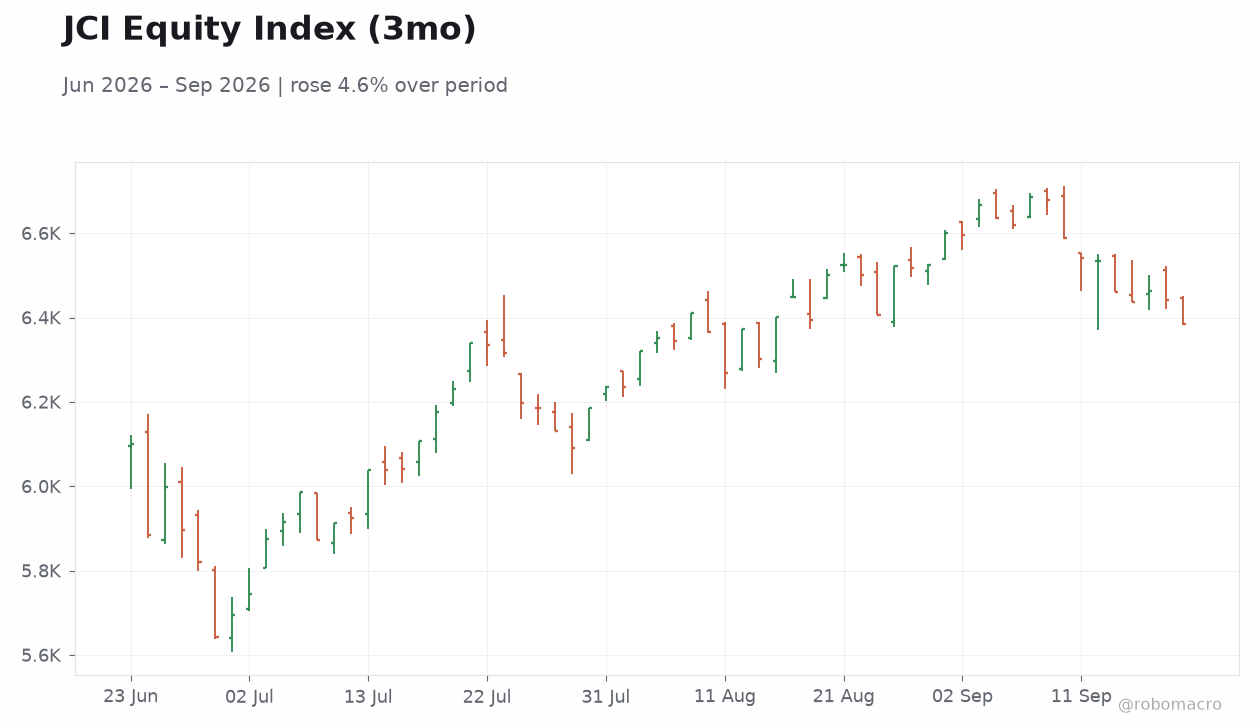
| JCI | 6,384.73 | -0.88% |
| KLCI | 1,666.94 | +0.08% |
| STI | 5,675.23 | +0.34% |
| USD/IDR | 17,798.00 | -0.27% |
| USD/THB | 33.38 | +0.53% |
| USD/MYR | 4.08 | +0.04% |
| USD/PHP | 62.67 | +0.02% |
| USD/SGD | 1.28 | +0.30% |
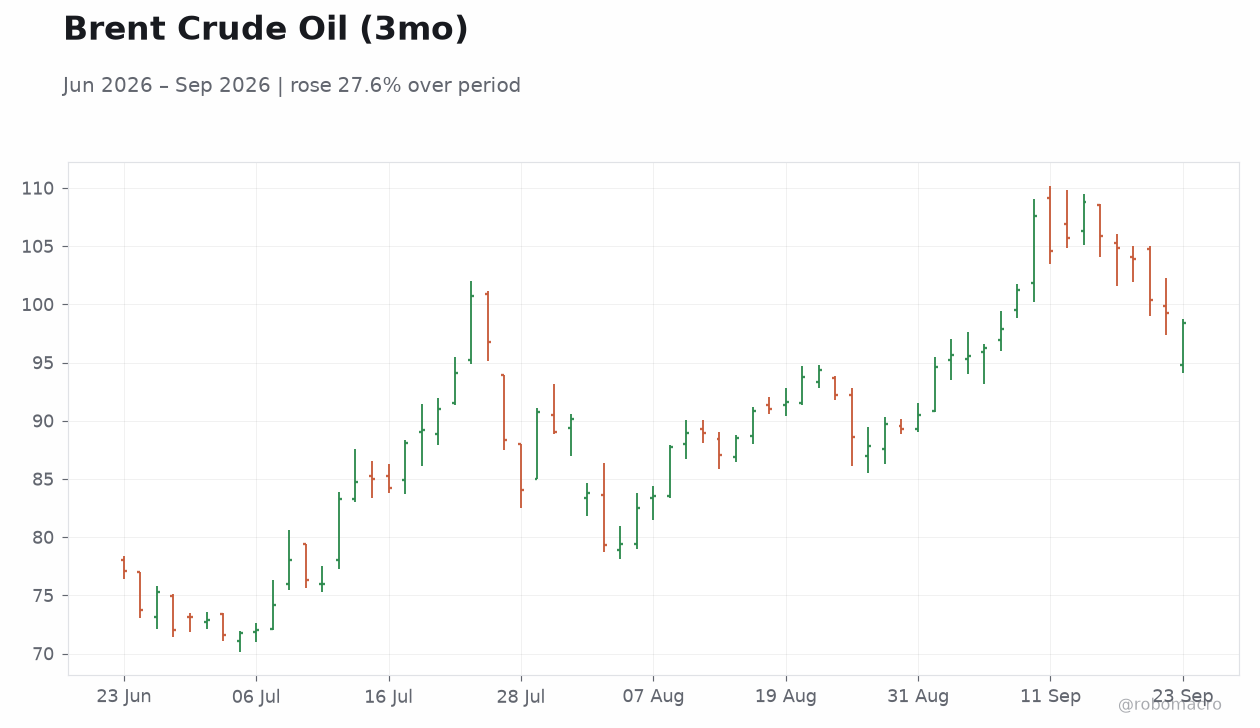
| Brent Crude | 98.36 | -0.90% |
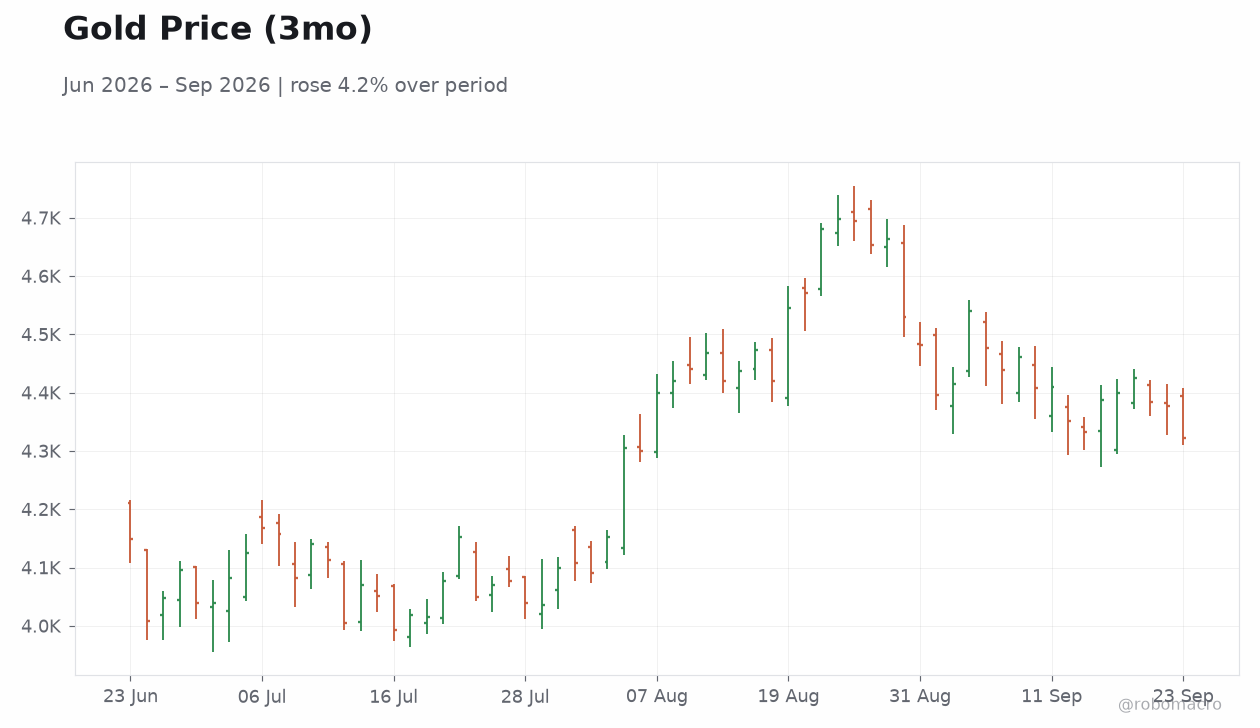
| Gold | 4,322.70 | -1.23% |
| Bitcoin | 84,492.27 | -1.95% |
| Indonesia 10Y Govt Yield | - | - |
| Thailand 10Y Govt Yield | - | - |
Prior Economic Events
| Data | Prior | Cons | Actual |
|---|---|---|---|
| No events available | |||
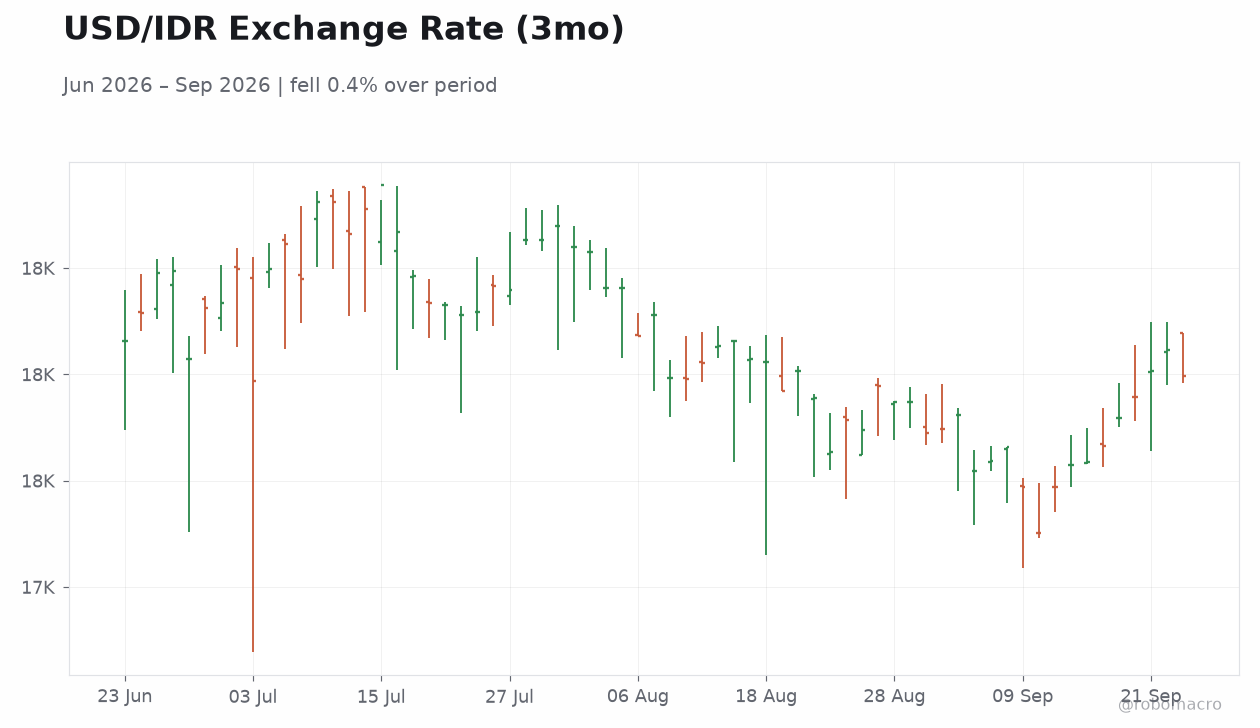 USD/IDR Exchange Rate (3mo) | Type: market_hloc | IDR per USD: 1.78e+04 (2026-09-23) | Range: 1.75e+04–1.816e+04 | Trend(6pt): 1.786e+04,1.816e+04,1.787e+04,1.775e+04,1.781e+04,1.78e+04
Today's Economic Events
| Data | Prior | Cons | Time |
|---|---|---|---|
| No events available | |||
- Bank Indonesia kept its policy rate unchanged while introducing hedging incentives and gold mobilization to stabilize the rupiah.
- Regional equities closed mixed, with JCI falling 0.88% while KLCI and STI posted modest gains.
- No major data releases occurred across ASEAN economies on 22 September.
Yesterday's Recap
Bank Indonesia held its benchmark rate steady as expected and introduced additional hedging incentives to support the rupiah. The central bank pledged all-out efforts to maintain currency stability and confirmed that banknotes bearing the former governor’s signature remain valid. Indonesia also announced plans to mobilize 1,800 tons of household gold to bolster rupiah reserves.
Equity markets reflected the policy outcome, with the JCI closing 0.88% lower at 6,384.73. In contrast, the KLCI edged up 0.08% to 1,666.94 and the STI rose 0.34% to 5,675.23. Currency moves stayed contained, with USD/IDR easing 0.27% to 17,798 while USD/THB climbed 0.53% to 33.38.
Brent crude and gold both declined more than 0.9%, adding modest downward pressure on commodity-linked ASEAN assets. PTTEP’s final investment decision on the Bussabong gas field in Thailand targets first gas in 2028 and supports energy security.
The Day Ahead
The economic calendar remains empty for 23–24 September across the six ASEAN economies. No CPI, GDP, trade, or industrial production prints are scheduled. Central-bank meetings are also absent, leaving markets without fresh policy signals.
Thailand’s PTTEP gas-field investment decision and ongoing air-pollution cost assessments may generate secondary headlines but carry no immediate market-moving data. Investors will likely focus on external drivers, including global commodity prices and US-China trade rhetoric. Thin domestic flows are expected until the next round of inflation or trade-balance releases.
Other Economic Notes
Thailand faces the second-highest PM2.5 air-pollution cost in Southeast Asia at an estimated US$45.3 billion annually, or 3.89% of GDP. PTTEP’s final investment decision on the Bussabong gas field targets first gas in 2028 and supports Thailand’s energy security. Malaysia’s central-bank governor reiterated that growth should remain firmly within the 4–5% range, underscoring resilience in manufacturing and services.
These developments highlight divergent structural challenges: environmental costs in Thailand versus steady expansion in Malaysia. Broader ASEAN FDI trends continue to benefit from supply-chain shifts out of China, though no new project announcements surfaced yesterday.