ASEAN Macro Daily(Beta Mode)
Rupiah Nears 18,000 as BI Readies Intervention
Market Snapshot
| Asset | Level | Change |
|---|---|---|
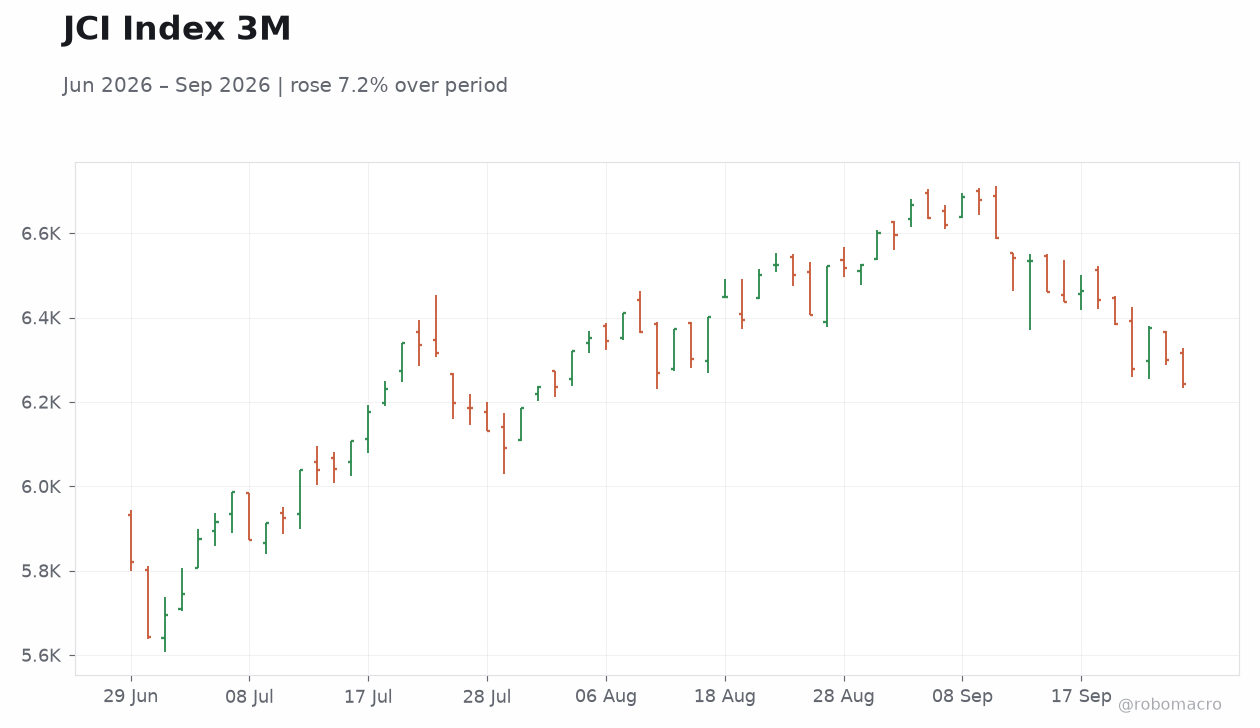
| JCI | 6,241.89 | -0.90% |
| KLCI | 1,671.62 | -0.04% |
| STI | 5,711.12 | +0.49% |
| USD/IDR | 17,960.00 | +2.28% |
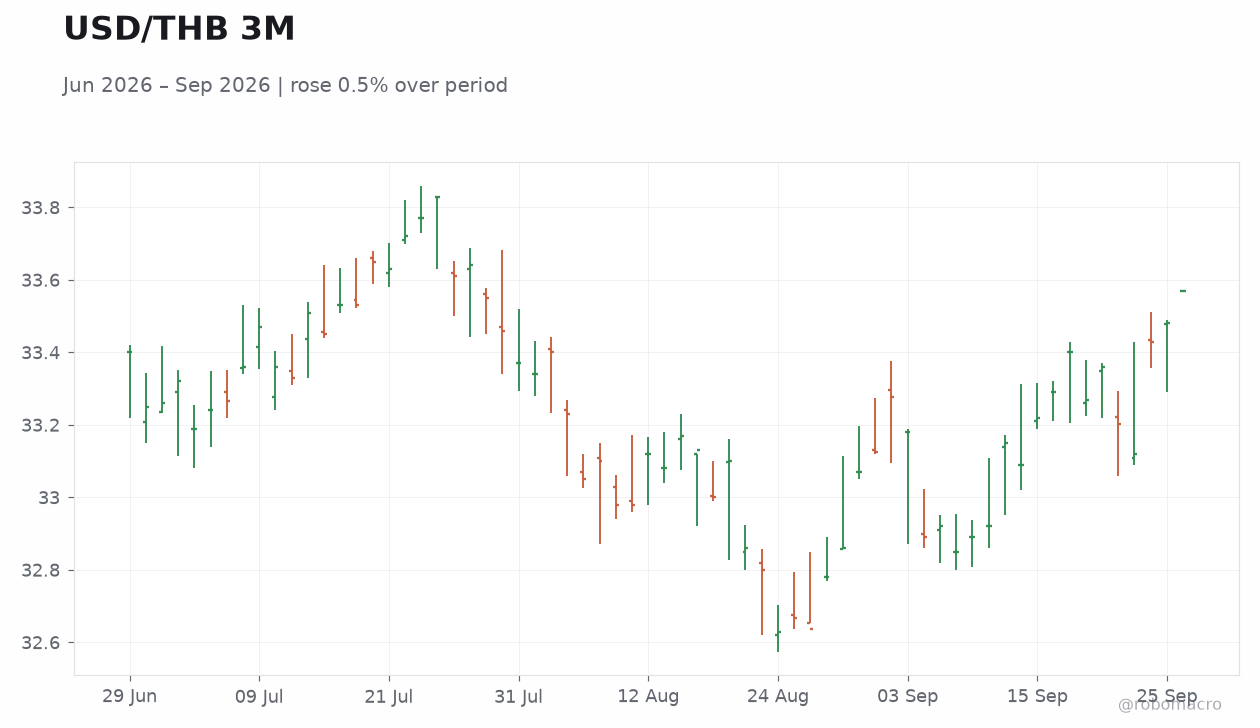
| USD/THB | 33.57 | +0.27% |
| USD/MYR | 4.08 | -0.07% |
| USD/PHP | 62.45 | +0.14% |
| USD/SGD | 1.28 | -0.21% |
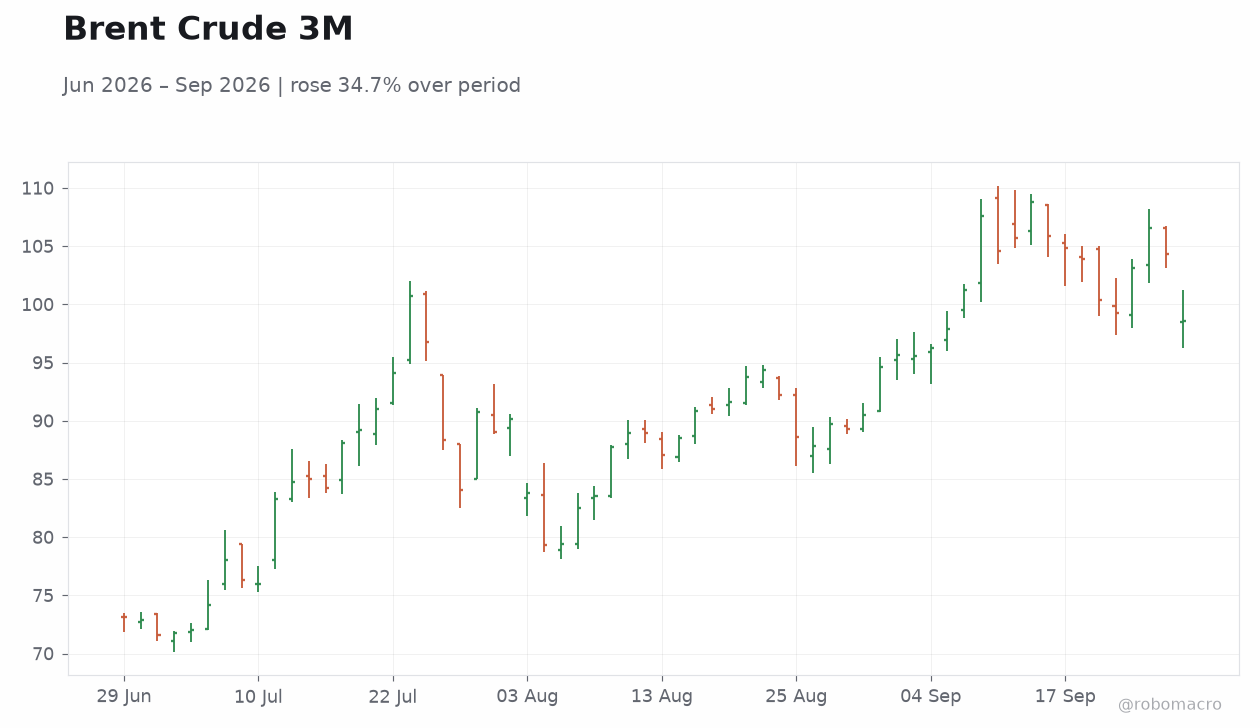
| Brent Crude | 98.56 | -5.52% |
| Gold | 4,148.50 | -4.00% |
| Bitcoin | 83,072.41 | -1.64% |
| Indonesia 10Y Govt Yield | - | - |
| Thailand 10Y Govt Yield | - | - |
Prior Economic Events
| Data | Prior | Cons | Actual |
|---|---|---|---|
| No events available | |||
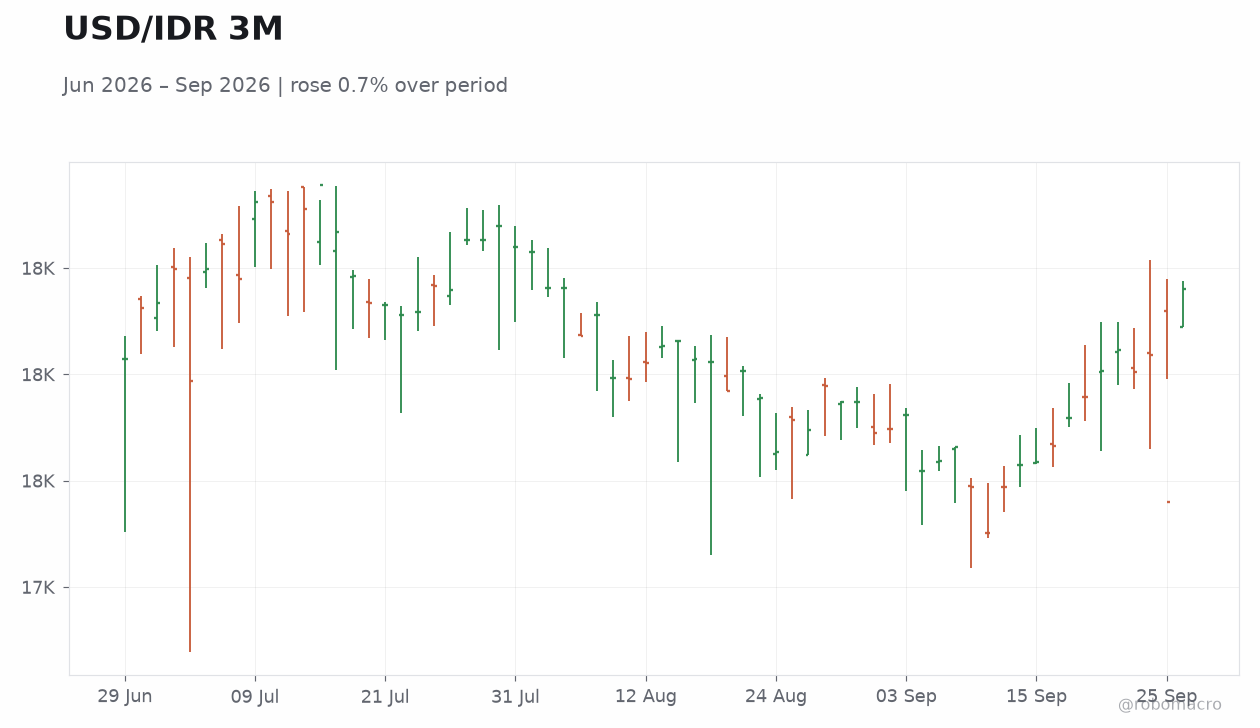 USD/IDR 3M | Type: market_hloc | IDR per USD: 1.796e+04 (2026-09-28) | Range: 1.75e+04–1.816e+04 | Trend(6pt): 1.783e+04,1.793e+04,1.782e+04,1.772e+04,1.756e+04,1.796e+04
Today's Economic Events
| Data | Prior | Cons | Time |
|---|---|---|---|
| Inflation Rate Year-over-Year | 3.19 | - | 20:00 |
| Trade Balance | 130m | - | 20:00 |
- Indonesia's rupiah weakened sharply to 17,960 per USD, prompting Bank Indonesia to prepare stepped-up FX support ahead of the 18,000 threshold.
- Regional equities diverged, with Jakarta's JCI falling 0.90% while Singapore's STI gained 0.49% amid broader commodity sell-off.
- Indonesia's September inflation and trade balance releases on 30 September will shape near-term BI policy expectations.
Yesterday's Recap
Indonesia dominated ASEAN market action on 27 September as the rupiah fell 2.28% to 17,960 against the USD, approaching the psychologically critical 18,000 level amid portfolio outflows and elevated FX demand. Jakarta's JCI equity index dropped 0.90% to 6,241.89, reflecting investor caution over currency stability. Thailand's baht also softened, with USD/THB rising 0.27% to 33.57 and hitting a two-month low.
Malaysia's KLCI edged 0.04% lower to 1,671.62 while Singapore's STI advanced 0.49% to 5,711.12. Brent crude plunged 5.52% to 98.56 and gold declined 4.00% to 4,148.50, adding pressure on commodity-linked ASEAN currencies. No macroeconomic data releases occurred across the six economies.
Thailand's trade talks with the United States reached agreement in principle, offering modest support for export supply chains. Bank Indonesia has already scaled back spot intervention to 30% of prior volumes, while authorities coordinate five stabilisation measures with the Finance Ministry to address capital outflows.
The Day Ahead
Market focus shifts to Indonesia on 30 September for the release of September inflation and the trade balance. The inflation print follows the prior 3.19% year-over-year reading and will inform BI's assessment of price pressures amid currency weakness. The trade balance, last reported at a USD 130 million surplus, will be scrutinised for signs of external demand resilience.
No other high-impact data are scheduled for Thailand, Malaysia, the Philippines, Singapore or Vietnam. Traders will also monitor any further statements from BI on intervention tactics as the rupiah tests key levels. Broader regional attention remains on how commodity price weakness, especially the drop in Brent crude, may affect fiscal and current-account positions in Indonesia and Malaysia.
Other Economic Notes
Indonesia's authorities are coordinating five stabilisation measures involving the Finance Ministry and Bank Indonesia to address capital outflows and rupiah volatility. Economists have urged accelerated spot intervention, which BI has already scaled back to 30% of prior volumes. Thailand's agreement in principle on trade terms with the United States reduces near-term uncertainty for manufacturing exporters.
↓ p.2