| Asset | Level | Change |
|---|---|---|
| JCI | 6,192.93 | +1.21% |
| KLCI | 1,633.35 | +0.10% |
| STI | 5,701.54 | +0.66% |
| USD/IDR | 17,875.00 | -0.07% |
| USD/THB | 33.62 | -0.21% |
| USD/MYR | 4.09 | +0.04% |
| USD/PHP | 62.67 | +0.17% |
| USD/SGD | 1.28 | +0.03% |
| Brent Crude | 100.95 | +0.37% |
| Gold | 4,136.70 | -1.20% |
| Bitcoin | 83,187.58 | -2.77% |
| Indonesia 10Y Govt Yield | - | - |
| Thailand 10Y Govt Yield | - | - |
| Data | Prior | Cons | Actual |
|---|---|---|---|
| No events available | |||
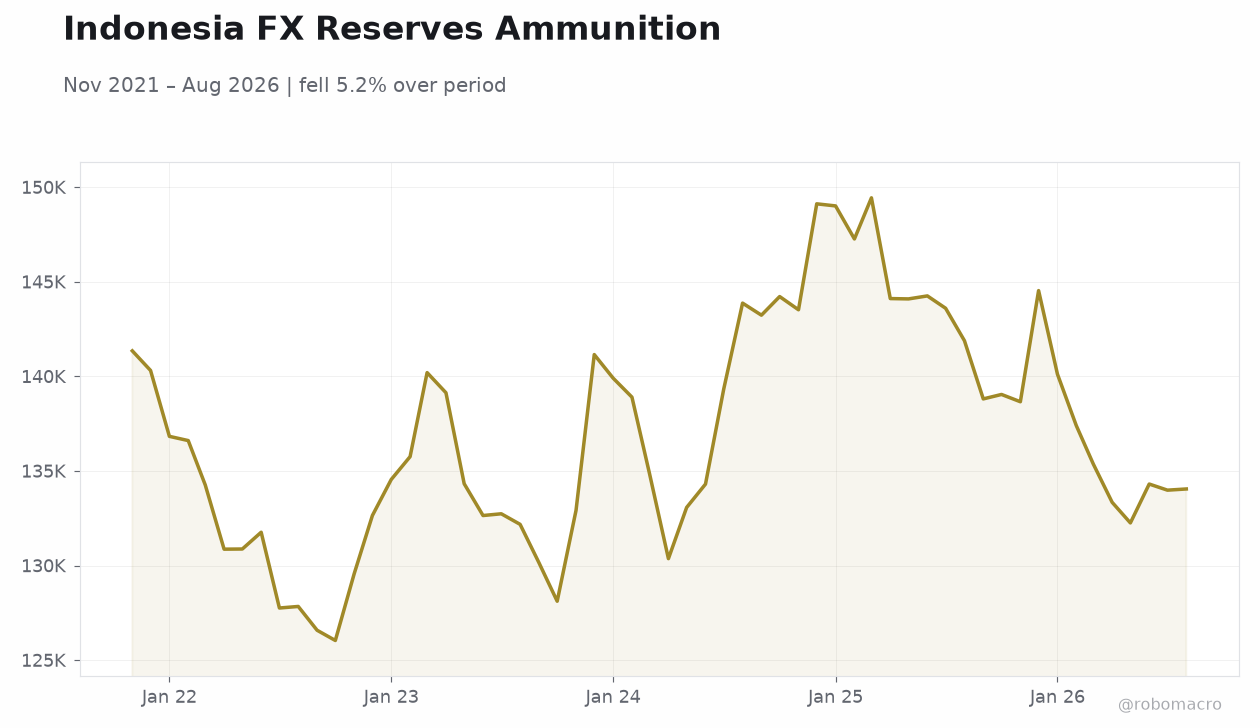
Indonesia FX Reserves Ammunition | Type: macro_line | Total Reserves excl Gold (USD bn): 1.34e+05 (2026-08-01) | Range: 1.26e+05–1.494e+05 | Trend(6pt): 1.413e+05,1.345e+05,1.348e+05,1.441e+05,1.34e+05,1.34e+05
| Data | Prior | Cons | Time |
|---|---|---|---|
| No events available | |||
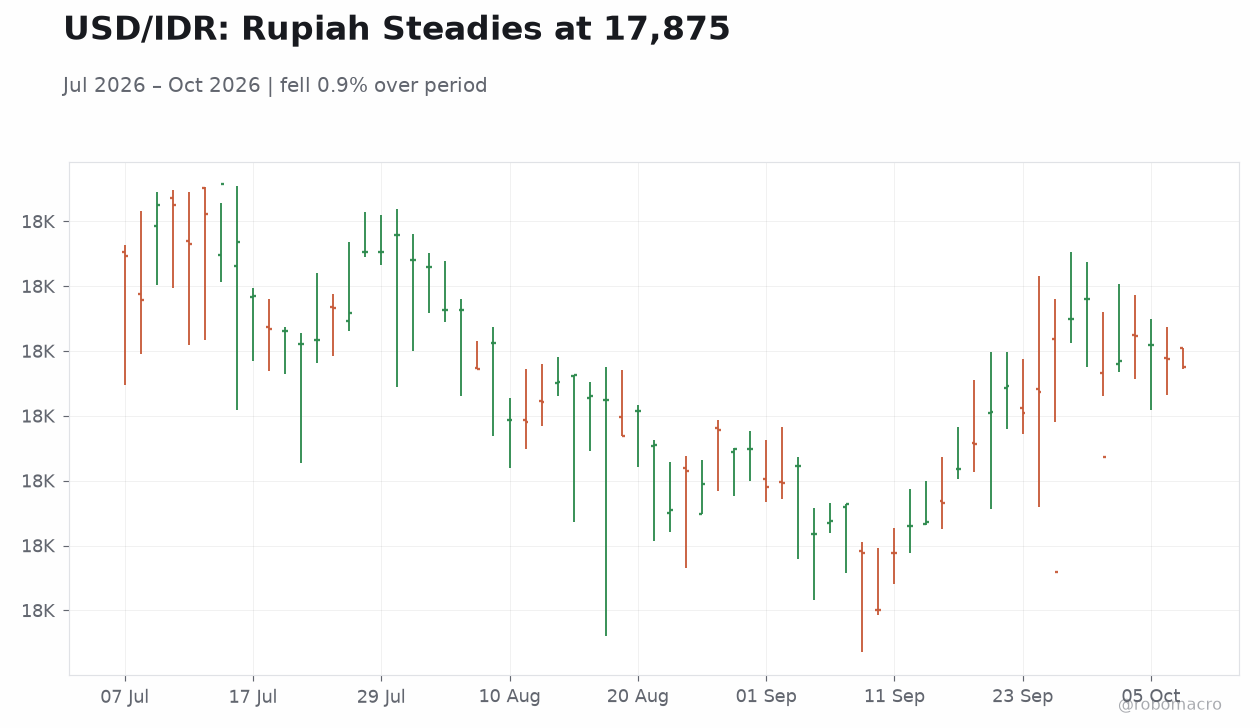
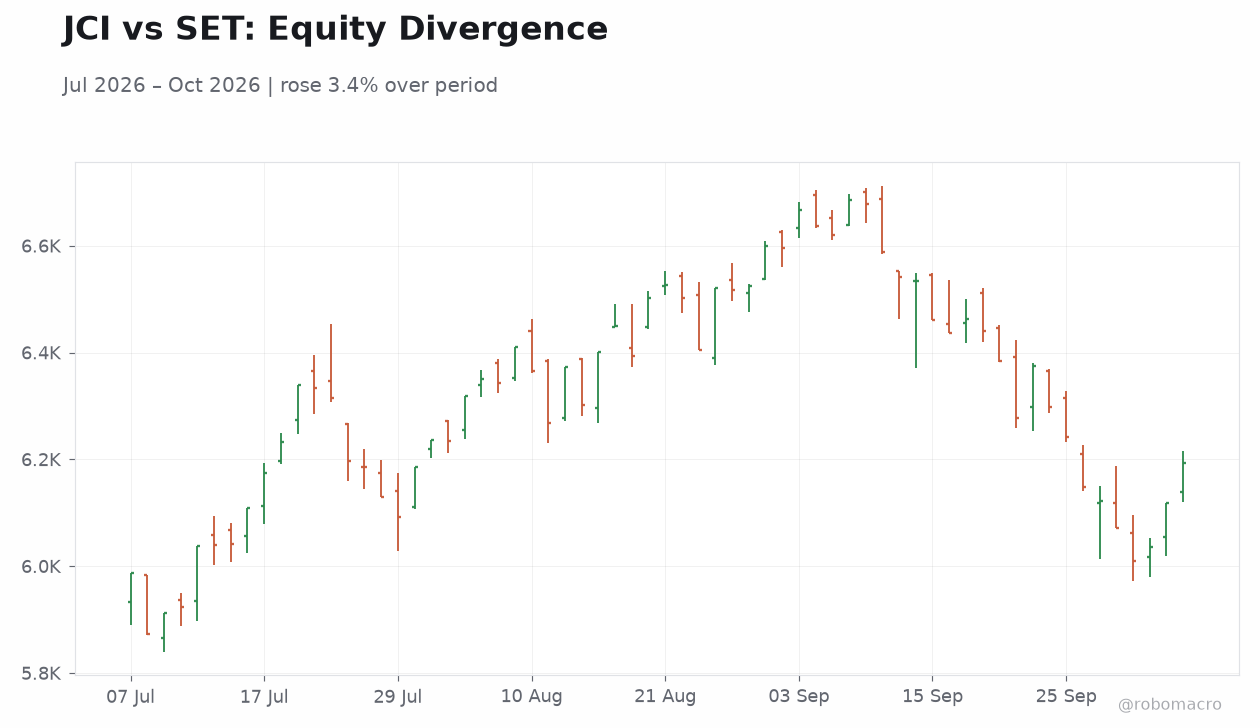
Indonesian assets dominated the session. The rupiah strengthened to Rp17,875/USD, supported by confirmation that foreign exchange reserves held steady at $146.3bn — a level that gives Bank Indonesia ample ammunition to smooth fourth-quarter currency pressures, which the central bank itself expects to ease. Sentiment got an additional lift from the World Bank's upgrade to Indonesia's 2026 growth forecast, helping the JCI rally 1.21% to 6,192.93, the strongest performance among regional benchmarks.
The gain came despite the World Bank simultaneously cautioning that Indonesia risks missing the AI-driven investment wave now benefiting Malaysia and Vietnam — a structural critique tempering the growth upgrade. Elsewhere, equity moves were more muted: Singapore's STI added 0.66% to 5,701.54 and Malaysia's KLCI edged up 0.10% to 1,633.35. On FX, the baht appreciated 0.21% to 33.62/USD, though Commerzbank flagged downside risks for the currency despite the firmer inflation print, while the ringgit opened slightly higher against the dollar even as US rate expectations firmed.
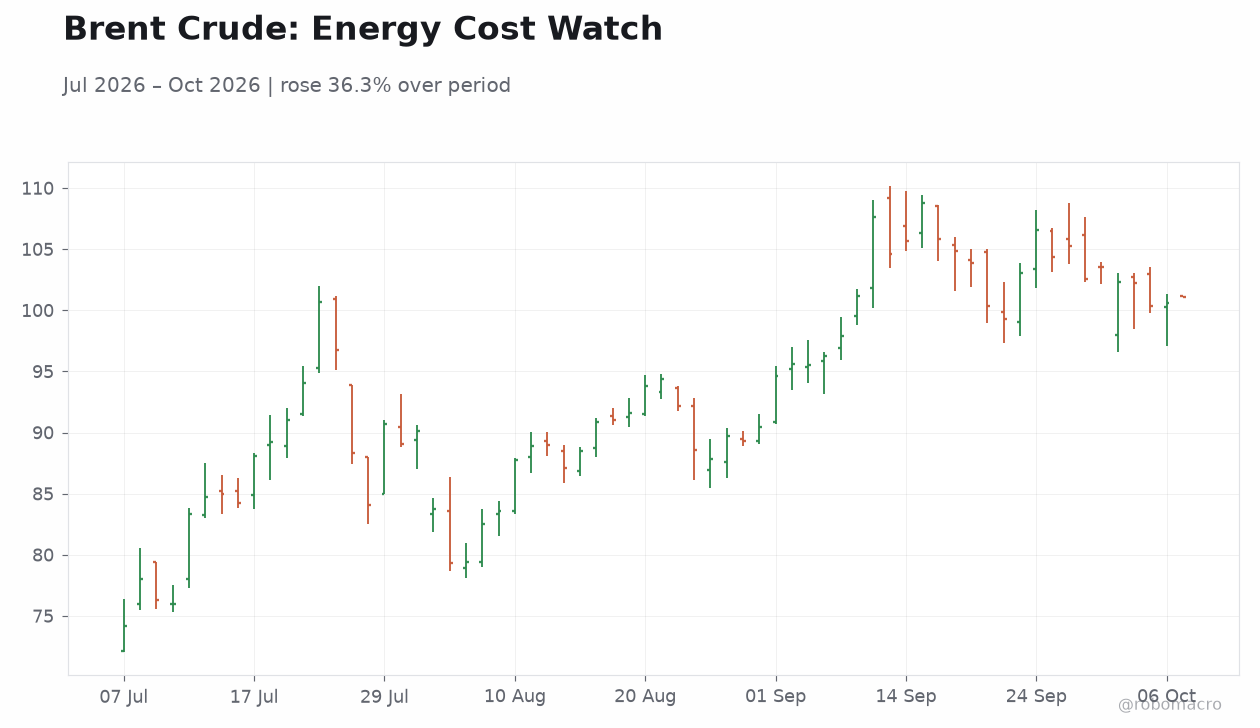
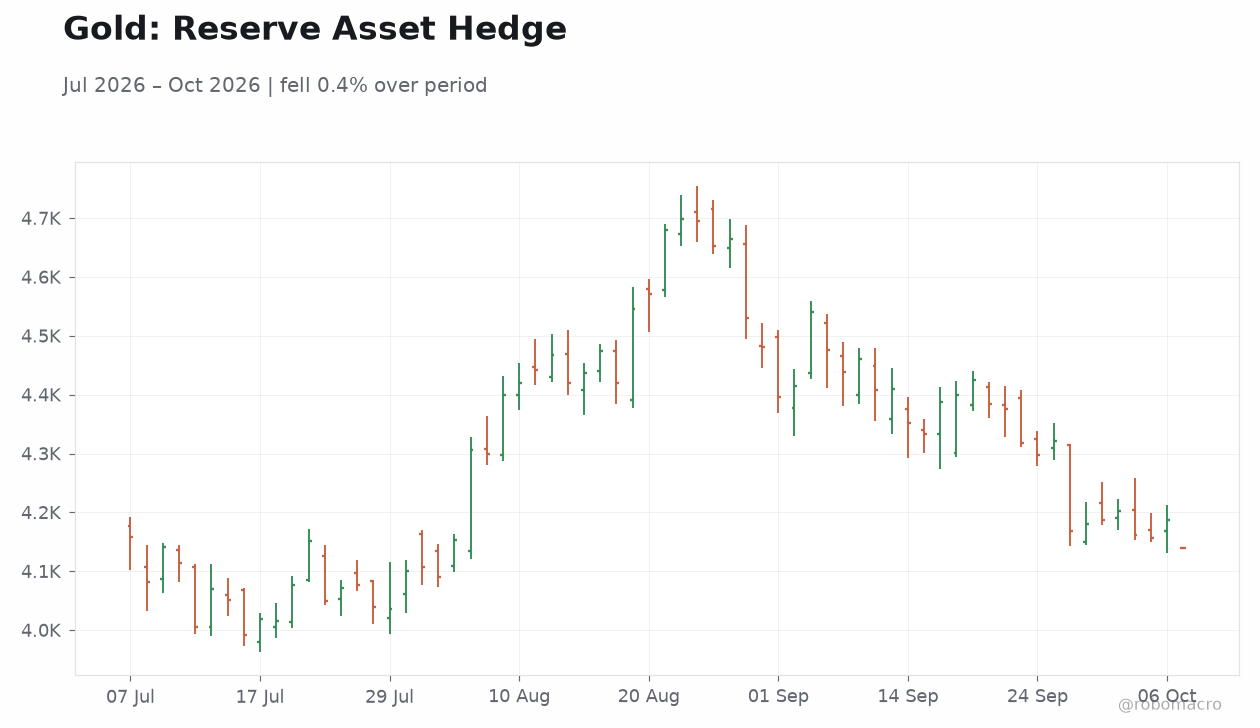
The peso lagged, weakening 0.17% to 62.67/USD. Brent crude climbed 0.37% to $100.95, a modest tailwind for the region's oil exporters, while gold slipped 1.20% to $4,136.70/oz and Bitcoin fell 2.77% to $83,187 — a risk-off tilt in alternative assets that contrasted with resilient regional equities.
The calendar is thin on scheduled ASEAN data releases, shifting attention to policy commentary and structural events. Watch for further detail on Thailand's US trade agreement, with Prime Minister Anutin Charnvirakul confirming negotiations are at the final paragraph — an announcement could land without warning and would be a positive surprise for Thai export and tourism names. Bank Indonesia's currency operations bear monitoring as it manages rupiah conversion flows; any update on Q4 FX intervention plans would be market-moving.
In Malaysia, follow-through from the BNM-HKMA fintech pact may generate additional regulatory announcements on cross-border stablecoin frameworks. Vietnam's trade performance remains the key data gap, with markets awaiting confirmation of whether the export drag flagged by commentators is cyclical or structural. Regional bond desks will also look for Indonesian and Thai 10-year yield prints to reappear after a data outage left those series blank.
↓ p.2
Subscribe to ASEAN Macro Daily and get each new issue delivered to your inbox.
Already a member? Visit robomacro.com to log in and manage subscriptions, or use Forgot Password to set a password.
USD/IDR: Rupiah Steadies at 17,875 | Type: market_hloc | USD/IDR: 1.788e+04 (2026-10-07) | Range: 1.75e+04–1.816e+04 | Trend(6pt): 1.805e+04,1.805e+04,1.781e+04,1.759e+04,1.791e+04,1.788e+04
JCI vs SET: Equity Divergence | Type: market_hloc | JCI Indonesia: 6193 (2026-10-06) | Range: 5873–6686 | Trend(5pt): 5986,6091,6526,6461,6193
Brent Crude: Energy Cost Watch | Type: market_hloc | Brent Crude (USD): 101.1 (2026-10-07) | Range: 74.16–108.8 | Trend(6pt): 74.16,90.74,93.78,105.7,100.6,101.1
Gold: Reserve Asset Hedge | Type: market_hloc | Gold (USD/oz): 4139 (2026-10-07) | Range: 3992–4698 | Trend(6pt): 4157,4036,4571,4352,4187,4139
Krung Thai Bank's interim dividend, payable October 8, is a near-term fixture on the Thai corporate calendar.
The World Bank's ASEAN AI analysis is the structural story of the week: Malaysia and Vietnam are positioned to ride the AI and supply-chain diversification boom, while Indonesia — despite the growth upgrade — is flagged as missing out on the highest-value segments. That divergence matters for capital allocation, as AI-adjacent FDI tends to concentrate in economies with strong semiconductor, data-center and electronics ecosystems — precisely where Penang and northern Vietnam have built advantages. Thailand's luxury property pipeline offers a counterpoint of domestic-demand resilience: Siam Piwat's planned $300mn project on Phuket underscores confidence in high-end tourism recovery.
Meanwhile, Krung Thai Bank's interim dividend of THB0.48 per share, payable October 8, signals continued balance-sheet strength in the Thai banking sector. The BNM-HKMA stablecoin initiative, announced with bilateral cooperation arrangements, positions both jurisdictions as early movers in regulated digital-currency infrastructure — a soft-power play for financial-center relevance.
Safe-haven demand for the dollar persisted, keeping USD/Asia ranges compressed even as regional currencies found their own footing; the ringgit's ability to open higher despite elevated US rate expectations suggests rate differentials are no longer the sole driver of ASEAN FX. ↓ p.3
Brent's climb toward $101 raises the question of pass-through into ASEAN inflation prints, a consideration for regional central banks weighing policy room. The World Bank's global outlook revisions — including a 7.9% rebound forecast for Saudi Arabia in 2027 — signal improving commodity-cycle confidence that indirectly supports ASEAN's energy and palm oil exporters. Bank of Canada policy communications drew attention as a template for how mid-sized open economies are framing the late-cycle environment.
For ASEAN, the dominant global variables remain the US rate path, China's manufacturing pulse, and the pace of supply-chain friend-shoring — the last of which now has a World Bank endorsement for Malaysia and Vietnam specifically.
Bank Indonesia is the focal point. The central bank is openly struggling to defend the rupiah near Rp18,000, yet reserves at $146.3bn and its own assessment that Q4 pressure will ease suggest a strategy of patience over aggression — intervention is being calibrated, not abandoned. BI is also pushing a regional agenda, urging ASEAN central banks to coordinate on AI-related challenges to payment systems and financial stability.
In Thailand, the baht's weakness despite higher inflation complicates the Bank of Thailand's communication: Commerzbank sees THB downside risks persisting, which argues for a cautious, data-dependent stance at the next review. Malaysia's BNM is executing beyond rates, signing a fintech cooperation pact with the HKMA targeting cross-border stablecoin regulation — a sign its policy bandwidth has shifted toward financial-market infrastructure. The MAS continues to operate through its S$NEER band, and the SGD's stability at 1.28/USD suggests no urgency to adjust the slope or width at the October review.
BSP faces a mildly weaker peso at 62.67, but the move is within tolerance and unlikely to trigger action. SBV has been quiet, though Vietnam's trade drag bears watching for any shift in the dong's managed trajectory. The broad picture: six central banks in wait-and-see mode, with BI carrying the heaviest FX-defense burden.