| Asset | Level | Change |
|---|---|---|
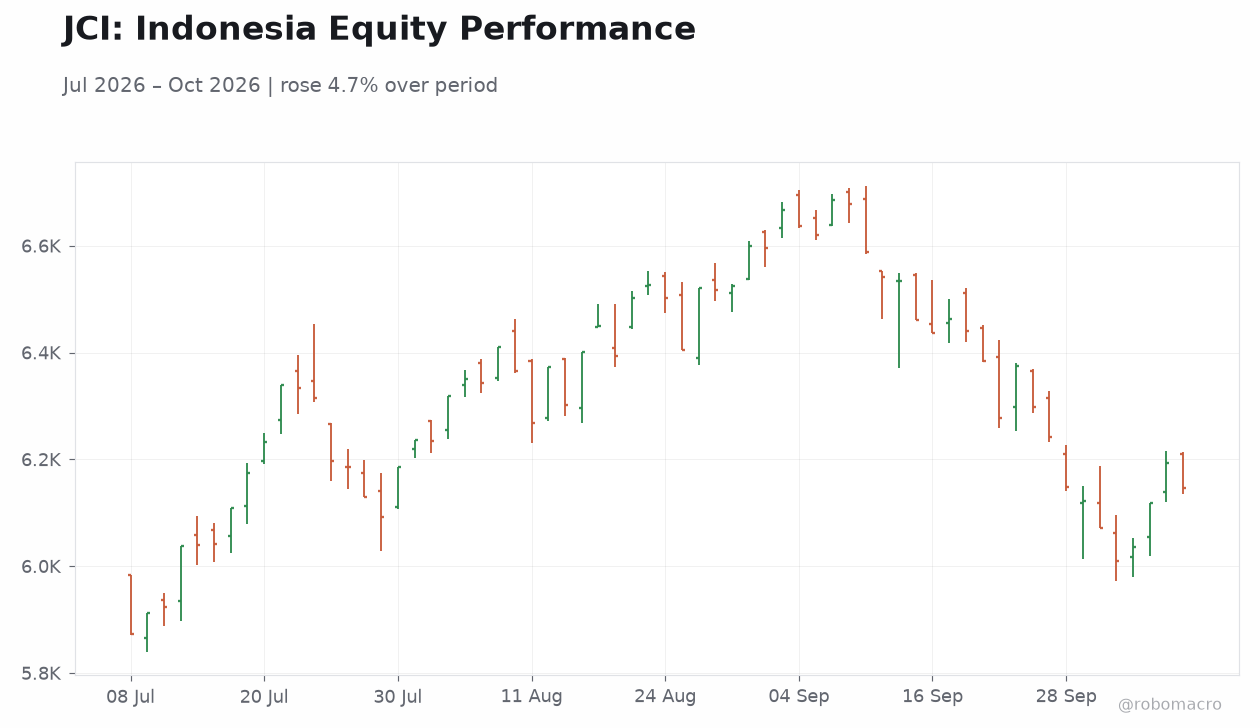
| JCI | 6,146.72 | -0.75% |
| KLCI | 1,611.78 | -1.32% |
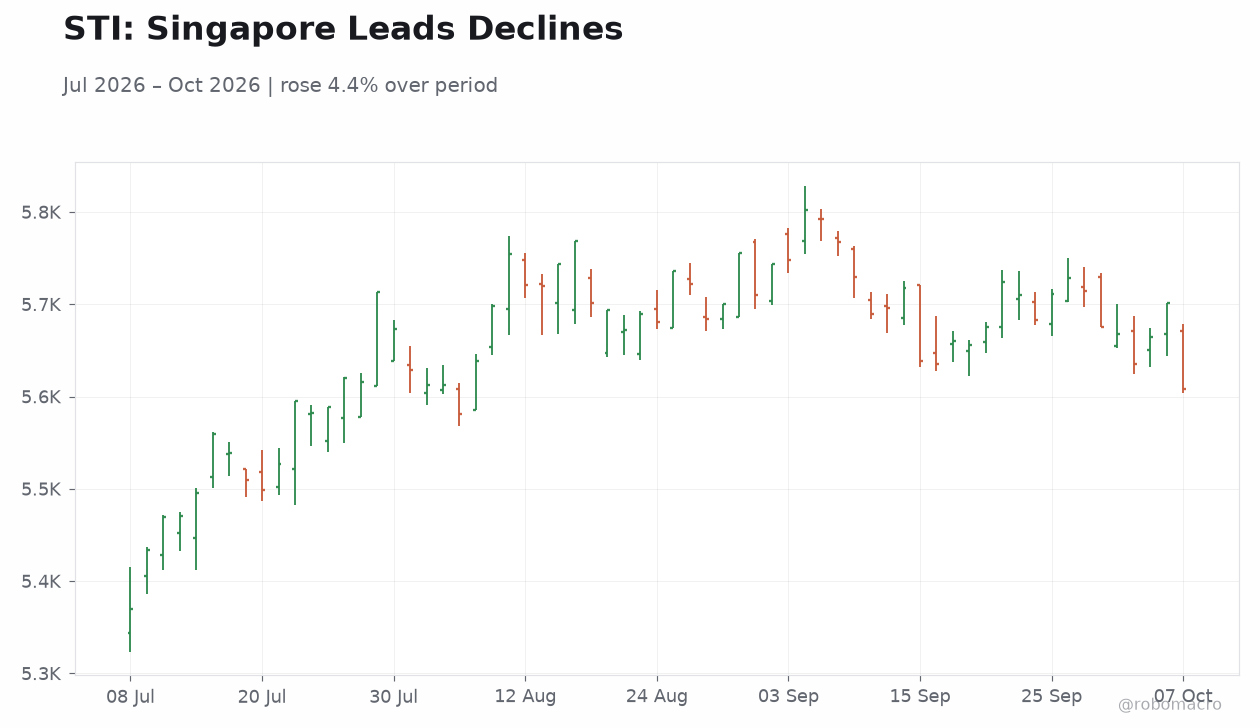
| STI | 5,608.44 | -1.63% |
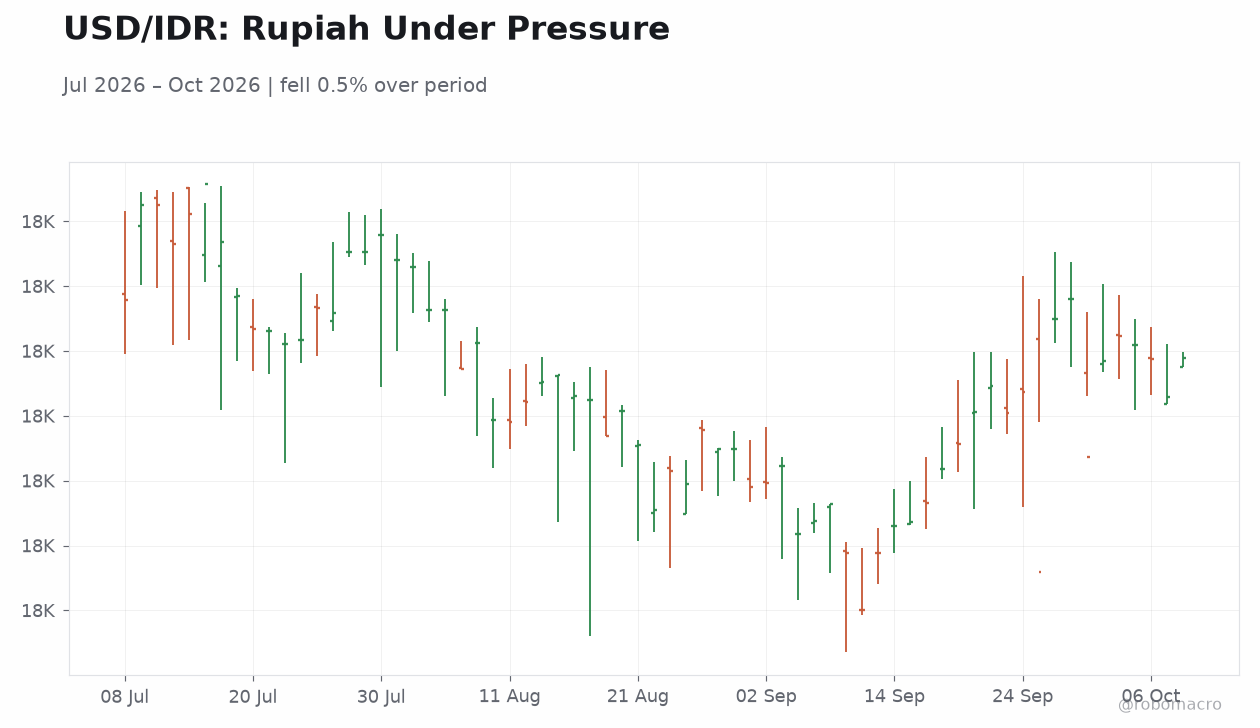
| USD/IDR | 17,890.00 | +0.34% |
| USD/THB | 33.65 | +0.26% |
| USD/MYR | 4.09 | +0.10% |
| USD/PHP | 62.89 | +0.38% |
| USD/SGD | 1.28 | +0.21% |
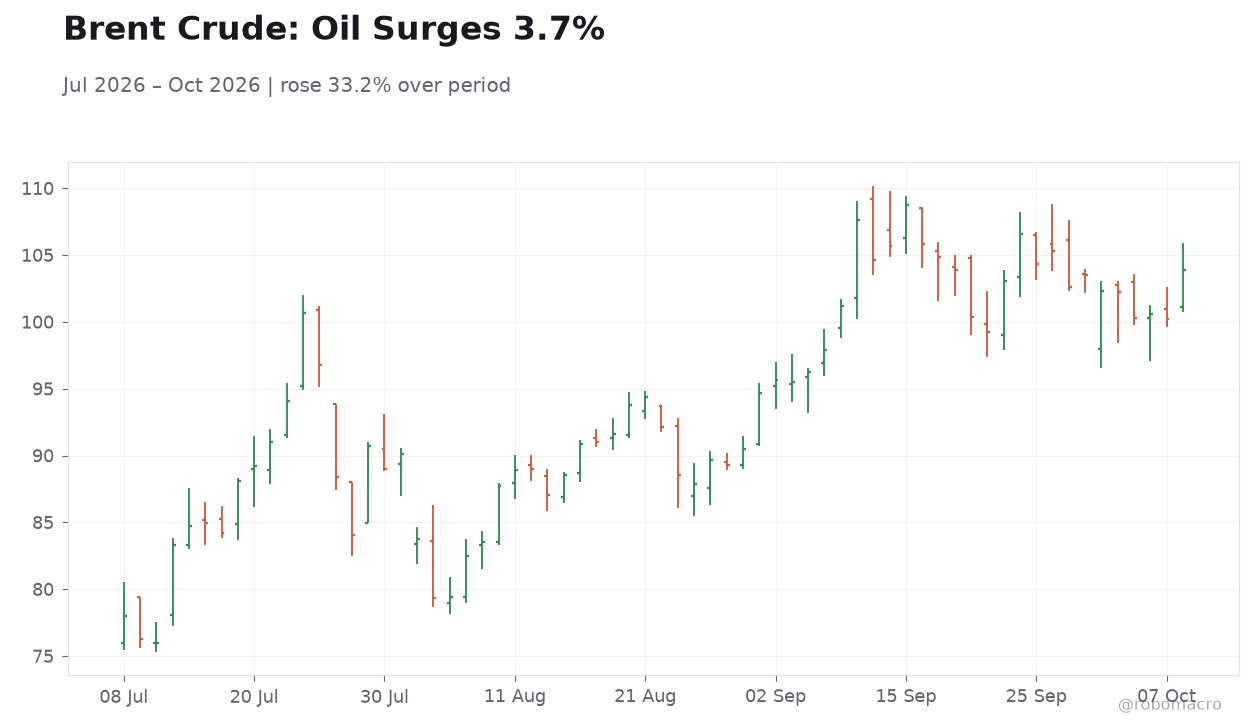
| Brent Crude | 103.92 | +3.71% |
| Gold | 4,158.30 | +0.43% |
| Bitcoin | 81,676.45 | -1.92% |
| Indonesia 10Y Govt Yield | - | - |
| Thailand 10Y Govt Yield | - | - |
| Data | Prior | Cons | Actual |
|---|---|---|---|
| No events available | |||
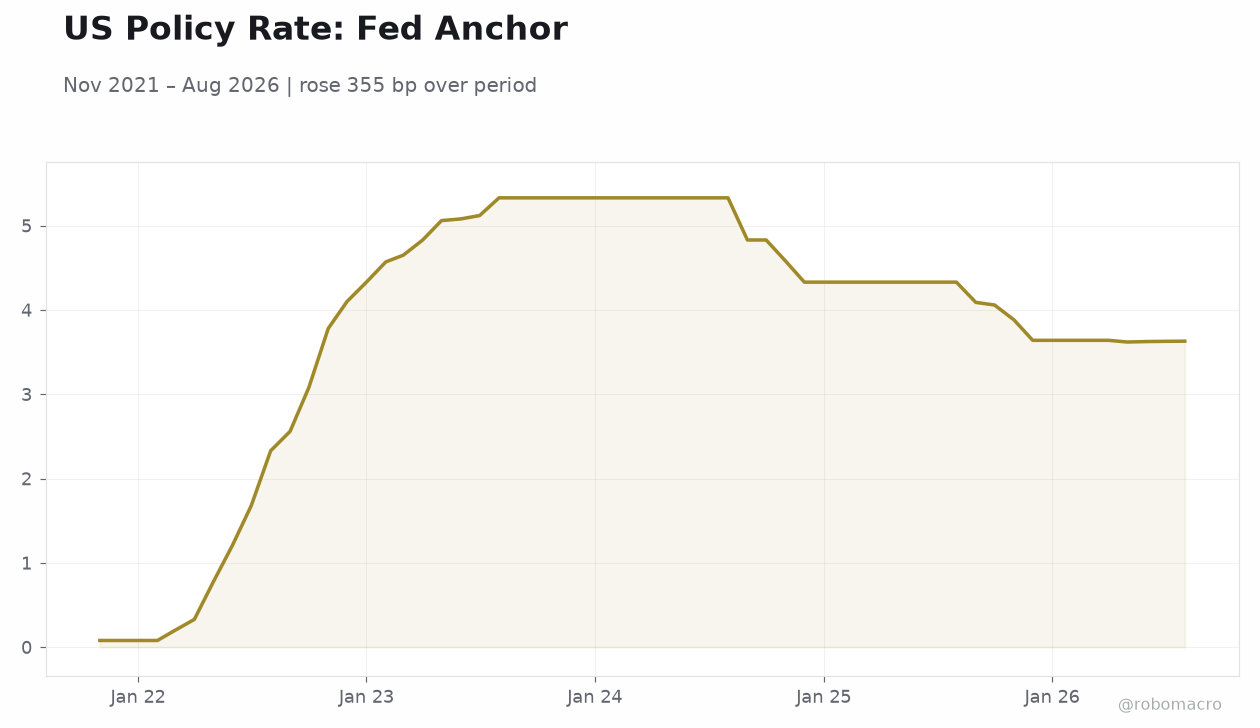
US Policy Rate: Fed Anchor | Type: macro_line | US Short Rate (%): 3.63 (2026-08-01) | Range: 0.08–5.33 | Trend(6pt): 0.08,4.33,5.33,4.33,3.628,3.63
| Data | Prior | Cons | Time |
|---|---|---|---|
| No events available | |||
ASEAN equity markets closed lower on Wednesday as risk sentiment deteriorated across the region. Singapore's STI led declines at 5,608.44, down 1.63%, followed by Malaysia's KLCI at 1,611.78, off 1.32%. Indonesia's JCI held up comparatively better at 6,146.72, shedding 0.75%.
Currencies softened broadly: the rupiah weakened 0.34% to 17,890 per dollar after briefly touching 17,887 intraday, the baht slipped 0.26% to 33.65, the peso lost 0.38% to 62.89, and the Singapore dollar eased 0.21% to 1.28. The key Indonesian data point was September foreign reserves, which slipped to $146.3bn, with the Jakarta Post noting the decline came amid rupiah volatility. BI moved to reassure, indicating fourth-quarter rupiah pressures should ease as seasonal dollar demand fades and portfolio flows stabilize, while stressing reserves remain adequate by international adequacy metrics.
Commodity moves added to the inflation calculus: Brent crude surged 3.71% to $103.92, a headwind for net oil importers like Thailand, the Philippines and Indonesia, while gold rose 0.43% to $4,158.30. Bitcoin fell 1.92% to $81,676, consistent with the broader risk-off tone that also weighed on regional equities. Indonesia's 10-year government yield was not available in today's snapshot, leaving the fixed-income picture incomplete pending local market data.
Today's calendar is light on scheduled ASEAN data releases, shifting attention to policy commentary and structural developments. Market participants will parse BI's ongoing messaging on rupiah stability following the reserves print, with the central bank's assessment of Q4 currency pressures likely to anchor near-term FX expectations. In Thailand, watch for follow-through on the Bank of Thailand's pledged credit-market overhaul aimed at opening bank lending to SMEs, a structural reform with implications for credit growth and financial stability.
Malaysia's Budget 2027 preparations remain in focus, with ringgit traders eyeing fiscal signals; the currency opened slightly higher against the dollar before fading in afternoon trade. The Thailand-EU FTA negotiations, now at round ten with significant progress on the negotiating text, and the near-conclusion of the US trade deal bear monitoring for trade-policy clarity. ↓ p.2
Subscribe to ASEAN Macro Daily and get each new issue delivered to your inbox.
Already a member? Visit robomacro.com to log in and manage subscriptions, or use Forgot Password to set a password.
Brent Crude: Oil Surges 3.7% | Type: market_hloc | Brent ($/bbl): 103.9 (2026-10-08) | Range: 76.01–108.8 | Trend(6pt): 78.02,89.03,94.39,108.8,100.2,103.9
STI: Singapore Leads Declines | Type: market_hloc | STI: 5608 (2026-10-07) | Range: 5370–5802 | Trend(5pt): 5370,5674,5680,5639,5608
JCI: Indonesia Equity Performance | Type: market_hloc | JCI: 6147 (2026-10-07) | Range: 5873–6686 | Trend(5pt): 5873,6186,6502,6437,6147
USD/IDR: Rupiah Under Pressure | Type: market_hloc | USD/IDR: 1.789e+04 (2026-10-08) | Range: 1.75e+04–1.816e+04 | Trend(6pt): 1.798e+04,1.808e+04,1.776e+04,1.763e+04,1.789e+04,1.789e+04
Regional equity direction will likely take cues from Wall Street and oil's trajectory after Wednesday's sharp crude rally, with Krung Thai Bank's interim dividend payment of THB0.48 per share due today a minor market mechanic to note.
The World Bank raised its Indonesia growth projection to 5.2%, a vote of confidence in the largest ASEAN economy's domestic-demand resilience, though employer group Apindo cautioned that household purchasing power remains fragile — a tension between headline GDP and real consumer strength that bears watching. Structural capital flows continue to reshape the region's property landscape: Malaysia is positioning itself as a middle ground for Hong Kong and mainland Chinese investors seeking Singapore-like stability at price points closer to Thailand's, while Siam Piwat, the developer behind Siam Paragon and ICONSIAM, unveiled a $300mn luxury project on Phuket, Thailand's largest island — signals of continued high-end real estate confidence. Trade diplomacy advanced on multiple fronts, with Thailand at the "last paragraph" of its US trade agreement per PM Anutin, and the tenth round of Thailand-EU FTA talks making significant progress on the negotiating text.
In the digital-economy sphere, BNM and the HKMA agreed a fintech pact targeting cross-border stablecoin frameworks, an early template for regional payments integration.
The 3.71% surge in Brent crude to $103.92 was the dominant global macro event, with implications rippling through ASEAN via terms-of-trade and inflation channels — net importers Thailand and the Philippines face imported-cost pressure, while Indonesia's fiscal position benefits from higher commodity prices even as subsidy costs rise. Gold's advance to $4,158.30 (+0.43%) reflects persistent safe-haven demand amid geopolitical and monetary uncertainty. Bitcoin's 1.92% decline to $81,676 signals broader risk appetite contraction, consistent with the ASEAN equity selloff.
The US rate path remains the key external variable for ASEAN central banks, with BI explicitly flagging US policy as a determinant of the rupiah outlook. A firmer dollar environment, evidenced by broad ASEAN currency weakness, constrains the region's easing room and keeps reserve adequacy in focus. Stablecoin regulation is emerging as a new coordination frontier, with BNM and the HKMA targeting cross-border stablecoin frameworks in a new fintech pact.
Bank Indonesia dominated the regional central-bank narrative, confirming September reserves at $146.3bn while signaling that fourth-quarter rupiah pressures should ease — a communication strategy aimed at anchoring expectations without aggressive intervention. BI also urged ASEAN central banks collectively to address AI-related challenges, signaling a supervisory and operational modernization agenda. In Malaysia, market consensus is building around BNM raising the OPR to 3.00% by 1Q27, with the catalyst being a third consecutive monthly decline in reserves; the ringgit's mixed performance — higher against ASEAN peers, lower versus the dollar — frames the policy calculus.
Bank of Thailand policy risks are viewed as balanced per Standard Chartered, though Commerzbank flags baht downside risks alongside an inflation uptick, suggesting the next move hinges on the growth-inflation mix. The BoT separately pledged a credit-overhaul program to open bank lending to SMEs. The MAS continues to operate through its exchange-rate band framework, with the Singapore dollar's 0.21% slip well within the band's tolerance.
BSP and SBV were quiet on the news flow. The broader theme: with the dollar firm and oil elevated, ASEAN central banks are prioritizing FX stability, leaning on reserves and communication rather than pre-emptive rate action.