ASEAN Macro Daily(Beta Mode)
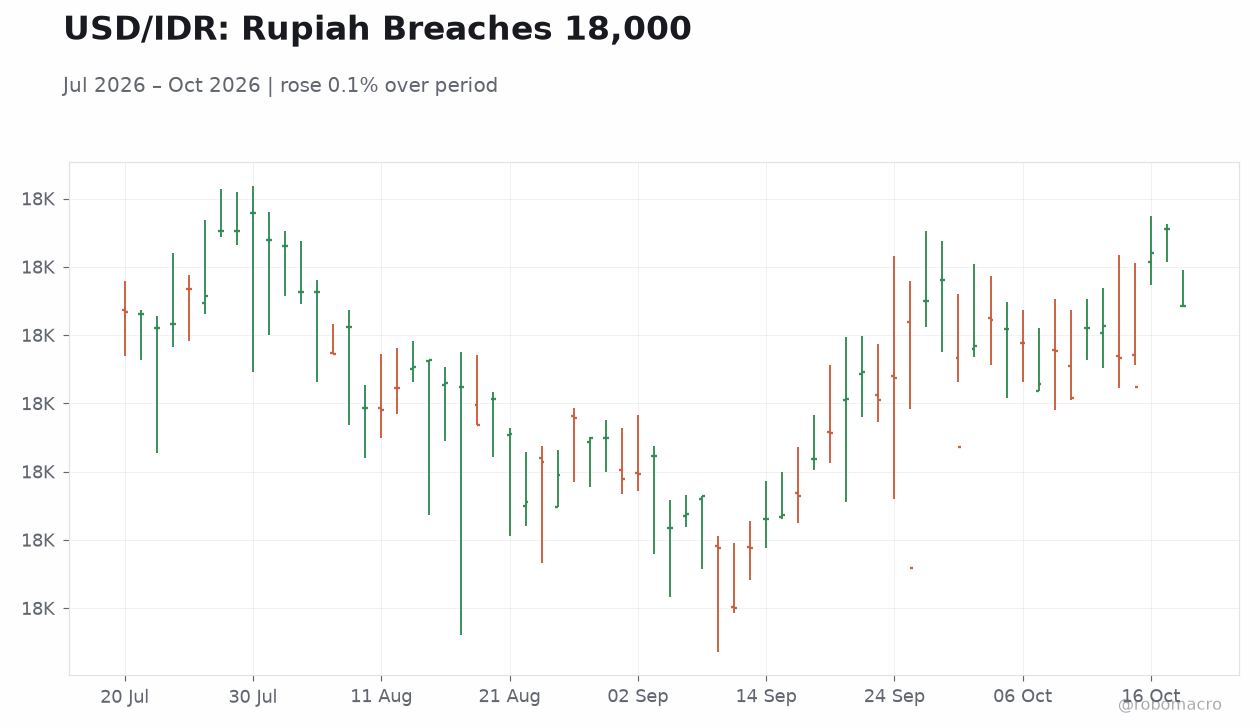
Rupiah Breaches 18,000 as BI Defends; MSCI Risk Weighs
Market Snapshot
| Asset | Level | Change |
|---|---|---|
| JCI | 4,996.61 | -3.64% |
| KLCI | 1,595.75 | -0.75% |
| STI | 5,412.00 | -0.07% |
| USD/IDR | 17,943.00 | -0.63% |
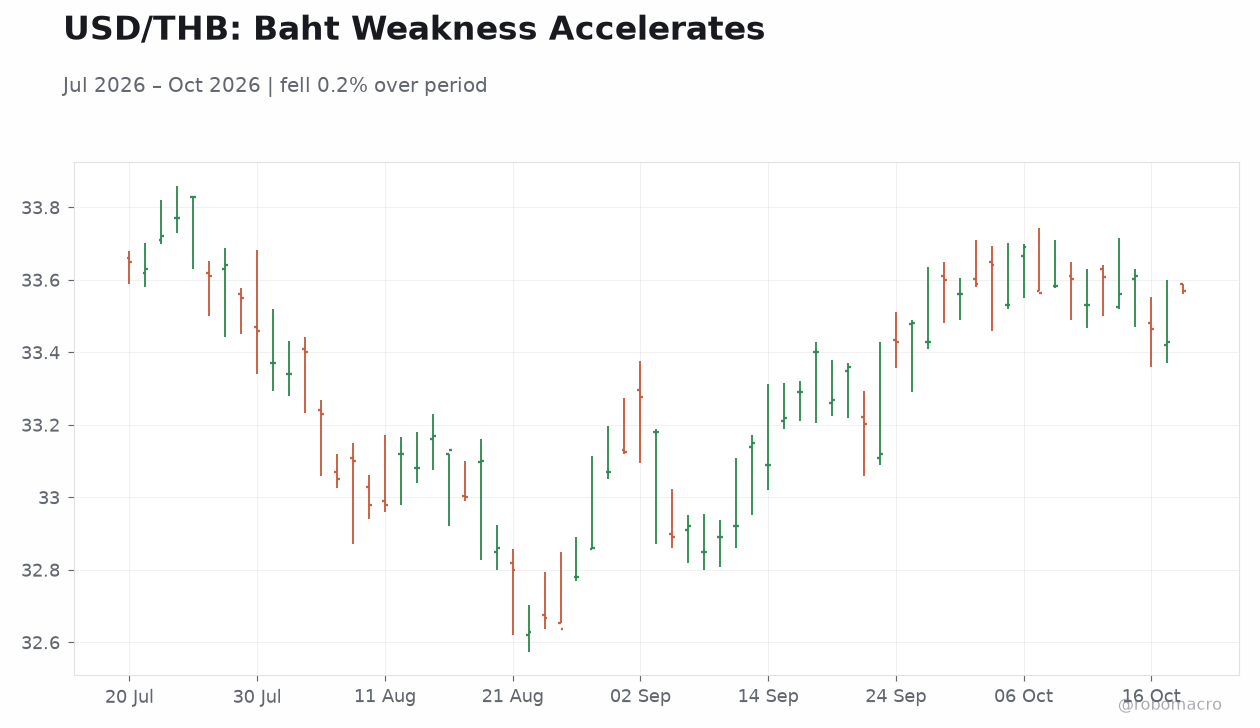
| USD/THB | 33.59 | +0.48% |
| USD/MYR | 4.08 | -0.00% |
| USD/PHP | 63.03 | +0.13% |
| USD/SGD | 1.28 | -0.11% |
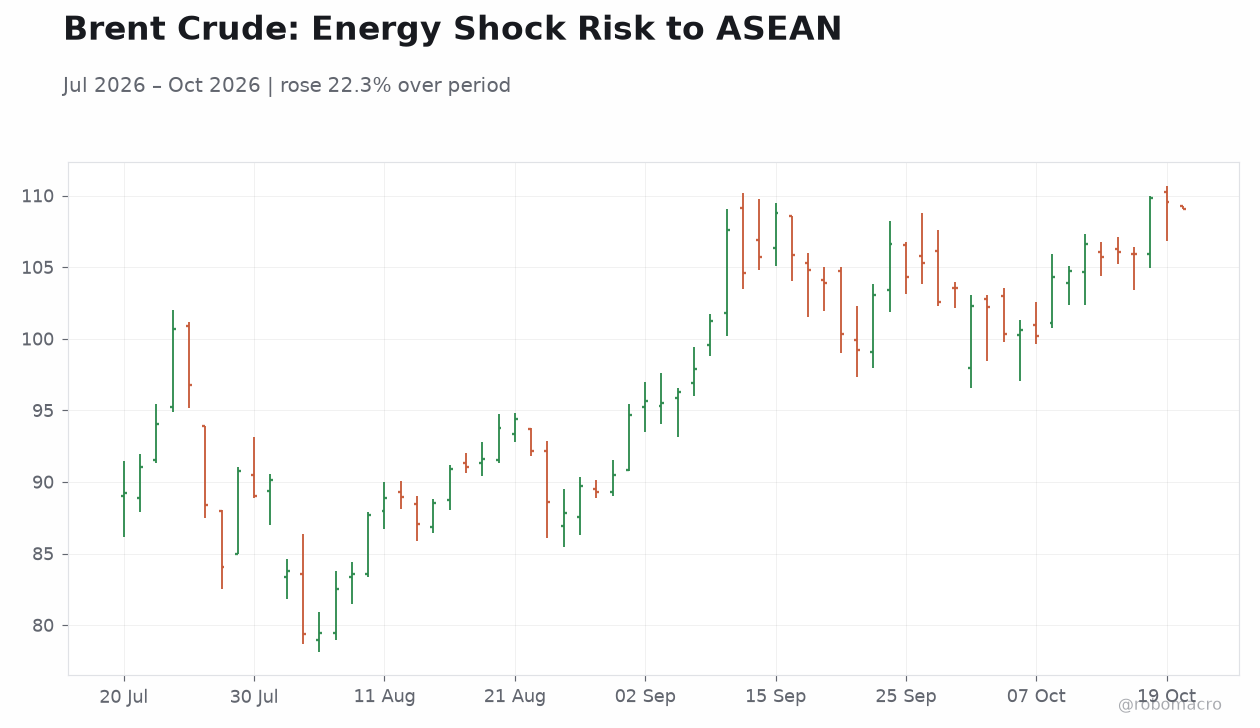
| Brent Crude | 109.17 | -0.35% |
| Gold | 4,144.80 | -0.37% |
| Bitcoin | 82,920.00 | +1.30% |
| Indonesia 10Y Govt Yield | - | - |
| Thailand 10Y Govt Yield | - | - |
Prior Economic Events
| Data | Prior | Cons | Actual |
|---|---|---|---|
| No events available | |||
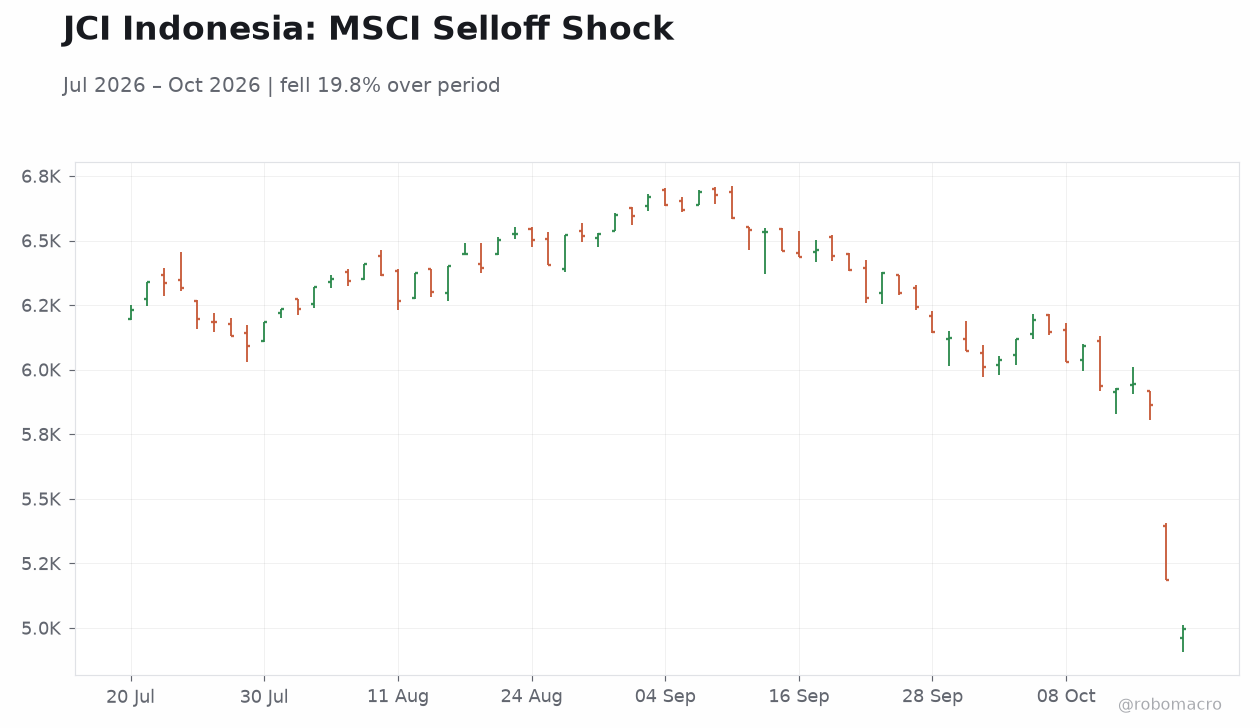 JCI Indonesia: MSCI Selloff Shock | Type: market_hloc | JCI Index: 4997 (2026-10-19) | Range: 4997–6686 | Trend(5pt): 6232,6268,6636,6148,4997
Today's Economic Events
| Data | Prior | Cons | Time |
|---|---|---|---|
| No events available | |||
- Indonesian assets under severe pressure: JCI plunged 3.64% to 4,996.61 as the rupiah breached Rp 18,000 intraday before stabilizing; BI has stepped up intervention and rate-hike bets are rising.
- Regional FX mixed: USD/IDR eased 0.63% to 17,943 on stabilization measures, while USD/THB rose 0.48% to 33.59 and USD/PHP edged up 0.13% to 63.03; USD/MYR and USD/SGD were broadly flat.
- Policy divergence widening: Vietnam's central bank has agreed to lower rates to support growth, Malaysia's BNM carries a hawkish bias, and the BSP remains among the region's most hawkish central banks per Nomura.
Yesterday's Recap
Indonesian markets dominated the session, with the JCI tumbling 3.64% to 4,996.61 — a sharp risk-off move tied to MSCI's expulsion threat and broader global shocks. The rupiah breached the psychologically important Rp 18,000 level intraday, prompting Bank Indonesia to step up market intervention; the currency subsequently recovered to 17,943, down 0.63% on the day. Rate-hike bets on BI jumped as investors priced tighter policy to defend the currency and stem capital outflows.
Elsewhere in ASEAN, Malaysia's KLCI slipped 0.75% to 1,595.75 and Singapore's STI was essentially flat at 5,412.00, down just 0.07%. Thai and Philippine equities were not captured in the market data, but FX moves showed baht weakness (USD/THB +0.48% to 33.59) and modest peso softness (USD/PHP +0.13% to 63.03). The Malaysian ringgit held steady at 4.08 and the Singapore dollar was marginally firmer at 1.28.
No scheduled ASEAN macro releases appeared on the calendar for the session, leaving FX and equity flows to drive the narrative.
The Day Ahead
The ASEAN calendar is empty for today, with no tier-one data releases scheduled across the six economies. Market attention will therefore remain fixed on Indonesia, where traders will watch whether BI's intervention and stabilization measures can keep the rupiah below the Rp 18,000 threshold and whether equity outflows from the MSCI-related selloff persist. Thai markets will digest baht weakness and monitor whether the BoT signals any concern over imported inflation from a currency near 33.60.
Malaysia's ringgit will be watched for signs of hawkish BNM positioning ahead of a possible November policy move. Singapore's FX-sensitive STI and the Philippine peso will trade on regional risk sentiment and global rate expectations. With no domestic prints to anchor direction, ASEAN assets are likely to take their cue from overnight global macro developments.
Other Economic Notes
Thailand's central bank is seeking public feedback on proposed regulations governing Buy Now, Pay Later lending, part of a broader effort to curb rising household debt as consumer credit expands. ↓ p.2