ASEAN Macro Daily(Beta Mode)
BI Holds at 5.75% as Rupiah Weakens on Oil
Market Snapshot
| Asset | Level | Change |
|---|---|---|
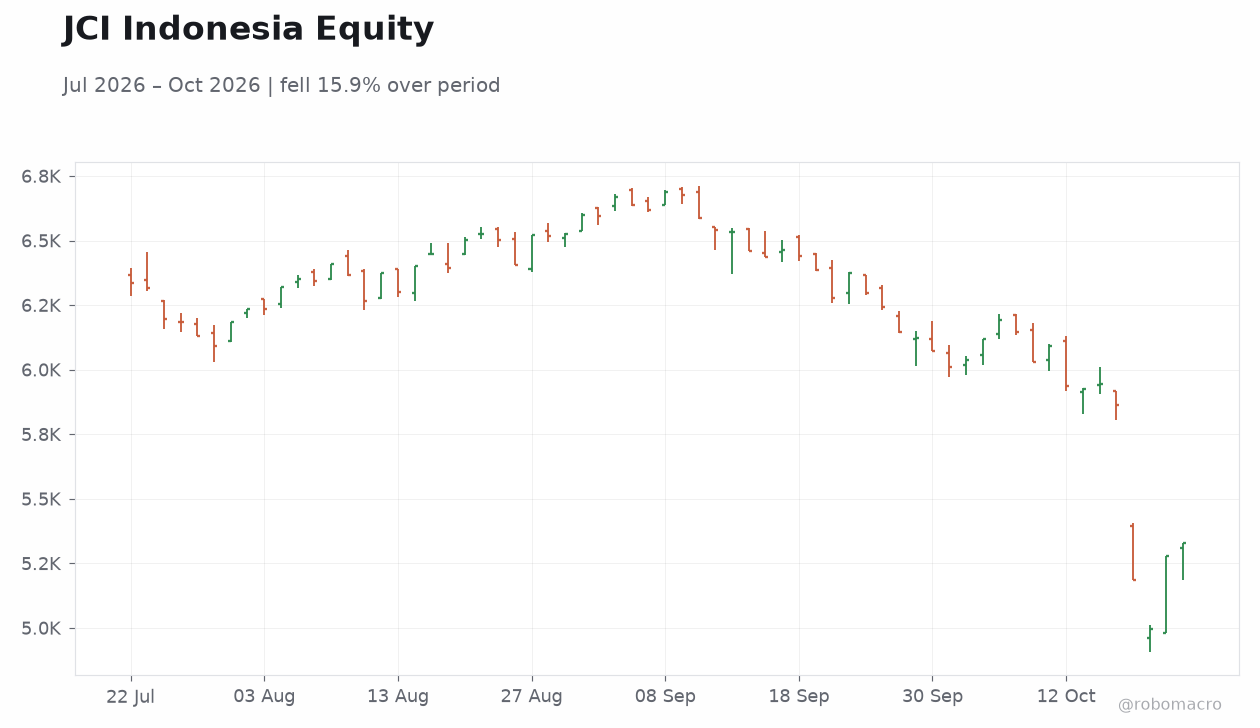
| JCI | 5,328.36 | +0.94% |
| KLCI | 1,602.27 | +0.17% |
| STI | 5,437.99 | +0.63% |
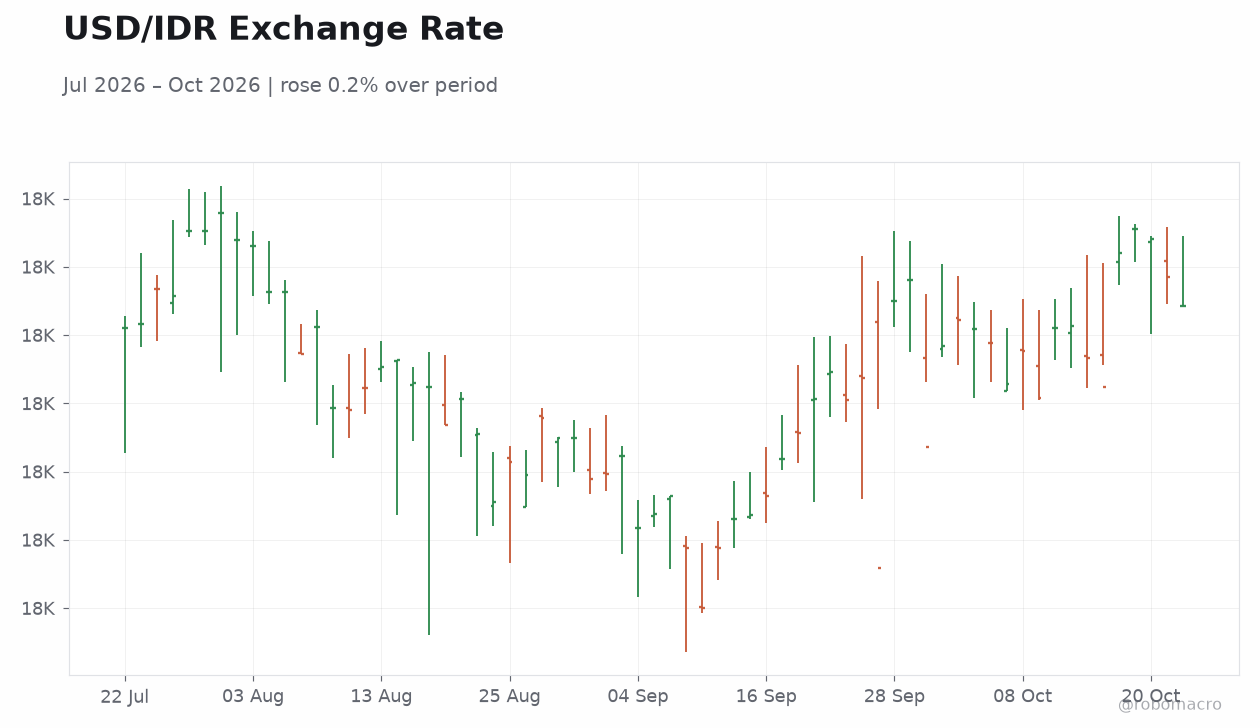
| USD/IDR | 17,943.00 | -0.24% |
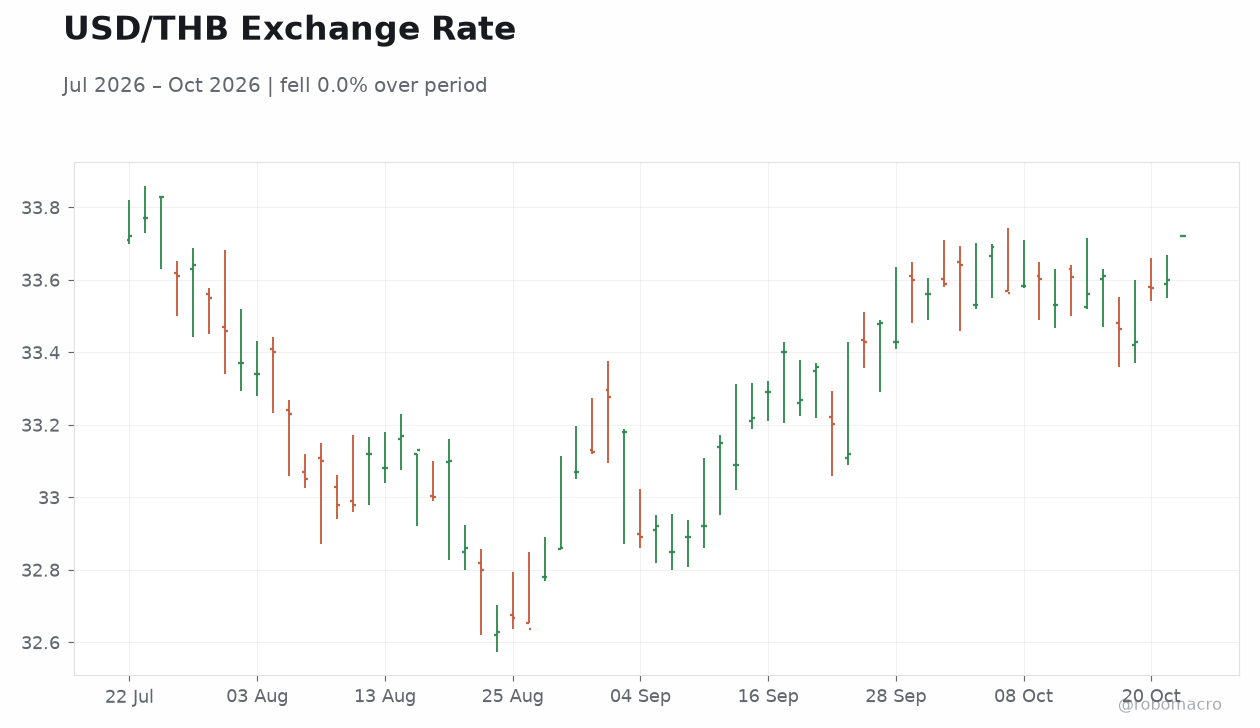
| USD/THB | 33.72 | +0.36% |
| USD/MYR | 4.08 | +0.03% |
| USD/PHP | 63.43 | +0.67% |
| USD/SGD | 1.28 | -0.05% |
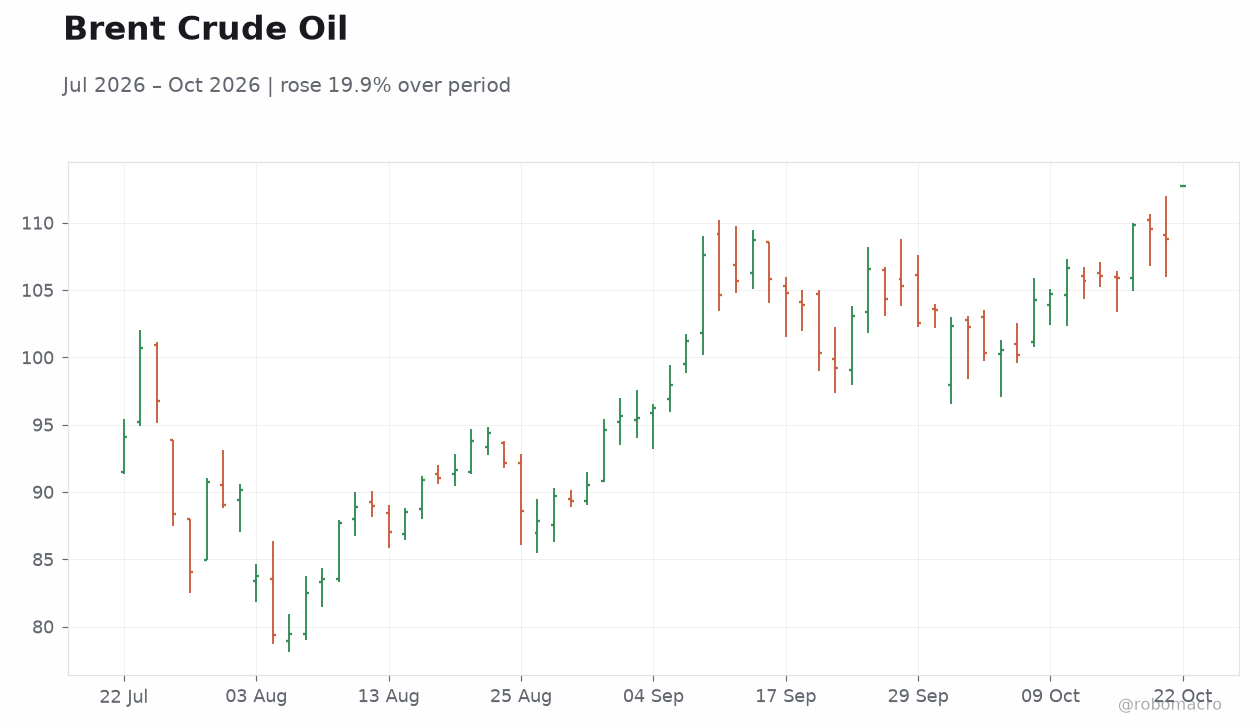
| Brent Crude | 112.76 | +3.65% |
| Gold | 4,040.20 | -2.65% |
| Bitcoin | 81,375.99 | -3.14% |
| Indonesia 10Y Govt Yield | - | - |
| Thailand 10Y Govt Yield | - | - |
Prior Economic Events
| Data | Prior | Cons | Actual |
|---|---|---|---|
| No events available | |||
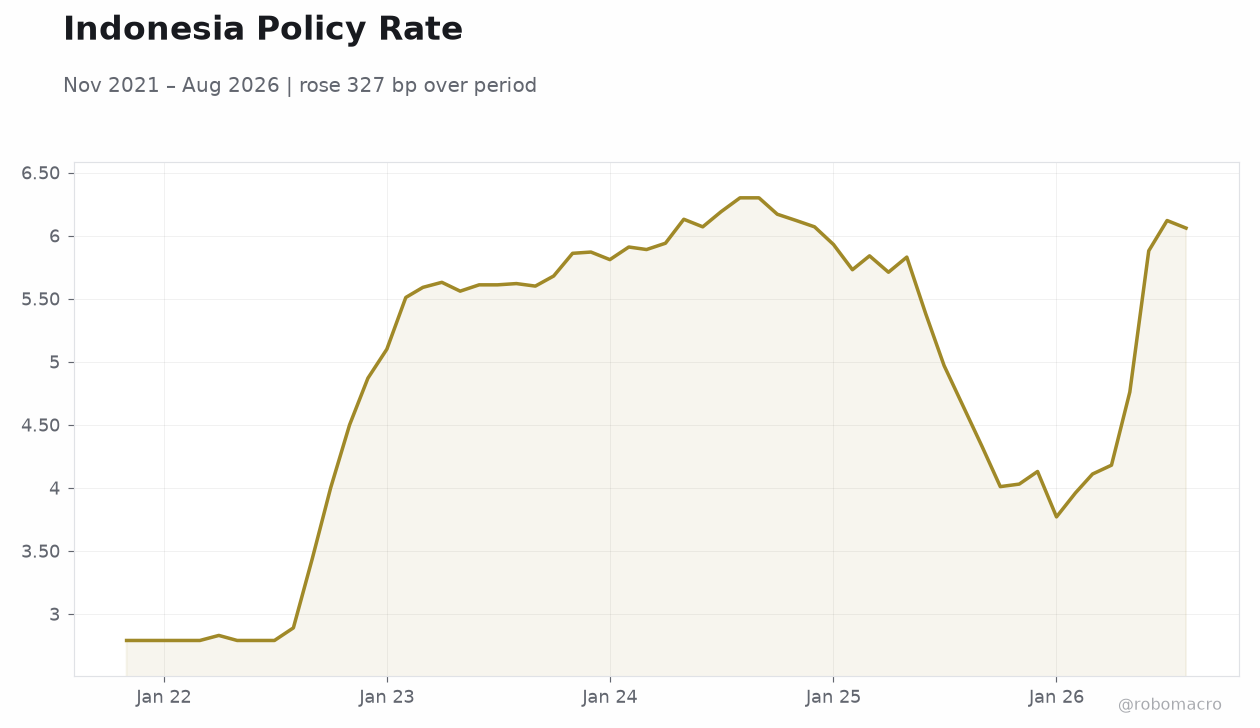 Indonesia Policy Rate | Type: macro_line | Policy Rate %: 6.06 (2026-08-01) | Range: 2.79–6.3 | Trend(6pt): 2.79,5.1,5.89,5.83,6.12,6.06
Today's Economic Events
| Data | Prior | Cons | Time |
|---|---|---|---|
| No events available | |||
- Bank Indonesia kept its benchmark rate unchanged at 5.75% while lifting the deposit facility rate to counter Rupiah weakness
- Regional equities rose, led by Indonesia’s JCI which gained 0.94%, while Brent crude jumped 3.65% to $112.76
- Economists now see BI-Rate reaching 6.25% later in the cycle as higher oil prices threaten Indonesia’s inflation outlook
Yesterday's Recap
Bank Indonesia held its policy rate at 5.75% but raised the deposit facility rate, seeking to support the Rupiah without tightening overall conditions. The Rupiah nonetheless fell to Rp18,060 per dollar despite liquidity measures, as Brent crude prices surged and heightened inflation risks. Indonesia’s September CPI stood at 3.28% year-on-year, leaving limited room for near-term easing.
In Malaysia, the Ringgit opened higher on stronger domestic data while the KLCI added 0.17%. Singapore’s STI rose 0.63% and the USD/SGD eased 0.05%. Thailand’s equity market showed limited movement amid ongoing focus on semiconductor supply-chain upgrades.
Overall, ASEAN currencies traded mixed against a firmer dollar, with USD/IDR down 0.24% and USD/THB up 0.36%. Higher oil prices transmitted directly into Indonesia’s current-account and inflation outlook, complicating BI’s dual mandate while supply-chain realignment toward Vietnam and Malaysia continued to support FDI inflows.
The Day Ahead
Markets will monitor any follow-up comments from Bank Indonesia officials on liquidity tools and Rupiah defence. Economists expect further discussion around the timing of a potential 25-basis-point hike should oil prices remain elevated. In Malaysia, attention turns to Bank Negara Malaysia’s next policy meeting, with some forecasts pointing to an eventual lift in the overnight policy rate.
Thailand’s focus remains on industrial policy aimed at advanced electronics manufacturing. Singapore’s MAS will continue to manage the Singapore dollar NEER band amid regional capital-flow volatility. No major data releases are scheduled across the six economies in the immediate session.
Regional bond markets remain sensitive to any widening in Indonesia’s credit spreads given the Rupiah’s recent moves, while capital-flow management measures in Indonesia and potential rate adjustments elsewhere highlight diverging policy responses to the same external shock.
Other Economic Notes
Higher global oil prices are transmitting directly into Indonesia’s current-account and inflation outlook, complicating BI’s dual mandate. Supply-chain realignment toward Vietnam and Malaysia continues to support FDI inflows, though rising energy costs may pressure margins for manufacturers. ↓ p.2