ASEAN Macro Daily(Beta Mode)
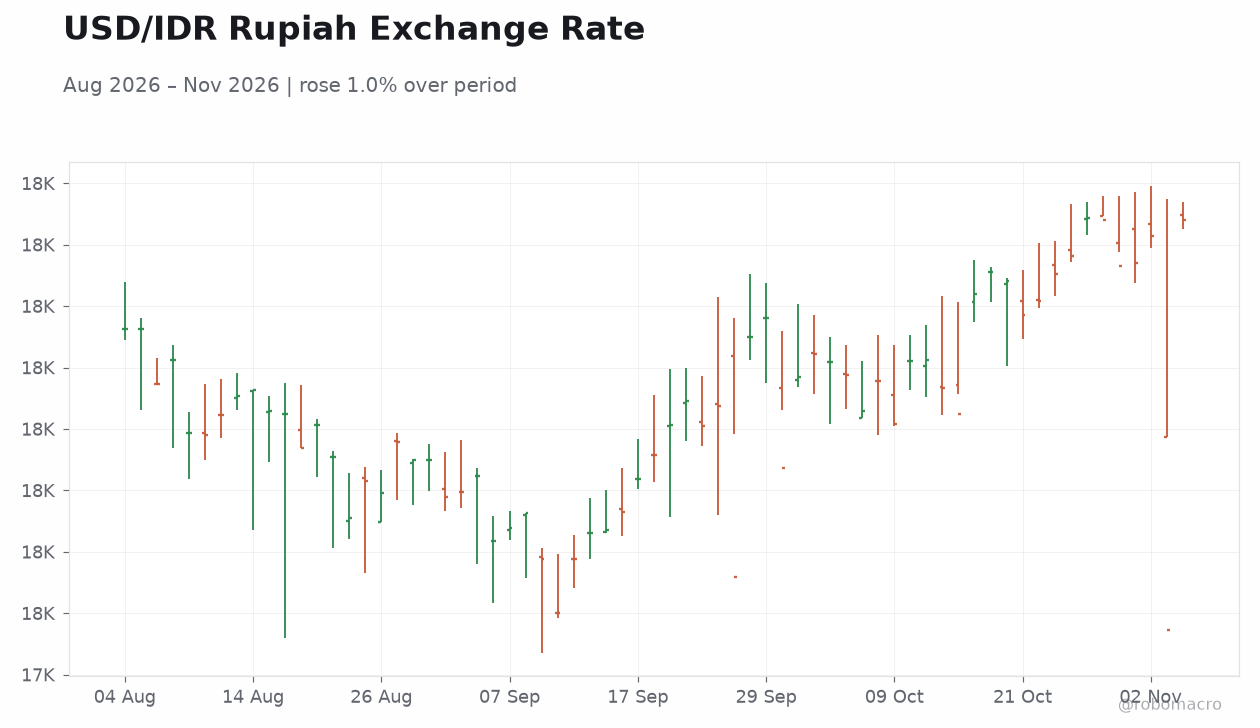
Rupiah Slide Deepens, BI Defends
Market Snapshot
| Asset | Level | Change |
|---|---|---|
| JCI | 4,904.29 | -3.78% |
| KLCI | 1,621.85 | +0.14% |
| STI | 5,269.29 | -0.65% |
| USD/IDR | 18,140.00 | +3.82% |
| USD/THB | 33.59 | -0.33% |
| USD/MYR | 4.06 | -0.18% |
| USD/PHP | 63.36 | +0.15% |
| USD/SGD | 1.28 | -0.09% |
| Brent Crude | 94.63 | -8.66% |
| Gold | 4,072.20 | +3.34% |
| Bitcoin | 80,361.78 | +3.90% |
| Indonesia 10Y Govt Yield | - | - |
| Thailand 10Y Govt Yield | - | - |
Prior Economic Events
| Data | Prior | Cons | Actual |
|---|---|---|---|
| No events available | |||
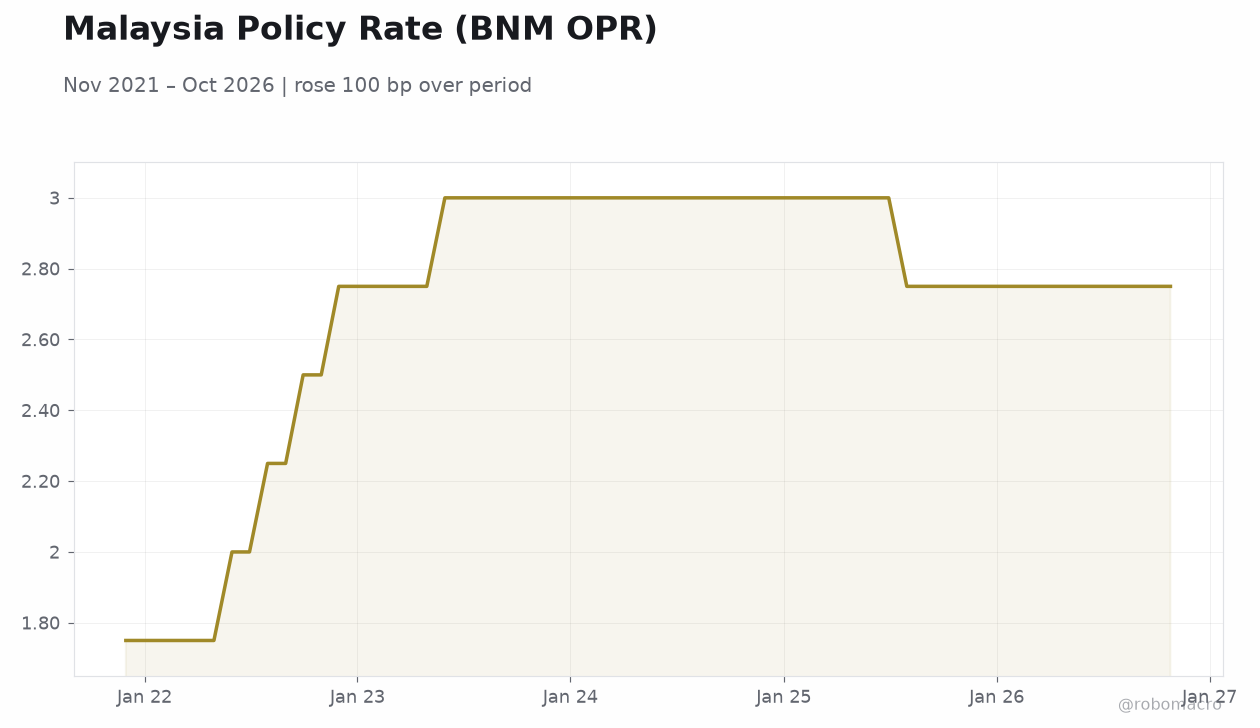 Malaysia Policy Rate (BNM OPR) | Type: macro_line | BNM Overnight Policy Rate (%): 2.75 (2026-10-26) | Range: 1.75–3 | Trend(4pt): 1.75,2.75,3,2.75
Today's Economic Events
| Data | Prior | Cons | Time |
|---|---|---|---|
| Inflation Rate Year-over-Year | 7.20 | 7.70 | 20:00 |
| GDP Growth Year-over-Year | 5.29 | 5.20 | 23:00 |
| Thursday (2026-11-05) | |||
| Central Bank Interest Rate Decision | 2.75 | - | 02:00 |
| Headline Unemployment Rate | 5.30 | - | 20:00 |
- Indonesian rupiah plunges 3.82% to 18,140/USD, forcing Bank Indonesia intervention as JCI tumbles 3.78% on MSCI weighting concerns
- Brent crude collapses 8.66% to $94.63/bbl while gold surges 3.34% to $4,072/oz, signaling risk-off rotation into safe havens
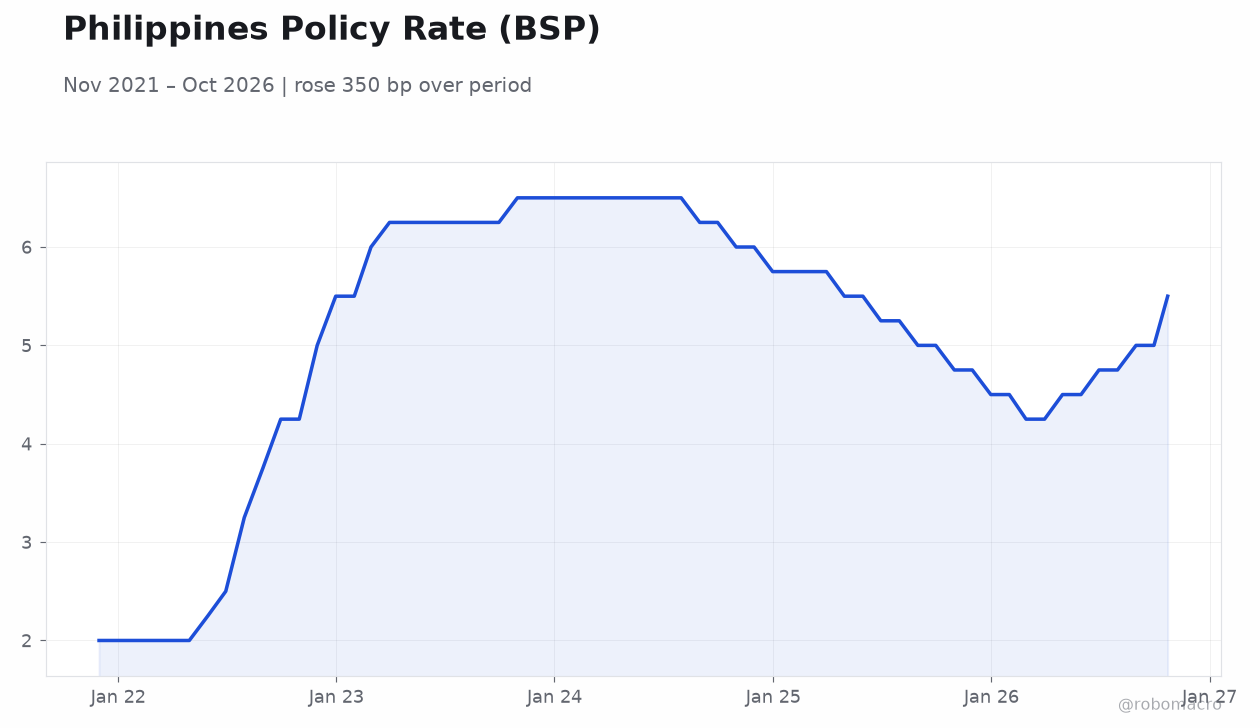
- Malaysia's BNM expected to hold policy rate at 2.75% Thursday; Philippines inflation consensus at 7.7% YoY vs previous 7.2%
Yesterday's Recap
Indonesia dominated ASEAN market action Tuesday as the rupiah plummeted 3.82% to 18,140/USD, its weakest level in recent memory, triggering aggressive Bank Indonesia intervention. The Jakarta Composite Index collapsed 3.78% to 4,904.29 amid MSCI's warning on market accessibility and liquidity concerns, though BI reported a robust $3.36 billion trade surplus for September 2026 and $13.23 billion in foreign portfolio inflows through October. Singapore's Straits Times Index fell 0.65% to 5,269.29, dragged lower by banking sector weakness, while Malaysia's KLCI edged up 0.14% to 1,621.85 as the ringgit strengthened 0.18% to 4.06/USD ahead of Thursday's BNM decision.
Thailand's baht appreciated 0.33% to 33.59/USD following S&P's affirmation of the kingdom's BBB+ sovereign rating with stable outlook. The Philippine peso weakened marginally by 0.15% to 63.36/USD as markets await today's inflation print. Regional bond markets saw limited activity with Indonesian and Thai 10-year yields unchanged in the data feed.
The Day Ahead
Philippines releases inflation data at 20:00 ET, with consensus expecting 7.7% YoY acceleration from the previous 7.2% print, which would reinforce BSP's hawkish stance. Indonesia publishes Q3 GDP growth at 23:00 ET, with consensus forecasting 5.2% YoY, a modest slowdown from the prior 5.29% reading that could further pressure the rupiah if confirmed. Malaysia's BNM announces its overnight policy rate decision early Thursday at 02:00 ET, with markets expecting a hold at 2.75% given stable inflation dynamics.
The Philippines also releases headline unemployment data Thursday at 20:00 ET, with the previous print at 5.3%. These releases will shape regional FX sentiment heading into the weekend.
Other Economic Notes
Thailand's cabinet approved a significant excise tax increase on fully imported battery electric vehicles to 35% from 10% effective January, a protectionist shift designed to support domestic EV production and attract investment from manufacturers like GAC, which just opened its first overseas battery plant in the kingdom. Google announced a massive $15 billion investment in Malaysia spanning 2027-2028, focused on data center infrastructure that underscores Malaysia's growing role as a regional digital hub. ↓ p.2