ASEAN Macro Daily(Beta Mode)
Rupiah Rallies on BI Hike, MSCI Retention Talks
Market Snapshot
| Asset | Level | Change |
|---|---|---|
| JCI | 5,215.85 | +1.35% |
| KLCI | 1,549.05 | -0.48% |
| STI | 4,953.81 | -0.43% |
| USD/IDR | 18,131.00 | -0.85% |
| USD/THB | 33.90 | -0.35% |
| USD/MYR | 4.11 | +0.06% |
| USD/PHP | 63.71 | -0.29% |
| USD/SGD | 1.29 | -0.01% |
| Brent Crude | 88.50 | -0.97% |
| Gold | 3,555.10 | -2.64% |
| Bitcoin | 59,890.87 | -2.16% |
| Indonesia 10Y Govt Yield | - | - |
| Thailand 10Y Govt Yield | - | - |
Prior Economic Events
| Data | Prior | Cons | Actual |
|---|---|---|---|
| No events available | |||
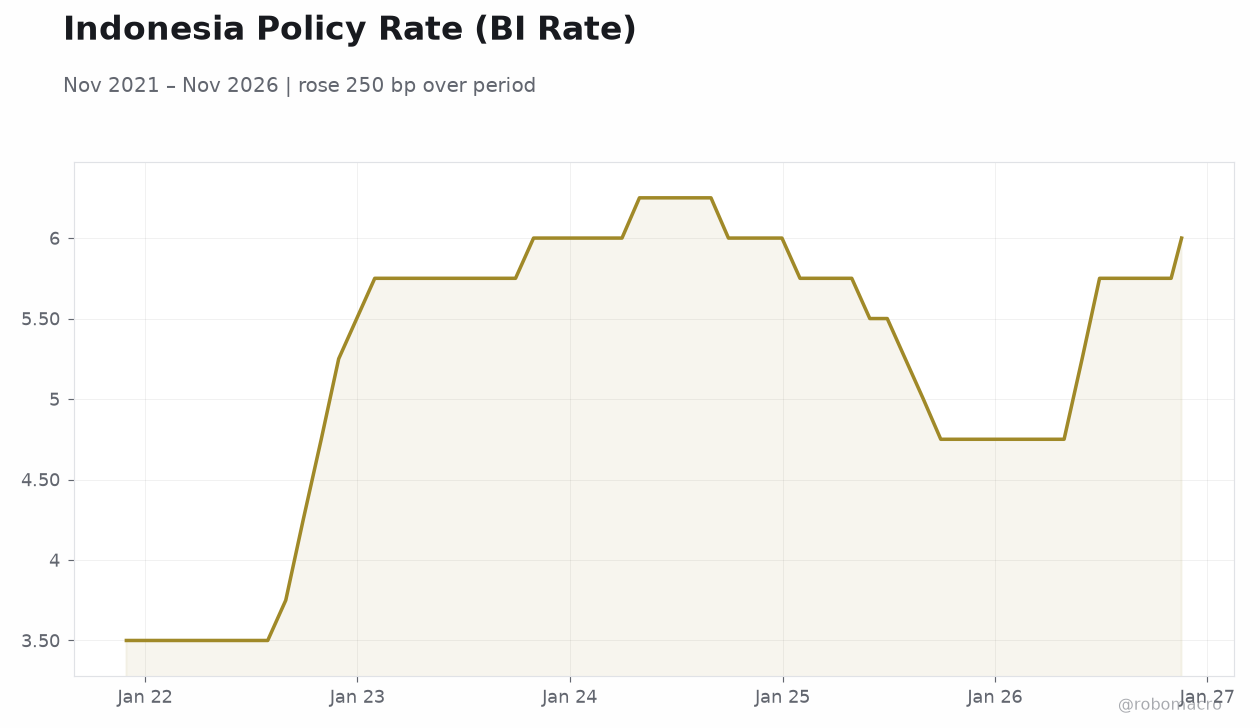 Indonesia Policy Rate (BI Rate) | Type: macro_line | BI policy rate (%): 6 (2026-11-18) | Range: 3.5–6.25 | Trend(5pt): 3.5,5.75,6.25,5,6
Today's Economic Events
| Data | Prior | Cons | Time |
|---|---|---|---|
| No events available | |||
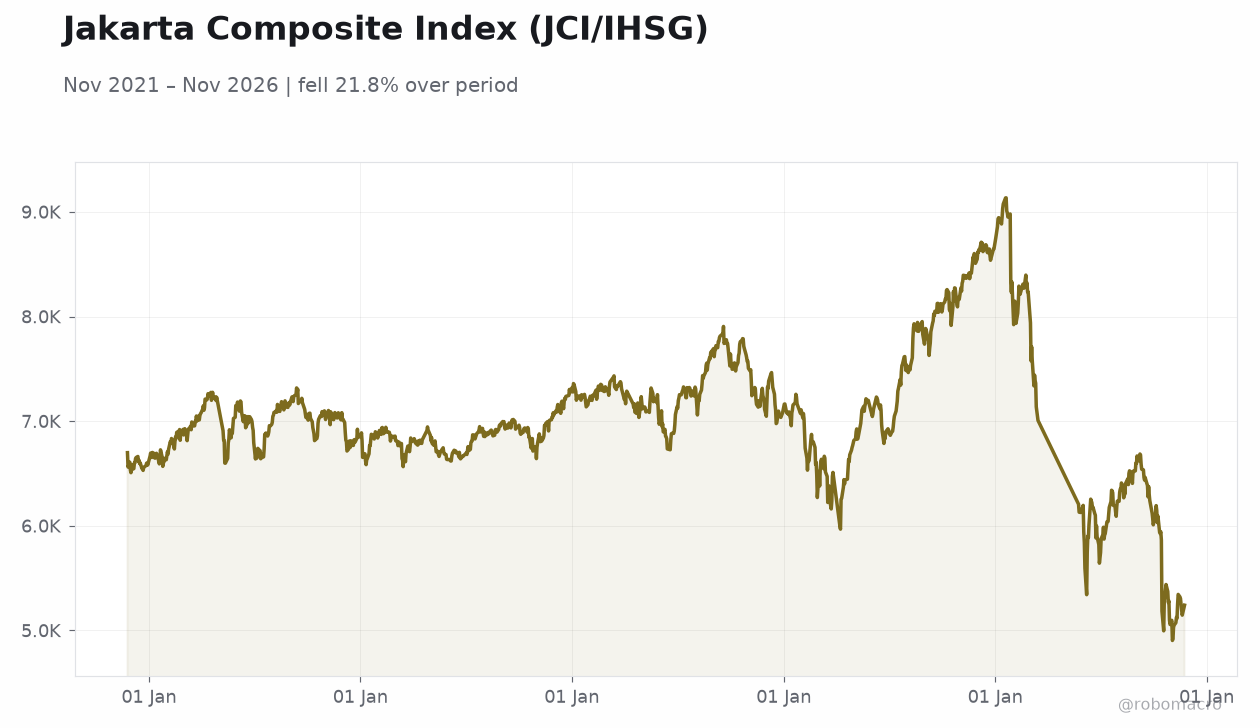
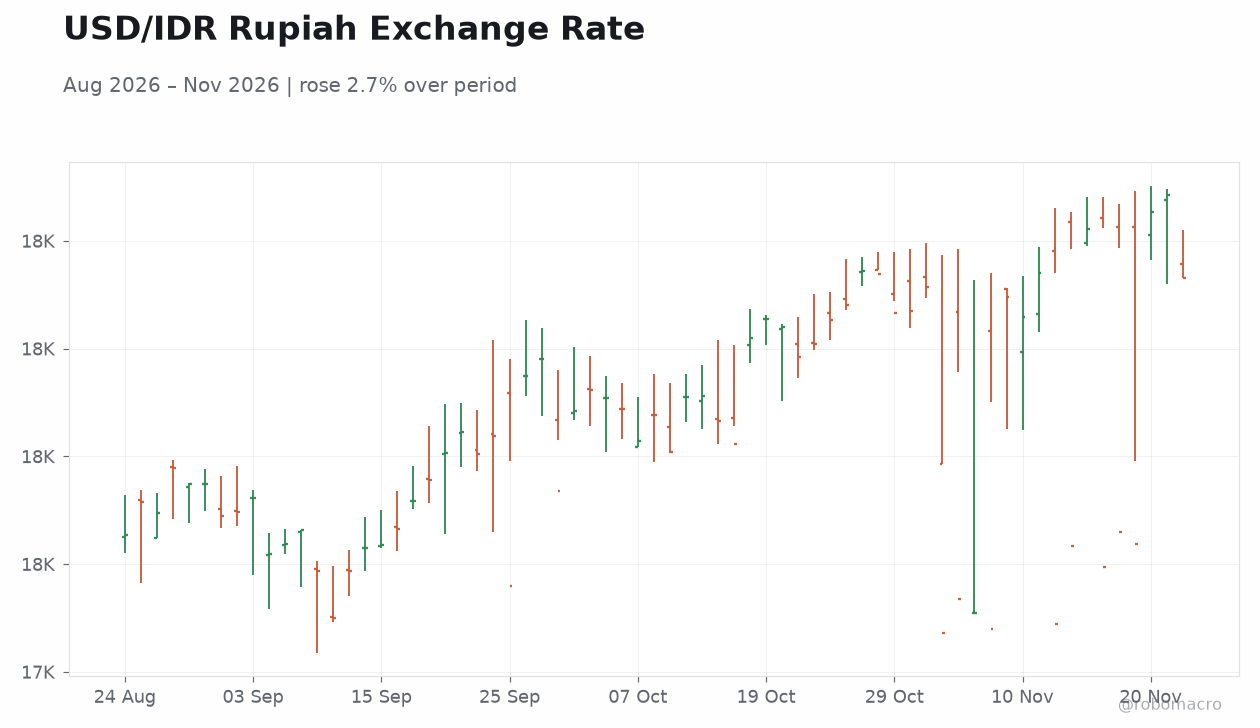
- Bank Indonesia's 25bp hike to 6.00% and MSCI retention talks drive USD/IDR down 0.85% to 18,131, leading regional FX gains
- JCI outperforms ASEAN peers with +1.35% while KLCI and STI slip on cautious sentiment ahead of BNM decision
- Gold's 2.64% plunge and Brent's 0.97% decline signal shifting risk appetite as markets await regional policy clarity
Yesterday's Recap
Indonesia dominated ASEAN market action as the rupiah strengthened 0.85% to 18,131 per dollar, extending gains following Bank Indonesia's 25bp rate hike to 6.00% on November 18 and ongoing MSCI retention discussions with the Prabowo administration. The JCI surged 1.35% to 5,215.85, outperforming regional peers as foreign investors responded positively to BI's aggressive FX defense posture. Malaysia's KLCI declined 0.48% to 1,549.05 amid cautious positioning ahead of the upcoming BNM policy decision, while Singapore's STI fell 0.43% to 4,953.81.
The baht appreciated 0.35% to 33.90, benefiting from broader dollar weakness, while the Philippine peso gained 0.29% to 63.71. The Malaysian ringgit was the sole regional laggard, edging 0.06% weaker to 4.11. Commodity markets saw significant pressure, with gold tumbling 2.64% to $3,555.10 and Brent crude declining 0.97% to $88.50, reflecting reduced safe-haven demand.
The Day Ahead
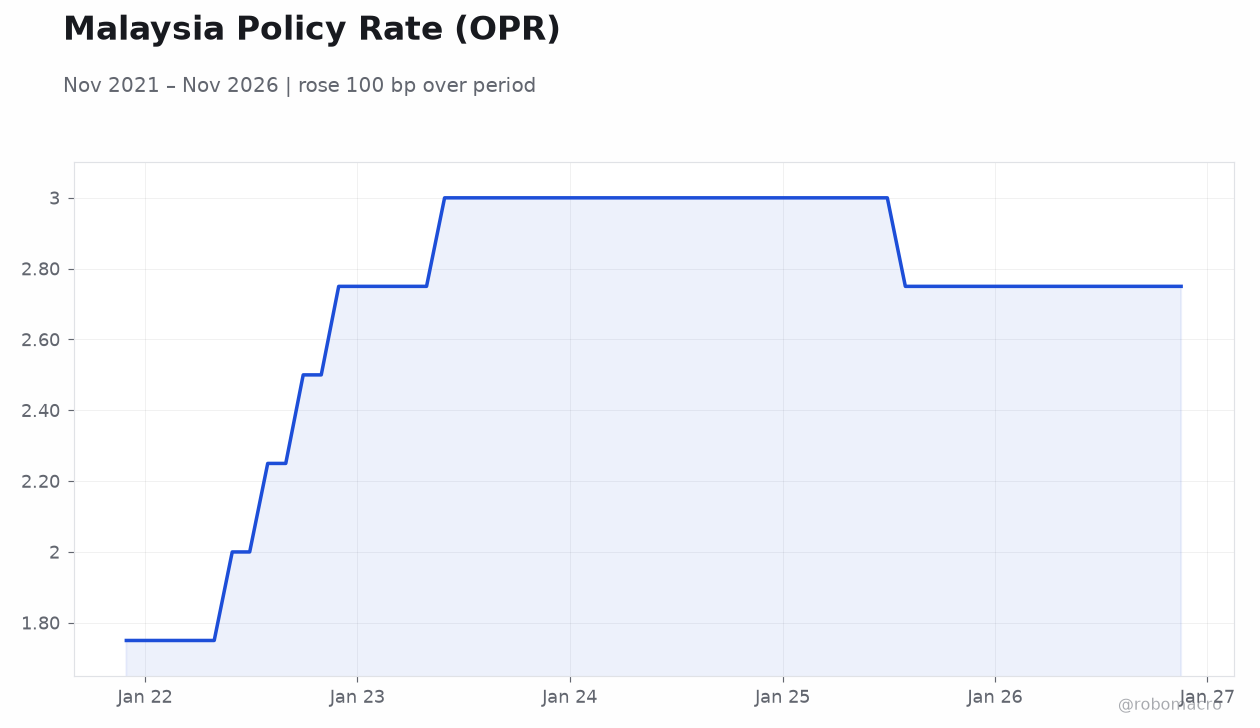
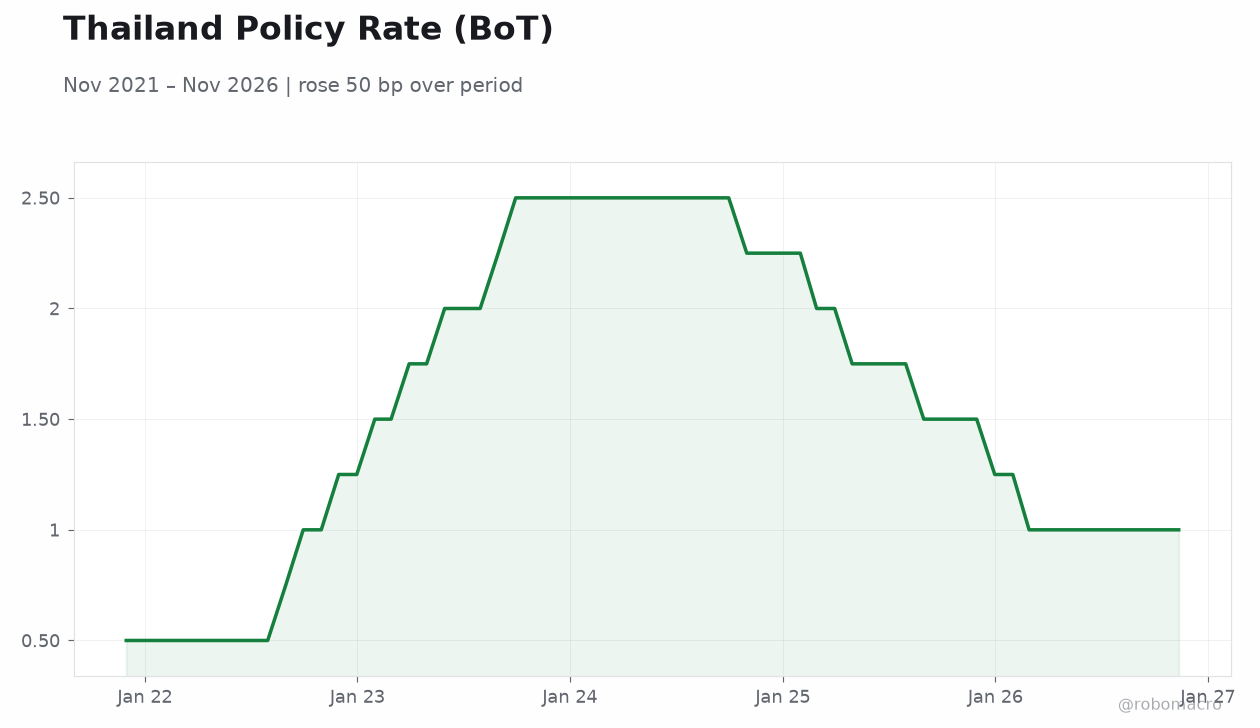
Malaysia's bond market braces for a potential policy reset as BNM's decision looms, with economists increasingly expecting the overnight policy rate to rise to 3.0% by Q1 2027 from the current 2.75%. Singapore's MAS is expected to maintain its NEER band slope, with markets watching for any adjustment signals given regional inflation dynamics. Thailand's CPI at 3.90% remains above the BoT's comfort zone, keeping pressure on the central bank despite its 1.00% policy rate.
Indonesia's parliament continues deliberations on the 2027 budget framework, with fiscal deficit targets under scrutiny. Vietnam's manufacturing PMI and trade data remain in focus as the country cements its position as a supply-chain diversification beneficiary.
Other Economic Notes
Malaysia is expanding local-currency settlement mechanisms in regional trade, reducing dollar dependence and potentially lowering transaction costs for intra-ASEAN commerce. S&P Global projects Malaysia's growth to slow to 5.1% in 2027 from an estimated 5.5% this year, reflecting moderating external demand. Indonesia's economy remains fundamentally solid according to government sources, with investors eyeing 2027 opportunities despite political noise surrounding the Prabowo administration.
↓ p.2