ASEAN Macro Daily(Beta Mode)
Rupiah Hits Record Low Despite BI Hike; MY GDP Beats
Market Snapshot
| Asset | Level | Change |
|---|---|---|
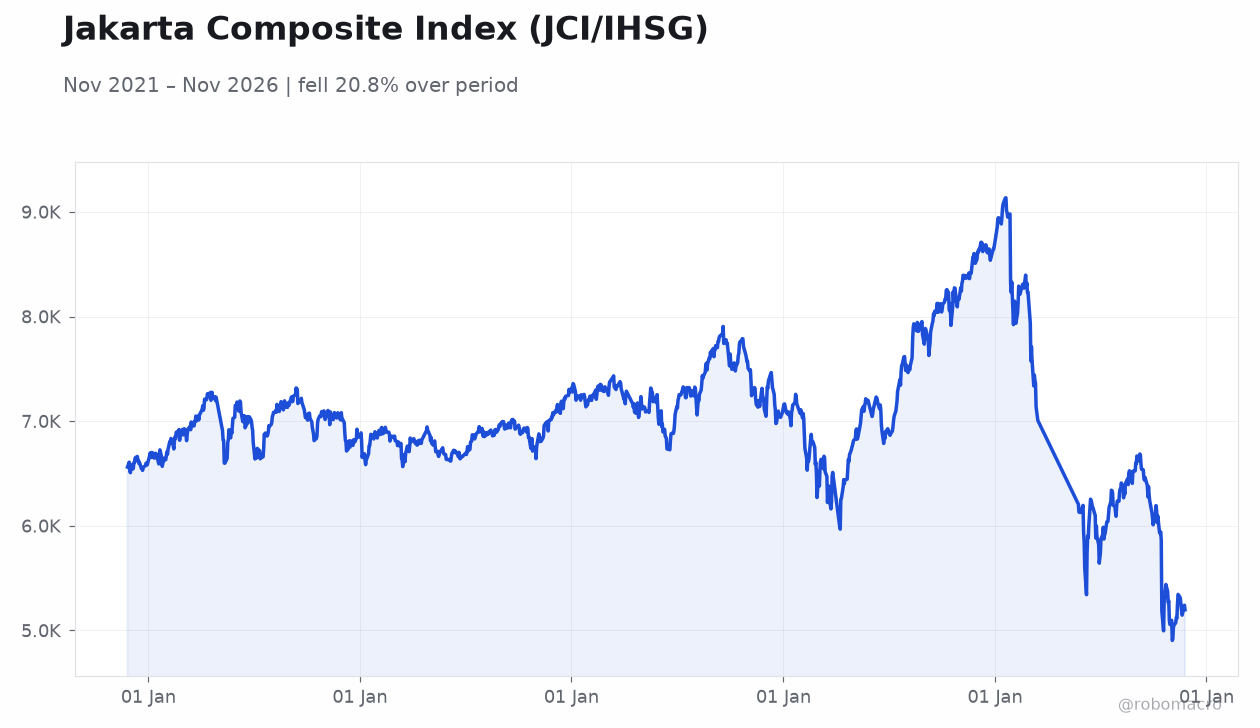
| JCI | 5,241.59 | +0.49% |
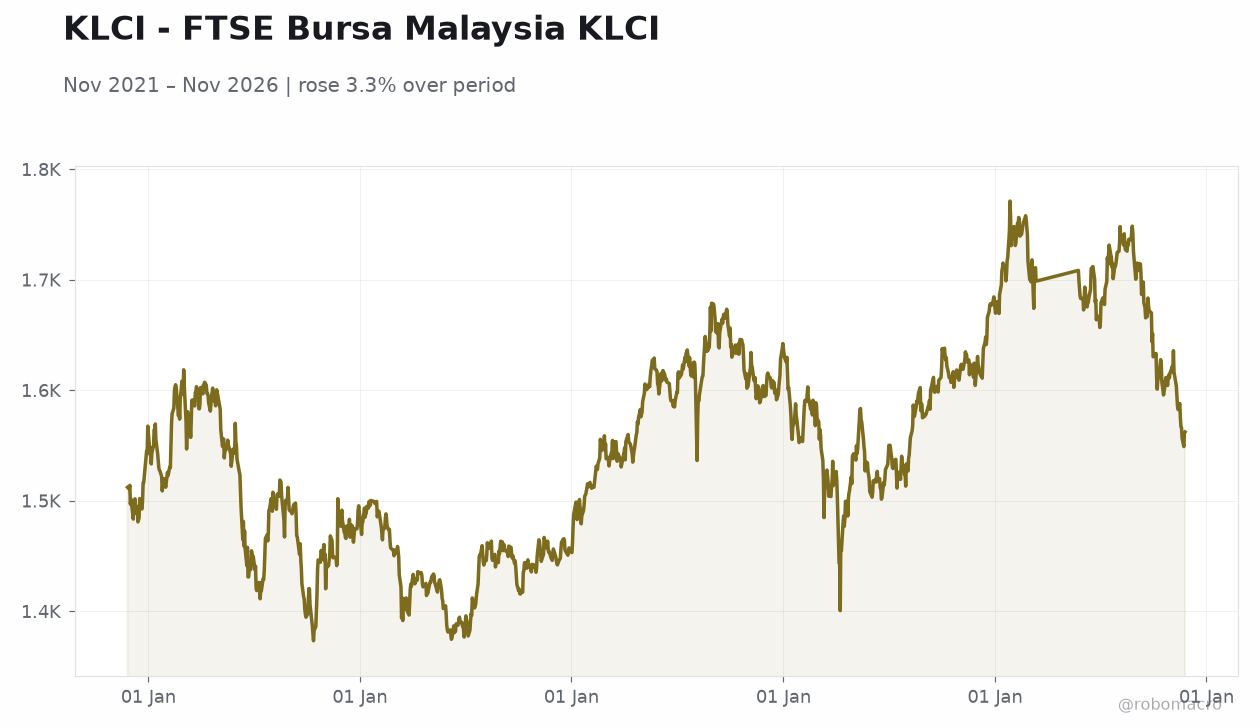
| KLCI | 1,561.68 | +0.82% |
| STI | 4,958.87 | +0.10% |
| USD/IDR | 18,303.00 | +0.67% |
| USD/THB | 34.02 | +0.16% |
| USD/MYR | 4.12 | -0.08% |
| USD/PHP | 63.68 | +0.51% |
| USD/SGD | 1.29 | -0.12% |
| Brent Crude | 90.82 | -0.63% |
| Gold | 3,617.80 | +1.57% |
| Bitcoin | 60,034.92 | +0.48% |
| Indonesia 10Y Govt Yield | - | - |
| Thailand 10Y Govt Yield | - | - |
Prior Economic Events
| Data | Prior | Cons | Actual |
|---|---|---|---|
| No events available | |||
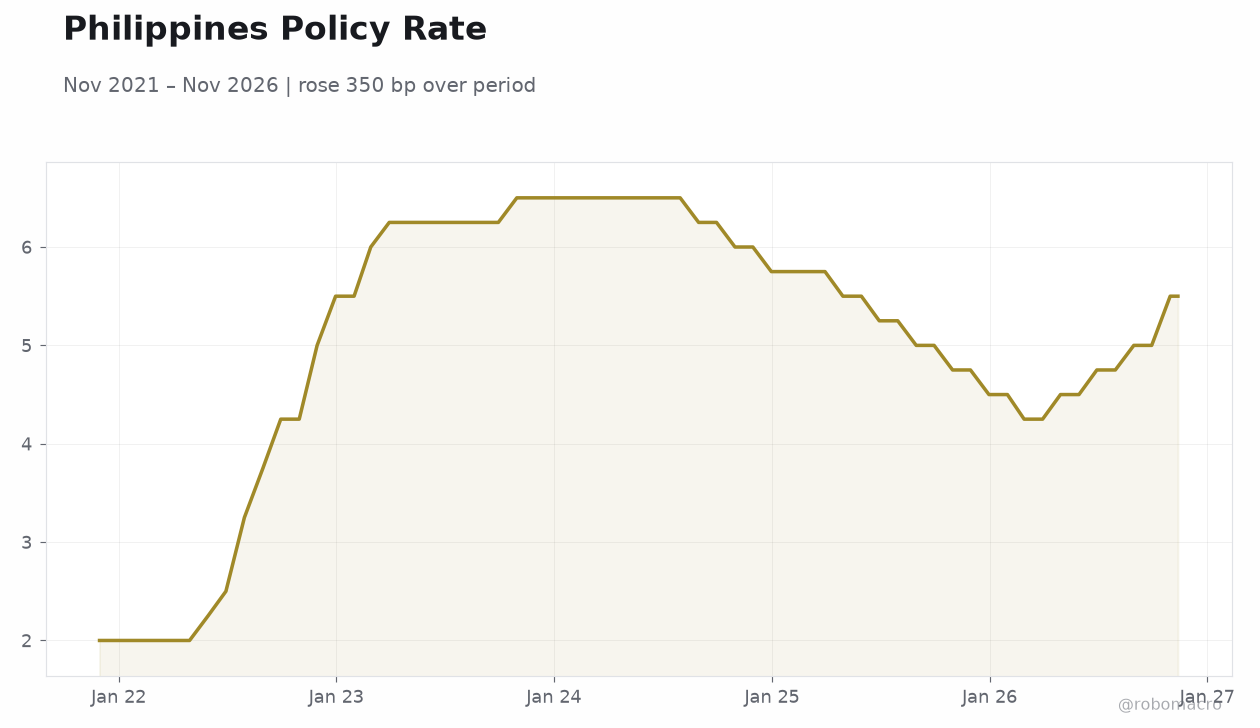 Philippines Policy Rate | Type: macro_line | BSP policy rate (%): 5.5 (2026-11-13) | Range: 2–6.5 | Trend(5pt): 2,6,6.5,5,5.5
Today's Economic Events
| Data | Prior | Cons | Time |
|---|---|---|---|
| No events available | |||
- IDR slides to a fresh record low near 18,280/USD despite BI's +25bp hike to 6.00% on Nov 18, with BI guiding 6% through 2027.
- Malaysia's Q3 GDP grew 5.5% y/y, beating forecasts, while MYR was the region's sole gainer (-0.08%).
- Regional equities firmed (KLCI +0.82%, JCI +0.49%) even as gold jumped 1.57% and Brent eased 0.63%.
Yesterday's Recap
Indonesia dominated the session as the rupiah printed a record low of 18,280/USD before recovering modestly to 18,303 (+0.67% on the day), a striking move given Bank Indonesia's +25bp hike to 6.00% at its Nov 18 decision. Governor Perry Warjiyo signaled the benchmark will hold at 6% through 2027, framing the stance as a two-handed defense combining hawkish rates with targeted liquidity management. Jakarta equities nonetheless rose, with the JCI up 0.49% to 5,241.59, suggesting some stabilization in risk appetite.
Malaysia was the standout macro print: Q3 GDP expanded 5.5% y/y, beating consensus, and the KLCI gained 0.82% to 1,561.68 while the ringgit edged 0.08% stronger to 4.12/USD. Singapore's STI added 0.10% to 4,958.87 and SGD firmed 0.12% to 1.29, while the baht softened 0.16% to 34.02 and the peso slipped 0.51% to 63.68. Thailand's BoT flagged an informal economy at 48% of GDP, the 14th highest globally, as it moves to curb gray money.
The Day Ahead
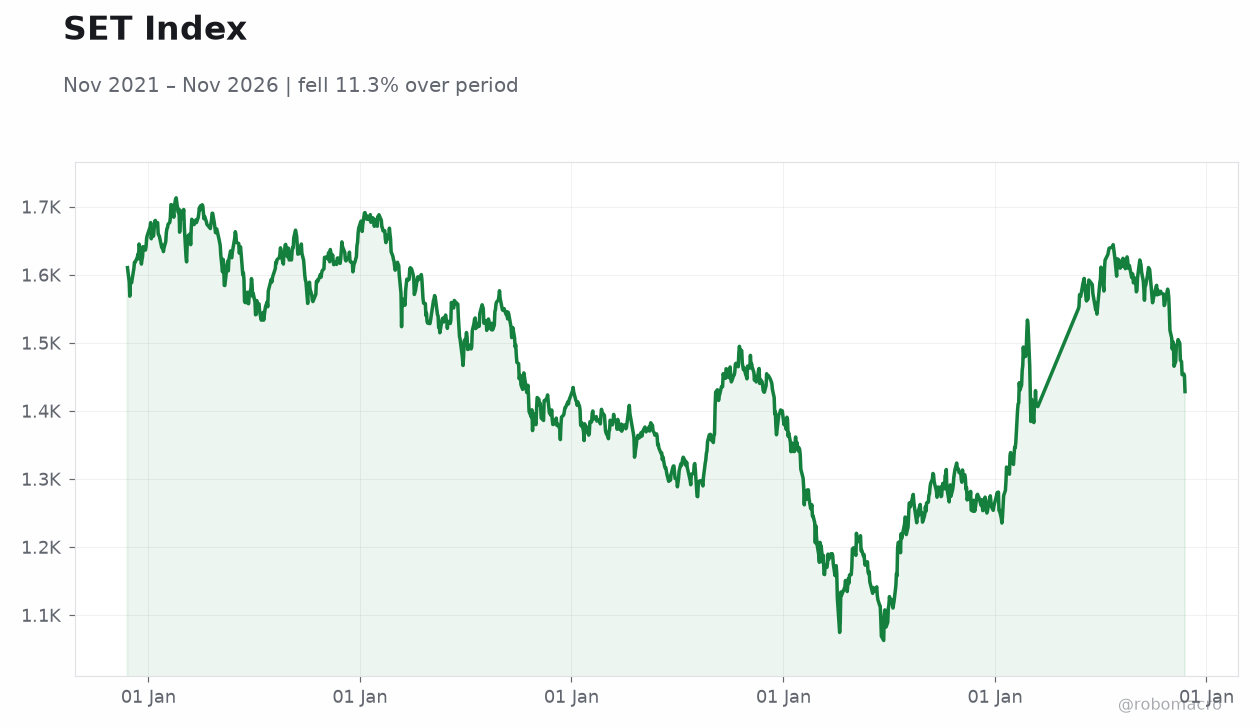
The ASEAN calendar is empty for Wednesday, leaving markets to digest the rupiah's record-low print and Malaysia's above-forecast GDP. Attention turns to whether BI follows through with the liquidity-tightening leg of its defense, and to MSCI-related headlines as Indonesia pushes reforms to retain index status. Thailand's public-debt trajectory near the 70% cap will keep fiscal headlines in focus.
Singapore and Malaysia trade data are due later in the week, while Vietnam remains quiet ahead of month-end. With no scheduled releases, FX and rates will take their cue from global risk sentiment and dollar direction.
Other Economic Notes
Thailand's fiscal arithmetic is tightening, with public debt approaching the 70% ceiling and the government facing harder spending choices. The BoT's push to formalize the 48%-of-GDP informal economy is a structural positive but a slow-burn productivity story. Malaysia is expanding local-currency settlement in regional trade, a modest but deliberate step toward reducing dollar dependence.
Indonesia's MSCI status remains a live risk, with a Permata Bank economist warning reforms are "necessary but not sufficient" to avert a downgrade. The World Bank and Jakarta are discussing value-added seaweed development, part of the downstreaming agenda.