Andeans Macro Daily(Beta Mode)
Andean FX Weakens as Copper, Gold Advance
Market Snapshot
| Asset | Level | Change |
|---|---|---|
| MSCI Colombia | 9.02 | +0.00% |
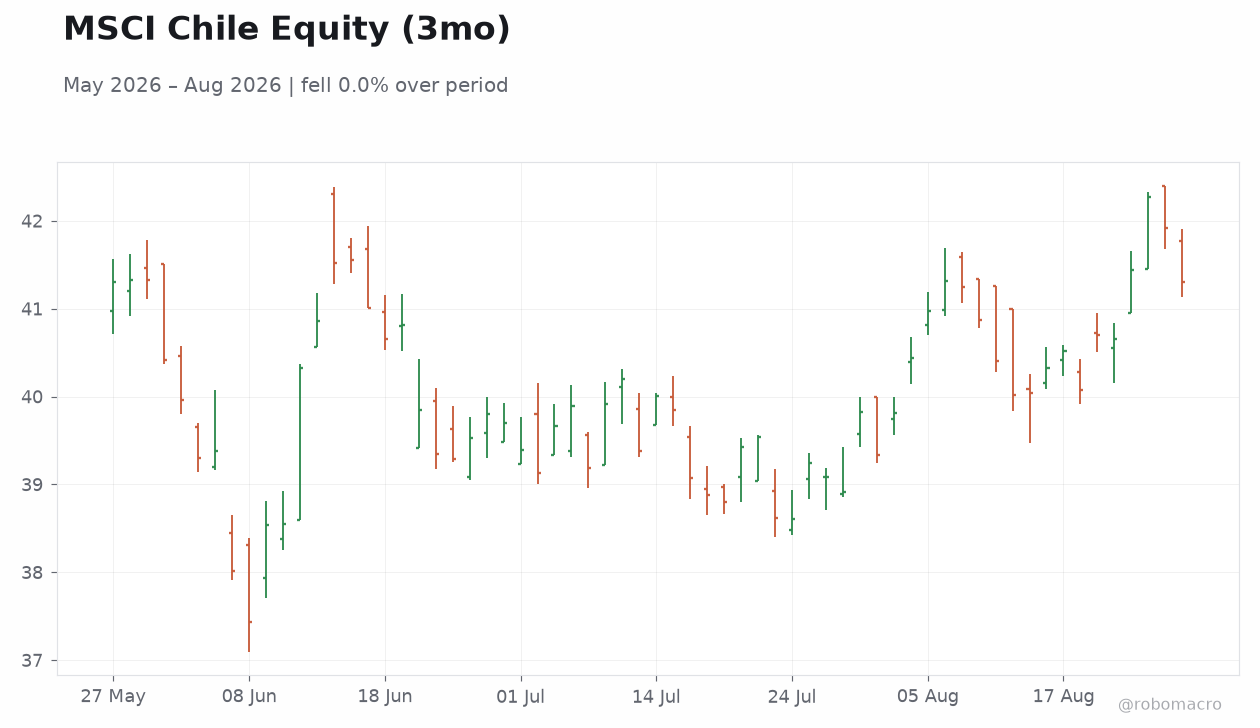
| MSCI Chile | 41.30 | -1.48% |
| MSCI Peru | 94.29 | -0.72% |
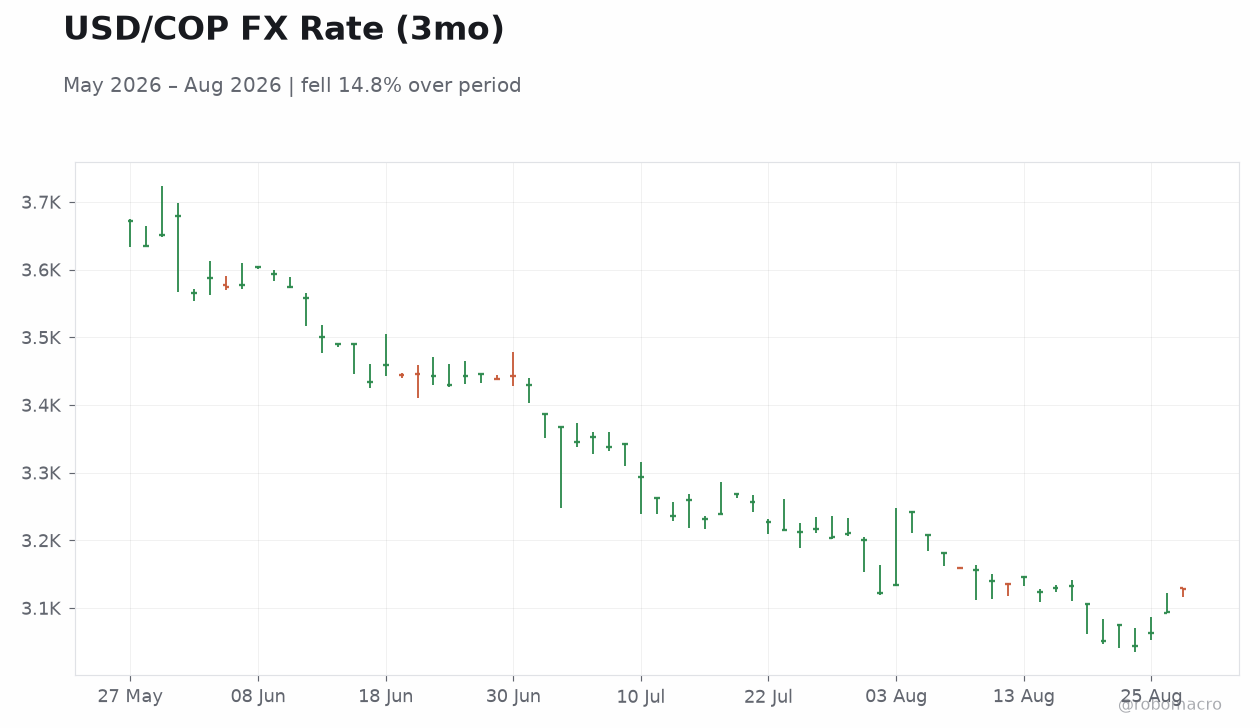
| USD/COP | 3,128.57 | +1.11% |
| USD/CLP | 920.93 | +0.89% |
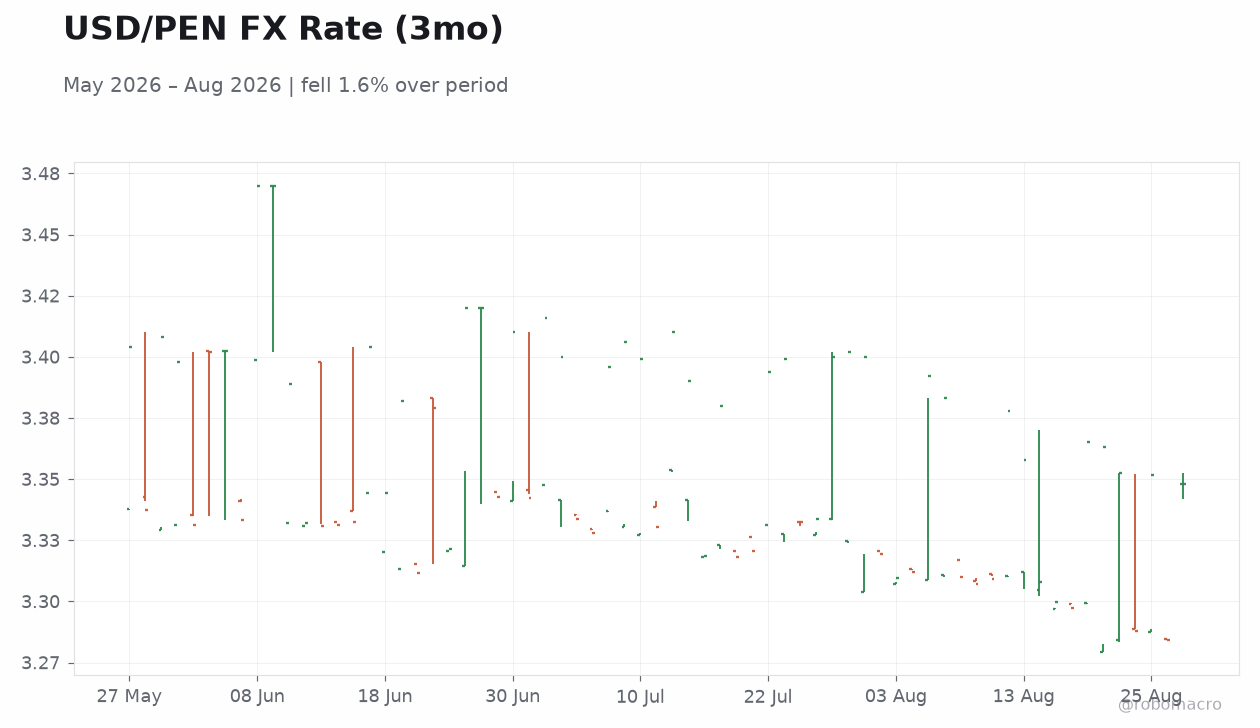
| USD/PEN | 3.35 | +1.95% |
| Copper | 6.65 | +0.90% |
| Gold | 4,643.40 | +0.98% |
| Brent Crude | 87.38 | -0.52% |
| Bitcoin | 79,678.65 | +0.82% |
| Colombia 10Y Govt Yield | - | - |
| Chile Short-term Rate | 4.50% | +0.00% |
Prior Economic Events
| Data | Prior | Cons | Actual |
|---|---|---|---|
| No events available | |||
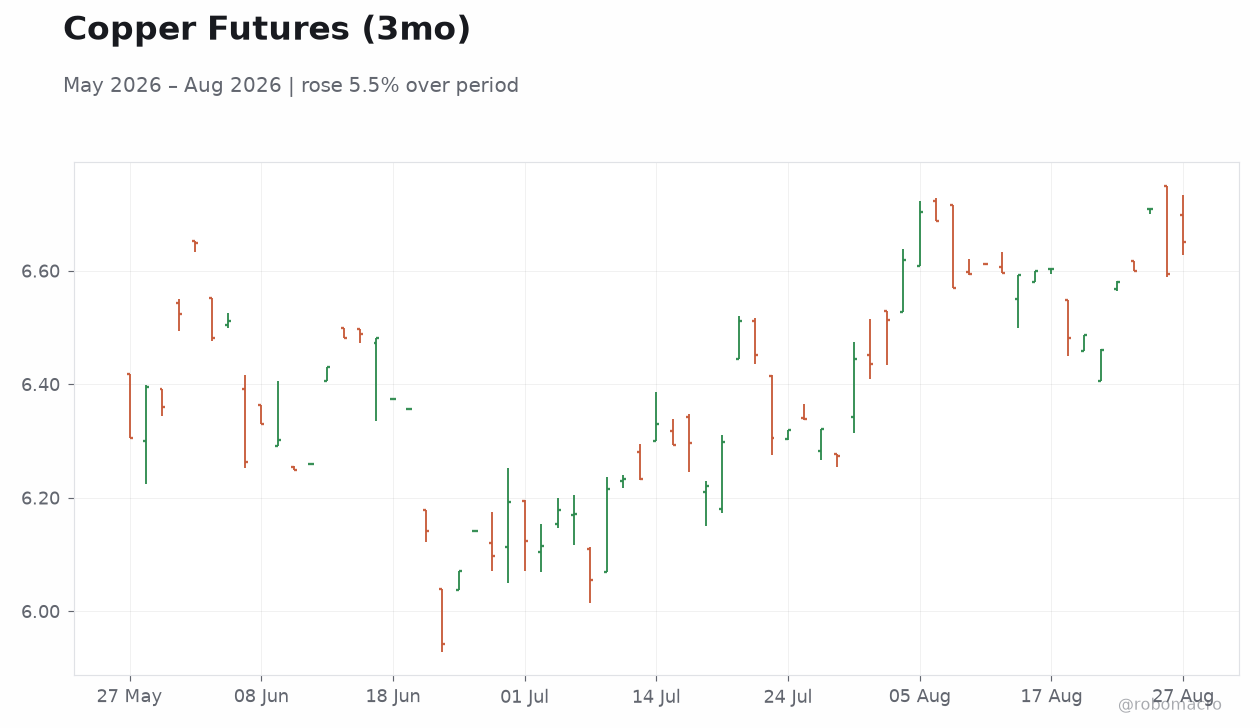 Copper Futures (3mo) | Type: market_hloc | USD per lb: 6.65 (2026-08-27) | Range: 5.943–6.709 | Trend(5pt): 6.305,6.374,6.33,6.703,6.65
Today's Economic Events
| Data | Prior | Cons | Time |
|---|---|---|---|
| No events available | |||
- MSCI Chile and Peru decline while Colombia holds flat amid regional currency depreciation
- PEN leads losses as USD/PEN jumps 1.95%, with COP and CLP also weaker versus USD
- Copper and gold rise, offering support to Chile and Peru mining revenues despite Brent crude dip
Yesterday's Recap
Equity markets across the Andean bloc posted mixed results on August 26. MSCI Chile dropped 1.48% to 41.30 while MSCI Peru eased 0.72% to 94.29, reflecting profit-taking in mining-related names. MSCI Colombia stayed unchanged at 9.02.
Currencies came under broad pressure, with USD/PEN surging 1.95% to 3.35, USD/COP climbing 1.11% to 3,128.57 and USD/CLP advancing 0.89% to 920.93. Copper gained 0.90% to 6.65 and gold rose 0.98% to 4,643.40, providing a partial offset for Chile and Peru exporters. Brent crude fell 0.52% to 87.38, which could weigh on Colombia’s fiscal receipts from oil.
No major economic data releases occurred in any of the three countries.
The Day Ahead
No scheduled releases or central-bank meetings are set for August 28 in Colombia, Chile or Peru, leaving markets to track external drivers. Elevated copper prices near 6.65 should continue to underpin sentiment toward Chilean and Peruvian assets. Any fresh comments from BanRep, BCCh or BCRP officials on inflation or FX intervention could trigger intraday moves.
Global risk appetite, shaped by U.S. and euro-area indicators, will likely dictate flows into Andean equities and local-currency bonds. Lithium-sector developments in Chile remain a secondary focus for medium-term investors.
Other Economic Notes
Commodity price strength continues to shape fiscal and external balances across the region. Chile’s mining sector benefits directly from copper at 6.65, while Peru’s trade surplus gains from both copper and gold advances. Colombia faces a more mixed picture as lower Brent prices offset any modest gains in non-oil exports.
Persistent currency depreciation raises imported inflation risks, particularly for food and energy items in all three economies. Regional equity valuations remain sensitive to shifts in global metals demand and U.S. dollar strength.
Global Macro News
The euro-area backdrop remains supportive of commodity demand, with the ECB deposit rate at 2.25% and Eurozone CPI at 2.90% year-over-year. <i>↓ p.2</i>