Andeans Macro Daily(Beta Mode)
Andean Equities Advance on Copper Gains
Market Snapshot
| Asset | Level | Change |
|---|---|---|
| MSCI Colombia | 9.02 | +0.00% |
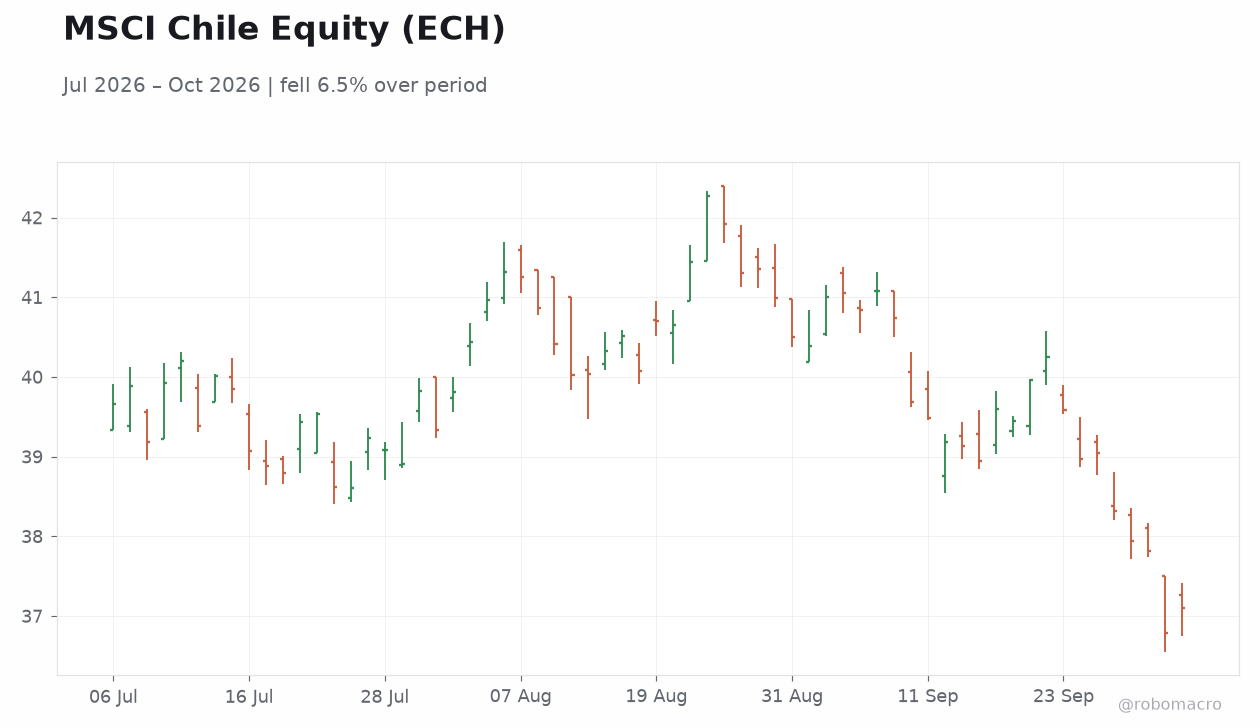
| MSCI Chile | 37.10 | +0.84% |
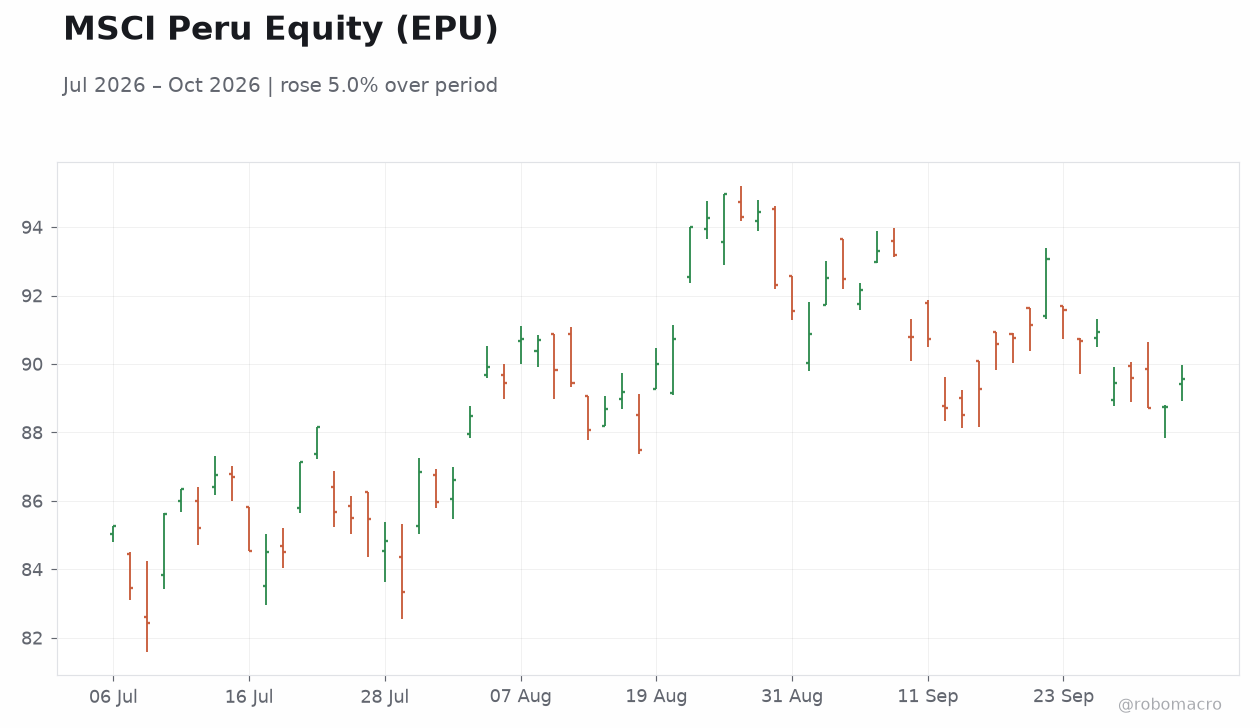
| MSCI Peru | 89.56 | +0.91% |
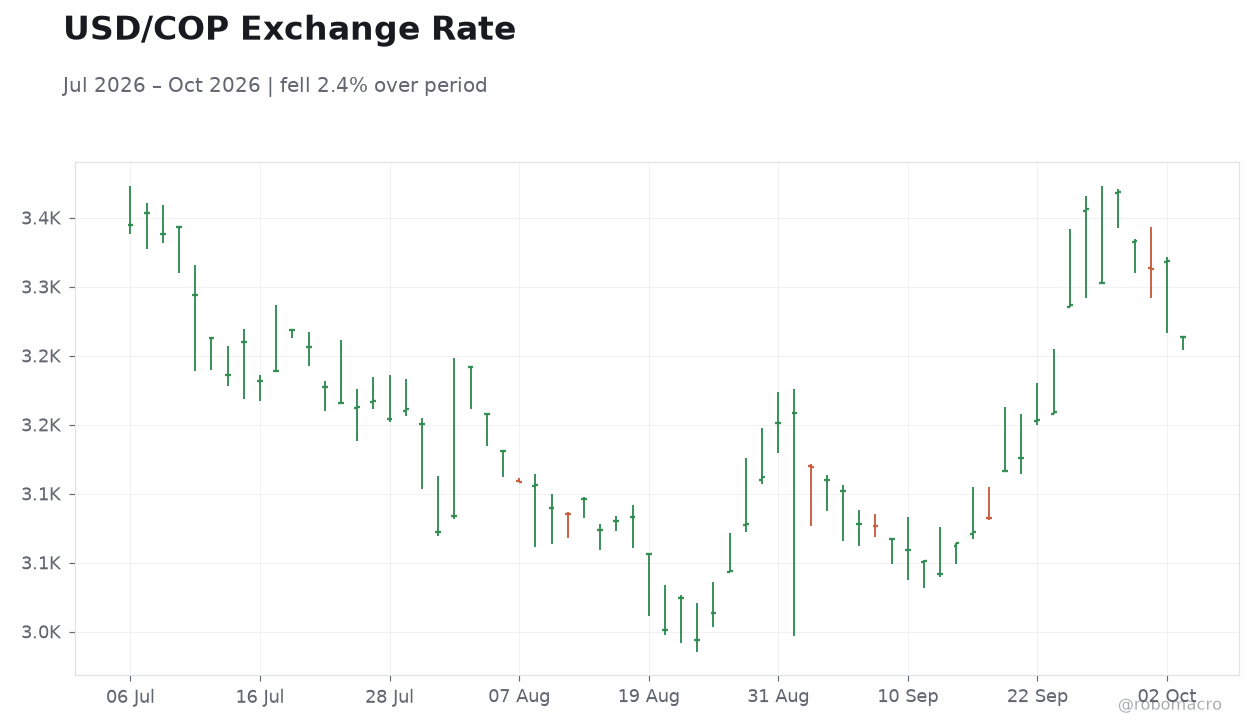
| USD/COP | 3,263.30 | -1.66% |
| USD/CLP | 988.85 | +0.78% |
| USD/PEN | 3.45 | +2.97% |
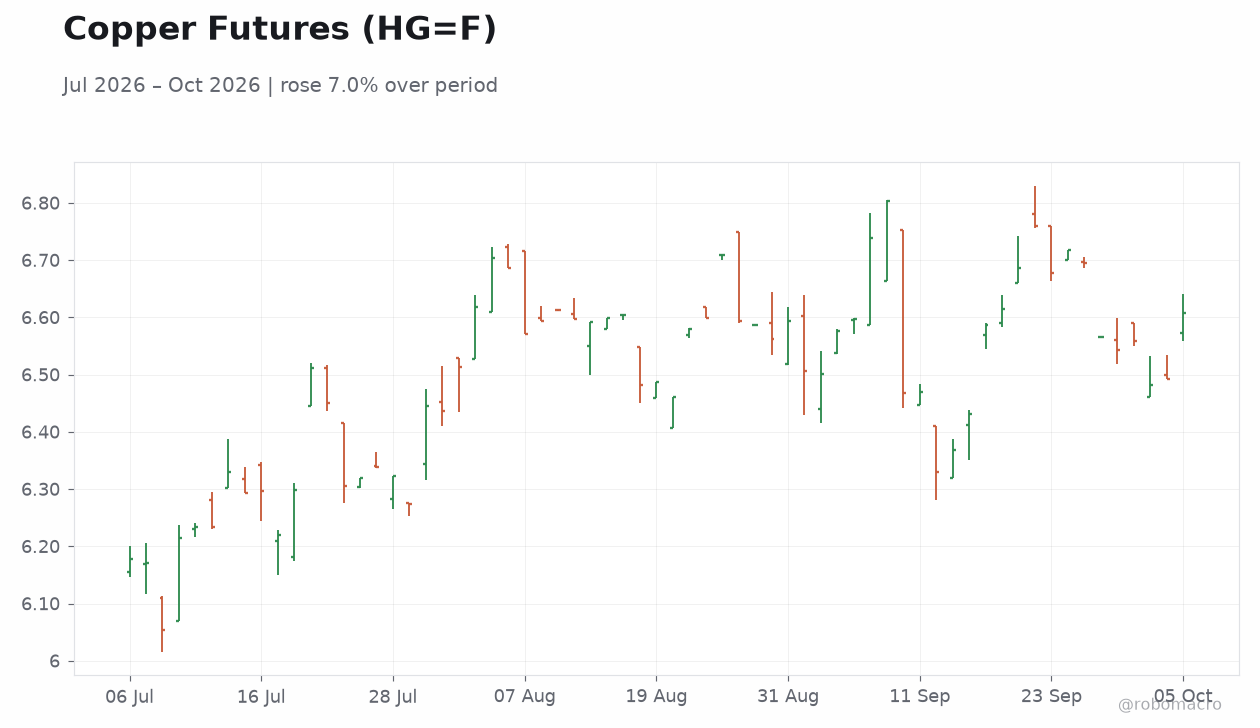
| Copper | 6.61 | +1.79% |
| Gold | 4,188.20 | +0.62% |
| Brent Crude | 102.75 | +0.49% |
| Bitcoin | 86,008.65 | -0.55% |
| Colombia 10Y Govt Yield | - | - |
| Peru 10Y Govt Yield | - | - |
Prior Economic Events
| Data | Prior | Cons | Actual |
|---|---|---|---|
| No events available | |||
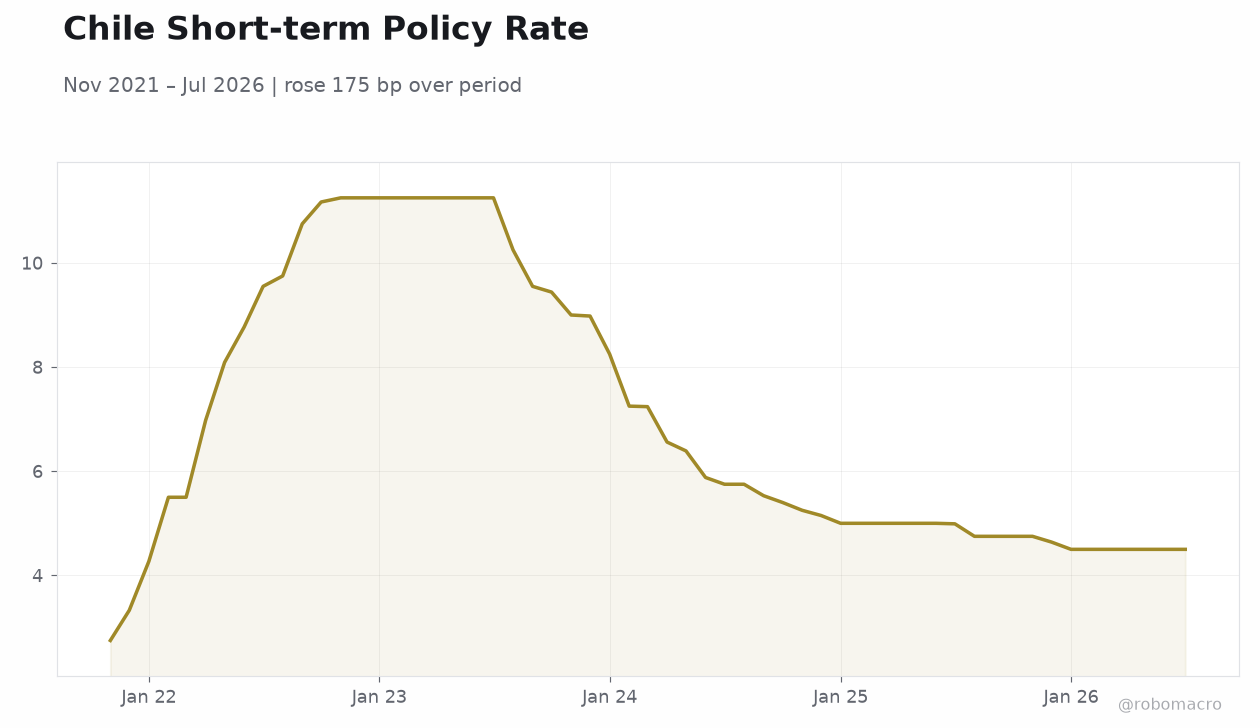 Chile Short-term Policy Rate | Type: macro_line | Short-term rate %: 4.5 (2026-07-01) | Range: 2.75–11.25 | Trend(5pt): 2.75,11.25,7.24,5,4.5
Today's Economic Events
| Data | Prior | Cons | Time |
|---|---|---|---|
| No events available | |||
- MSCI Chile rose 0.84% and MSCI Peru gained 0.91% as copper climbed 1.79% to 6.61
- COP strengthened 1.66% while CLP and PEN weakened against the USD
- Brent crude and gold posted modest gains supporting Colombia and mining exports
Yesterday's Recap
No economic data releases occurred across Colombia, Chile or Peru on October 4. Equity markets showed resilience with MSCI Chile advancing 0.84% to 37.10 and MSCI Peru rising 0.91% to 89.56 while MSCI Colombia stayed flat at 9.02. The Colombian peso strengthened as USD/COP fell 1.66% to 3,263.30.
In contrast USD/CLP increased 0.78% to 988.85 and USD/PEN jumped 2.97% to 3.45. Copper’s advance to 6.61 offered direct support to Chile and Peru through higher export and royalty revenues. Gold rose 0.62% to 4,188.20 and Brent crude edged up 0.49% to 102.75 providing additional lift to mining and oil-linked fiscal balances in the region.
Weak US employment data released Friday added to global growth concerns and may keep external demand for Andean commodities in focus. Brazil’s surprise August industrial output decline highlights regional slowdown risks that could spill into trade and investment flows with Chile, Colombia and Peru.
The Day Ahead
The calendar remains empty for October 5 and 6 with no CPI, GDP, trade or central-bank meetings scheduled in any of the three countries. Markets will focus on external commodity flows and any follow-through from yesterday’s copper and oil price gains. Chile and Peru remain most sensitive to further moves in copper while Colombia tracks Brent for fiscal and current-account effects.
FX volatility could persist given the divergent moves in COP versus CLP and PEN. Investors will also monitor any political or fiscal signals from Brazil that might influence regional risk sentiment. Fiscal uncertainties ahead of Brazil’s elections may keep volatility elevated across Latin American currencies and sovereign spreads.
Higher copper and oil prices continue to improve external accounts for Chile, Peru and Colombia respectively though sustained gains are required to ease FX pressure meaningfully.
Other Economic Notes
Lithium policy developments in Chile remain an important medium-term theme for investment and fiscal revenues. Weak US employment data released Friday added to global growth concerns and may keep external demand for Andean commodities in focus. Brazil’s surprise August industrial output decline highlights regional slowdown risks that could spill into trade and investment flows with Chile, Colombia and Peru.
↓ p.2