Andeans Macro Daily(Beta Mode)
Andean FX Slides as Copper, Gold Retreat
Market Snapshot
| Asset | Level | Change |
|---|---|---|
| MSCI Colombia | 9.02 | +0.00% |
| MSCI Chile | 33.80 | -1.29% |
| MSCI Peru | 73.20 | -2.44% |
| USD/COP | 3,422.87 | +1.96% |
| USD/CLP | 1,016.55 | +1.07% |
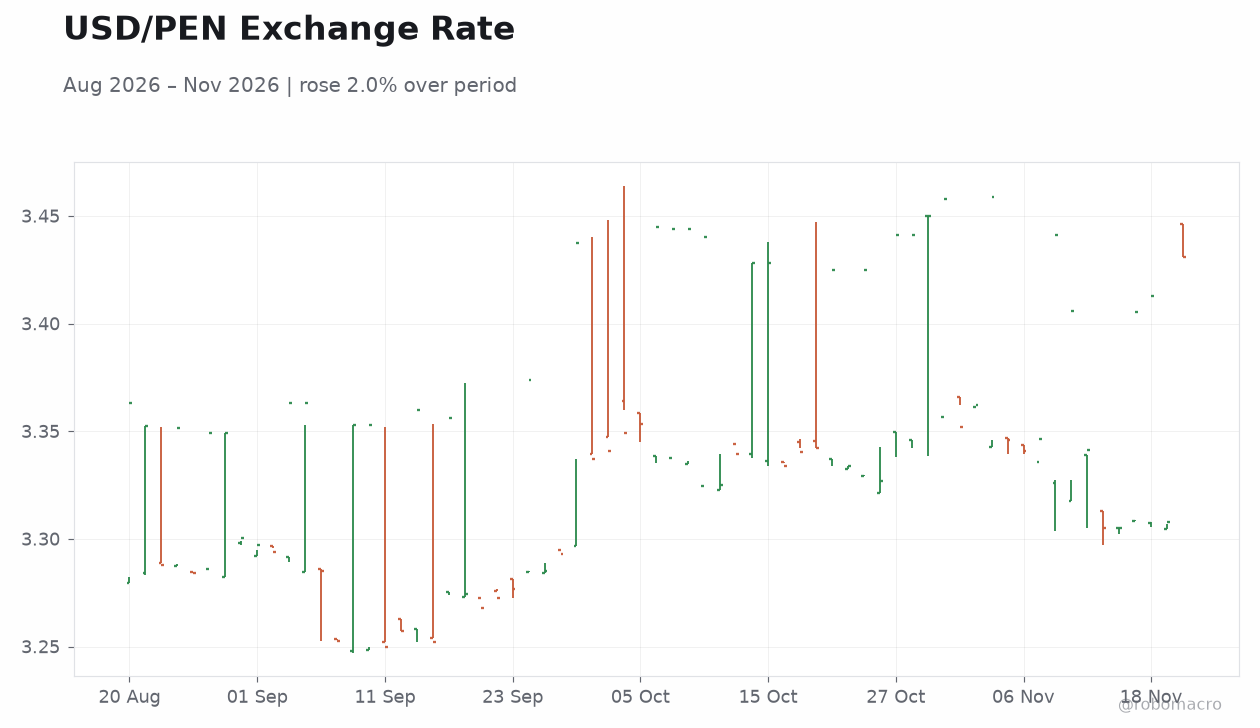
| USD/PEN | 3.43 | +3.72% |
| Copper | 5.56 | -1.10% |
| Gold | 3,590.60 | -2.57% |
| Brent Crude | 89.05 | -3.19% |
| Bitcoin | 61,748.34 | -0.25% |
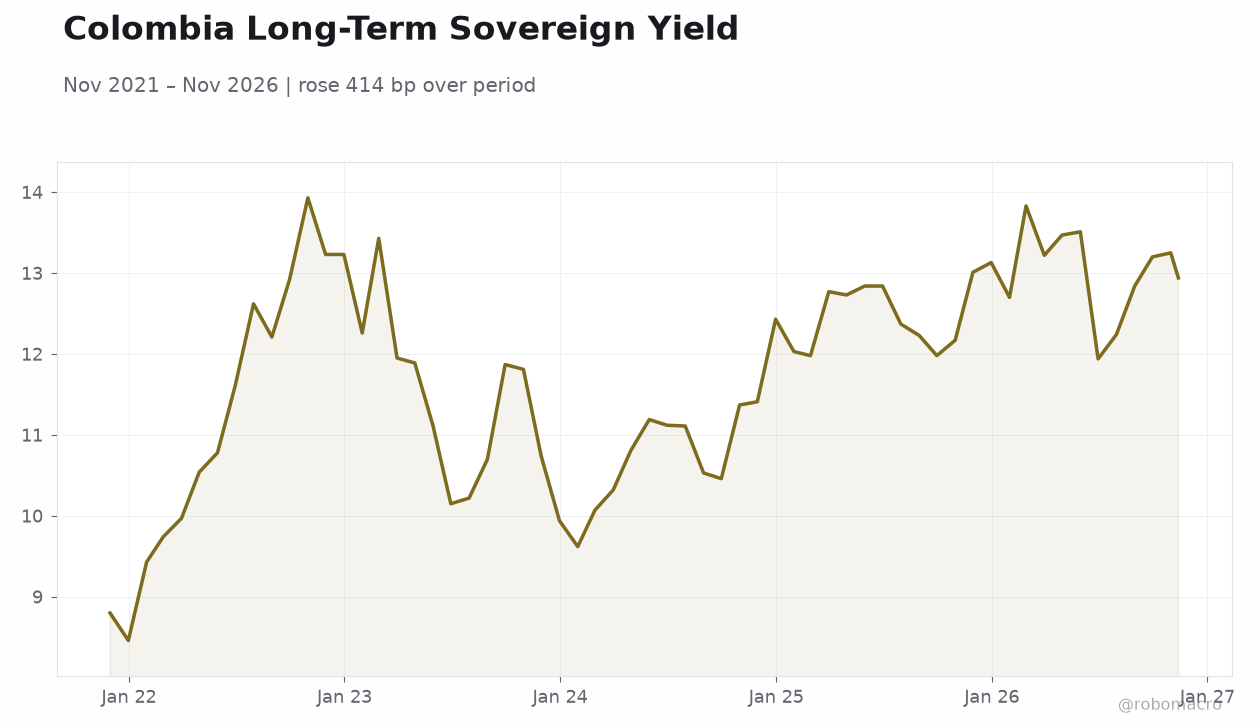
| Colombia 10Y Govt Yield | 12.94% | +4 bp |
| Peru 10Y Govt Yield | 6.78% | +10 bp |
Prior Economic Events
| Data | Prior | Cons | Actual |
|---|---|---|---|
| No events available | |||
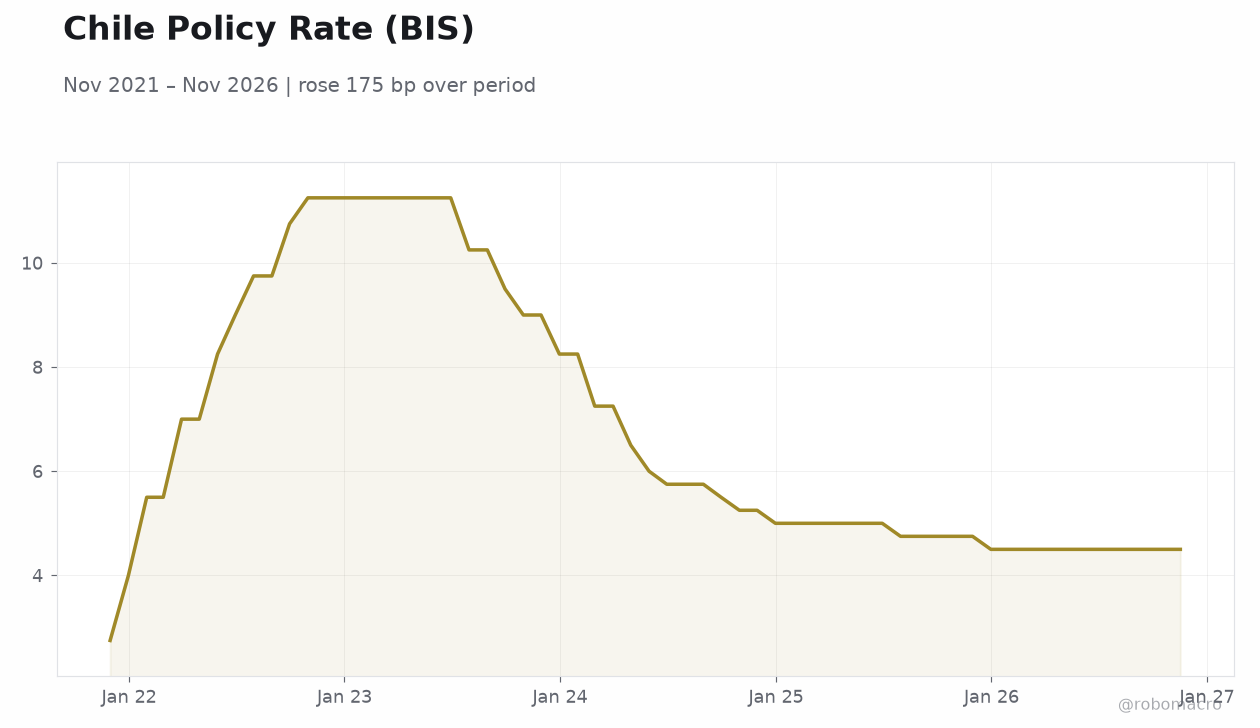 Chile Policy Rate (BIS) | Type: macro_line | Chile policy rate (%): 4.5 (2026-11-17) | Range: 2.75–11.25 | Trend(5pt): 2.75,11.25,6,4.75,4.5
Today's Economic Events
| Data | Prior | Cons | Time |
|---|---|---|---|
| No events available | |||
- Colombian, Chilean and Peruvian currencies all weaken sharply against the dollar, with USD/PEN up 3.72% and USD/COP up 1.96% on the day.
- Andean equity proxies fall across the board: MSCI Peru -2.44%, MSCI Chile -1.29%, while MSCI Colombia holds flat.
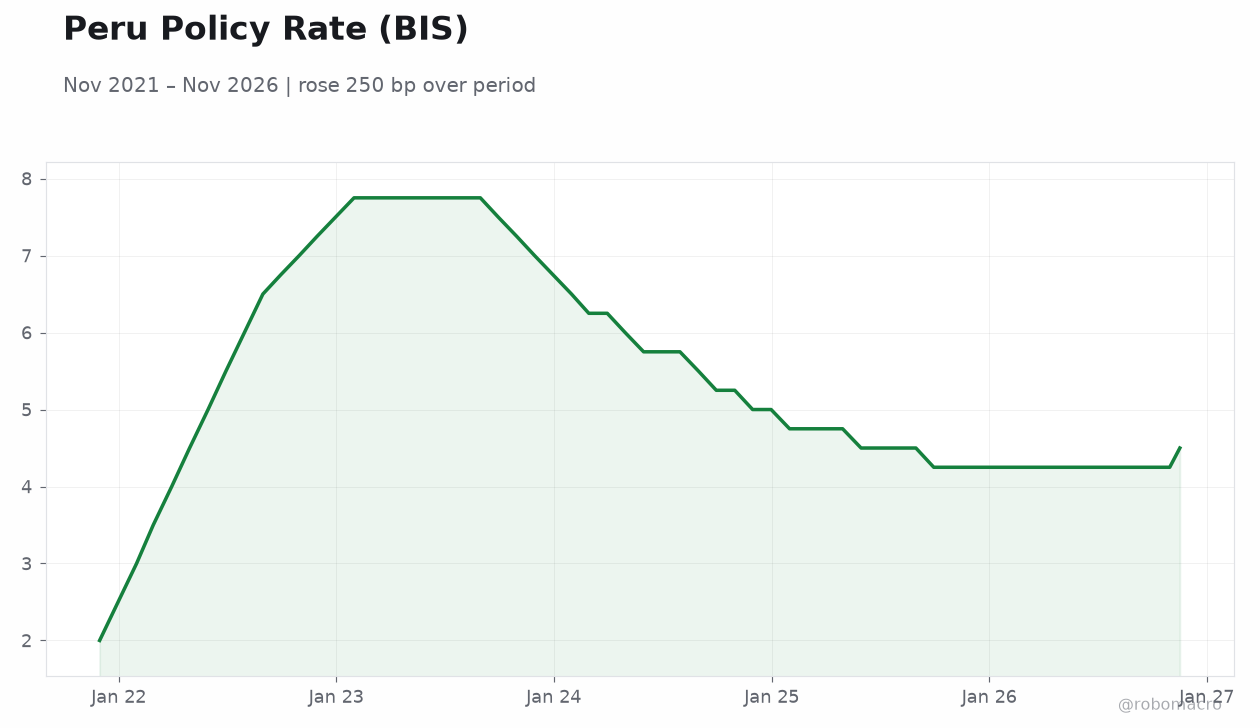
- Peru's 10-year sovereign yield rises 10 bp to 6.78% and Colombia's 10-year adds 4 bp to 12.94% as regional risk premia widen.
Yesterday's Recap
The Andean bloc traded under broad risk-off pressure on November 19, with all three currencies depreciating against the dollar. Peru was the standout underperformer, with USD/PEN climbing 3.72% and the MSCI Peru proxy dropping 2.44%, while the Peruvian 10-year government yield rose 10 bp to 6.78%. Chile followed a similar pattern, with USD/CLP up 1.07% and MSCI Chile down 1.29%, tracking the 1.10% decline in copper prices.
Colombia was the relative outlier on equities, with MSCI Colombia unchanged at 9.02, though USD/COP still rose 1.96% and the 10-year yield added 4 bp to 12.94%. The moves came against a backdrop of falling precious metals, with gold down 2.57%, and a 3.19% drop in Brent crude, which is particularly relevant for Colombia's fiscal and external accounts. No scheduled Andean macro releases printed on the day, leaving price action driven by external commodity and dollar dynamics.
The Day Ahead
The Andean calendar is empty for November 20, with no tier-one data releases scheduled across Colombia, Chile or Peru. Market attention will therefore remain on external drivers, particularly the trajectory of copper and gold prices, which have outsized influence on Chilean and Peruvian terms of trade and fiscal revenues. Traders will also watch the dollar's broader direction after the sharp Andean FX moves of the prior session, with USD/PEN's 3.72% jump likely to draw scrutiny from Peru's central bank given its sensitivity to exchange-rate volatility.
Colombian assets will continue to key off oil prices, where Brent's slide below $90 raises questions about the fiscal deficit trajectory. With no domestic catalysts, Andean spreads and currencies are likely to take their cue from global risk sentiment and US rates.
Other Economic Notes
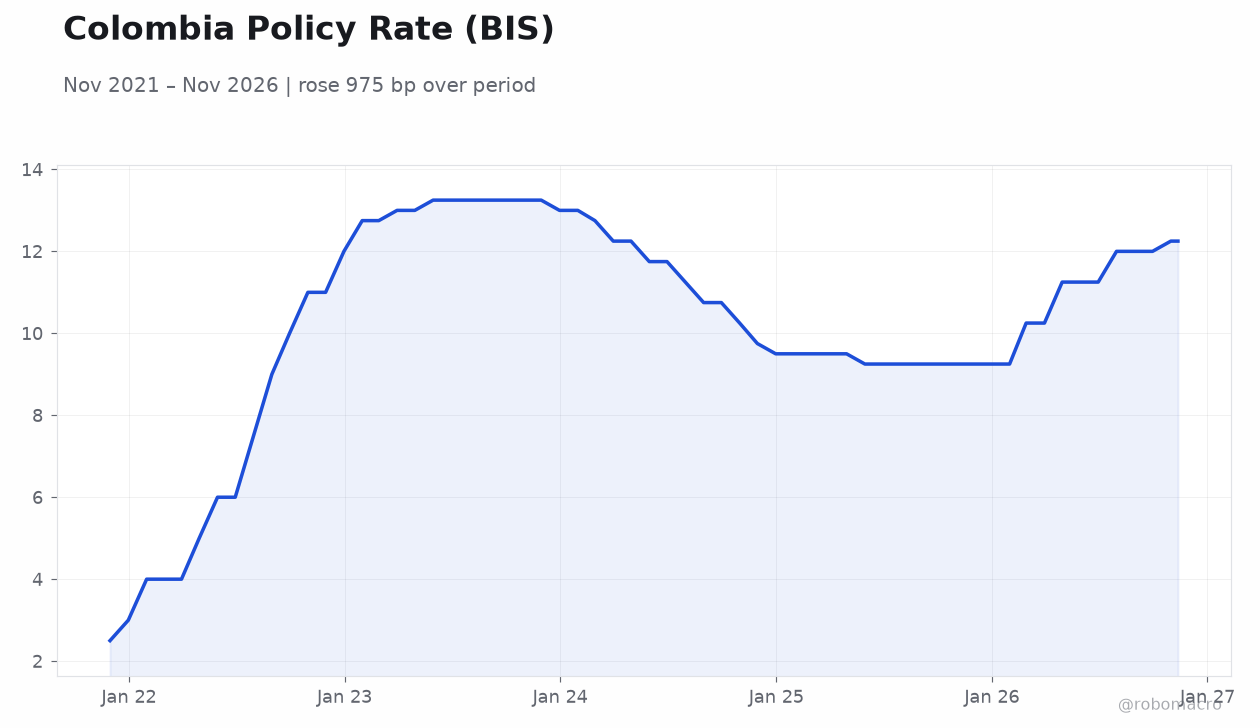
The synchronized Andean currency selloff underscores the bloc's vulnerability to dollar strength and commodity weakness, with Peru's outsized sol move particularly notable given the country's historically stable FX regime. Peru's 10-year yield at 6.78% remains elevated relative to its historical range, while Colombia's 12.94% continues to reflect the region's highest risk premium, consistent with its persistent inflation problem at 6.29% year-on-year. Chile's inflation at 4.52% remains above target, limiting the central bank's room to maneuver even as it has been the region's most aggressive cutter.
↓ p.2