Argentina Macro Daily(Beta Mode)
Soybean Rally Lifts MERVAL as FX Holds Steady
Market Snapshot
| Asset | Level | Change |
|---|---|---|
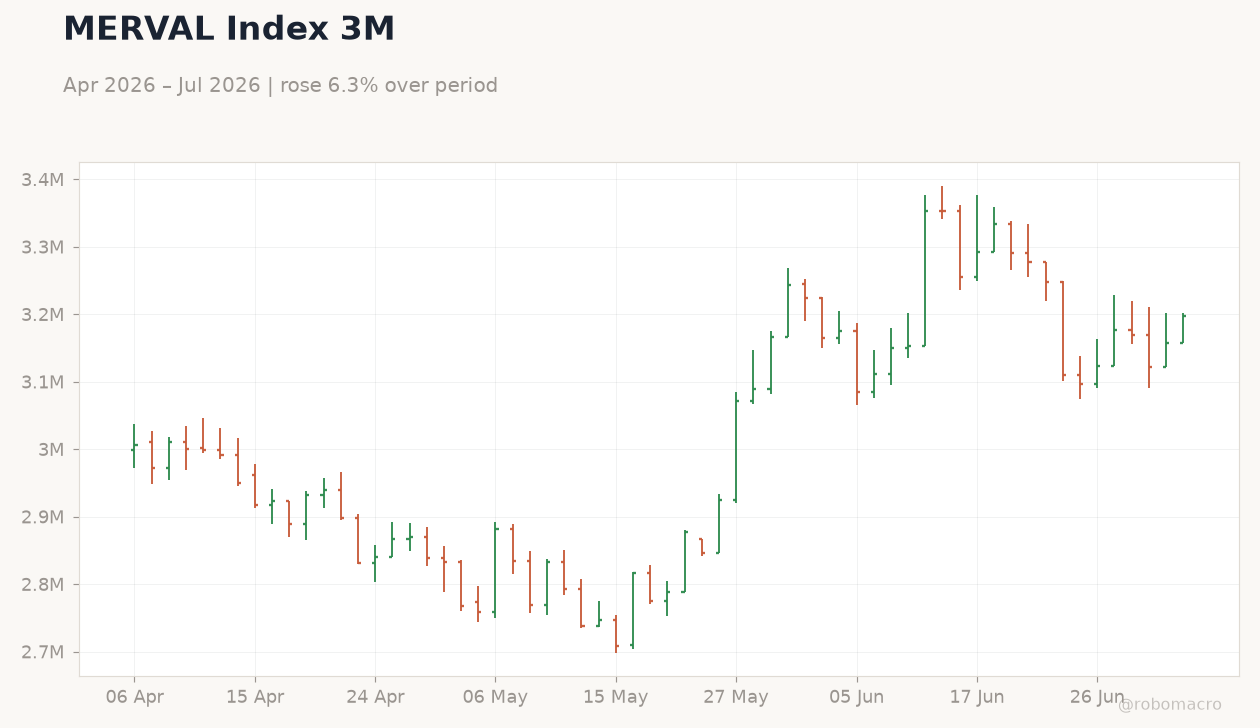
| MERVAL | 3,196,900.00 | +1.26% |
| USD/ARS | 1,488.00 | -0.07% |
| EUR/ARS | 1,700.76 | -0.00% |
| Gold | 4,160.80 | +1.17% |
| Brent Crude | 71.79 | -0.01% |
| Soybean | 1,182.00 | +4.44% |
| Bitcoin | 62,689.86 | -1.35% |
| Argentina 10Y | - | - |
Prior Economic Events
| Data | Prior | Cons | Actual |
|---|---|---|---|
| No events available | |||
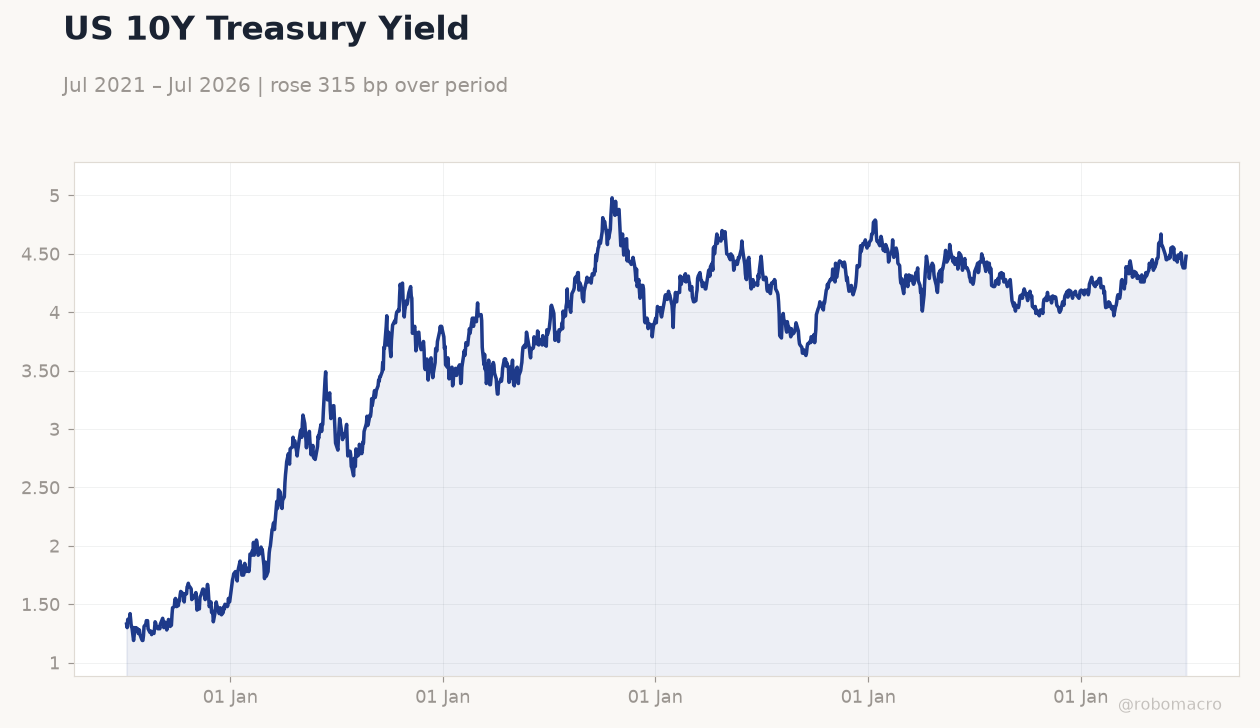 US 10Y Treasury Yield | Type: macro_line | Yield %: 4.48 (2026-07-01) | Range: 1.19–4.98 | Trend(6pt): 1.33,3.67,3.95,4.17,4.44,4.48
Today's Economic Events
| Data | Prior | Cons | Time |
|---|---|---|---|
| No events available | |||
- MERVAL advanced 1.26% to 3,196,900 on commodity strength
- USD/ARS eased 0.07% to 1,488 amid thin trading
- Soybean futures jumped 4.44%, bolstering export receipts
Yesterday's Recap
Argentine markets posted modest gains with no scheduled data releases. The MERVAL index rose 1.26% to close at 3,196,900, led by energy and financial names. USD/ARS slipped 0.07% to 1,488 while EUR/ARS held steady near 1,700.76.
Gold climbed 1.17% to 4,160.80 on safe-haven demand, supporting reserve valuations. Brent crude edged down 0.01% to 71.79, leaving limited impact on fuel subsidies. Soybean futures surged 4.44% to 1,182, lifting prospects for July export tax collections.
Bitcoin fell 1.35% to 62,689.86 with negligible spillover to local risk assets.
The Day Ahead
No domestic releases are scheduled through July 7. Attention will turn to global commodity flows and any BCRA reserve updates. Treasury bill auctions may provide signals on rollover costs.
Market participants will monitor soybean crush margins in China for further price direction. IMF program compliance reviews remain in focus ahead of the next disbursement tranche. Parallel FX premia will be watched for any widening that could prompt policy adjustments.
Other Economic Notes
A major appliance manufacturer announced closure of its Argentine plant, shifting output to Brazil and Mexico with $165 million in regional investment. The move highlights ongoing competitiveness challenges despite fiscal consolidation efforts. Soybean export volumes continue to underpin primary fiscal surplus targets above 1.5% of GDP.
Improved debt rollover capacity at recent T-bill auctions reflects gradual market confidence gains. Net liquid reserves at the BCRA stay negative, limiting room for large-scale intervention.
Global Macro News
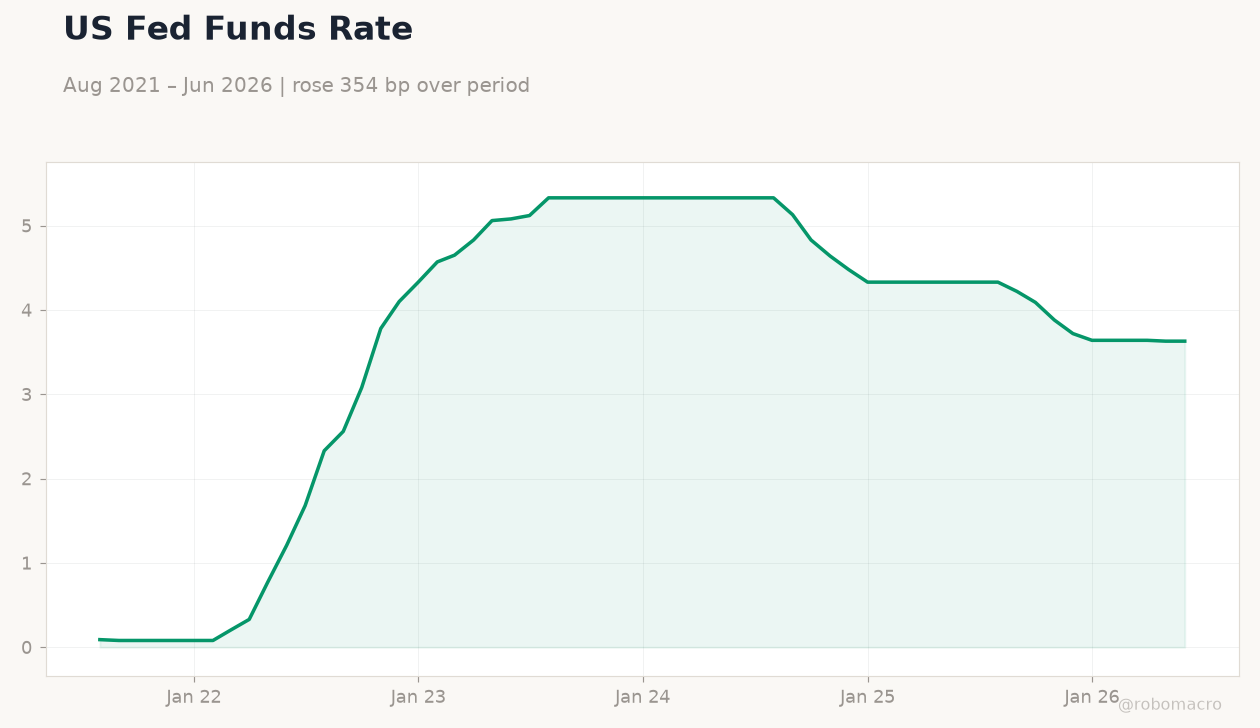
Thailand’s cooling inflation reinforced expectations of steady central bank rates, easing pressure on emerging-market currencies. The Philippine central bank governor signaled the economy could absorb one more 25 bp hike without derailing growth. Fed Chair Powell reiterated commitment to the 2% inflation target, keeping US rate-cut odds tempered.
Iran’s central bank liquidity squeeze to defend the rial illustrates similar reserve-management pressures facing Argentina. <i>↓ p.2</i>