Argentina Macro Daily(Beta Mode)
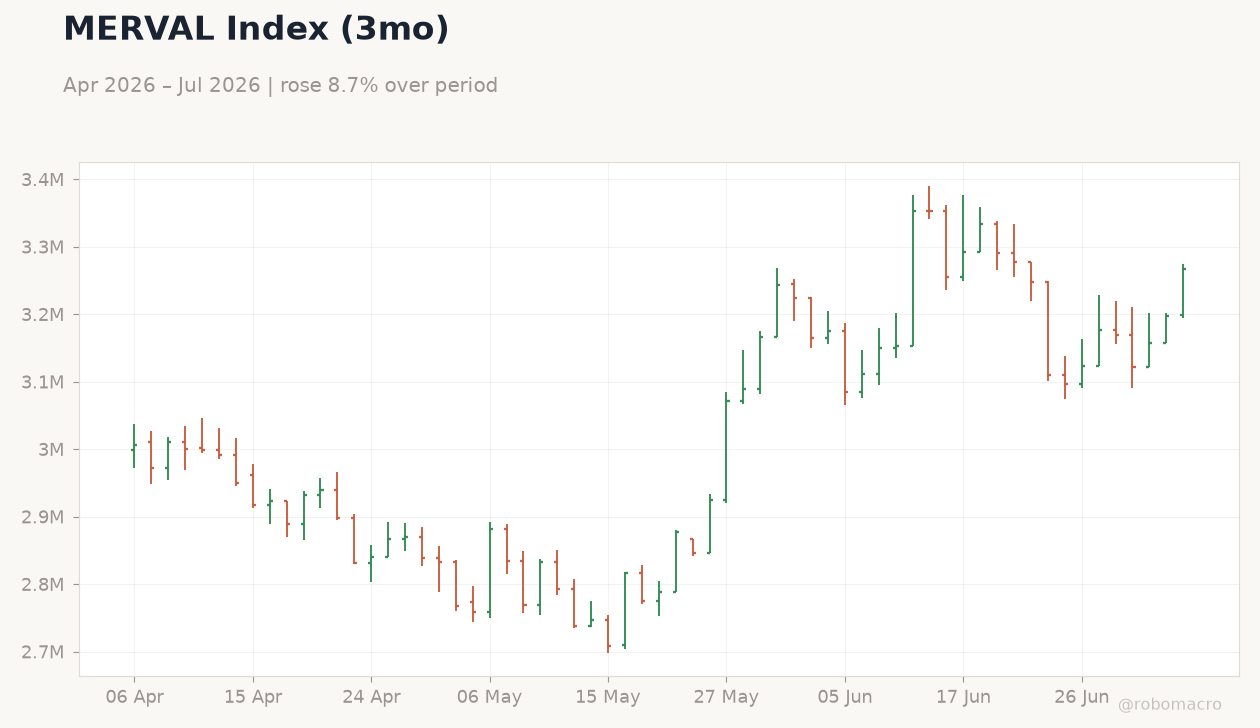
MERVAL Rises 2.2% as Peso Strengthens
Market Snapshot
| Asset | Level | Change |
|---|---|---|
| MERVAL | 3,266,960.00 | +2.19% |
| USD/ARS | 1,485.00 | -0.58% |
| EUR/ARS | 1,699.31 | -0.53% |
| Gold | 4,177.30 | +0.53% |
| Brent Crude | 72.56 | +0.79% |
| Soybean | 1,194.50 | +1.04% |
| Bitcoin | 63,452.50 | -0.85% |
| Argentina 10Y | - | - |
Prior Economic Events
| Data | Prior | Cons | Actual |
|---|---|---|---|
| No events available | |||
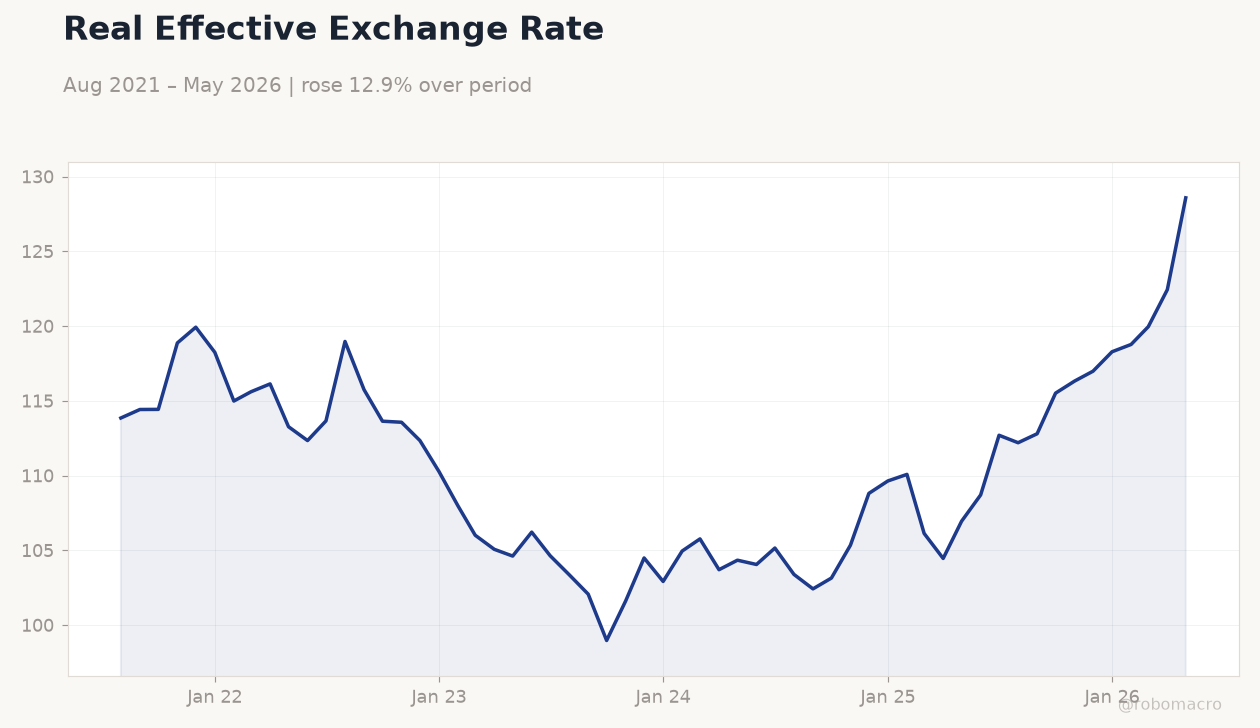 Real Effective Exchange Rate | Type: macro_line | Index: 128.6 (2026-05-01) | Range: 98.97–128.6 | Trend(6pt): 113.9,113.6,104.5,110.1,122.4,128.6
Today's Economic Events
| Data | Prior | Cons | Time |
|---|---|---|---|
| No events available | |||
- MERVAL climbs 2.19% to 3,266,960 while USD/ARS falls 0.58% to 1,485
- Government confirms sufficient sources to cover 2027 debt without new external bonds
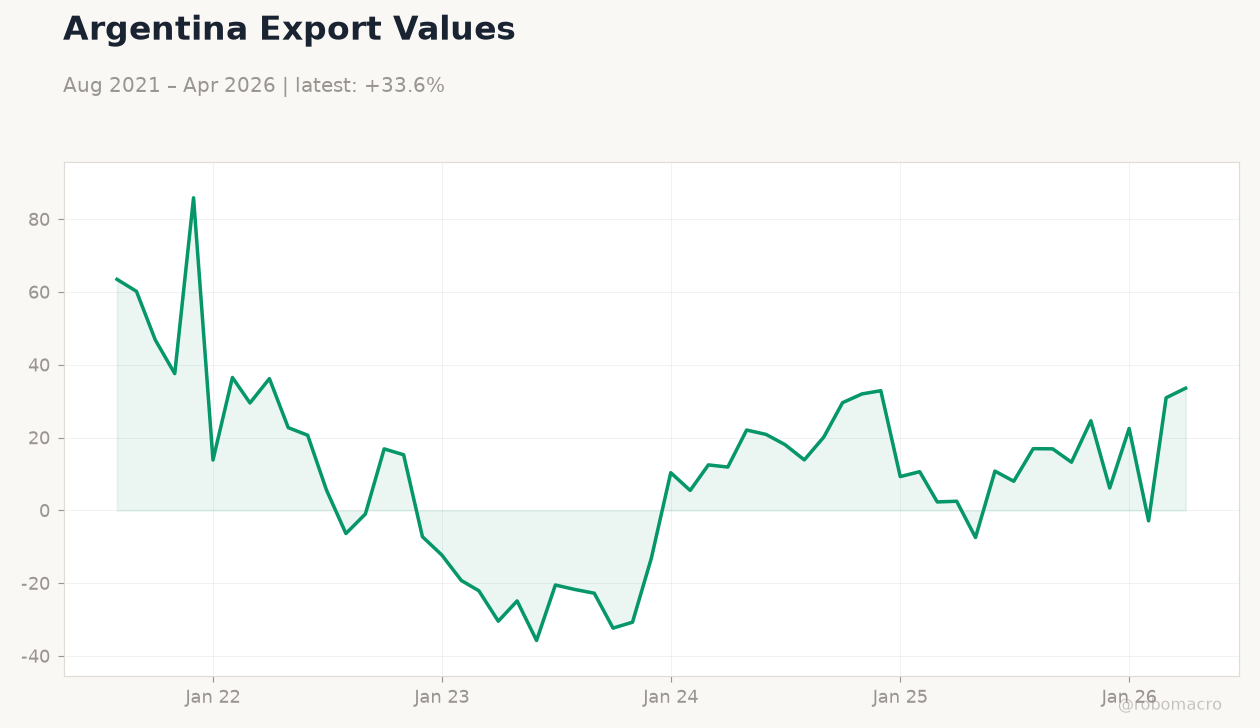
- Soybean futures advance 1.04% supporting export receipts and reserve buildup
Yesterday's Recap
Argentine equities posted solid gains on July 6 as the MERVAL index rose 2.19% to close at 3,266,960 amid buying in banks and energy names. The official peso firmed against the dollar with USD/ARS declining 0.58% to 1,485 while EUR/ARS eased 0.53% to 1,699.31. Commodity support lifted soybean futures 1.04% to 1,194.50 and Brent crude 0.79% to 72.56, both positive for Argentine export revenues.
Gold advanced 0.53% to 4,177.30 on safe-haven demand while Bitcoin slipped 0.85%. The government announced it holds adequate financing to meet all 2027 debt obligations without returning to international capital markets. No economic data prints occurred, leaving market focus on the debt statement and commodity price moves.
The Day Ahead
No domestic data releases or policy events are scheduled for July 7. Traders will track soybean export registrations and their impact on BCRA reserves. Global commodity price action and emerging-market flows remain the main drivers for ARS crosses.
Any follow-up comments on the 2027 debt financing plan could influence local bond yields. Attention may also turn to IMF staff conclusions from recent Article IV talks. Thin volumes are likely given the empty calendar.
Other Economic Notes
Fiscal primary surpluses continue to anchor credibility and reduce reliance on monetary financing. Soybean dollar inflows provide a steady channel for reserve accumulation without new external borrowing. The decision to avoid global bond markets in 2027 lowers rollover risk and supports peso stability.
Export competitiveness benefits from firm soybean prices despite the stronger official exchange rate. Private-sector analysts continue to monitor inflation pass-through from earlier utility adjustments.
Global Macro News
Thailand’s cooling inflation reinforced expectations for a prolonged rate hold by its central bank. The Philippine central bank governor stated the economy can absorb one additional rate increase if required. Ethiopia received a $464 million IMF disbursement while facing renewed inflation pressures.
<i>↓ p.2</i>