Argentina Macro Daily(Beta Mode)
Peso Softens as MERVAL Slips on Quiet Day
Market Snapshot
| Asset | Level | Change |
|---|---|---|
| MERVAL | 3,223,998.00 | -1.32% |
| USD/ARS | 1,491.50 | +0.39% |
| EUR/ARS | 1,701.96 | +0.12% |
| Gold | 4,065.40 | -1.93% |
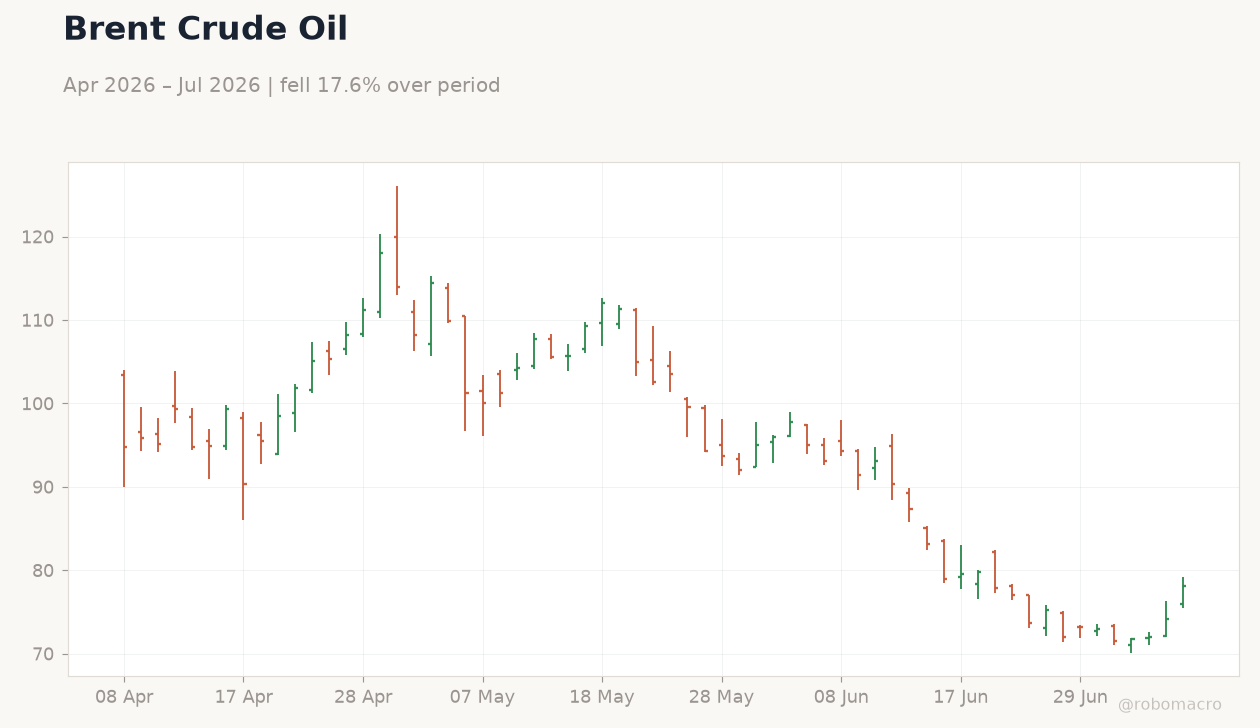
| Brent Crude | 78.00 | +5.18% |
| Soybean | 1,199.75 | +0.25% |
| Bitcoin | 62,075.36 | -1.93% |
| Argentina 10Y | - | - |
Prior Economic Events
| Data | Prior | Cons | Actual |
|---|---|---|---|
| No events available | |||
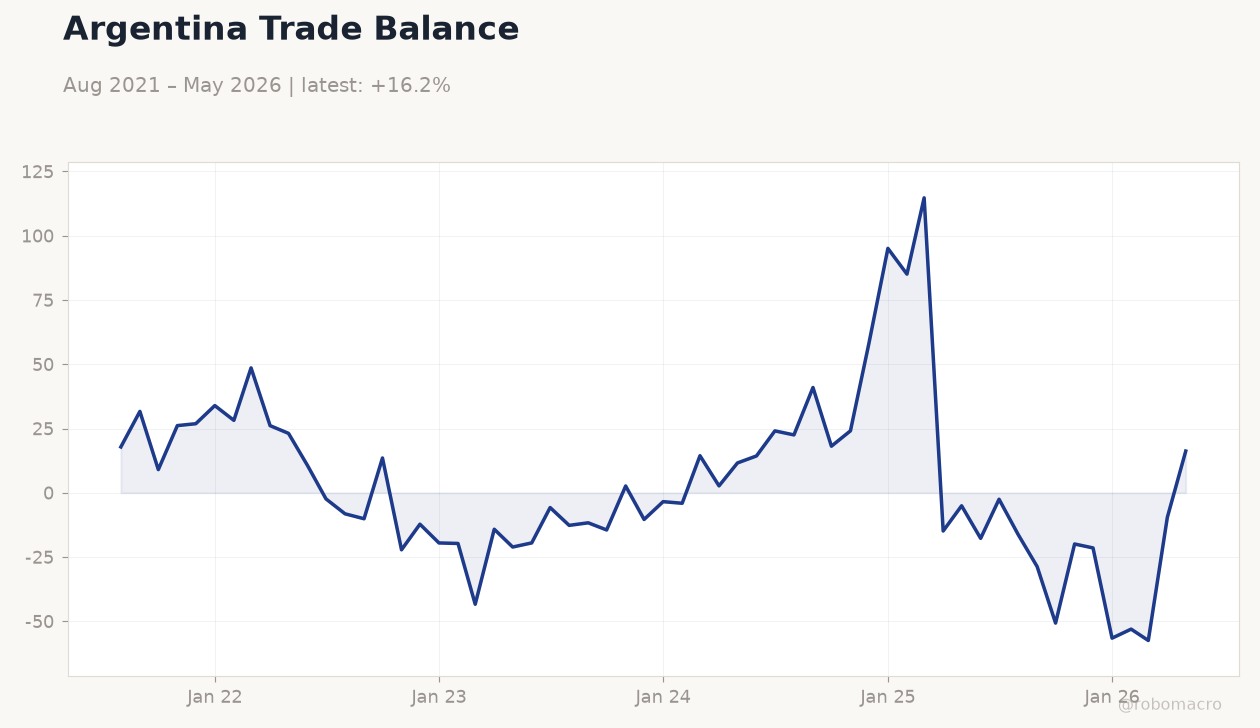 Argentina Trade Balance | Type: macro_line | USD mn: 16.24 (2026-05-01) | Range: -57.45–114.7 | Trend(6pt): 17.84,13.55,-10.37,85.08,-9.564,16.24
Today's Economic Events
| Data | Prior | Cons | Time |
|---|---|---|---|
| No events available | |||
- MERVAL declined 1.32% to 3,223,998 amid thin trading.
- USD/ARS rose 0.39% to 1,491.50, extending peso softness.
- Brent Crude jumped 5.18% to 78.00, lifting export revenues.
Yesterday's Recap
No economic data releases occurred on July 7, leaving Argentine markets to react to commodity moves and currency flows. The MERVAL index fell 1.32% to 3,223,998 as investors trimmed positions in financial and industrial names. USD/ARS advanced 0.39% to 1,491.50, reflecting modest peso depreciation, while EUR/ARS gained 0.12% to 1,701.96.
Gold dropped 1.93% to 4,065.40, curbing safe-haven demand, but Brent Crude surged 5.18% to 78.00, supporting energy export income. Soybean futures rose 0.25% to 1,199.75, reinforcing the agricultural trade surplus outlook. Bitcoin fell 1.93% to 62,075.36 with little direct impact on local assets.
Argentina 10-year bonds recorded no quoted change.
The Day Ahead
No scheduled releases or events are set for July 8, directing attention to intraday peso trading and global commodity prices. Market participants will track BCRA foreign-exchange purchases and any Treasury debt operations. Regional central-bank decisions may shape sentiment toward Argentine assets through risk appetite channels.
Focus stays on soybean shipment volumes and reserve accumulation trends. Equity flows remain sensitive to external developments given limited domestic catalysts.
Other Economic Notes
Fiscal consolidation under the IMF program continues to anchor credibility, with primary surplus targets guiding spending restraint. Soybean exports provide the main source of reserve inflows, aided by steady Chinese demand and favorable weather. Inflation remains elevated, keeping real interest rates restrictive and limiting room for near-term easing.
Tariff adjustments and wage settlements add incremental price pressures that the BCRA must monitor closely.
Global Macro News
New Zealand’s central bank raised its policy rate 25 basis points to 2.50%, underscoring a cautious global tightening bias that can affect emerging-market funding costs. The UK faces projected GDP losses of 10% by 2100 under 4°C warming scenarios, highlighting long-term risks for commodity-dependent economies. Ghanaian bankers expect a rate hold, mirroring caution across several emerging markets.
<i>↓ p.2</i>