Argentina Macro Daily(Beta Mode)
MERVAL Slides as Peso Firms on Quiet Day
Market Snapshot
| Asset | Level | Change |
|---|---|---|
| MERVAL | 3,202,490.00 | -0.67% |
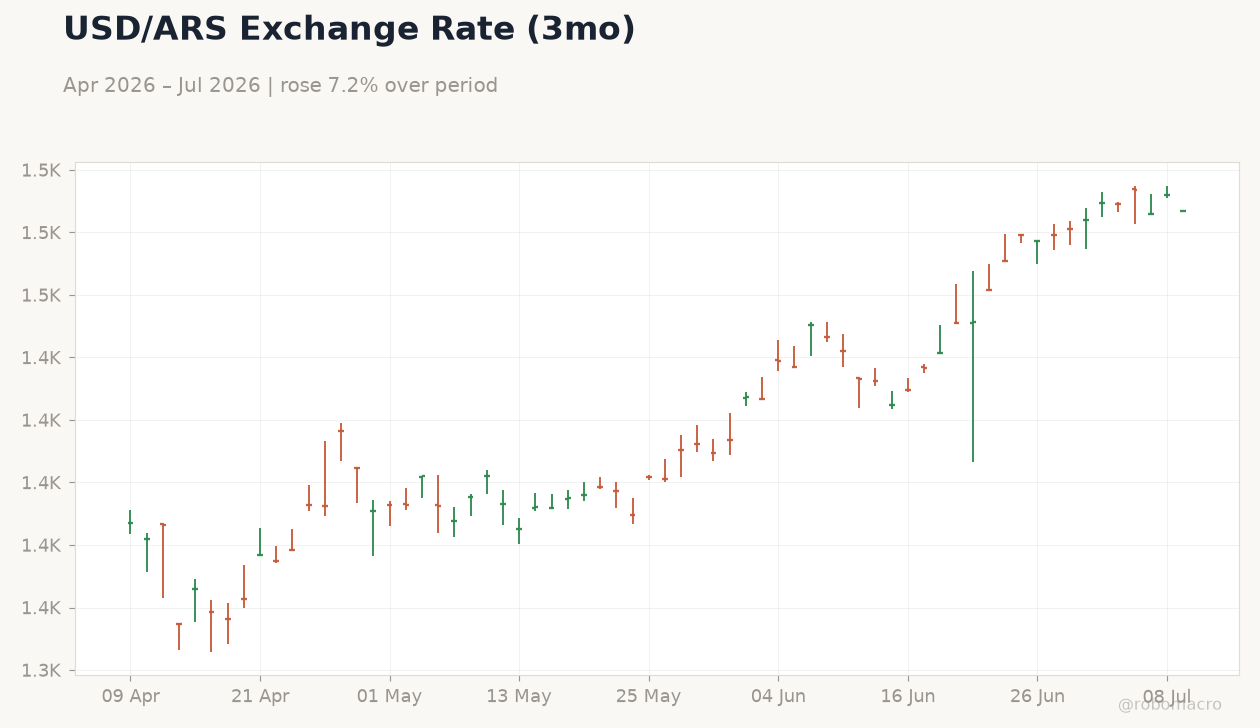
| USD/ARS | 1,487.00 | -0.34% |
| EUR/ARS | 1,699.81 | -0.08% |
| Gold | 4,133.10 | +1.53% |
| Brent Crude | 77.55 | -0.60% |
| Soybean | 1,184.50 | -0.88% |
| Argentina 10Y | - | - |
Prior Economic Events
| Data | Prior | Cons | Actual |
|---|---|---|---|
| No events available | |||
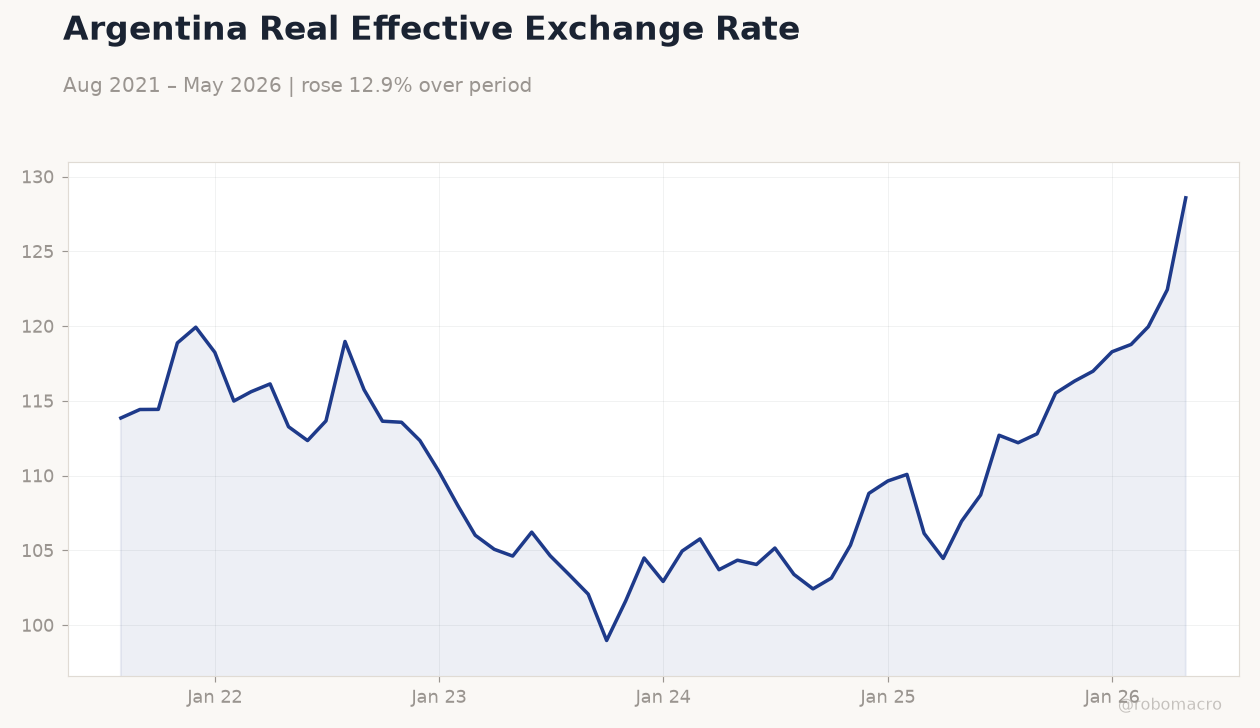 Argentina Real Effective Exchange Rate | Type: macro_line | Index: 128.6 (2026-05-01) | Range: 98.97–128.6 | Trend(6pt): 113.9,113.6,104.5,110.1,122.4,128.6
Today's Economic Events
| Data | Prior | Cons | Time |
|---|---|---|---|
| No events available | |||
- MERVAL falls 0.67% to 3,202,490 amid thin volumes
- USD/ARS eases 0.34% to 1,487 as soybean inflows slow
- Gold rises 1.53% while Brent and soybeans decline
Yesterday's Recap
No economic data releases occurred on July 8. MERVAL closed 0.67% lower at 3,202,490 as investors reduced exposure to banks and energy names. USD/ARS slipped 0.34% to 1,487.00, reflecting modest peso appreciation on limited spot demand.
EUR/ARS edged 0.08% lower to 1,699.81. Gold advanced 1.53% to 4,133.10 on safe-haven buying. Brent Crude dropped 0.60% to 77.55 while soybean futures fell 0.88% to 1,184.50, weighing on export revenue expectations.
Argentina 10Y bonds recorded no price movement. Thin trading volumes limited price discovery across asset classes, with participants awaiting clearer signals on external financing and commodity trends. The absence of fresh data kept focus on ongoing reserve management and fiscal execution.
The Day Ahead
No releases are scheduled for July 9. Market participants will track any informal BCRA reserve commentary. Attention stays on Treasury funding needs and IMF Article IV progress.
Commodity price swings will continue to drive local equity and FX flows. Liquidity conditions in the parallel FX market remain the key near-term focus. Traders are expected to monitor global yield movements for any spillover effects on Argentine assets.
With calendars empty, positioning is likely to stay light until external catalysts emerge.
Other Economic Notes
Peso stability supports gradual reserve rebuilding despite soft soybean prices. Fiscal consolidation efforts continue to anchor domestic bond demand. Export-tax adjustments have improved revenue visibility without triggering major market volatility.
Inflation pass-through from prior devaluation remains the dominant medium-term risk for monetary settings. Steady external disbursements have eased immediate balance-of-payments pressures, allowing policymakers room to maintain current settings. Domestic demand for inflation-linked instruments has shown resilience, supporting smoother Treasury operations.