Argentina Macro Daily(Beta Mode)
MERVAL Dips as Peso Holds Near 1,487
Market Snapshot
| Asset | Level | Change |
|---|---|---|
| MERVAL | 3,202,490.00 | -0.67% |
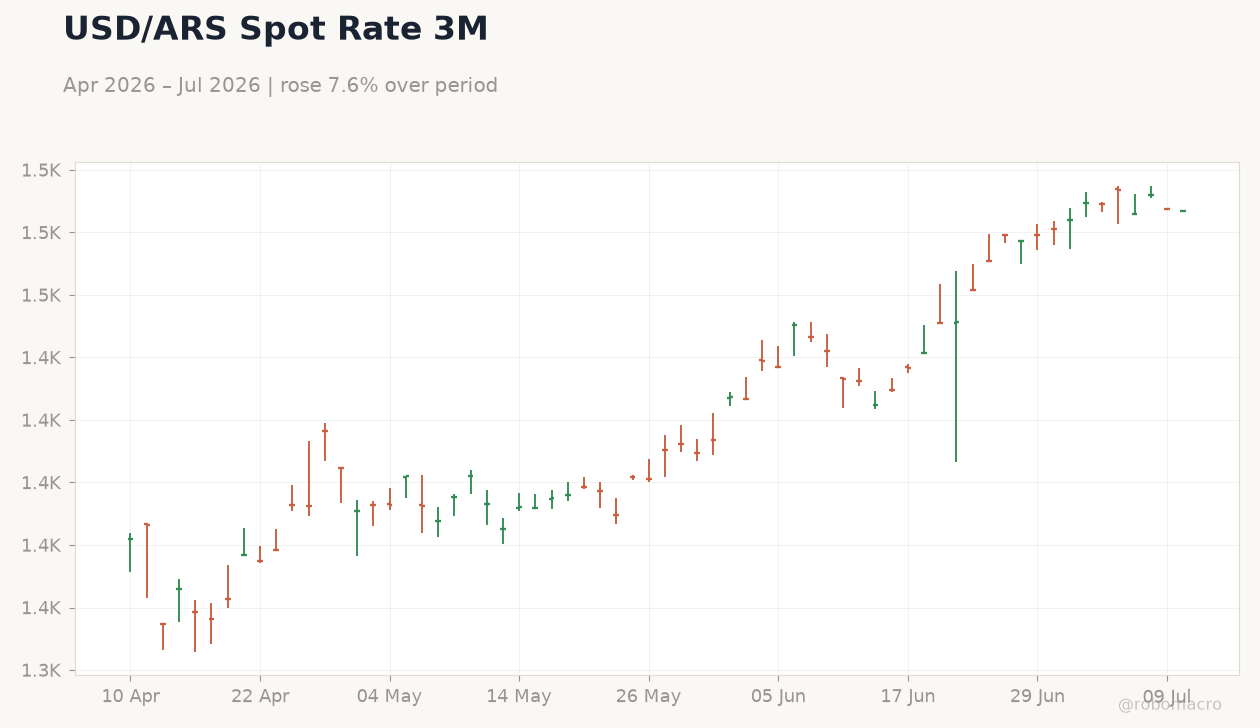
| USD/ARS | 1,487.00 | -0.03% |
| EUR/ARS | 1,700.98 | +0.11% |
| Gold | 4,117.70 | -0.31% |
| Brent Crude | 76.23 | -0.09% |
| Soybean | 1,176.75 | -0.25% |
| Bitcoin | 64,427.83 | +1.95% |
| Argentina 10Y | - | - |
Prior Economic Events
| Data | Prior | Cons | Actual |
|---|---|---|---|
| No events available | |||
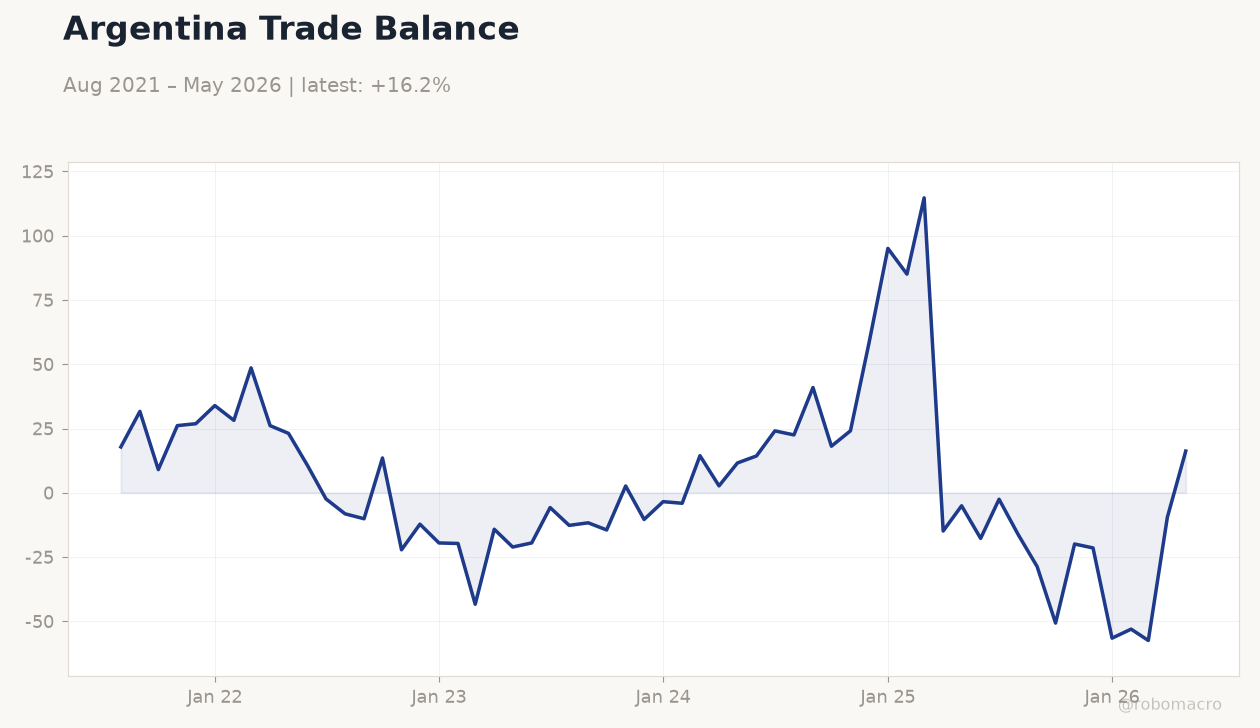 Argentina Trade Balance | Type: macro_line | USD mn: 16.24 (2026-05-01) | Range: -57.45–114.7 | Trend(6pt): 17.84,13.55,-10.37,85.08,-9.564,16.24
Today's Economic Events
| Data | Prior | Cons | Time |
|---|---|---|---|
| No events available | |||
- MERVAL falls 0.67% to 3,202,490 amid fading carry-trade flows
- USD/ARS stable at 1,487 with BCRA maintaining tight control
- Soybean prices slip 0.25%, weighing on export earnings outlook
Yesterday's Recap
Argentine equity markets closed lower as the MERVAL index declined 0.67 percent to 3,202,490. The official USD/ARS rate edged down 0.03 percent to 1,487, reflecting continued BCRA intervention that kept daily moves minimal. EUR/ARS rose 0.11 percent to 1,700.98, highlighting modest euro strength against the peso.
Soybean futures fell 0.25 percent to 1,176.75, reducing expected dollar inflows from the key agricultural sector. Brent Crude eased 0.09 percent while gold declined 0.31 percent, offering limited safe-haven support for Argentine assets. Bitcoin gained 1.95 percent, providing some risk-on sentiment but failing to lift local equities.
No economic data releases occurred, leaving market focus on peso stability and reserve accumulation trends.
The Day Ahead
No scheduled releases appear on the calendar for the coming session. Traders will monitor any BCRA liquidity operations and Treasury bill rollover activity. Soybean export volumes remain a key watch item given recent price weakness.
Broader sentiment may hinge on global commodity moves and any fresh comments from IMF staff on the current programme review. Markets also await signals on fiscal primary balance performance after June’s outperformance. Peso forward points are expected to stay anchored near current levels absent policy shifts.
Other Economic Notes
Removal of anti-dumping duties on Chinese aluminium tubes should support industrial imports and reduce input costs for local manufacturers. Fiscal consolidation efforts continue to deliver primary surpluses that keep the IMF programme on track. Net international reserves have climbed steadily, providing the BCRA with greater room to defend the crawling peg.
Soybean export-tax rebates remain in place and continue to underpin July shipment forecasts. These factors collectively reinforce the authorities’ focus on reserve rebuilding ahead of the 2027 electoral cycle.
Global Macro News
The Federal Reserve minutes revealed heightened concern over persistent US inflation, raising the prospect of delayed rate cuts that could pressure emerging-market currencies. <i>↓ p.2</i>