Argentina Macro Daily(Beta Mode)
Peso Holds as MERVAL Climbs Before CPI Data
Market Snapshot
| Asset | Level | Change |
|---|---|---|
| MERVAL | 3,280,224.00 | +2.43% |
| USD/ARS | 1,487.00 | -0.03% |
| EUR/ARS | 1,694.36 | -0.37% |
| Gold | 4,083.80 | -0.49% |
| Brent Crude | 77.59 | +2.08% |
| Soybean | 1,194.75 | -0.15% |
| Bitcoin | 63,110.03 | -1.02% |
| Argentina 10Y | - | - |
Prior Economic Events
| Data | Prior | Cons | Actual |
|---|---|---|---|
| No events available | |||
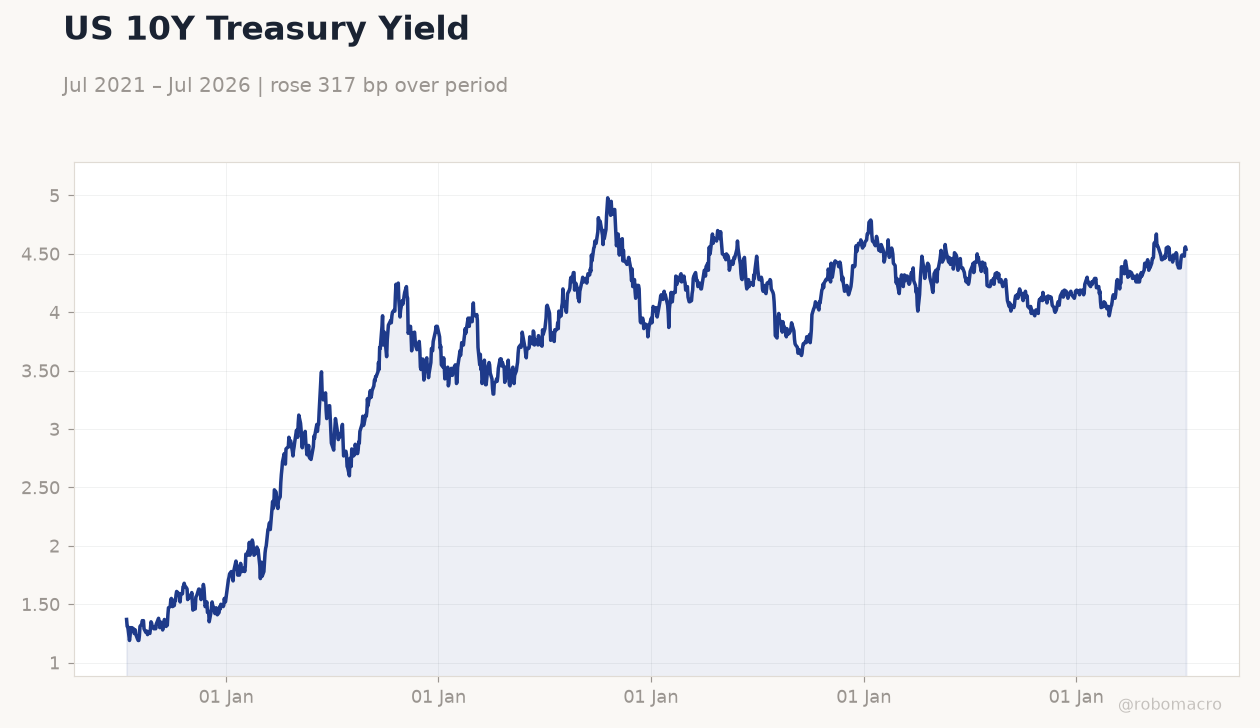 US 10Y Treasury Yield | Type: macro_line | Percent: 4.54 (2026-07-09) | Range: 1.19–4.98 | Trend(6pt): 1.37,3.93,4.02,4.26,4.56,4.54
Today's Economic Events
| Data | Prior | Cons | Time |
|---|---|---|---|
| No events available | |||
- MERVAL rises 2.43% to 3,280,224 on energy and bank support
- USD/ARS eases 0.03% to 1,487 with limited intervention
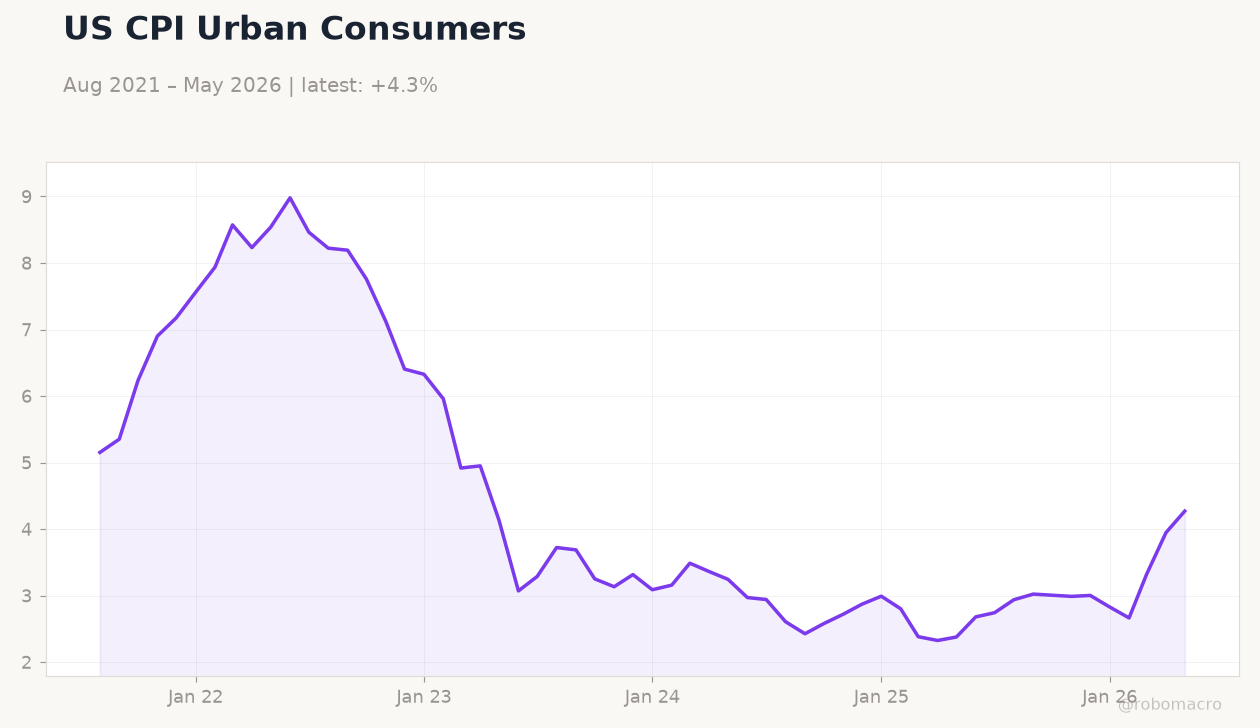
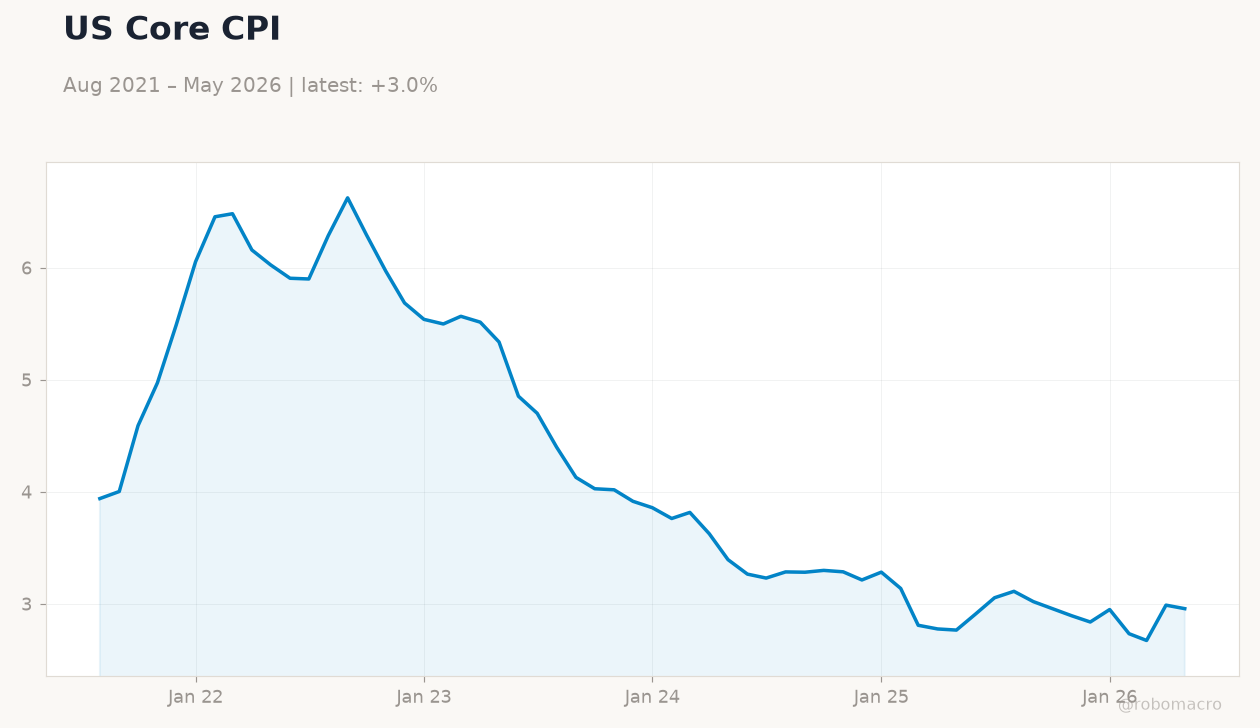
- Markets prepare for June inflation prints from Argentina and US
Yesterday's Recap
Argentine equities advanced solidly with the MERVAL index closing 2.43% higher at 3,280,224 amid selective buying in energy names. The peso traded firmer against the dollar as USD/ARS slipped 0.03% to 1,487 while EUR/ARS declined 0.37% to 1,694.36. Soybean futures eased 0.15% to 1,194.75, tempering export revenue expectations for the month.
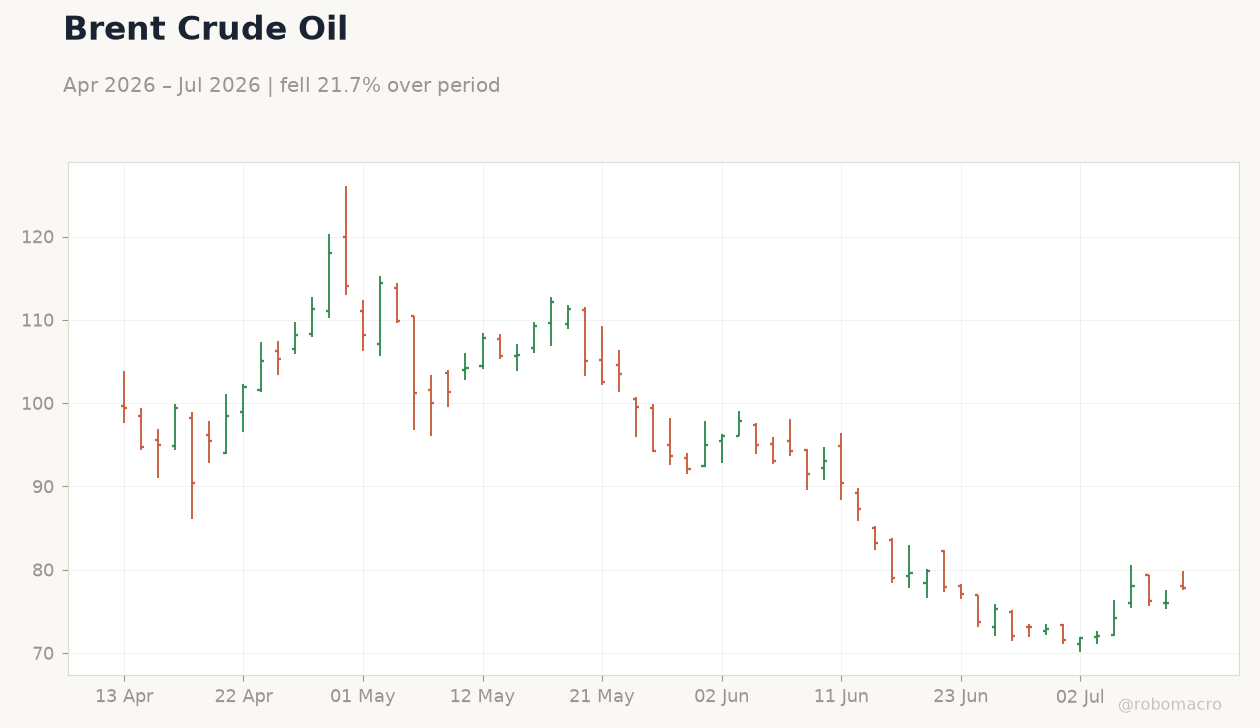
Gold in local terms fell 0.49% to 4,083.80, tracking softer commodity sentiment. Brent crude climbed 2.08% to 77.59, lifting fiscal receipts from energy exports. No major data releases occurred, leaving market focus on peso liquidity and reserve accumulation trends.
Bitcoin declined 1.02% to 63,110.03, offering little offset to local asset performance. Thin volumes underscored cautious positioning ahead of inflation releases.
The Day Ahead
Traders will monitor June CPI releases from both Argentina and the United States as the main market drivers this week. The BCRA money-market report for June is due without any scheduled policy meeting until early August. Industrial production and construction figures for May are expected later in the period, though consensus forecasts point to continued contraction.
Soybean export settlements and IMF program compliance checks remain in focus for reserve management. Thin trading volumes may amplify moves in the official and parallel exchange rates. Global oil price swings tied to Middle East developments could influence Argentine fiscal flows.
Market participants also track any updates on export-tax performance and wage negotiations that could shape near-term inflation dynamics.
Other Economic Notes
The approved sale of Raízen Energia assets in Argentina to Mercuria Energy Group for USD 1.42 billion signals continued foreign interest in the energy sector. Export-tax collections have outperformed budget targets, supporting primary fiscal balance efforts under the current IMF arrangement. Private wage settlements are showing moderation relative to earlier inflation prints, easing pressure on domestic demand.
Soybean export proceeds continue to anchor reserve accumulation despite softer futures prices. Broader fiscal consolidation remains on track, reducing near-term financing risks for the Treasury. <i>↓ p.2</i>