Argentina Macro Daily(Beta Mode)
Merval Falls as Peso Firms in Quiet Session
Market Snapshot
| Asset | Level | Change |
|---|---|---|
| MERVAL | 3,235,295.00 | -1.37% |
| USD/ARS | 1,482.00 | -0.65% |
| EUR/ARS | 1,688.67 | +2.31% |
| Gold | 4,022.90 | +0.65% |
| Brent Crude | 87.20 | +4.68% |
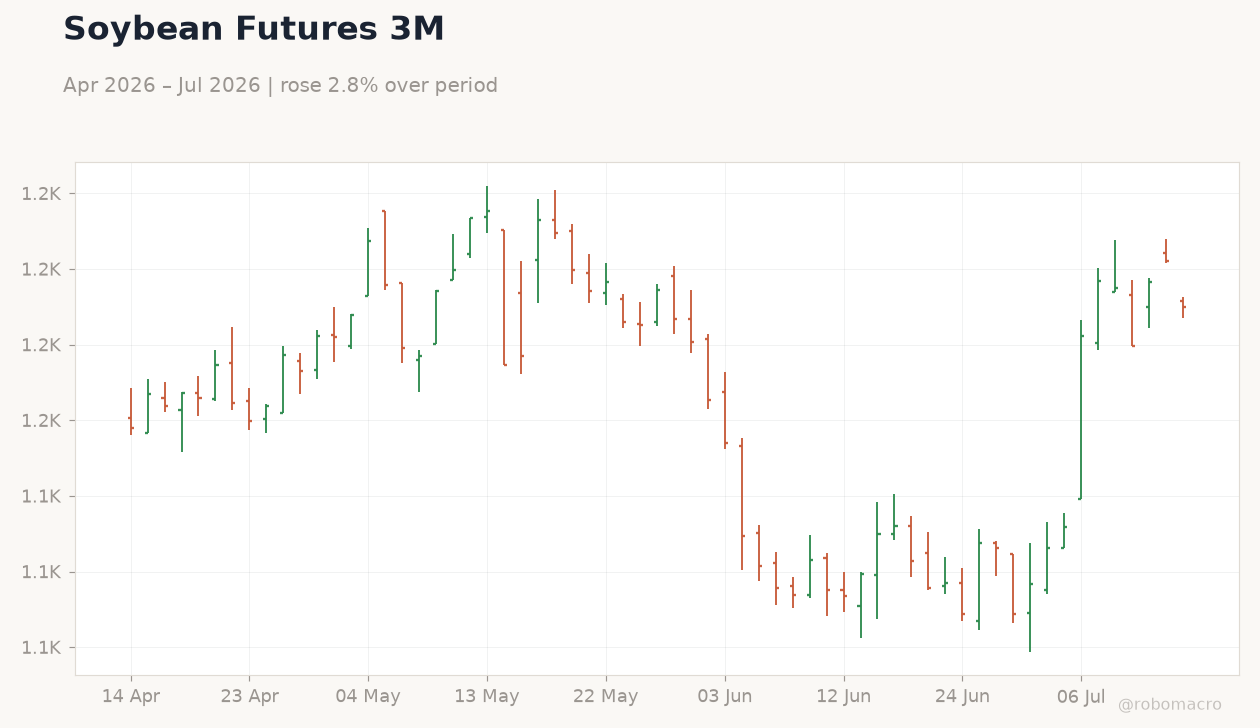
| Soybean | 1,190.00 | -1.00% |
| Bitcoin | 62,600.35 | +0.58% |
| Argentina 10Y | - | - |
Prior Economic Events
| Data | Prior | Cons | Actual |
|---|---|---|---|
| No events available | |||
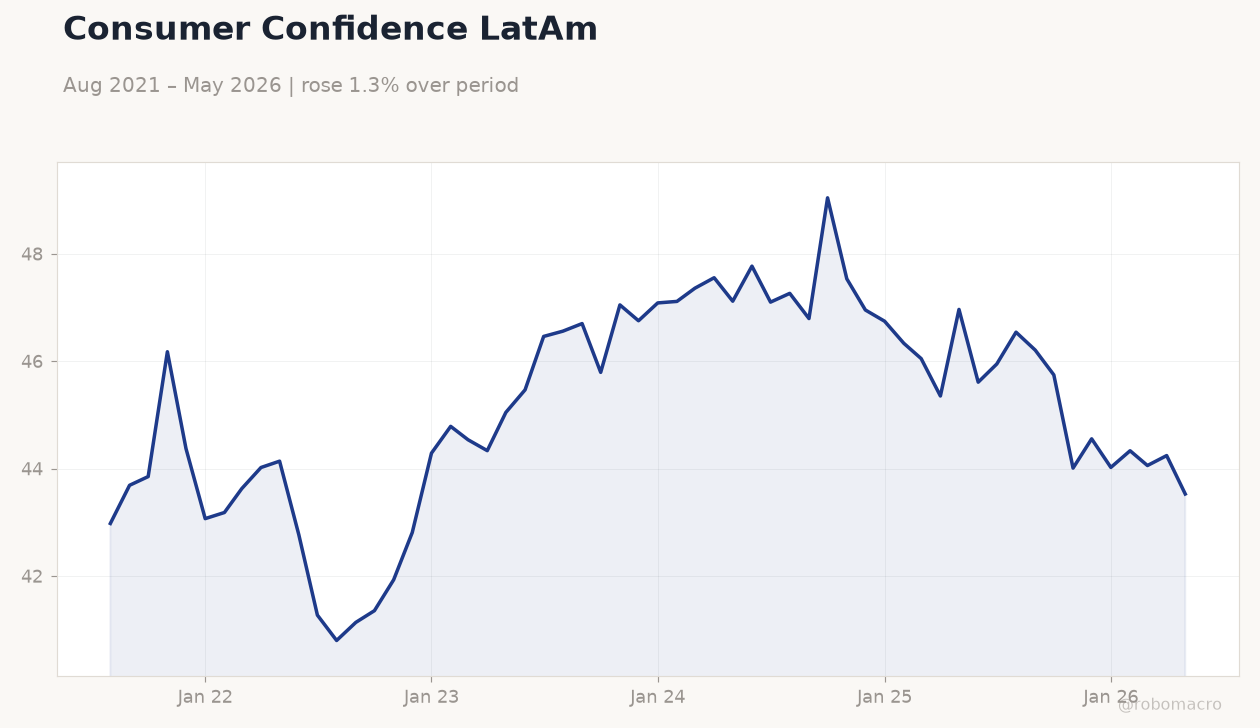 Consumer Confidence LatAm | Type: macro_line | Index: 43.53 (2026-05-01) | Range: 40.8–49.04 | Trend(6pt): 42.98,41.35,46.75,46.33,44.24,43.53
Today's Economic Events
| Data | Prior | Cons | Time |
|---|---|---|---|
| No events available | |||
- MERVAL declined 1.37% to 3,235,295 amid limited volume
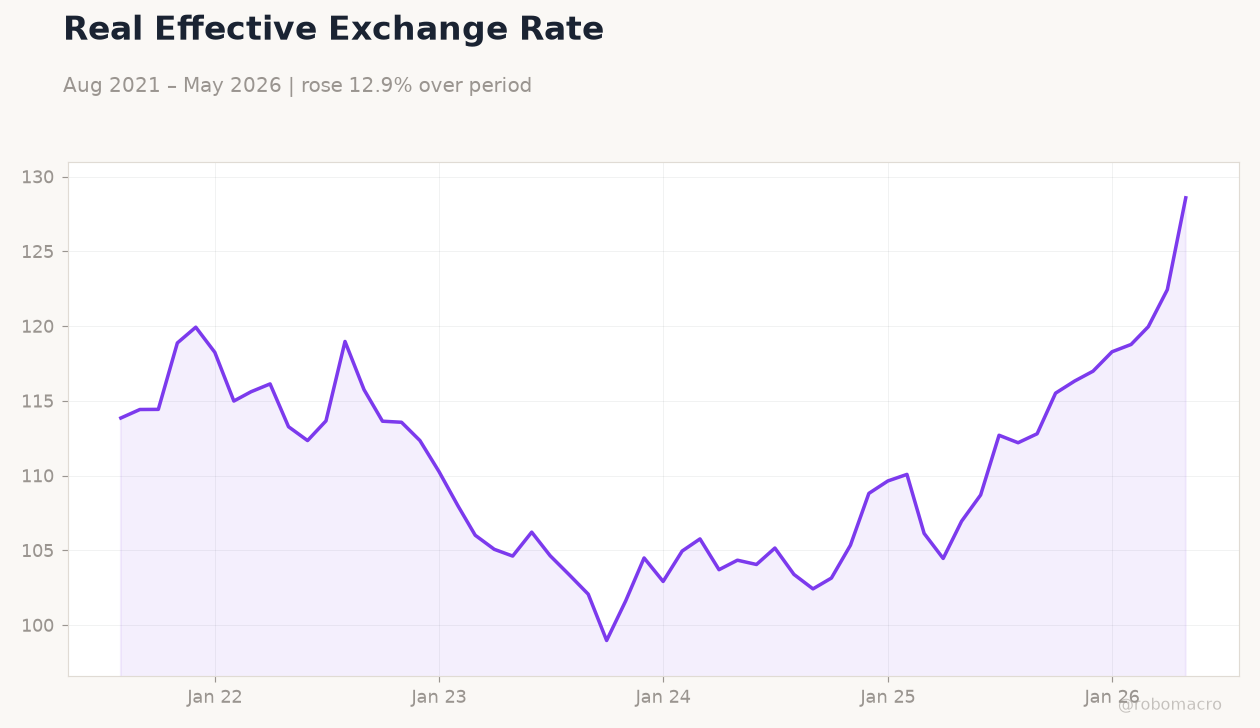
- USD/ARS fell 0.65% to 1,482.00 while EUR/ARS rose 2.31%
- Brent crude surged 4.68% to 87.20 on geopolitical risk
Yesterday's Recap
Markets recorded modest moves with no economic releases from official sources. The equity benchmark MERVAL closed 1.37% lower at 3,235,295 as investors reduced positions in banks and industrials. The official USD/ARS rate eased 0.65% to 1,482.00, narrowing the gap with parallel quotes.
EUR/ARS advanced 2.31% to 1,688.67, reflecting euro strength against the peso. Soybean prices dropped 1.00% to 1,190.00 per bushel, weighing on export-related equities. Gold rose 0.65% to 4,022.90 while Bitcoin gained 0.58% to 62,600.35.
The absence of fresh data left trading ranges narrow and driven by external commodity flows. Brent’s sharp gain offered support to energy names even as overall equity turnover stayed subdued.
The Day Ahead
No Tier-1 Argentine releases are scheduled for the next session according to the FinanceFlow calendar. Attention will center on any BCRA weekly monetary aggregates published after local market close. Treasury debt operations remain the main domestic event, with routine rollover auctions expected to test demand for dual-currency instruments.
Market participants will also track soybean export registrations and any updates on IMF program disbursements. Broader regional flows from Brazil and commodity price swings will likely set the tone for peso trading. Quiet calendars often amplify the impact of small reserve or liquidity updates once released.
Other Economic Notes
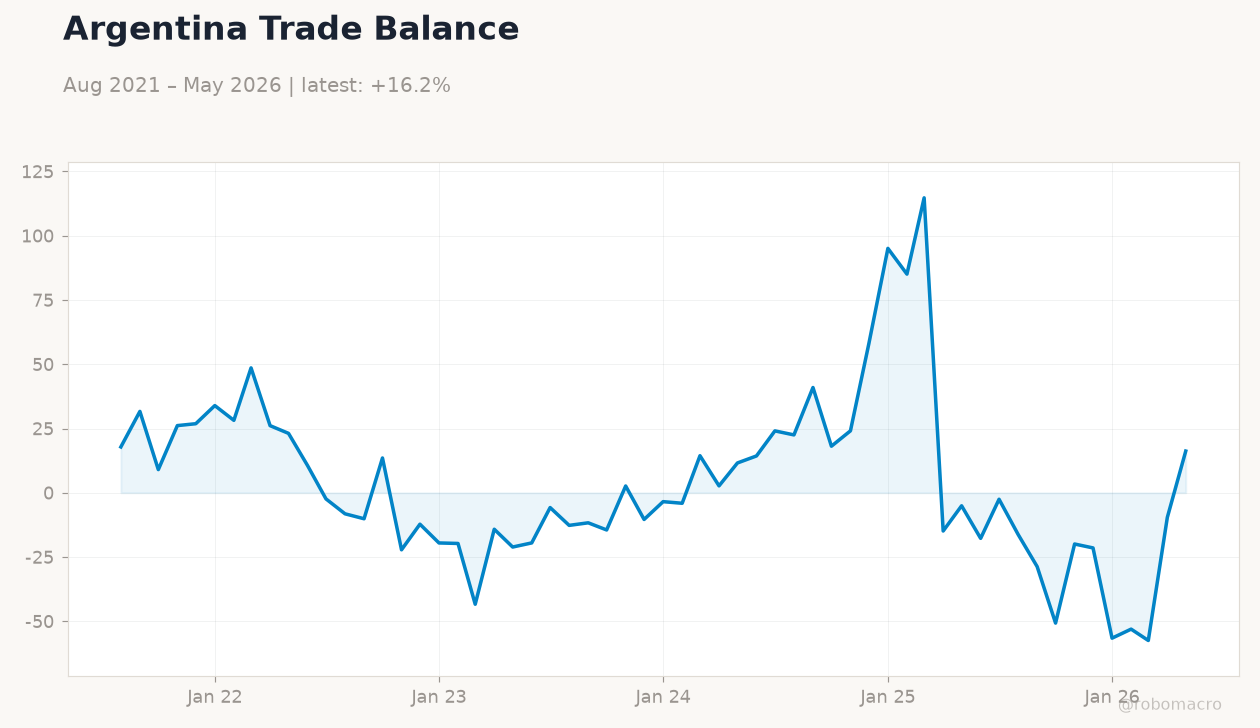
Argentina’s May CPI reading of 33.2% y/y continues to anchor expectations for gradual policy normalization. Export proceeds from soybeans remain central to reserve accumulation and fiscal revenue. Primary surplus targets stay on track, supporting renewed access to domestic bond markets.
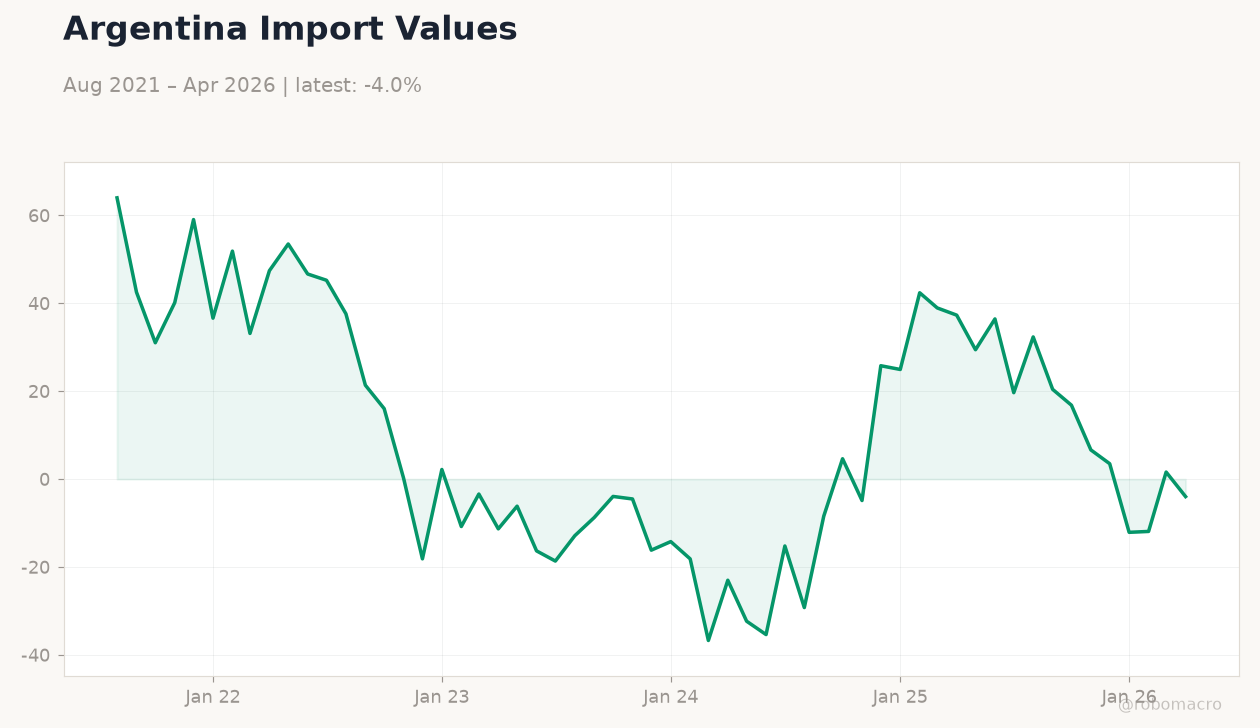
External financing conditions hinge on sustained commodity prices and steady IMF reviews. Peso stability at current levels reduces immediate pressure on import costs and inflation pass-through. Lower volatility in the official exchange rate helps limit second-round effects on consumer prices in the near term.