Argentina Macro Daily(Beta Mode)
Peso Firms as Argentine Inflation Cools to 33.2%
Market Snapshot
| Asset | Level | Change |
|---|---|---|
| MERVAL | 3,229,324.00 | -0.18% |
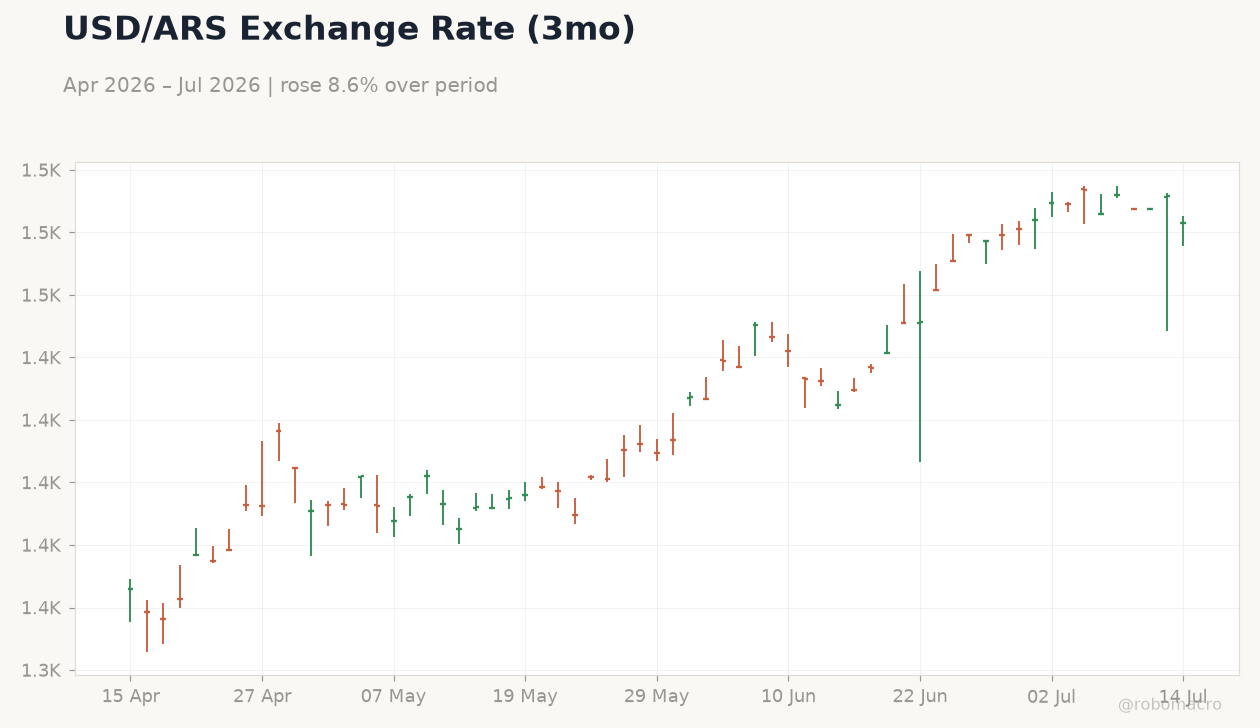
| USD/ARS | 1,482.99 | -0.58% |
| EUR/ARS | 1,687.98 | +2.27% |
| Gold | 4,037.60 | -0.58% |
| Brent Crude | 84.68 | -0.06% |
| Soybean | 1,196.50 | -0.89% |
| Bitcoin | 64,728.87 | -0.35% |
| Argentina 10Y | - | - |
Prior Economic Events
| Data | Prior | Cons | Actual |
|---|---|---|---|
| No events available | |||
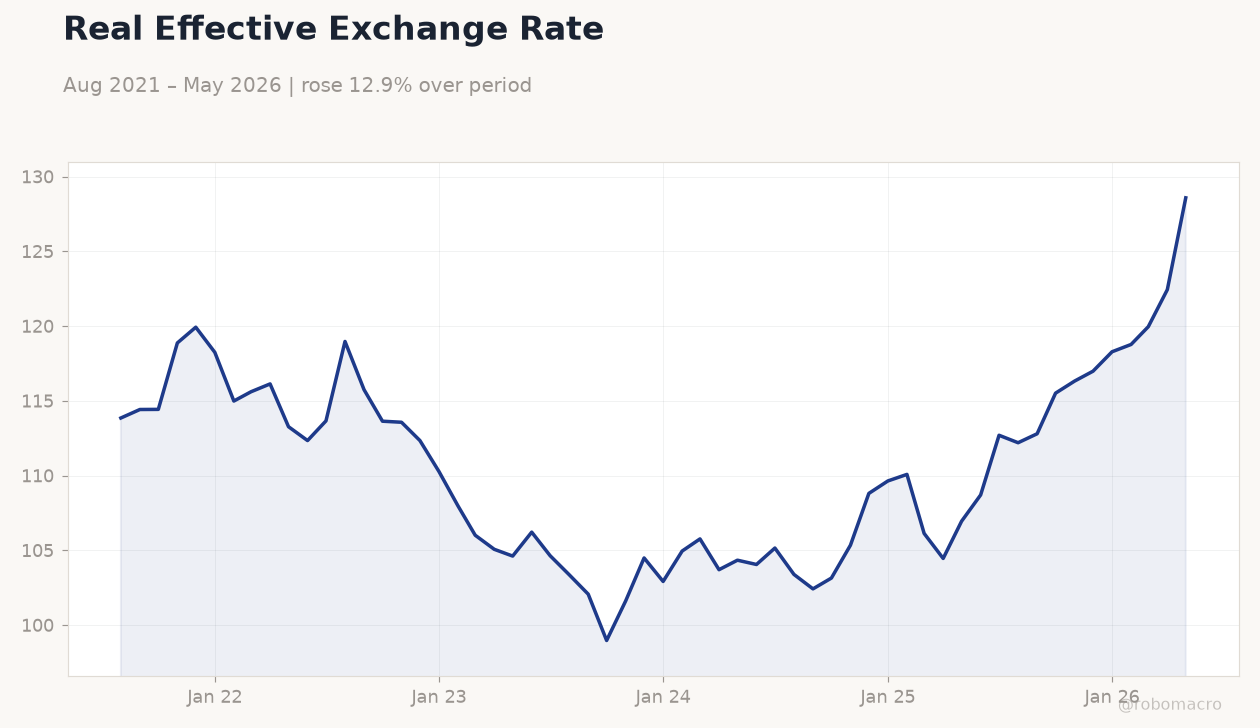 Real Effective Exchange Rate | Type: macro_line | Index (2010=100): 128.6 (2026-05-01) | Range: 98.97–128.6 | Trend(6pt): 113.9,113.6,104.5,110.1,122.4,128.6
Today's Economic Events
| Data | Prior | Cons | Time |
|---|---|---|---|
| No events available | |||
- Argentina annual inflation fell to 33.2% YoY as of May 31, the lowest level since August.
- MERVAL slipped 0.18% to 3,229,324 while USD/ARS declined 0.58% to 1,482.99.
- Soybean prices dropped 0.89% to 1,196.50, pressuring export revenues.
Yesterday's Recap
Markets digested the latest inflation print showing annual CPI at 33.2% YoY through May, confirming three consecutive months of deceleration and supporting President Milei’s disinflation narrative. The MERVAL index closed 0.18% lower at 3,229,324 amid light volumes as investors rotated out of equities into fixed-income assets. USD/ARS eased 0.58% to 1,482.99, narrowing the gap with parallel rates and reducing immediate depreciation pressure on the peso.
EUR/ARS rose 2.27% to 1,687.98, tracking euro strength against the dollar rather than local factors. Gold fell 0.58% to 4,037.60 while Brent crude held near 84.68, leaving limited impact on Argentine energy margins. Soybean futures declined 0.89% to 1,196.50 on improved U.S.
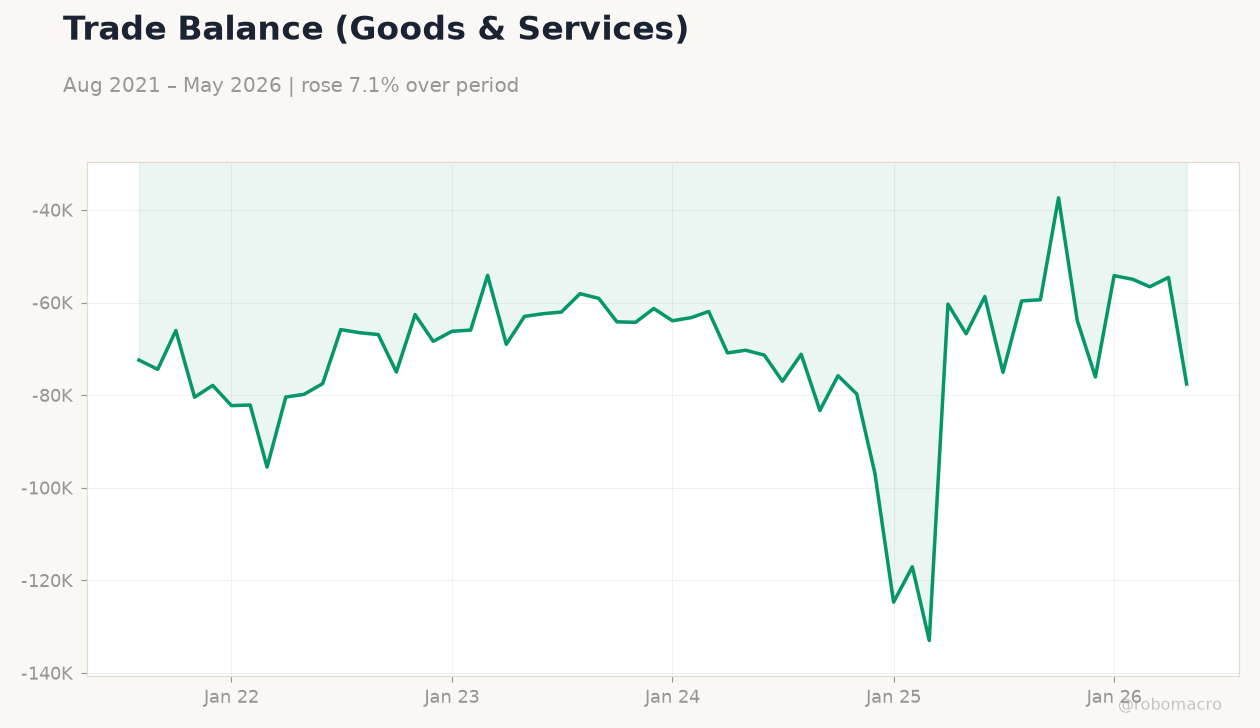
weather, weighing on expected export proceeds and fiscal receipts. Bitcoin slipped 0.35% to 64,728.87 with little spillover to domestic risk assets. The trade surplus and reserve gains noted in recent data further eased devaluation concerns.
The Day Ahead
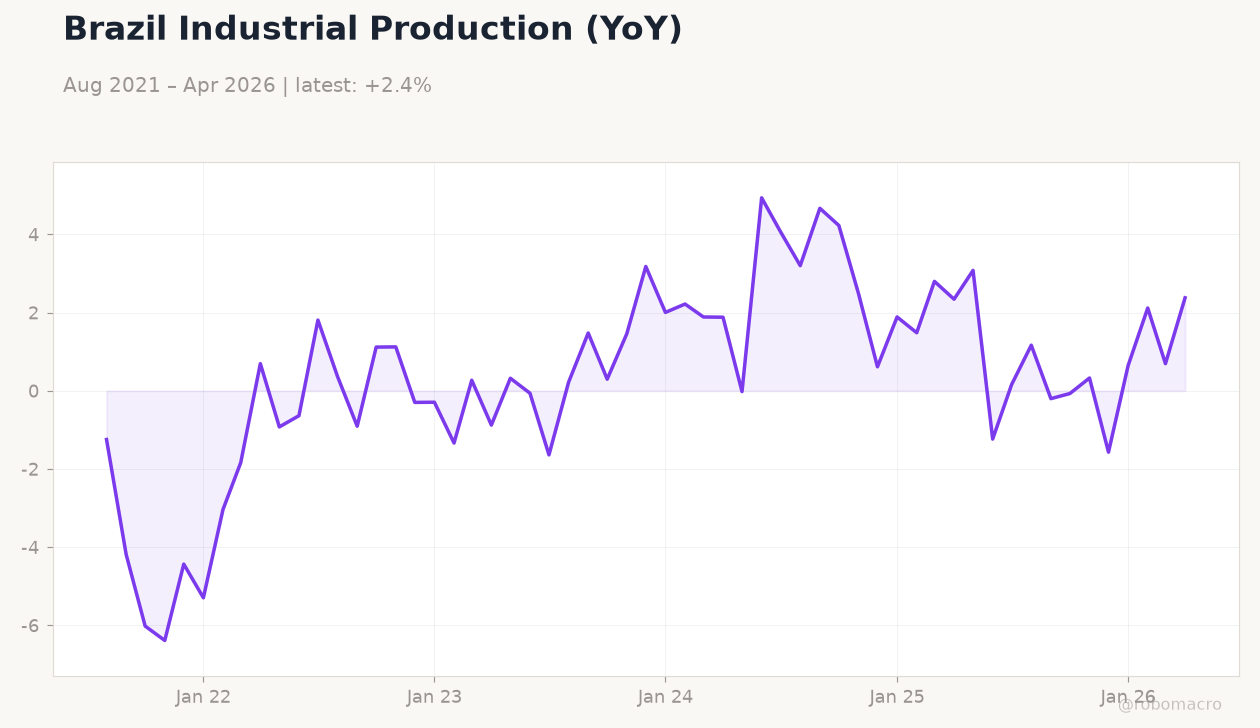
The BCRA will release its weekly reserve update tomorrow, providing the first post-inflation gauge of foreign-currency purchases. INDEC is scheduled to publish June industrial production and construction figures on July 16, offering insight into real-economy momentum after the CPI slowdown. Treasury plans to auction LETES and dual-currency bonds mid-week, testing demand for peso instruments at current yields.
Markets will monitor soybean export registrations for signs of volume recovery ahead of the July 20 tax deadline. IMF staff are expected to finalize Article IV conclusions by month-end, potentially unlocking the next disbursement tranche. No major political events are flagged through the weekend.
Other Economic Notes
Fiscal consolidation remains on track with the primary surplus target of 0.8% of GDP for 2026 still viewed as achievable following June’s outperformance. Lower inflation has eased pressure on indexed spending, freeing fiscal space for targeted transfers without breaching deficit caps. Export competitiveness continues to hinge on soybean prices and the crawling-peg pace, with any sustained decline in commodity values threatening reserve accumulation.
<i>↓ p.2</i>