Argentina Macro Daily(Beta Mode)
MERVAL Dips as Peso Weakens Modestly
Market Snapshot
| Asset | Level | Change |
|---|---|---|
| MERVAL | 3,229,324.00 | -0.18% |
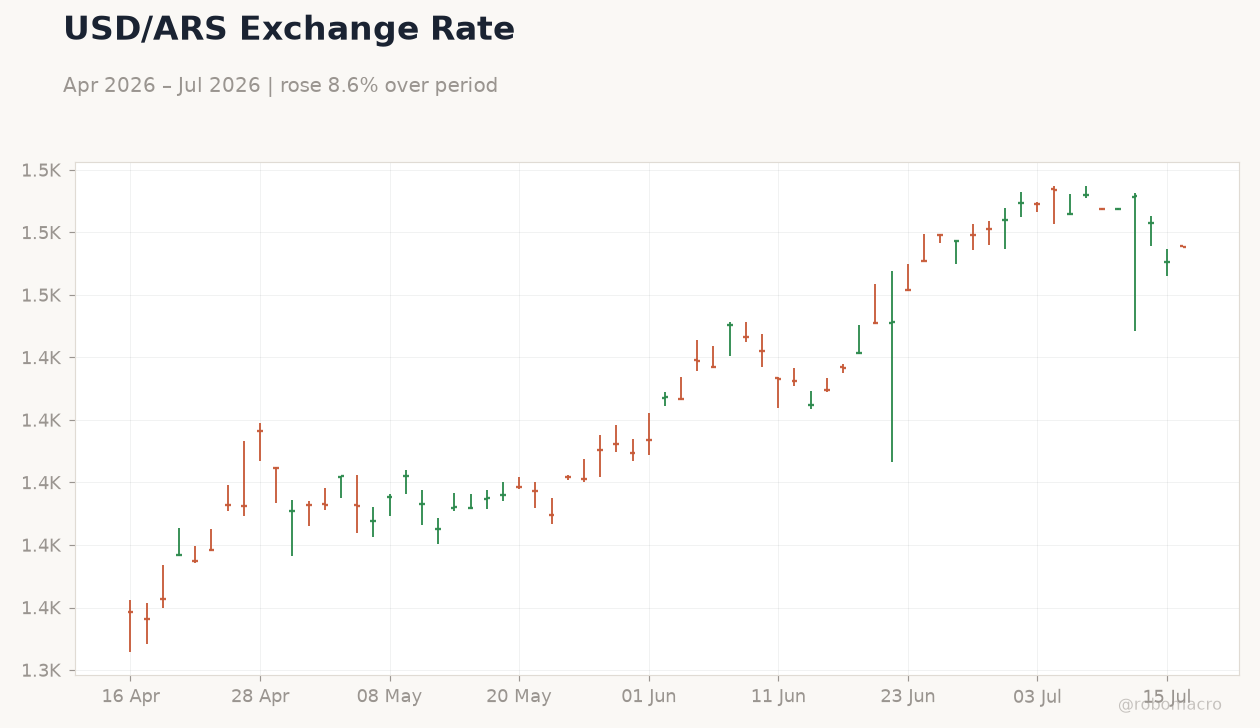
| USD/ARS | 1,475.25 | +0.32% |
| EUR/ARS | 1,691.52 | +0.69% |
| Gold | 4,038.60 | -0.13% |
| Brent Crude | 84.62 | -0.39% |
| Soybean | 1,204.25 | +0.17% |
| Bitcoin | 64,080.53 | -0.98% |
| Argentina 10Y | - | - |
Prior Economic Events
| Data | Prior | Cons | Actual |
|---|---|---|---|
| No events available | |||
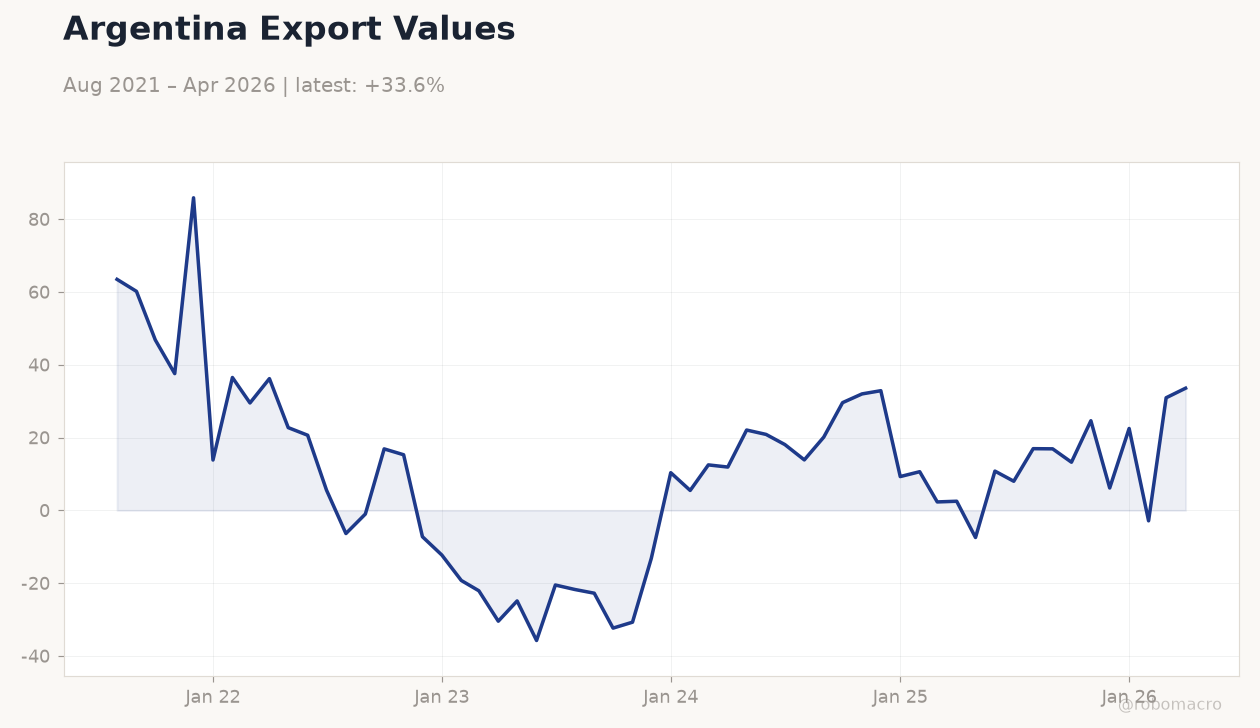 Argentina Export Values | Type: macro_line | USD mn: 33.56 (2026-04-01) | Range: -35.75–85.86 | Trend(5pt): 63.46,16.89,-13.18,10.62,33.56
Today's Economic Events
| Data | Prior | Cons | Time |
|---|---|---|---|
| No events available | |||
- MERVAL falls 0.18% to 3,229,324 with USD/ARS rising 0.32%
- No Argentina data releases or policy events occurred yesterday
- June CPI at 33.6% YoY supports expectations for steady BCRA stance
Yesterday's Recap
Argentine markets recorded modest moves with the MERVAL index declining 0.18% to close at 3,229,324. The official USD/ARS rate advanced 0.32% to 1,475.25 while the EUR/ARS pair gained 0.69% to 1,691.52. Gold slipped 0.13% to 4,038.60 and Brent Crude fell 0.39% to 84.62, trimming commodity-linked revenues for exporters.
Soybeans edged 0.17% higher to 1,204.25, offering limited support to agricultural shipments. Bitcoin declined 0.98% to 64,080.53, reflecting broader risk-off sentiment among local investors. The Argentina 10Y bond showed no price change.
With the calendar empty of releases, trading volumes remained subdued and focus stayed on peso stability and carry-trade positioning.
The Day Ahead
No high-frequency indicators or central bank announcements are scheduled for the next session. Attention will center on weekly BCRA reserve updates and any follow-up comments from Treasury officials on fiscal execution. Soybean export registrations and primary surplus prints due later in the week could influence sentiment toward the peso.
Global commodity prices, particularly Brent and gold, will continue to shape external accounts. Investors will also monitor any spillover from Asian equity moves and U.S. inflation prints that affect EM flows into Argentina.
Other Economic Notes
June CPI at 33.6% YoY confirms the ongoing disinflation path and keeps real returns on peso assets positive. Export-tax collections have benefited from stable soybean prices near 1,204.25, supporting the Treasury’s primary surplus target. Fiscal consolidation efforts remain on track, reducing pressure on domestic financing needs.
The combination of contained inflation and steady commodity revenues improves the outlook for reserve accumulation. These factors collectively reduce the urgency for immediate BCRA rate adjustments while preserving space for gradual easing later in the year.
Global Macro News
Canada’s central bank held its policy rate steady at 2.25%, citing improving domestic conditions and providing a neutral signal for global liquidity. South Korea raised rates for the first time since 2023 to address inflation and household debt, tightening financial conditions for emerging-market borrowers. <i>↓ p.2</i>