Argentina Macro Daily(Beta Mode)
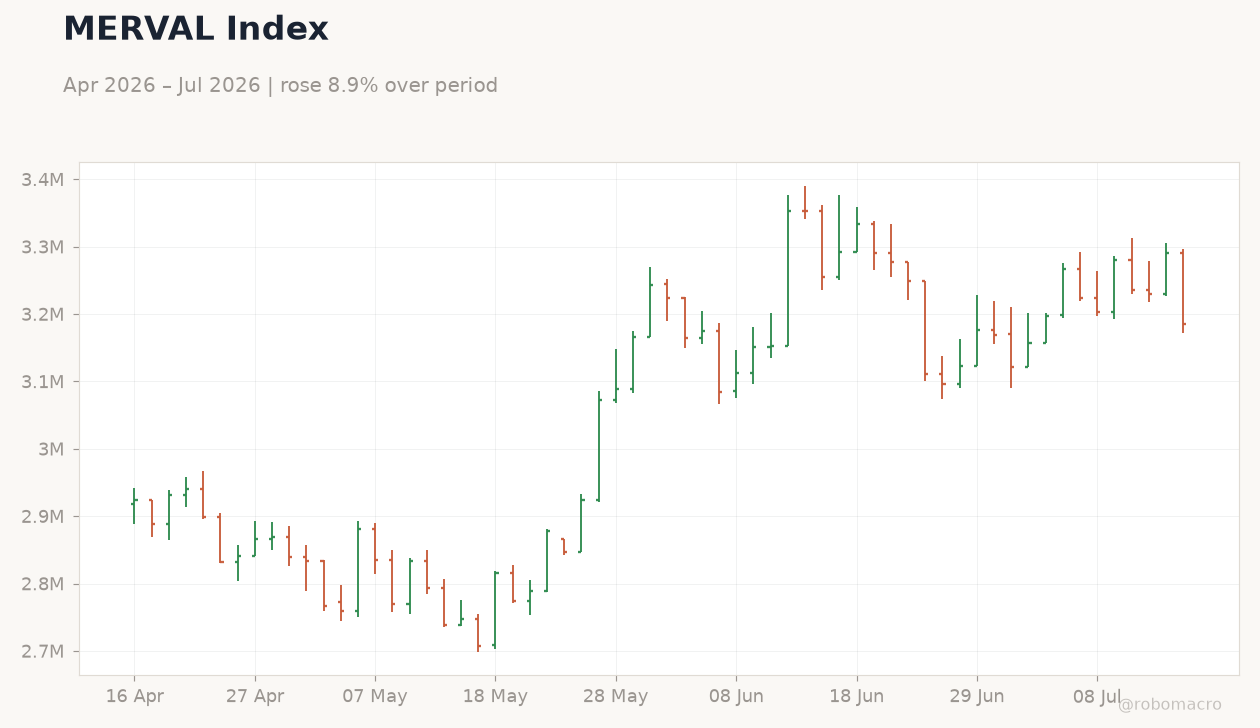
MERVAL Slides 3.2% as Peso Holds Steady
Market Snapshot
| Asset | Level | Change |
|---|---|---|
| MERVAL | 3,185,257.00 | -3.22% |
| USD/ARS | 1,475.00 | -0.07% |
| EUR/ARS | 1,686.82 | -0.36% |
| Gold | 4,001.20 | +0.39% |
| Brent Crude | 84.81 | +0.69% |
| Soybean | 1,189.75 | -0.44% |
| Bitcoin | 62,862.03 | -1.45% |
| Argentina 10Y | - | - |
Prior Economic Events
| Data | Prior | Cons | Actual |
|---|---|---|---|
| No events available | |||
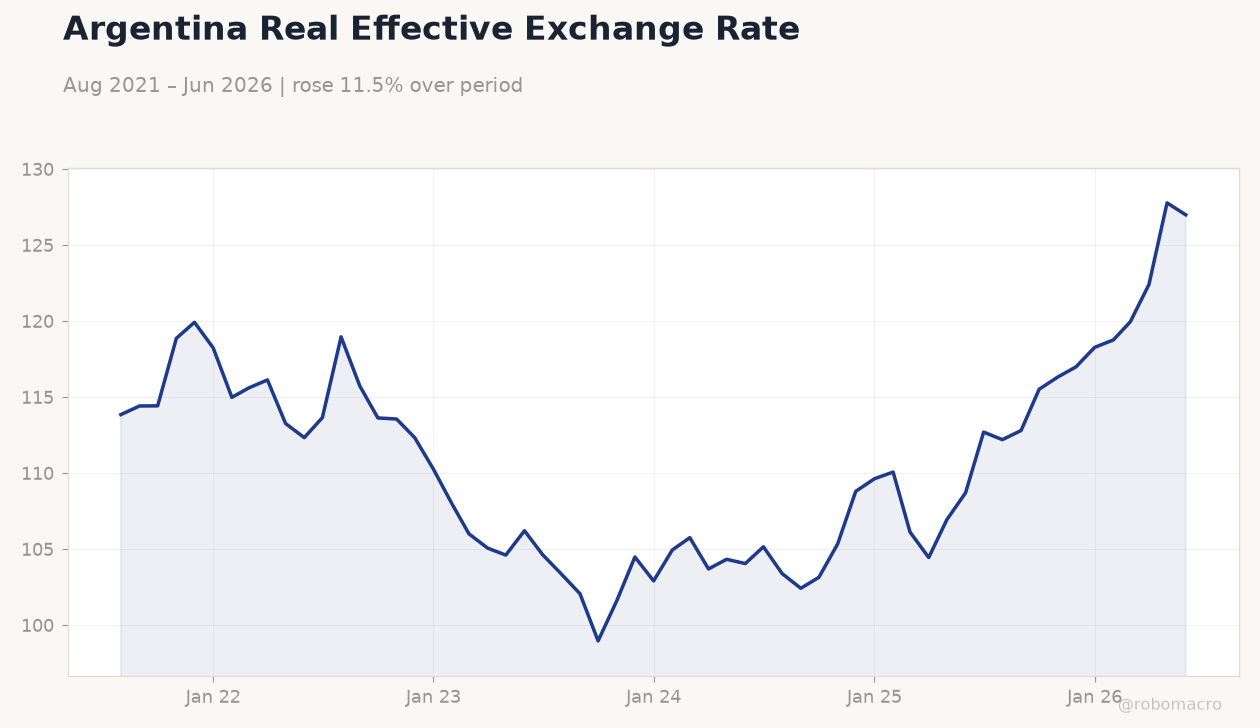 Argentina Real Effective Exchange Rate | Type: macro_line | Index: 127 (2026-06-01) | Range: 98.97–127.8 | Trend(6pt): 113.9,113.6,104.5,110.1,122.4,127
Today's Economic Events
| Data | Prior | Cons | Time |
|---|---|---|---|
| No events available | |||
- MERVAL drops 3.22% to 3,185,257 on thin volumes
- USD/ARS eases 0.07% to 1,475 with limited intervention
- Annual inflation remains at 33.6% as of June 30
Yesterday's Recap
Argentine equity markets closed lower with the MERVAL index declining 3.22% to 3,185,257 amid subdued trading activity and no major corporate announcements. The peso traded in a narrow range, with USD/ARS ending at 1,475.00 after a 0.07% dip that reflected steady BCRA presence in the spot market. EUR/ARS fell 0.36% to 1,686.82 while soybean prices slipped 0.44% to 1,189.75, weighing on export-related sentiment.
Gold advanced 0.39% to 4,001.20 and Brent crude gained 0.69% to 84.81, providing modest support to commodity-linked assets. No economic data releases occurred on July 16, leaving market moves driven by positioning ahead of the weekend. Provincial debt spreads remained stable as investors awaited fresh fiscal signals from the Treasury.
The Day Ahead
No scheduled Argentine data releases or policy events appear on the calendar for July 17 or July 18. Traders will monitor BCRA reserve updates and any Treasury bill auctions that could influence short-term peso liquidity. Global developments such as Brazil’s rebounding growth and South Korea’s rate hike may shape external risk appetite for emerging-market assets.
Soybean export flows and any updates on IMF Article IV discussions remain key watchpoints for fiscal credibility. Market participants expect the crawling peg to stay on its current path absent fresh inflation prints.
Other Economic Notes
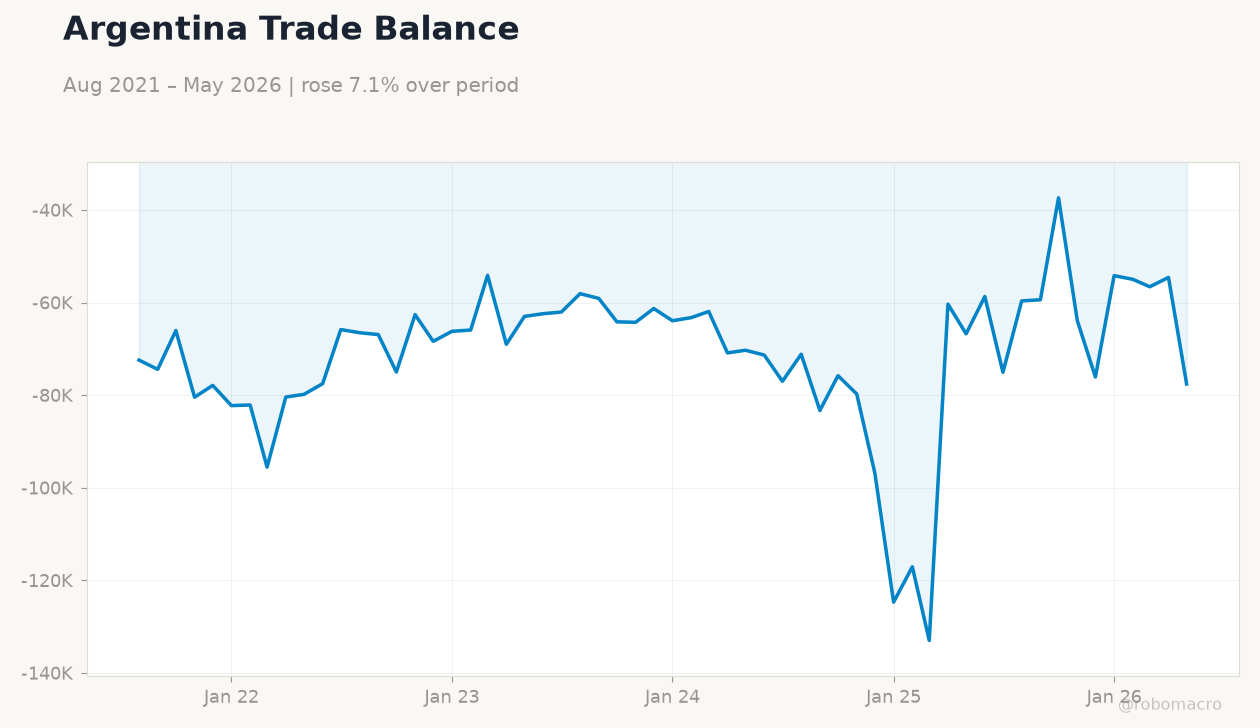
Argentina’s primary fiscal surplus target of 1.8% of GDP continues to anchor investor confidence in peso-denominated instruments despite limited new issuance data. Soybean export proceeds remain central to reserve accumulation, with current prices offering only marginal support to the trade balance. IMF staff engagement in Buenos Aires underscores the need for sustained consolidation beyond the headline surplus to rebuild buffers.
Provincial financing conditions have improved modestly, yet overall debt dynamics stay sensitive to real interest rates and exchange-rate stability.
Global Macro News
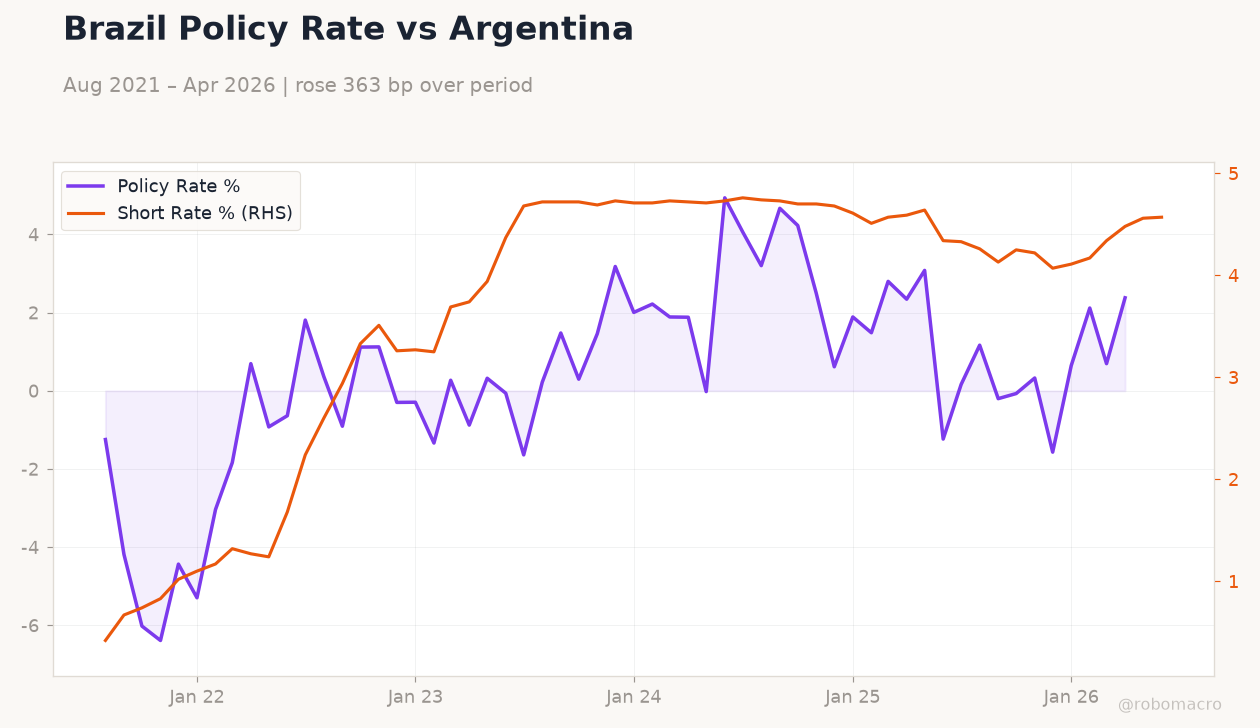
Brazil’s economic rebound in early 2026 has reduced expectations for near-term rate cuts there, tightening regional financial conditions that spill over to Argentine asset pricing. <i>↓ p.2</i>