Argentina Macro Daily(Beta Mode)
Peso Slides Sharply as MERVAL Edges Higher
Market Snapshot
| Asset | Level | Change |
|---|---|---|
| MERVAL | 3,199,935.00 | +0.46% |
| USD/ARS | 1,481.00 | +3.46% |
| EUR/ARS | 1,690.27 | +3.33% |
| Gold | 4,066.50 | +1.40% |
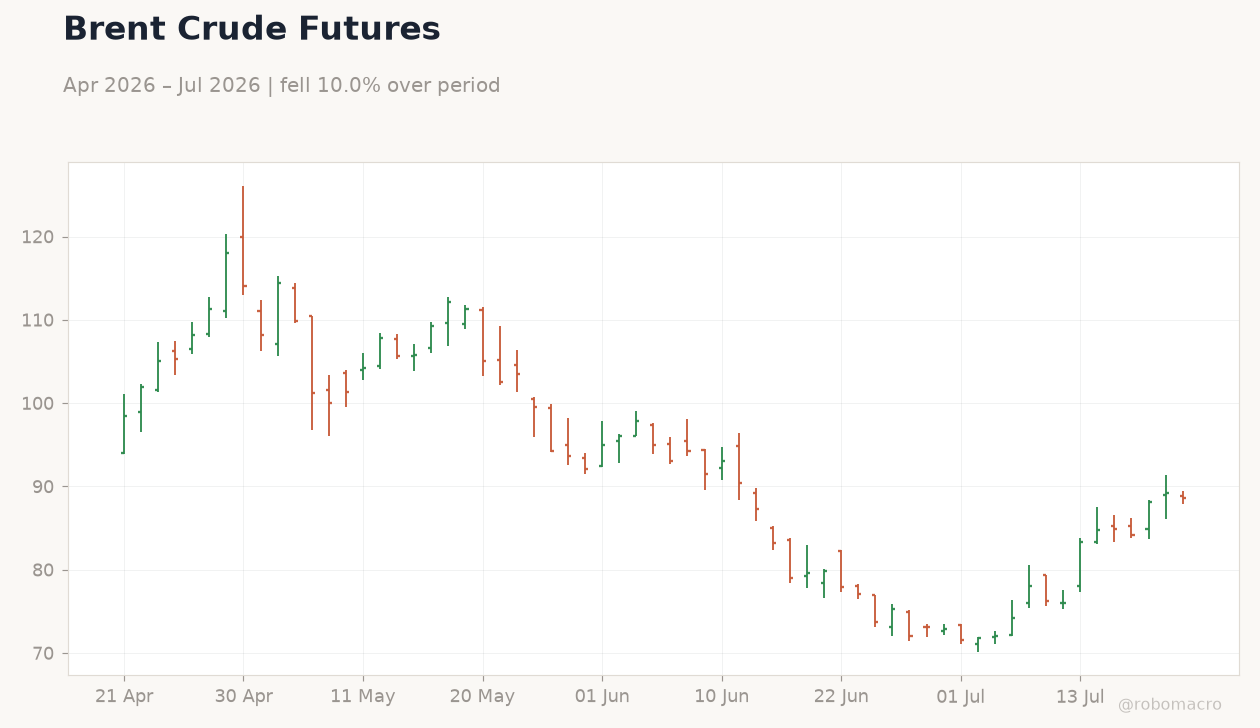
| Brent Crude | 88.70 | -0.58% |
| Soybean | 1,226.25 | +0.02% |
| Bitcoin | 66,165.91 | +1.43% |
| Argentina 10Y | - | - |
Prior Economic Events
| Data | Prior | Cons | Actual |
|---|---|---|---|
| No events available | |||
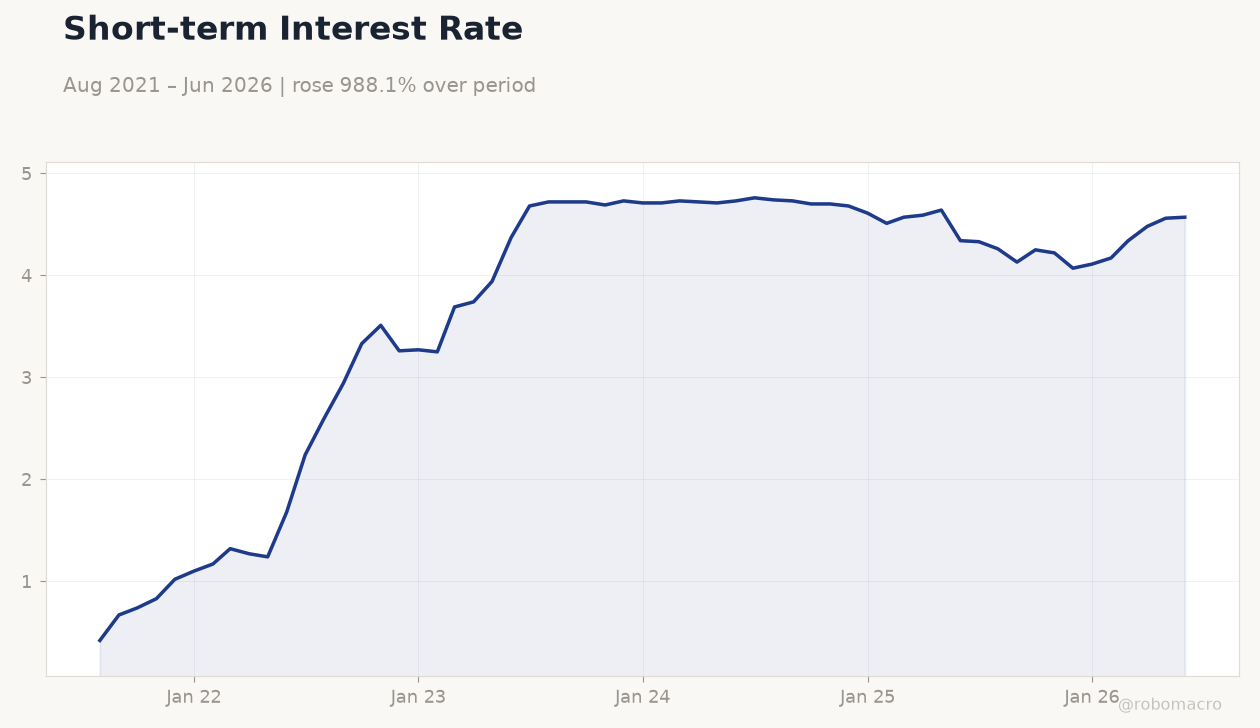 Short-term Interest Rate | Type: macro_line | Percent: 4.57 (2026-06-01) | Range: 0.42–4.76 | Trend(6pt): 0.42,3.33,4.73,4.51,4.48,4.57
Today's Economic Events
| Data | Prior | Cons | Time |
|---|---|---|---|
| No events available | |||
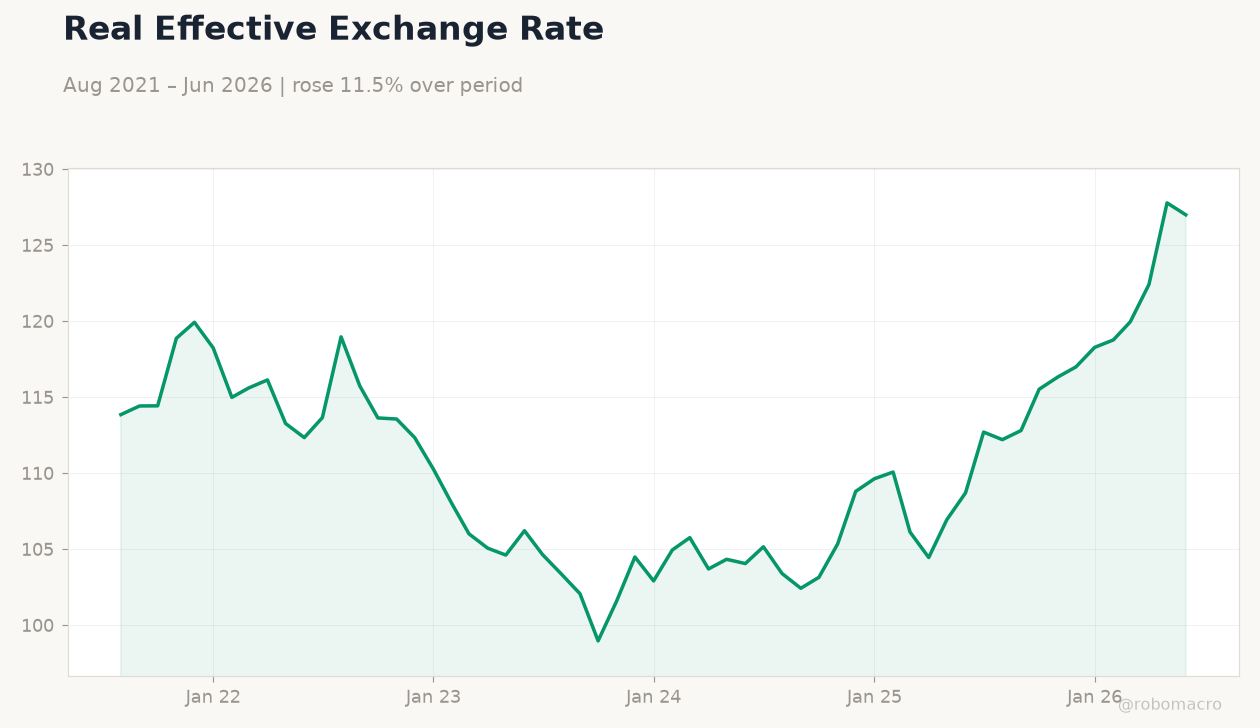
- USD/ARS surges 3.46% to 1,481 amid thin liquidity
- MERVAL rises 0.46% to 3,199,935 on selective buying
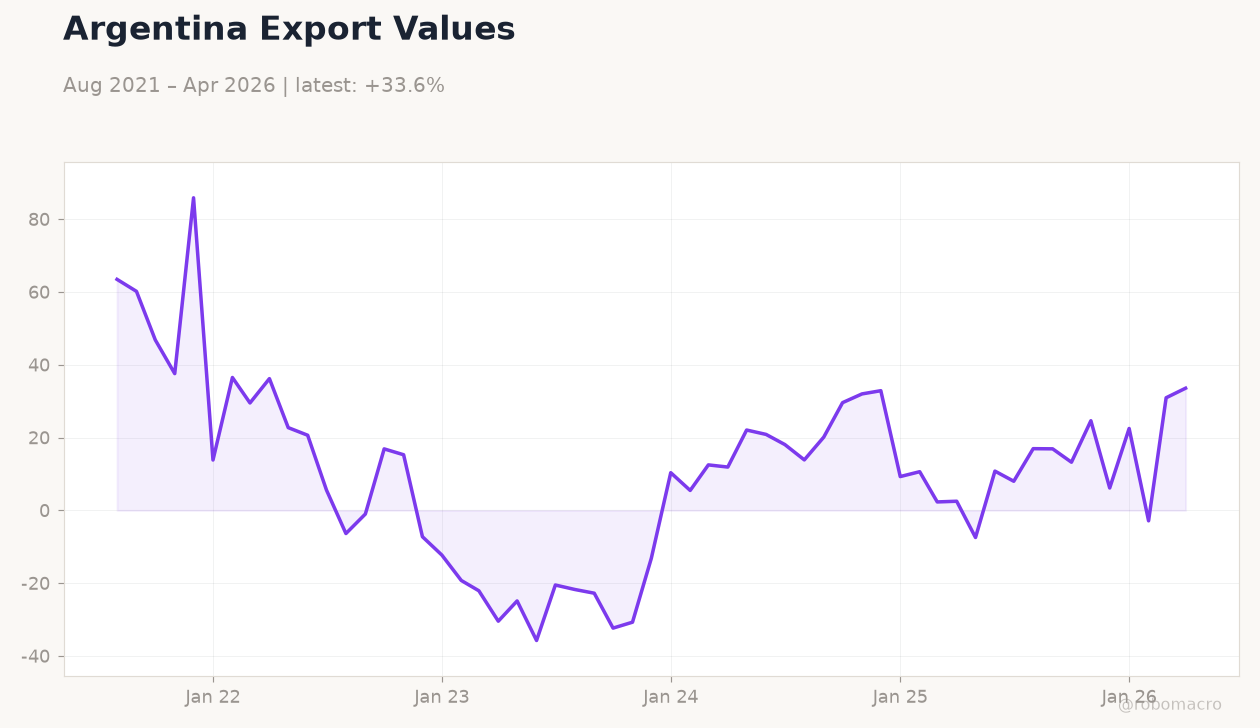
- June CPI YoY holds at 33.6%, supporting gradual easing bets
Yesterday's Recap
Argentina markets saw pronounced peso depreciation with USD/ARS climbing 3.46% to close at 1,481.00 while EUR/ARS advanced 3.33% to 1,690.27. The MERVAL index posted a modest 0.46% gain to 3,199,935.00, driven by selective demand in banks and energy names despite low volumes. Soybean prices remained nearly flat at 1,226.25, offering limited support to export revenues, while Brent crude fell 0.58% to 88.70.
Gold advanced 1.40% to 4,066.50, providing a partial hedge for local investors. No economic data releases occurred, leaving FX moves to reflect positioning ahead of potential reserve updates. Bitcoin rose 1.43% to 66,165.91, showing limited spillover into Argentine risk assets.
The Day Ahead
No official data releases are scheduled for the next three days, keeping focus on BCRA reserve flows and any IMF-related commentary. Market participants will monitor soybean export registrations for signs of renewed inflows that could stabilise the peso. Fiscal consolidation progress remains in view, with primary surplus targets tied to the next IMF disbursement.
Traders expect continued daily FX interventions to limit volatility around current levels. Broader sentiment will hinge on global energy prices and any updates on export-tax rebates supporting manufacturing.
Other Economic Notes
June CPI at 33.6% YoY marks continued disinflation, opening room for measured policy adjustments while preserving fiscal anchors. Soybean export proceeds remain central to reserve accumulation and external balance management under the current IMF programme. Extension of industrial export-tax rebates through year-end should sustain manufacturing momentum and support the primary surplus path.
Peso dynamics continue to reflect the balance between intervention volumes and limited capital inflows. Fiscal discipline and reserve targets stay key to maintaining programme credibility with multilateral lenders.
Global Macro News
Emerging-market equities extended losses as renewed US-Iran tensions lifted oil prices above $90, pressuring currencies across the region. Several African central banks signalled intentions to keep rates higher for longer to counter imported inflation risks. <i>↓ p.2</i>