Argentina Macro Daily(Beta Mode)
Moody's Upgrade Lifts Argentine Assets
Market Snapshot
| Asset | Level | Change |
|---|---|---|
| MERVAL | 3,199,935.00 | +0.46% |
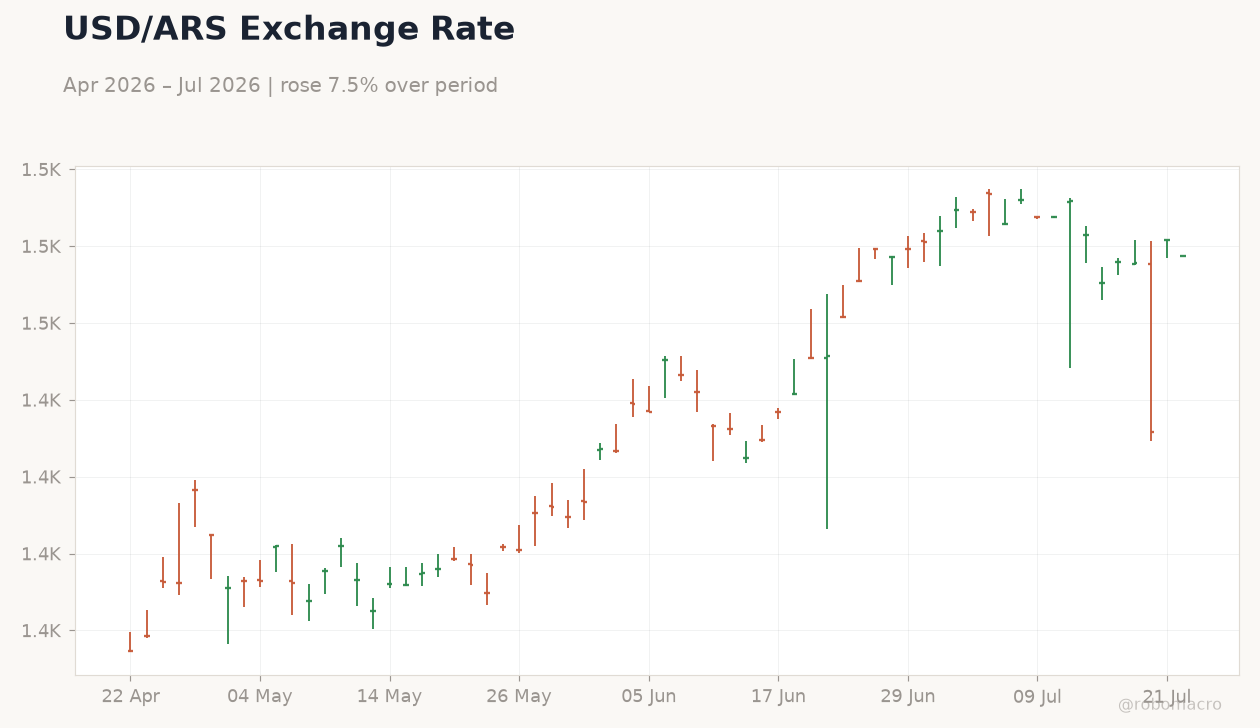
| USD/ARS | 1,477.50 | -0.27% |
| EUR/ARS | 1,685.27 | -0.34% |
| Gold | 4,122.60 | +1.27% |
| Brent Crude | 94.40 | +3.72% |
| Soybean | 1,225.00 | +0.45% |
| Bitcoin | 65,948.15 | -0.84% |
| Argentina 10Y | - | - |
Prior Economic Events
| Data | Prior | Cons | Actual |
|---|---|---|---|
| No events available | |||
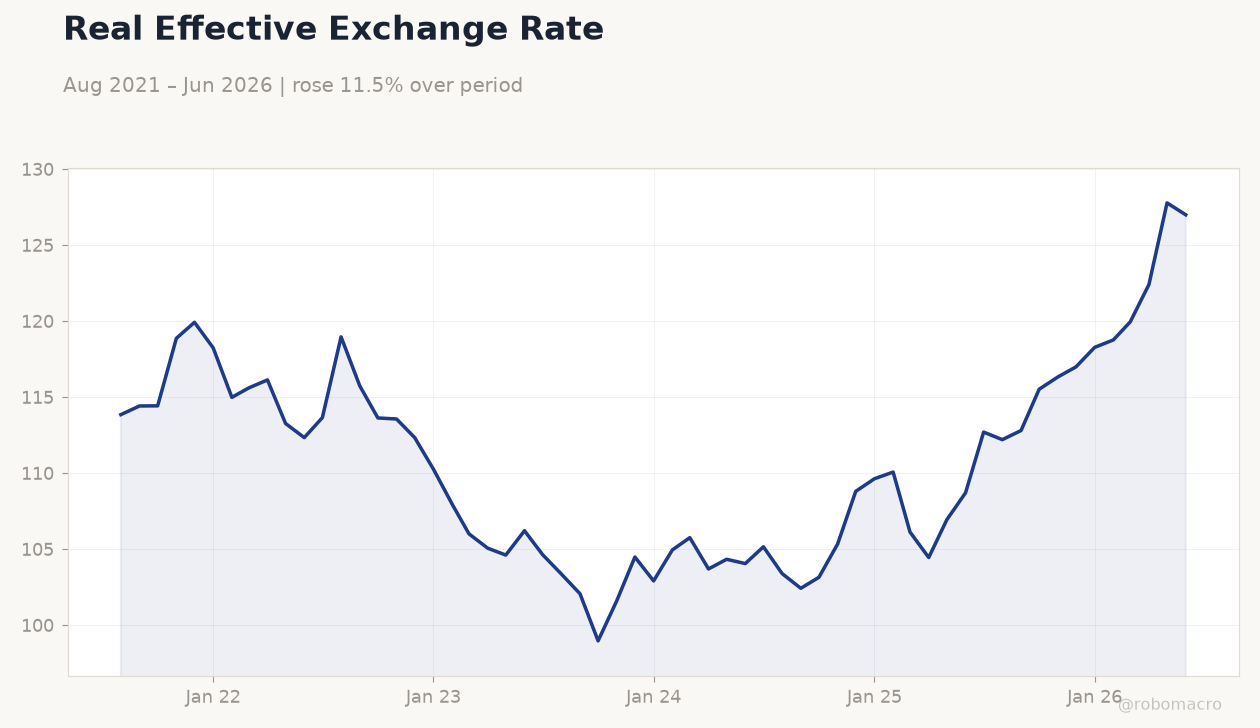 Real Effective Exchange Rate | Type: macro_line | Index: 127 (2026-06-01) | Range: 98.97–127.8 | Trend(6pt): 113.9,113.6,104.5,110.1,122.4,127
Today's Economic Events
| Data | Prior | Cons | Time |
|---|---|---|---|
| No events available | |||
- Moody's raises Argentina to B3 with positive outlook
- MERVAL gains 0.46% to 3,199,935 on improved sentiment
- USD/ARS falls 0.27% to 1,477.50 as peso firms
Yesterday's Recap
Markets responded positively to Moody's upgrade of Argentina's sovereign rating from Caa1 to B3 with a positive outlook, reflecting fiscal consolidation and restored market access. The MERVAL index advanced 0.46% to close at 3,199,935 amid broader risk appetite. USD/ARS declined 0.27% to 1,477.50, indicating modest peso strengthening against the dollar.
EUR/ARS eased 0.34% to 1,685.27 in tandem. Gold rose 1.27% to 4,122.60 on safe-haven demand while Brent crude jumped 3.72% to 94.40, supporting export-linked revenues. Soybean futures added 0.45% to 1,225.00, aiding Argentine farm margins.
No economic data releases occurred, leaving rating news as the dominant driver. Bitcoin slipped 0.84% to 65,948.15, showing limited spillover from local gains.
The Day Ahead
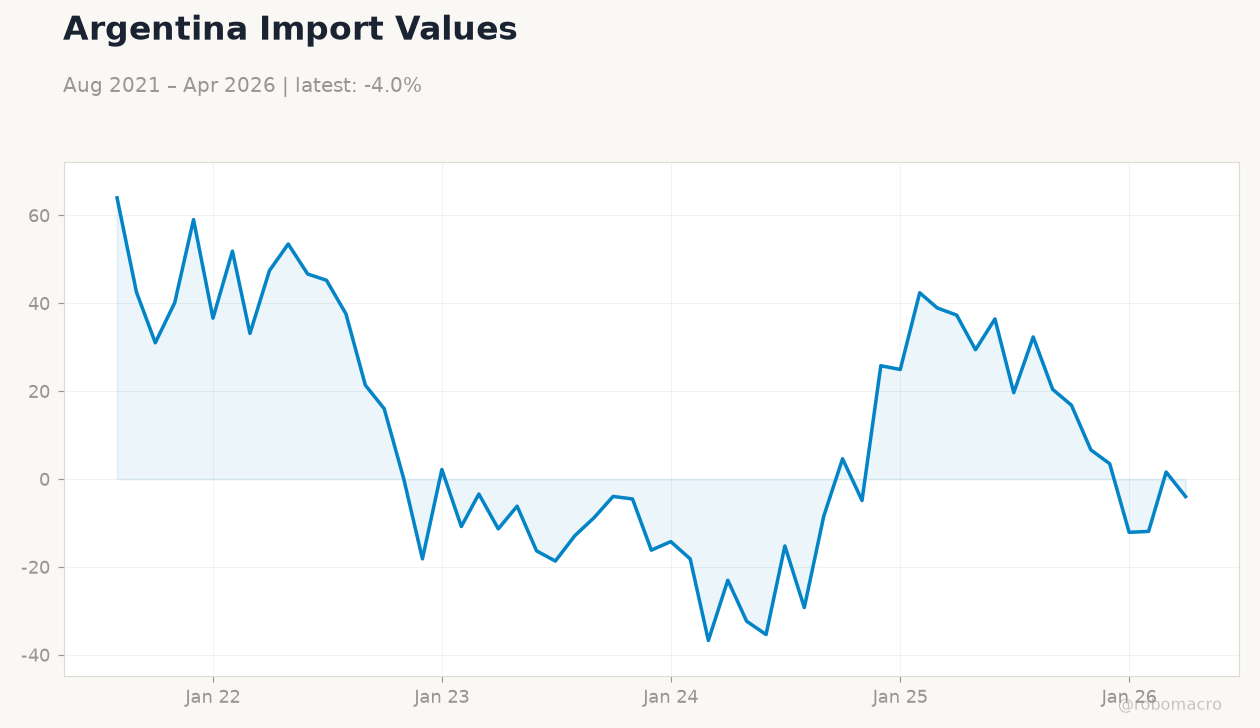
Attention centers on ongoing debt management and export performance with no major releases scheduled. Treasury operations continue to target longer-maturity placements following the Moody's signal. Soybean export volumes remain key for fiscal inflows and reserve support.
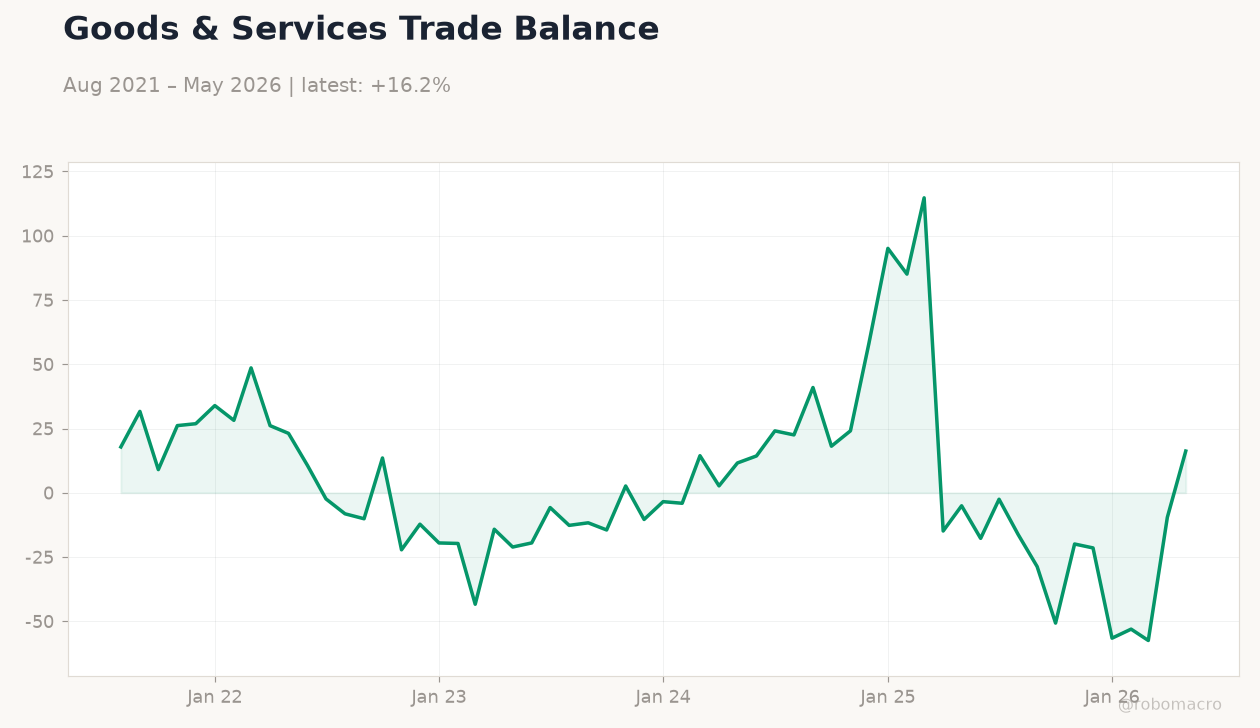
The peso's recent stability may encourage further central bank accumulation of foreign currency. Broader commodity price trends, especially Brent strength, could bolster trade balances. Analysts monitor any incremental updates on IMF review discussions for additional policy signals.
Gold's advance may also influence local inflation expectations given its safe-haven role.
Other Economic Notes
Moody's upgrade highlights tangible progress on structural reforms and primary surplus targets. Argentina's CPI YoY registered 33.6% as of June, confirming continued disinflation that supports external credibility. Fiscal accounts draw strength from soybean export tax collections amid stable global prices.
The rating change improves prospects for renewed international bond issuance and reduces near-term refinancing risks. Sustained inflows could ease pressure on domestic financing channels. Brent's sharp gain further aids energy-related revenues and trade surplus prospects.