Argentina Macro Daily(Beta Mode)
MERVAL Slides as Peso Weakens Further
Market Snapshot
| Asset | Level | Change |
|---|---|---|
| MERVAL | 3,319,522.00 | -1.78% |
| USD/ARS | 1,488.25 | +0.40% |
| EUR/ARS | 1,693.93 | +0.12% |
| Gold | 4,059.40 | +0.32% |
| Brent Crude | 91.70 | -8.93% |
| Soybean | 1,251.50 | +1.13% |
| Bitcoin | 65,079.53 | +0.05% |
| Argentina 10Y | - | - |
Prior Economic Events
| Data | Prior | Cons | Actual |
|---|---|---|---|
| No events available | |||
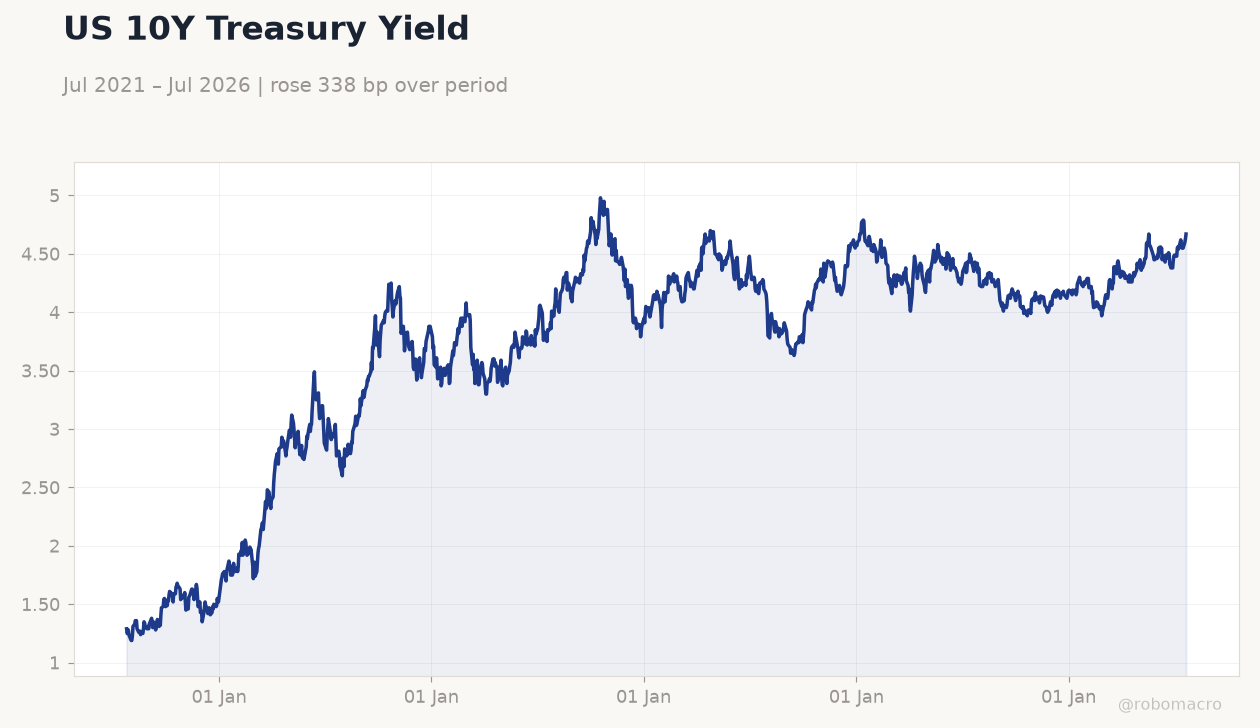 US 10Y Treasury Yield | Type: macro_line | Yield %: 4.67 (2026-07-22) | Range: 1.19–4.98 | Trend(6pt): 1.29,4.21,4.11,4.42,4.6,4.67
Today's Economic Events
| Data | Prior | Cons | Time |
|---|---|---|---|
| No events available | |||
- MERVAL falls 1.78% to 3,319,522 amid thin volumes
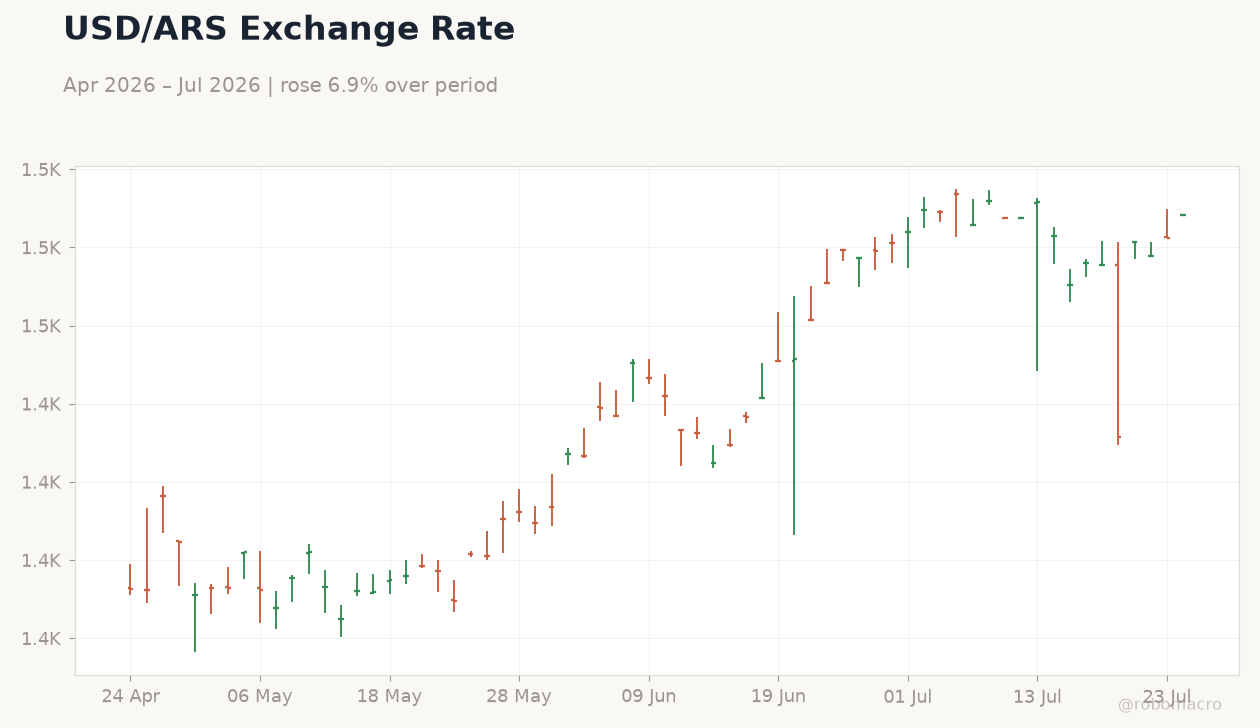
- USD/ARS climbs 0.40% to 1,488.25 on persistent demand
- Soybean futures rise 1.13%, bolstering export outlook
Yesterday's Recap
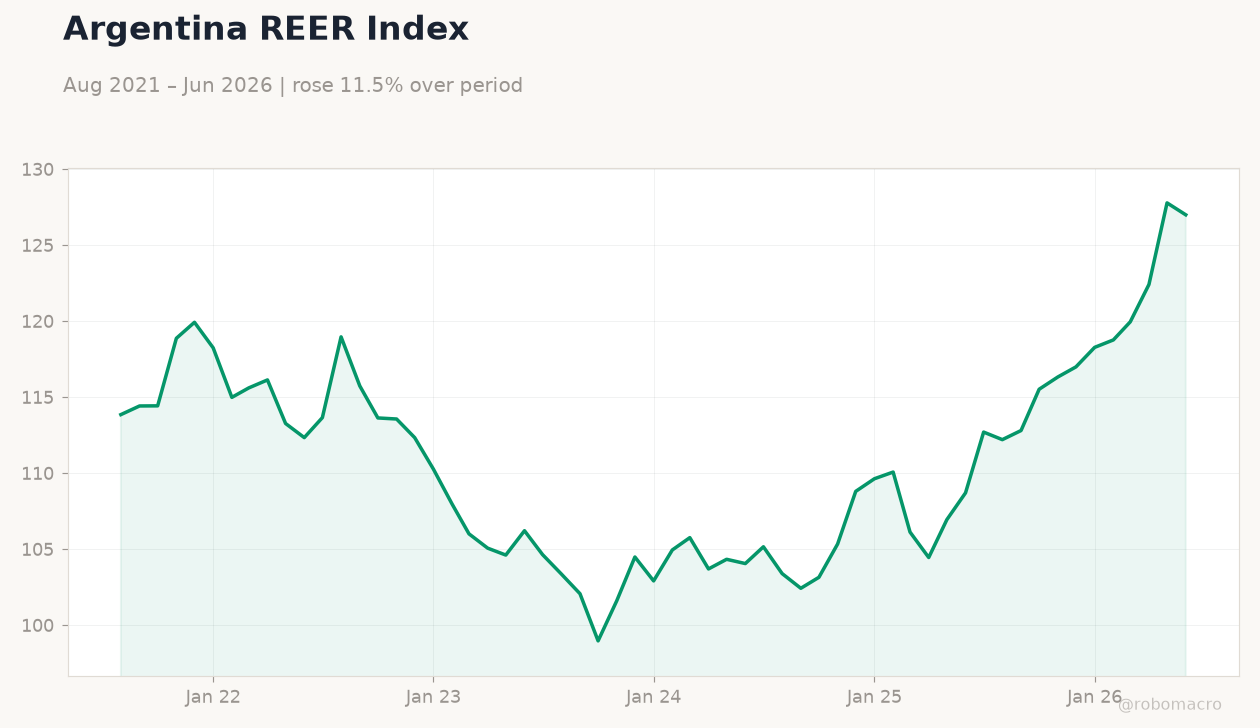
Argentine markets closed lower with the MERVAL declining 1.78% to 3,319,522 as investors reduced exposure to local equities amid thin trading volumes. The official USD/ARS rate advanced 0.40% to 1,488.25, reflecting ongoing peso depreciation pressures that prompted selective hedging. EUR/ARS edged 0.12% higher to 1,693.93 while gold gained 0.32% to 4,059.40 on safe-haven buying.
Brent crude plunged 8.93% to 91.70, easing imported energy costs for the economy and providing modest relief to fiscal accounts. No major data releases occurred yesterday, leaving soybean prices up 1.13% at 1,251.50 as the key positive driver for trade balances and reserve accumulation. Bitcoin held steady with a 0.05% gain at 65,079.53.
The absence of fresh inflation prints kept focus on reserve dynamics and fiscal flows, with the Argentina 10Y benchmark showing no quoted movement.
The Day Ahead
Markets enter a data-light session with no scheduled releases from INDEC or the BCRA according to the FinanceFlow calendar. Attention turns to any Treasury debt rollover announcements and ongoing IMF Article IV discussions in Buenos Aires. Traders will monitor soybean export registrations for signs of sustained surplus momentum that could further support external accounts.
The peso’s parallel premium remains a watchpoint given the official rate’s recent climb and persistent demand pressures. Regional central bank decisions elsewhere may influence sentiment toward emerging-market currencies including the ARS. Fiscal consolidation updates could surface through official channels without triggering immediate market moves, while global oil volatility continues to shape import cost expectations.
Other Economic Notes
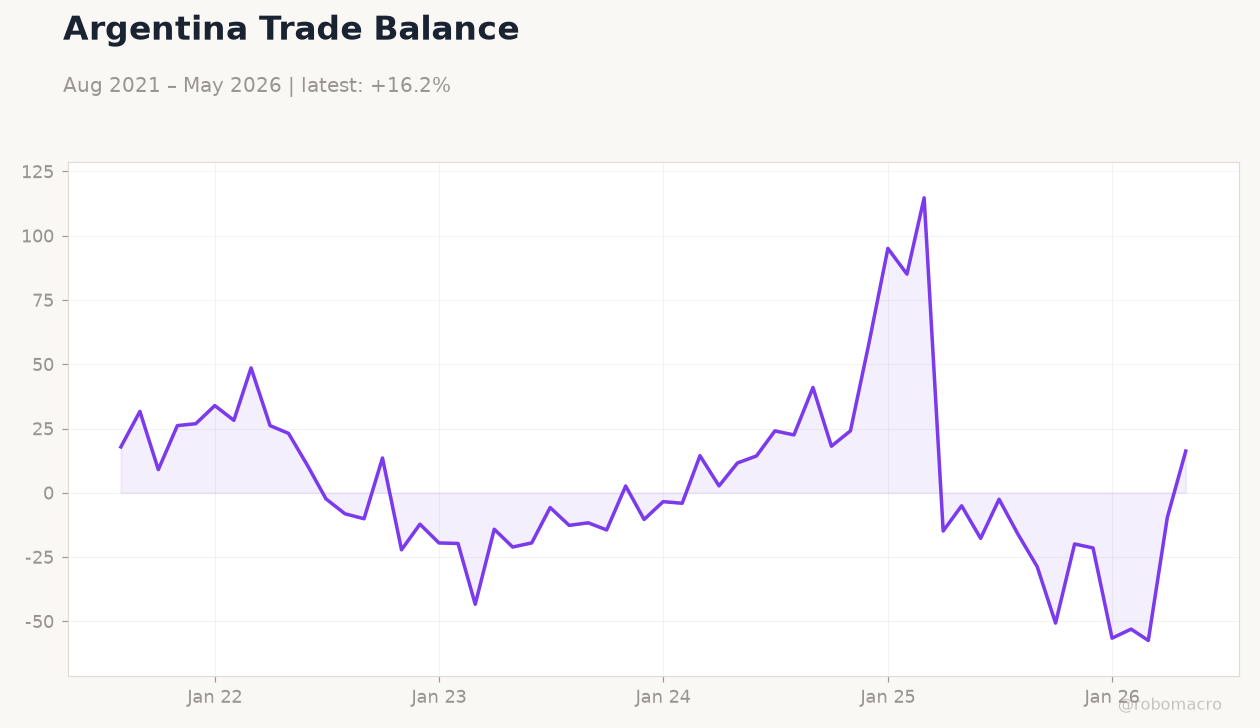
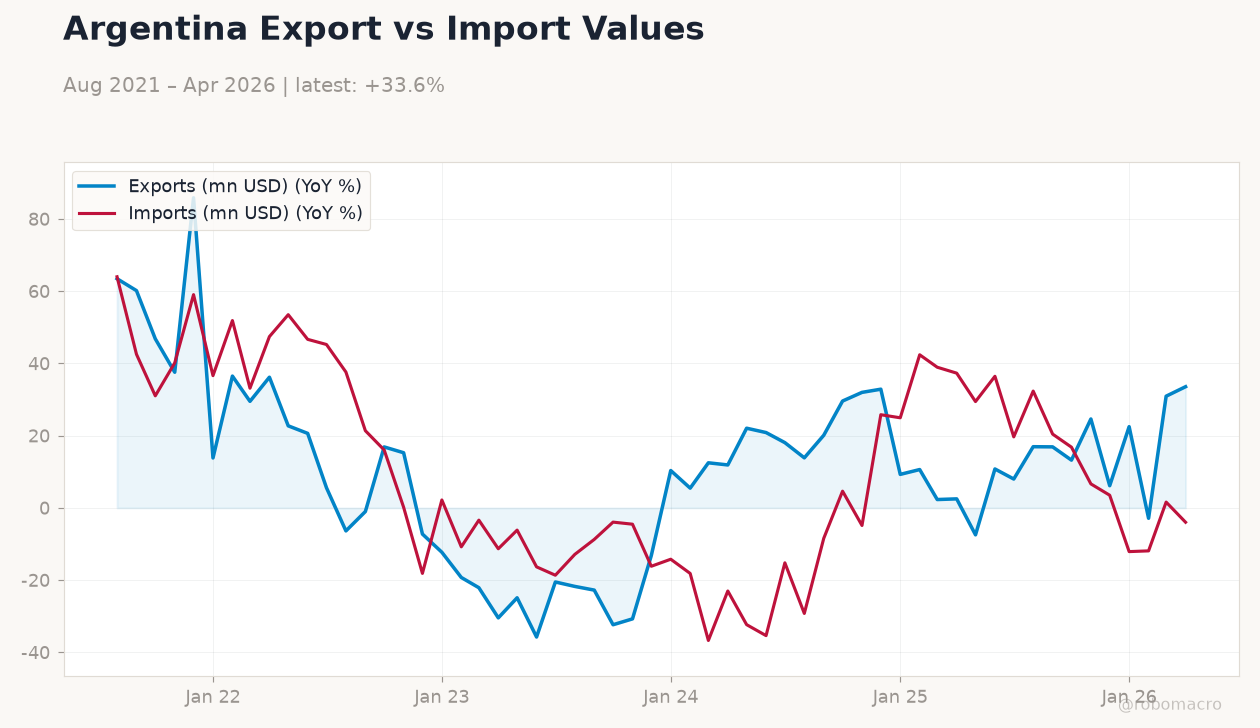
Vaca Muerta continues to attract petrochemical investment interest, with Dow Argentina highlighting the shale formation’s potential to anchor long-term capital inflows into downstream projects. Primary fiscal surpluses have reduced immediate reliance on BCRA financing for debt maturities, supporting a more orderly rollover of local-currency obligations. Record soybean shipments earlier this year widened the trade surplus and supported reserve accumulation, reinforcing the external position.
Industrial output showed modest sequential gains in recent months, consistent with gradual recovery in manufacturing activity. <i>↓ p.2</i>