Argentina Macro Daily(Beta Mode)
MERVAL Climbs as Peso Holds Steady
Market Snapshot
| Asset | Level | Change |
|---|---|---|
| MERVAL | 3,305,316.00 | +0.65% |
| USD/ARS | 1,496.50 | +0.09% |
| EUR/ARS | 1,701.69 | -0.12% |
| Gold | 4,044.40 | -0.74% |
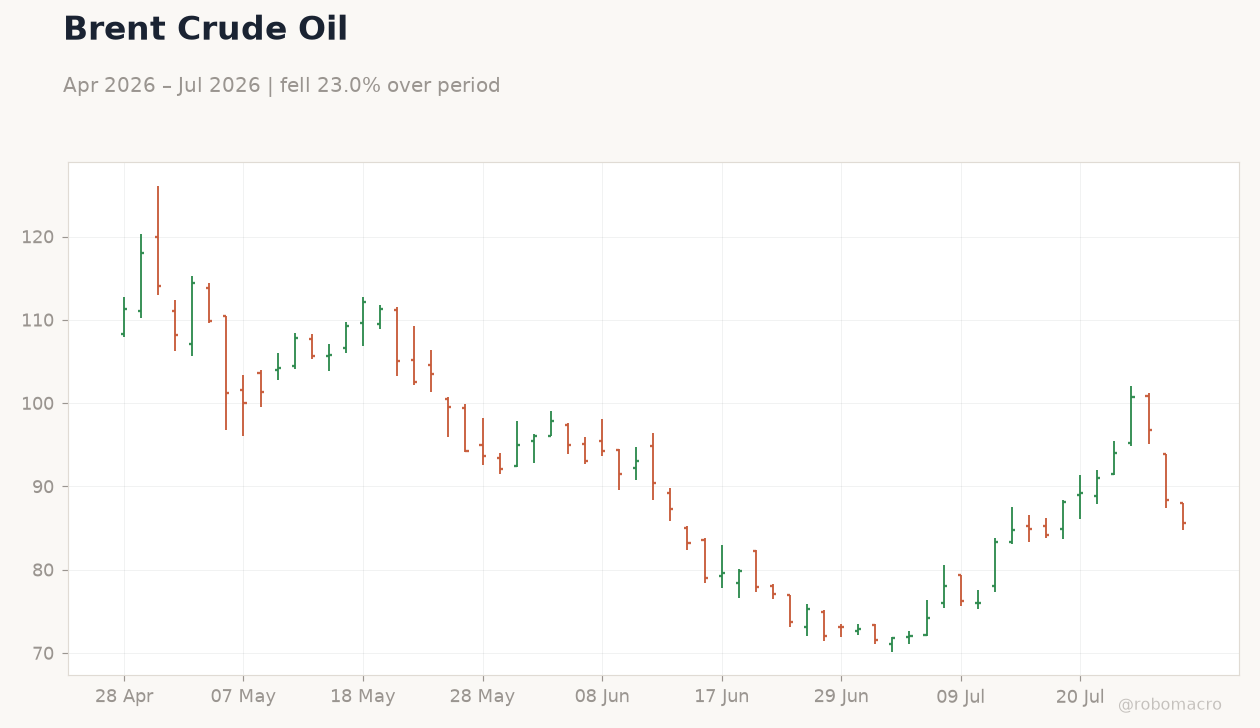
| Brent Crude | 85.31 | -3.45% |
| Soybean | 1,207.25 | -0.10% |
| Bitcoin | 63,382.59 | -0.54% |
| Argentina 10Y | - | - |
Prior Economic Events
| Data | Prior | Cons | Actual |
|---|---|---|---|
| No events available | |||
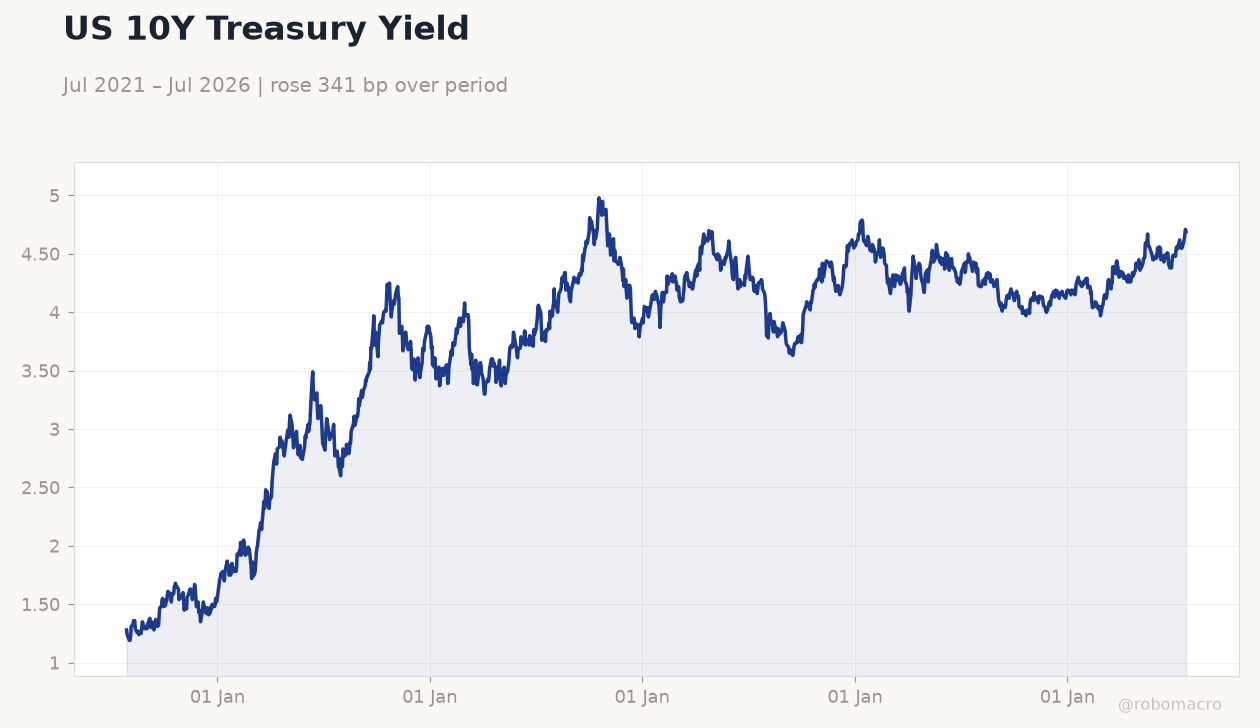 US 10Y Treasury Yield | Type: macro_line | %: 4.69 (2026-07-24) | Range: 1.19–4.98 | Trend(6pt): 1.28,4.04,4.14,4.32,4.71,4.69
Today's Economic Events
| Data | Prior | Cons | Time |
|---|---|---|---|
| No events available | |||
- MERVAL advances 0.65% to 3,305,316 amid thin trading
- USD/ARS rises 0.09% to 1,496.50 while soybean prices ease
- June CPI at 33.6% YoY reinforces expectations for BCRA caution
Yesterday's Recap
Argentine equity markets posted modest gains as the MERVAL closed 0.65% higher at 3,305,316, led by bank and energy names. The official USD/ARS rate ticked up 0.09% to 1,496.50, while the EUR/ARS slipped 0.12% to 1,701.69. Brent crude fell 3.45% to 85.31, weighing on energy export revenues, and Chicago soybeans declined 0.10% to 1,207.25, pressuring agricultural shipments.
Gold dropped 0.74% to 4,044.40 as risk appetite improved slightly. Bitcoin eased 0.54% to 63,382.59 with limited local impact. No major data releases occurred, leaving market moves driven by external commodity swings and thin domestic volumes.
The Argentina 10Y bond showed no change amid low liquidity.
The Day Ahead
Markets enter a data-light session with no scheduled Argentine releases. Global attention turns to US GDP and core PCE prints that could shift EM risk sentiment and peso flows. Treasury operations may feature routine bill rollovers without new inflation-linked supply.
Soybean export registrations and any fresh IMF mission updates remain the key domestic focal points. Traders will monitor oil price rebounds for effects on fiscal receipts and reserve accumulation. BCRA reserve and monetary aggregate data are due later in the week.
Other Economic Notes
Fiscal consolidation efforts continue to anchor investor focus ahead of the 2027 budget submission. Soybean export proceeds remain central to reserve rebuilding under the IMF programme. The 33.6% June CPI YoY reading highlights the slow pace of disinflation and limits room for near-term policy easing.
External financing conditions stay supportive only if commodity revenues hold and primary surpluses meet targets. Domestic bond placements continue to absorb local liquidity at elevated real yields.
Global Macro News
The Bank of Japan held rates at 1% while upgrading its GDP forecast, supporting a weaker yen that may ease pressure on emerging-market currencies including the peso. Singapore’s central bank tightened policy slightly on inflation concerns, signalling a broader caution among Asian authorities. The European Central Bank faces renewed rate-hike worries after recent yield spikes, which could lift global borrowing costs for Argentina.
<i>↓ p.2</i>