Argentina Macro Daily(Beta Mode)
Peso Weakens as MERVAL Advances 0.65%
Market Snapshot
| Asset | Level | Change |
|---|---|---|
| MERVAL | 3,305,316.00 | +0.65% |
| USD/ARS | 1,499.25 | +0.15% |
| EUR/ARS | 1,709.18 | +0.42% |
| Gold | 4,096.20 | +1.48% |
| Brent Crude | 86.98 | +3.44% |
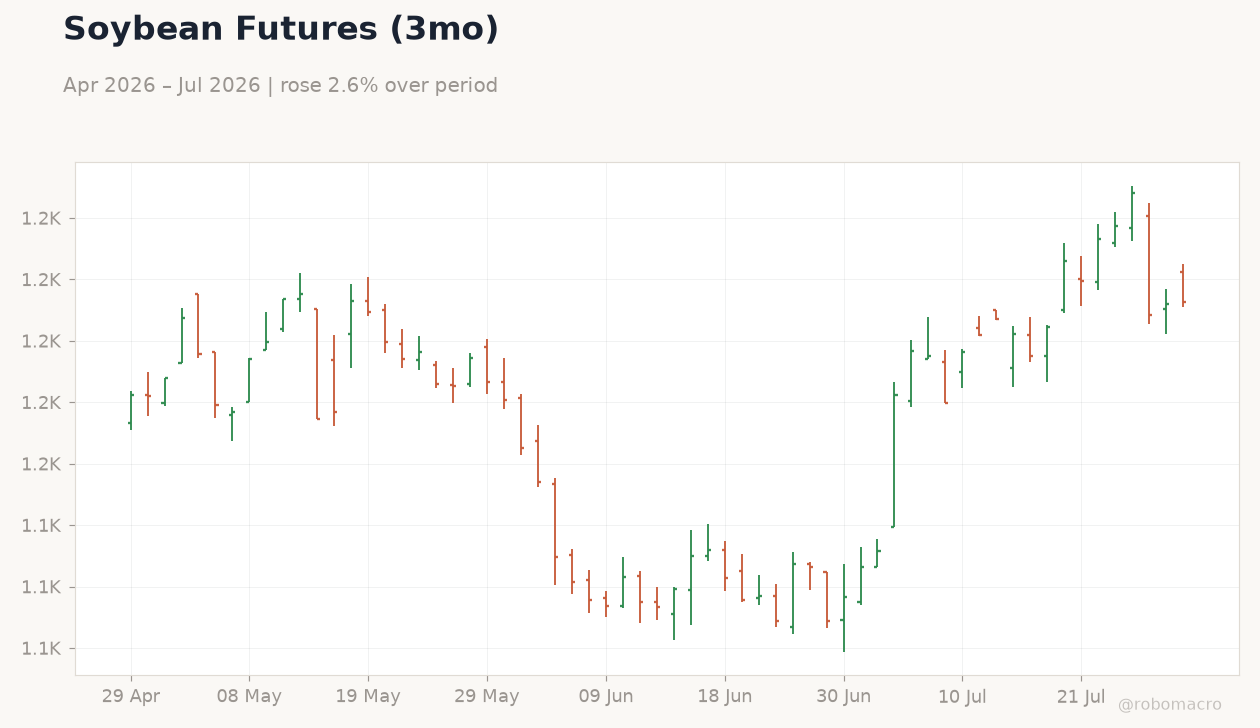
| Soybean | 1,212.75 | +0.06% |
| Bitcoin | 64,349.68 | +0.75% |
| Argentina 10Y | - | - |
Prior Economic Events
| Data | Prior | Cons | Actual |
|---|---|---|---|
| No events available | |||
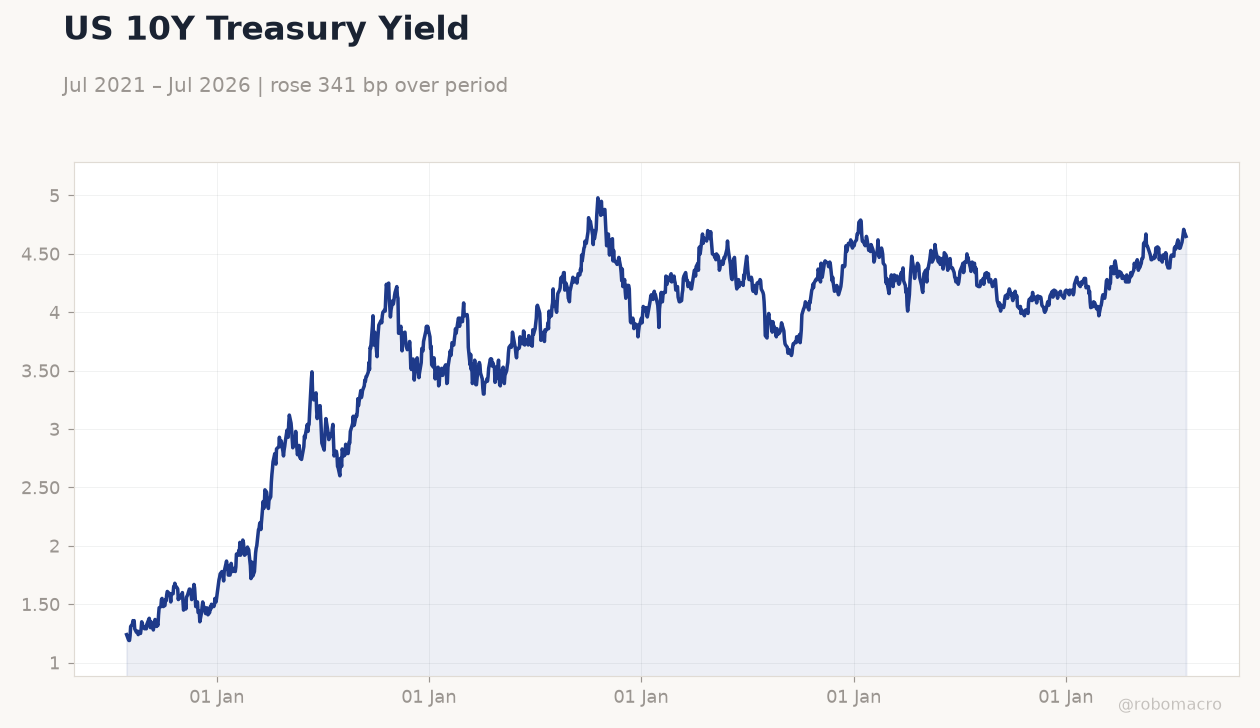 US 10Y Treasury Yield | Type: macro_line | %: 4.65 (2026-07-27) | Range: 1.19–4.98 | Trend(6pt): 1.24,3.96,4.15,4.29,4.69,4.65
Today's Economic Events
| Data | Prior | Cons | Time |
|---|---|---|---|
| No events available | |||
- MERVAL rises 0.65% to 3,305,316 amid thin trading
- USD/ARS advances 0.15% to 1,499.25 on limited intervention
- Brent Crude jumps 3.44% while soybean futures hold steady
Yesterday's Recap
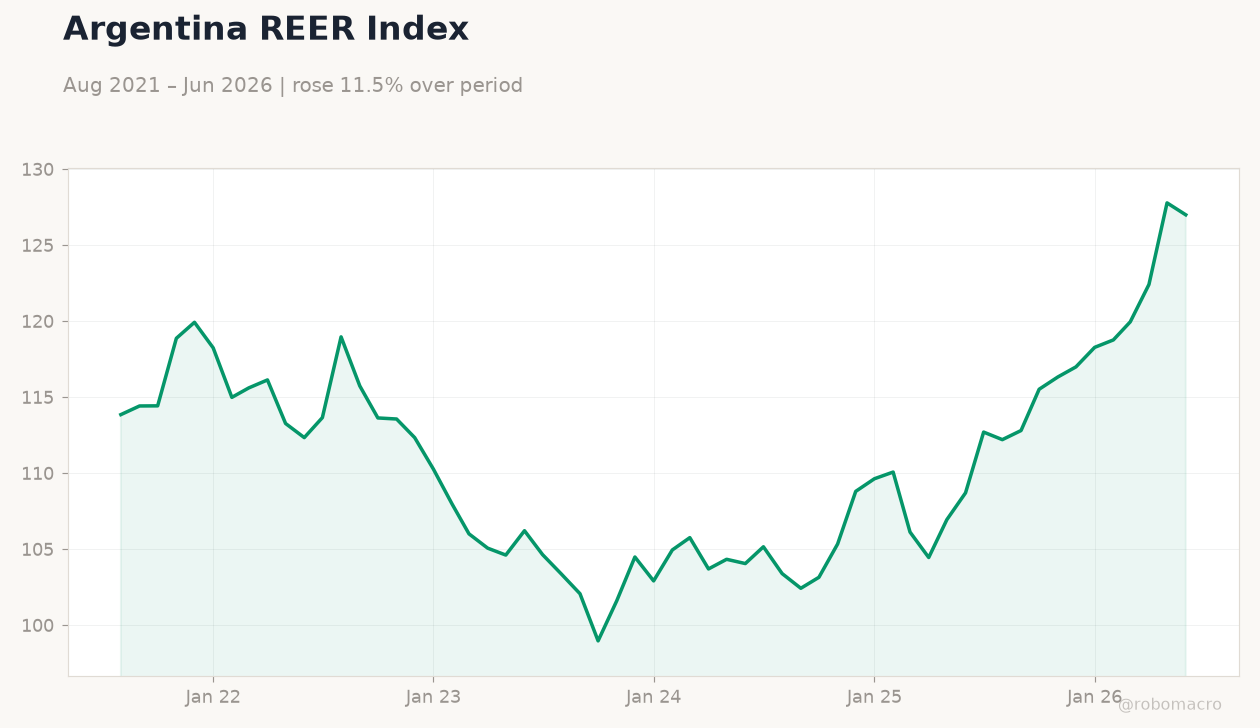
No economic data releases occurred on 28 July. Equity markets responded positively to the absence of negative surprises, lifting the MERVAL 0.65% to 3,305,316. The peso posted a modest decline as USD/ARS increased 0.15% to 1,499.25.
EUR/ARS rose 0.42% to 1,709.18, tracking broader euro strength. Gold advanced 1.48% to 4,096.20 on safe-haven demand. Brent Crude surged 3.44% to 86.98, supporting Argentina’s export revenue outlook.
Soybean futures added 0.06% to 1,212.75 while Bitcoin gained 0.75%. Regional political noise, including Milei’s accusations against US Democrats and Brazil over alleged anti-Argentina campaigns tied to the World Cup, added volatility but did not derail local asset gains.
The Day Ahead
The calendar shows no scheduled releases through 30 July. Market participants will track global commodity prices for effects on soybean and crude export proceeds. Focus stays on fiscal consolidation progress and compliance with the IMF program.
Reserve accumulation remains a key watchpoint given the current USD/ARS level. Any shift in global risk sentiment could influence local bond and equity flows. Analysts continue to monitor Milei administration statements on monetary tightening measures, particularly efforts to amend the central bank charter and block future monetary financing channels.
Other Economic Notes
Brazil-Argentina trade is expected to continue despite political tensions, according to regional experts. President Milei’s push to amend the central bank charter aims to eliminate mechanisms that previously enabled monetary financing. June CPI at 33.6% YoY confirms the ongoing disinflation trend.
Export tax collections have supported treasury liquidity ahead of upcoming debt obligations. Private forecasts have incorporated stronger agricultural output into 2026 growth projections. The $1.2 bn IMF disbursement after the second review further bolsters external credibility and reserve buffers.
Global Macro News
The BIS warned that the AI investment boom risks distorting central bank inflation readings, a development relevant for emerging-market policy transmission. <i>↓ p.2</i>