Argentina Macro Daily(Beta Mode)
Milei Bill Bars BCRA From Deficit Financing
Market Snapshot
| Asset | Level | Change |
|---|---|---|
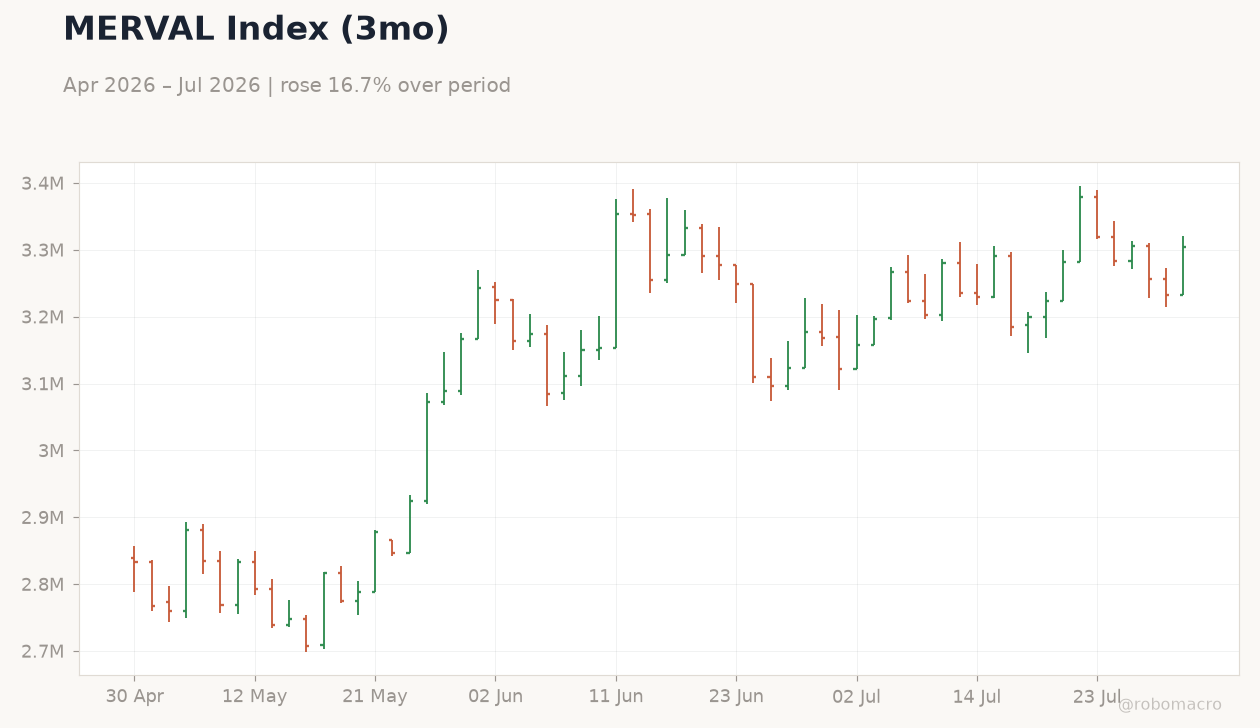
| MERVAL | 3,304,918.00 | +2.22% |
| USD/ARS | 1,488.50 | -0.47% |
| EUR/ARS | 1,712.69 | -0.13% |
| Gold | 4,118.60 | +0.45% |
| Brent Crude | 88.10 | -1.04% |
| Soybean | 1,190.00 | +1.08% |
| Bitcoin | 63,730.73 | -1.54% |
| Argentina 10Y | - | - |
Prior Economic Events
| Data | Prior | Cons | Actual |
|---|---|---|---|
| No events available | |||
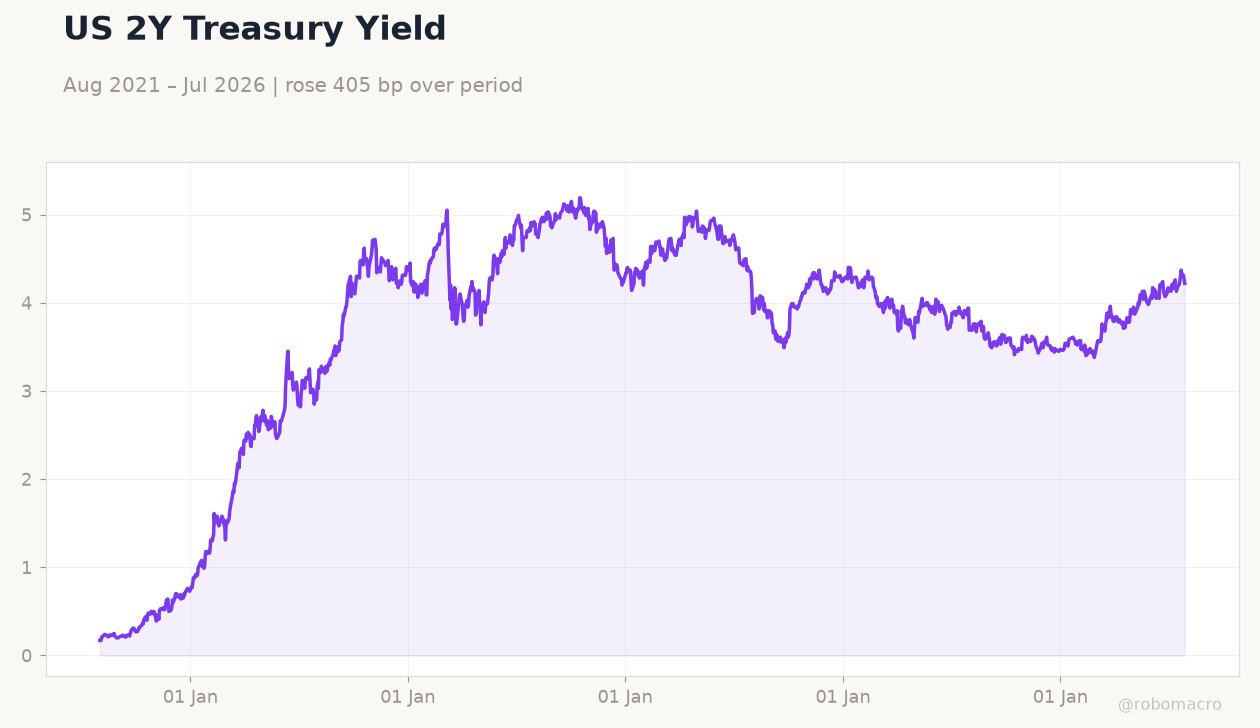
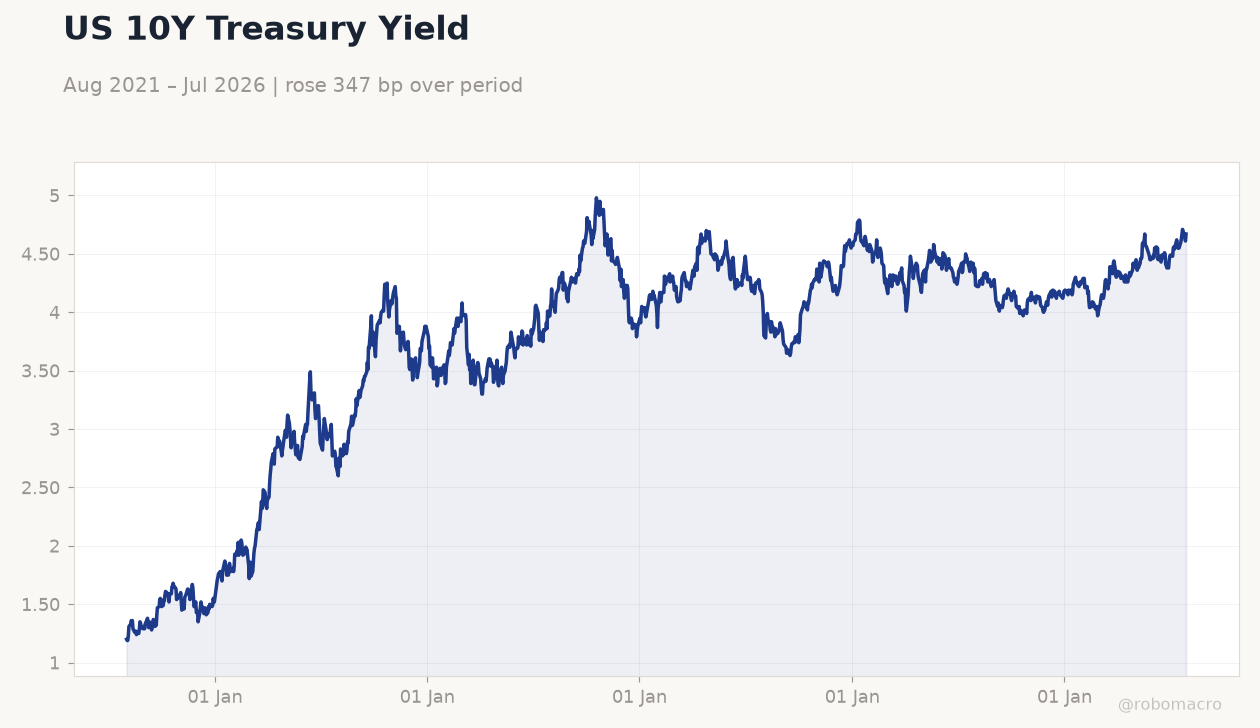 US 10Y Treasury Yield | Type: macro_line | %: 4.67 (2026-07-29) | Range: 1.19–4.98 | Trend(6pt): 1.2,4.02,4.08,4.23,4.65,4.67
Today's Economic Events
| Data | Prior | Cons | Time |
|---|---|---|---|
| No events available | |||
- MERVAL rises 2.22% while USD/ARS falls 0.47% on peso strength
- Milei bill prohibits BCRA financing of fiscal deficits
- IMF chief signals confidence in Argentina fiscal balance
Yesterday's Recap
Argentine equity and currency markets posted gains on July 30 with the MERVAL advancing 2.22% to 3,304,918 amid selective buying in banks and energy. The official USD/ARS rate declined 0.47% to 1,488.50, reflecting modest peso appreciation, while EUR/ARS eased 0.13% to 1,712.69. Soybean prices climbed 1.08% to 1,190.00, supporting export revenue expectations, and gold rose 0.45% to 4,118.60.
Brent crude fell 1.04% to 88.10, trimming energy import costs. No major economic data releases occurred, leaving market moves driven by ongoing fiscal consolidation signals and the proposed central bank overhaul. Bitcoin declined 1.54% to 63,730.73, showing limited spillover to local risk assets.
The Day Ahead
Attention centers on scheduled IMF staff discussions set for early August regarding the next program review. Treasury operations are expected to include ARS-denominated debt placements, with investor focus on rollover rates amid the fiscal primary surplus target. Soy-dollar export inflows continue under the extended scheme through mid-September, adding to reserve accumulation.
Private-sector wage settlements remain below prior BCRA projections, limiting second-round price pressures. Broader monitoring covers Vaca Muerta development progress following US shale investor expansion announcements. No INDEC releases are listed for August 1.
Other Economic Notes
The June primary surplus beat consensus at 0.4% of GDP, reinforcing the government’s 1.5% annual target under the IMF program. Soybean export proceeds are projected to deliver an additional $1.8 billion by September under the current incentive framework. International reserves stand near $28.9 billion after recent inflows, though faster accumulation remains a staff priority.
The 33.6% CPI YoY reading as of June 30 continues to anchor inflation expectations. Harold Hamm’s move to expand in Vaca Muerta underscores foreign interest in Argentina’s shale resources despite regulatory uncertainty.
Global Macro News
US second-quarter GDP growth slowed amid persistent inflation and wider trade deficits, raising questions about external demand for Argentine commodities. The Federal Reserve maintained a hawkish hold, clouding the outlook for emerging-market currencies including the peso. <i>↓ p.2</i>