Argentina Macro Daily(Beta Mode)
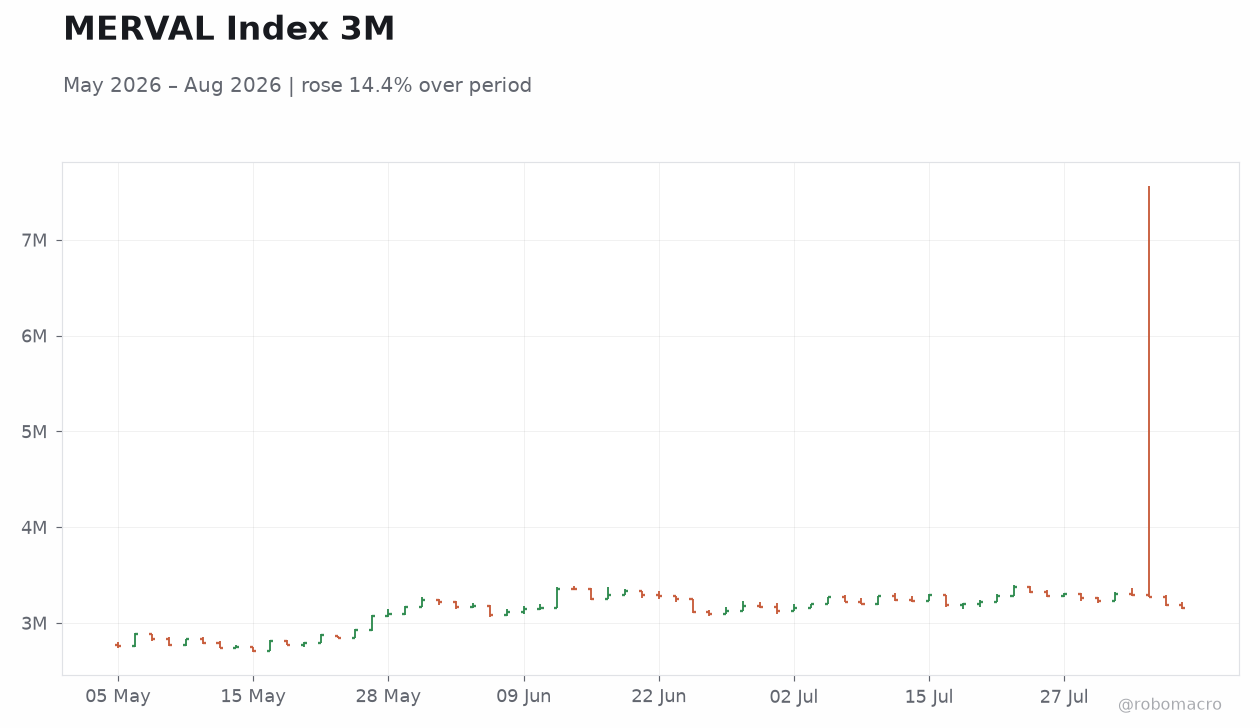
MERVAL Slides as Soybeans Advance
Market Snapshot
| Asset | Level | Change |
|---|---|---|
| MERVAL | 3,156,332.00 | -1.02% |
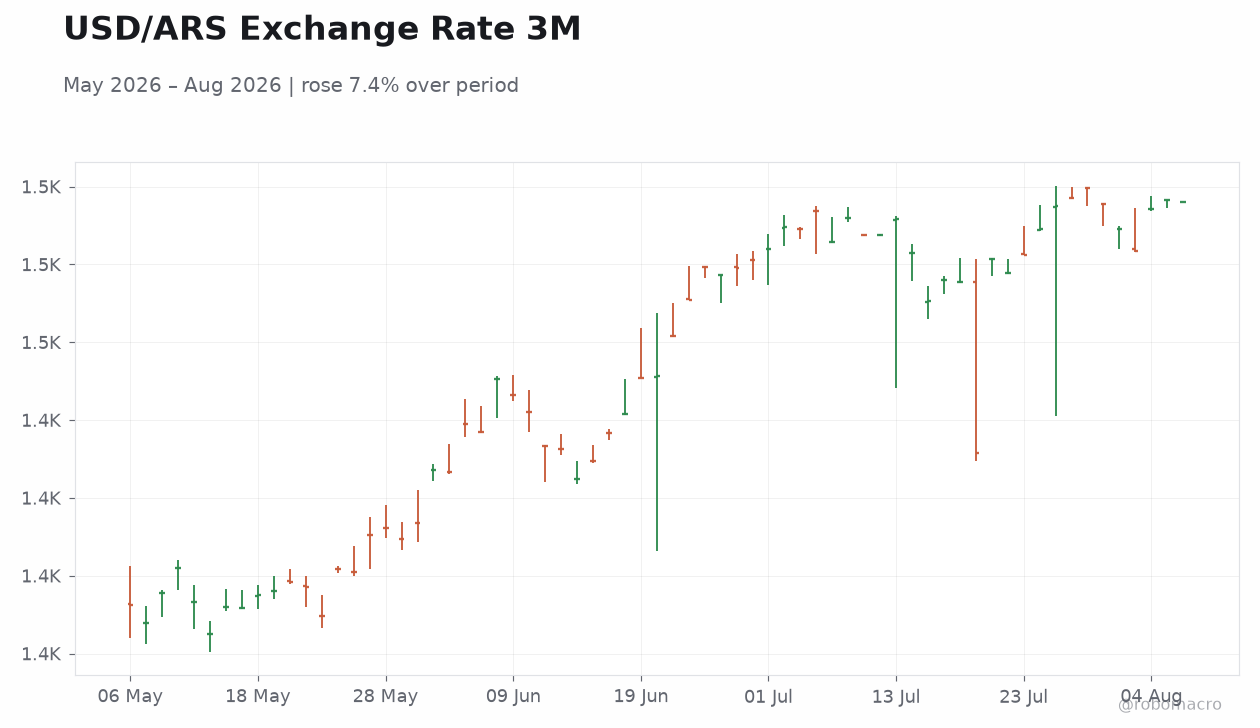
| USD/ARS | 1,496.00 | -0.03% |
| EUR/ARS | 1,727.51 | +0.10% |
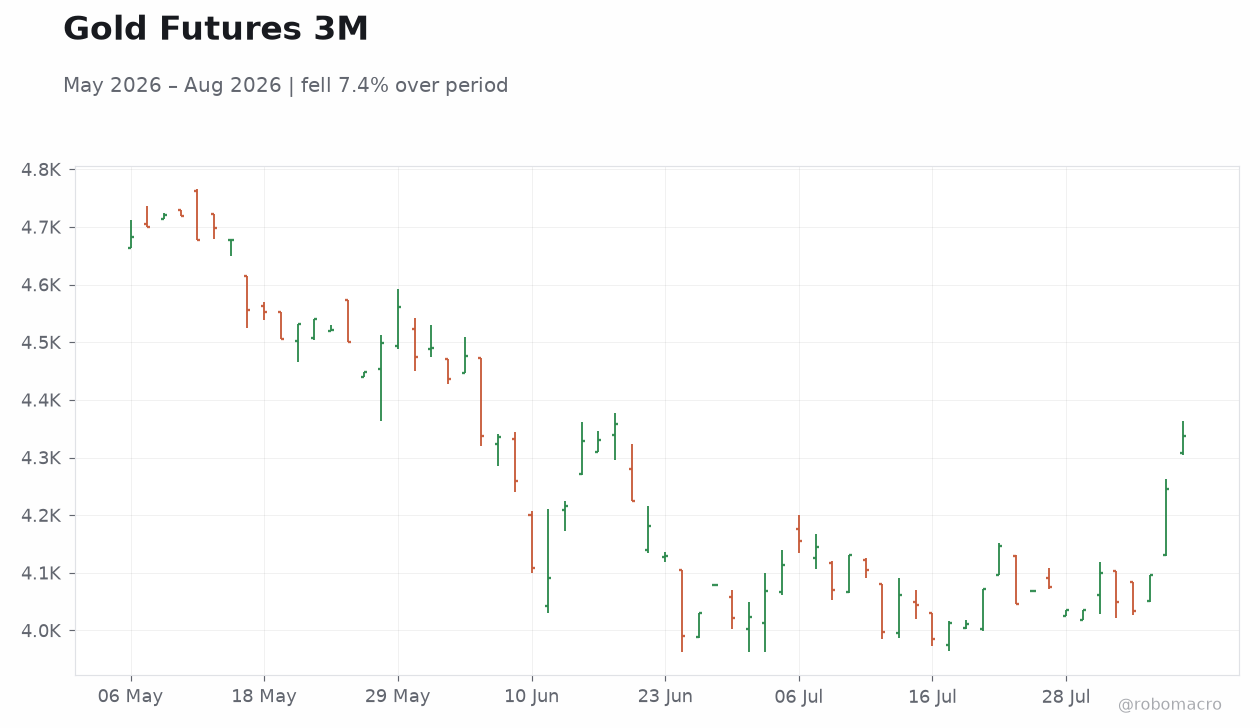
| Gold | 4,338.10 | +2.17% |
| Brent Crude | 79.67 | +0.28% |
| Soybean | 1,176.00 | +2.13% |
| Bitcoin | 64,706.91 | +0.17% |
| Argentina 10Y | - | - |
Prior Economic Events
| Data | Prior | Cons | Actual |
|---|---|---|---|
| No events available | |||
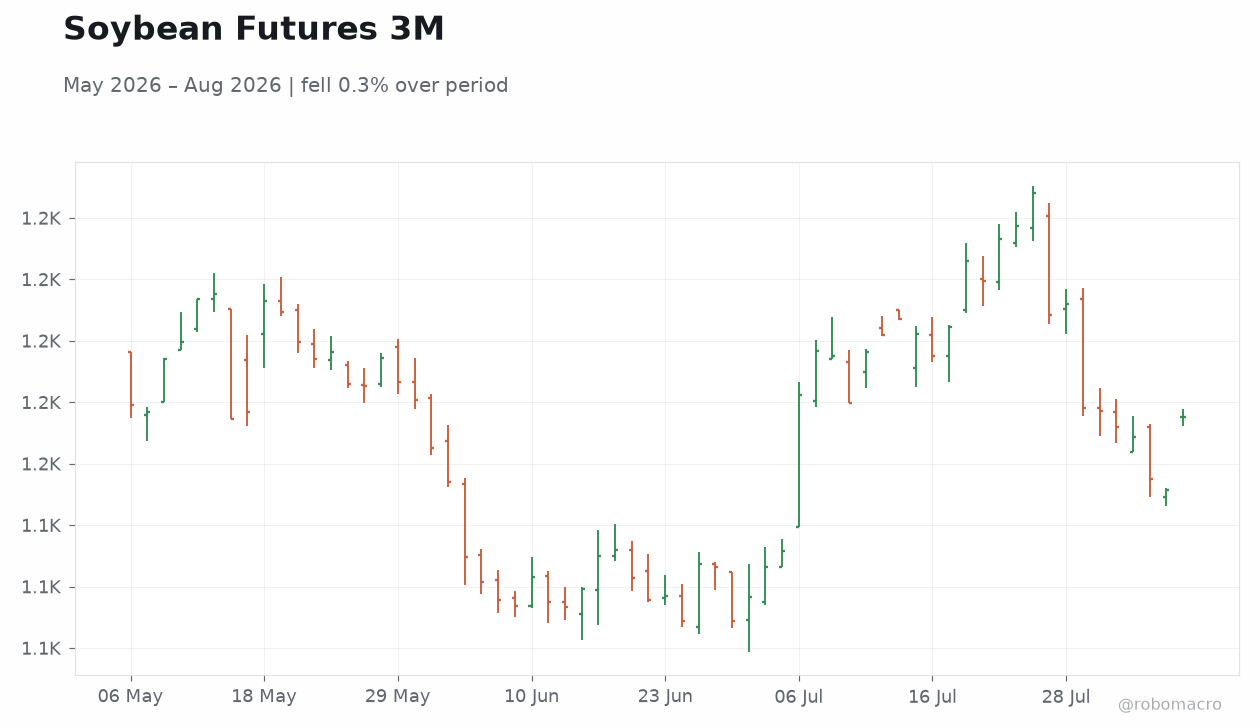 Soybean Futures 3M | Type: market_hloc | USD per bushel: 1175 (2026-08-06) | Range: 1109–1248 | Trend(5pt): 1179,1187,1117,1195,1175
Today's Economic Events
| Data | Prior | Cons | Time |
|---|---|---|---|
| No events available | |||
- MERVAL falls 1.02% to 3,156,332 amid thin volumes
- USD/ARS holds near 1,496 with negligible move
- Soybean prices jump 2.13% supporting export outlook
Yesterday's Recap
Argentine equity markets closed lower as the MERVAL index declined 1.02 percent to 3,156,332 points on limited trading activity. The official USD/ARS exchange rate remained virtually unchanged at 1,496 with a 0.03 percent dip, reflecting steady central bank management of peso liquidity. EUR/ARS advanced 0.10 percent to 1,727.51, tracking modest euro strength.
Gold prices surged 2.17 percent to 4,338.10 on safe-haven demand while Brent crude rose 0.28 percent to 79.67 dollars per barrel. Soybean futures climbed 2.13 percent to 1,176, bolstering prospects for Argentina’s key agricultural exports. Bitcoin edged 0.17 percent higher to 64,706.91 with little spillover to local assets.
No major economic data releases occurred, leaving market moves driven by external commodity flows and regional positioning. The absence of Argentina 10-year bond pricing left local fixed-income sentiment dependent on peso liquidity signals and commodity momentum.
The Day Ahead
Attention centers on the BCRA’s weekly international reserve report due at 11:00 AM local time, which will clarify intervention volumes. Industrial production and construction figures from INDEC are absent from the schedule, pointing to a data-light session. Treasury bill auctions for LECAPs and LEDES will test rollover demand and implied yields.
Traders will monitor soybean export registrations for signs of sustained momentum. Peso liquidity conditions and any BCRA FX sales remain the dominant focus for local markets. Global commodity price swings could influence sentiment ahead of the weekend.
With the calendar showing zero scheduled events through tomorrow, positioning is expected to stay cautious and driven by external flows rather than domestic releases.
Other Economic Notes
Fiscal consolidation under the Milei administration continues to anchor credibility with multilateral lenders and support reserve rebuilding. Soybean export strength provides a reliable buffer for the trade balance and foreign currency inflows. The peso’s controlled path reflects ongoing BCRA efforts to balance competitiveness with inflation control.
IMF program targets remain on track, aiding access to fresh financing and reducing rollover risks in coming months. <i>↓ p.2</i>