Argentina Macro Daily(Beta Mode)
MERVAL Slips as Peso Weakens Modestly
Market Snapshot
| Asset | Level | Change |
|---|---|---|
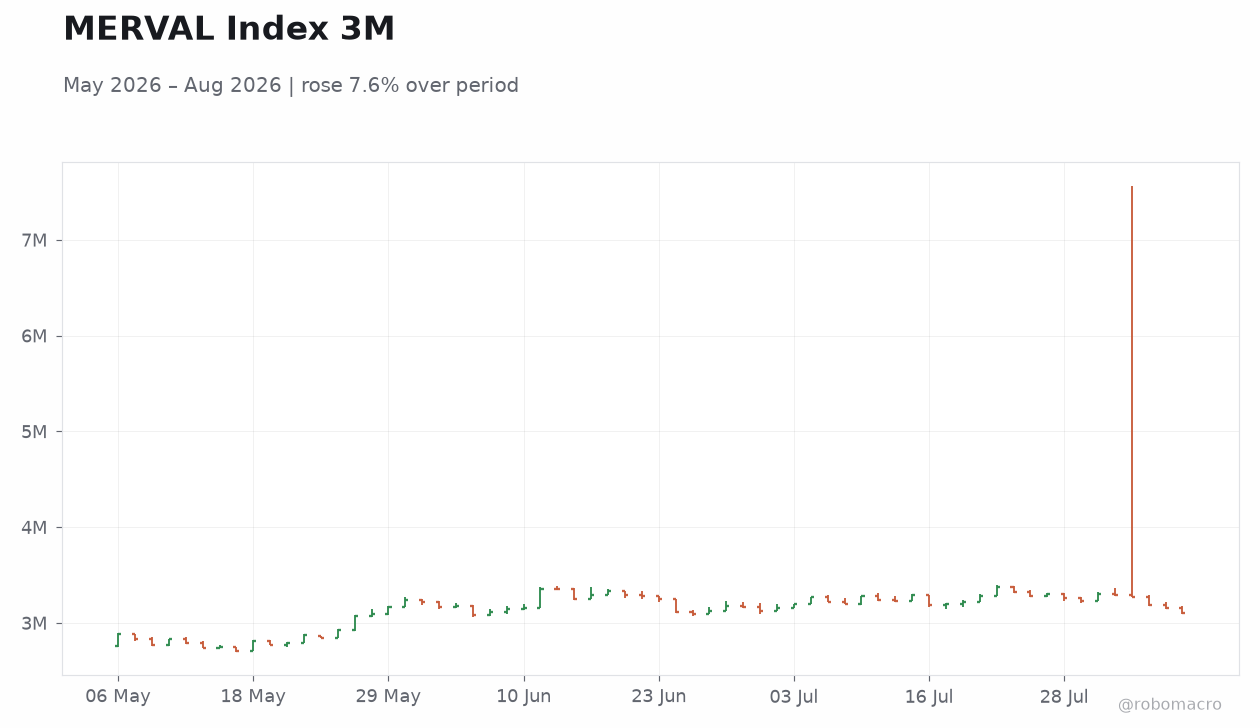
| MERVAL | 3,100,732.00 | -1.76% |
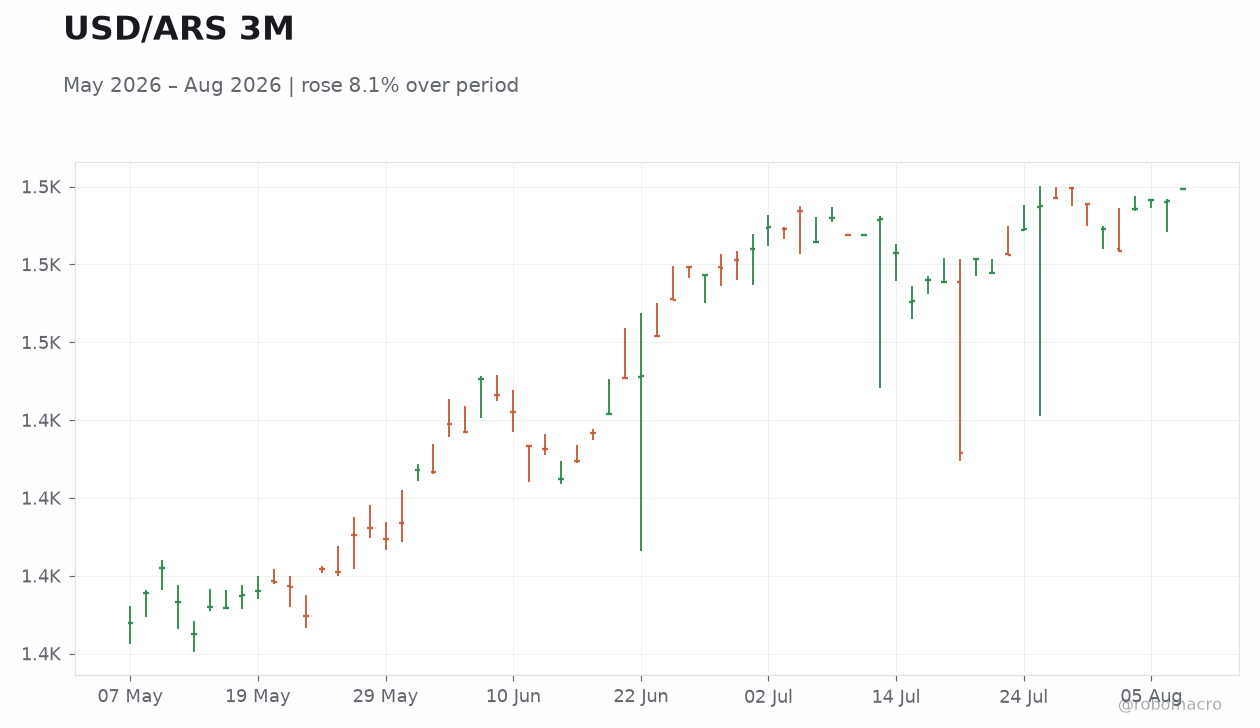
| USD/ARS | 1,499.50 | +0.22% |
| EUR/ARS | 1,727.73 | -0.08% |
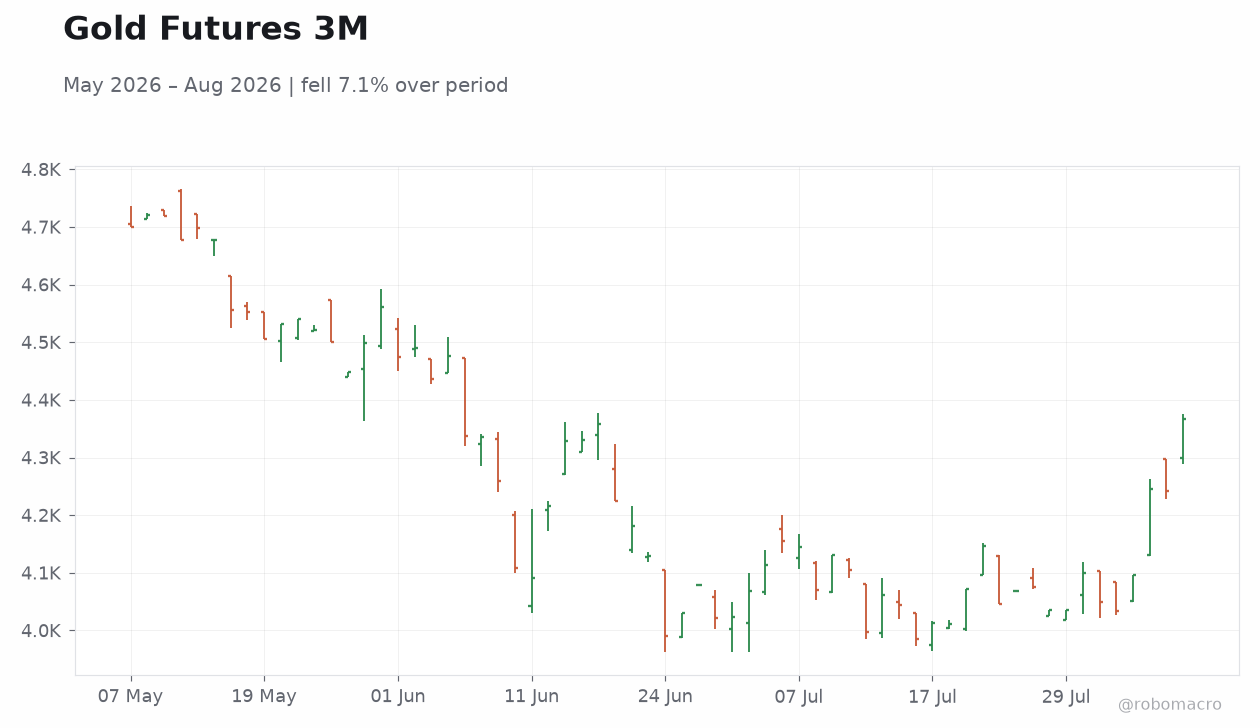
| Gold | 4,363.20 | +2.86% |
| Brent Crude | 83.03 | +0.65% |
| Soybean | 1,181.00 | +2.05% |
| Bitcoin | 64,631.16 | +0.57% |
| Argentina 10Y | - | - |
Prior Economic Events
| Data | Prior | Cons | Actual |
|---|---|---|---|
| No events available | |||
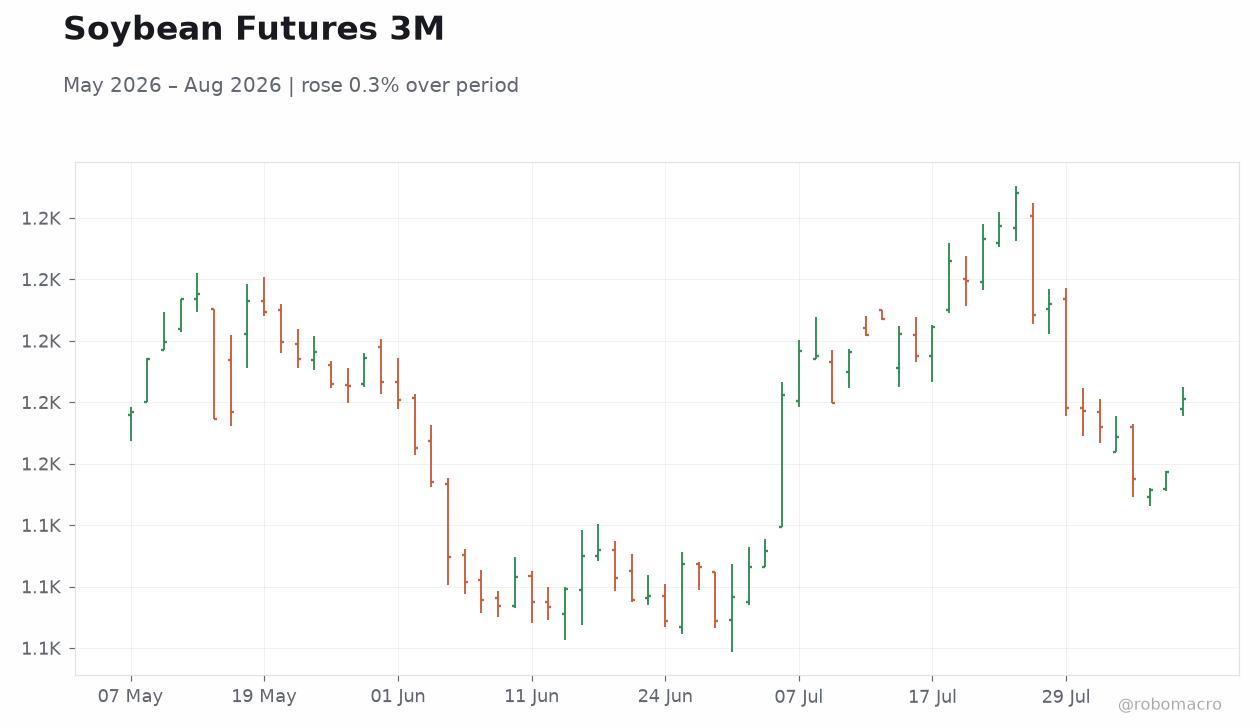 Soybean Futures 3M | Type: market_hloc | USD per bu: 1181 (2026-08-07) | Range: 1109–1248 | Trend(5pt): 1177,1181,1109,1204,1181
Today's Economic Events
| Data | Prior | Cons | Time |
|---|---|---|---|
| No events available | |||
- MERVAL falls 1.76% to 3,100,732 amid thin trading
- USD/ARS climbs 0.22% to 1,499.50 on limited intervention
- Soybean futures rise 2.05% while gold jumps 2.86%
Yesterday's Recap
Argentine equity markets closed lower with the MERVAL declining 1.76% to 3,100,732 as investors reduced exposure amid thin volumes and ahead of any fresh policy signals from authorities. The official USD/ARS rate advanced 0.22% to 1,499.50, reflecting modest peso depreciation despite limited BCRA sales in the spot market. EUR/ARS eased 0.08% to 1,727.73 while Brent crude gained 0.65% to $83.03 per barrel, supporting export revenues.
Soybean prices climbed 2.05% to $1,181 per bushel on firm Chinese demand and dry weather concerns in key growing regions. Gold surged 2.86% to $4,363.20 per ounce as local investors sought safe-haven assets amid ongoing social unrest. Police deployed tear gas against protesters in Buenos Aires, underscoring fiscal pressures on households.
No major economic data prints occurred, leaving markets focused on reserve flows and external commodity trends. Bitcoin rose 0.57% to 64,631.16, providing a modest offset in risk appetite.
The Day Ahead
Markets enter a data-light session with attention centered on the BCRA’s weekly reserve update and any intervention signals. Treasury auctions of LECER and dual-currency bonds are scheduled, offering insight into domestic funding costs. Traders will monitor soybean export registrations for signs of sustained inflows that could bolster net reserves.
Global commodity moves and US Treasury yield shifts are expected to influence local sentiment given Argentina’s external financing needs. The absence of scheduled releases keeps focus on peso liquidity and fiscal cash-flow execution. Brent and soybean price action will remain key external drivers for trade balance expectations.
Other Economic Notes
Soybean export proceeds remain the primary driver of reserve accumulation, with collections still running above last year’s pace despite lower volumes. Fiscal consolidation continues through tighter import licensing on non-essential goods, supporting the primary surplus target under the IMF program. External disbursements provide a temporary buffer ahead of September amortizations but do not alter the underlying reserve shortfall.
Police action against protesters highlights domestic tensions that could affect policy continuity and investor perceptions of social stability.