Argentina Macro Daily(Beta Mode)
MERVAL Slides as Peso Holds Steady
Market Snapshot
| Asset | Level | Change |
|---|---|---|
| MERVAL | 2,947,349.00 | -1.77% |
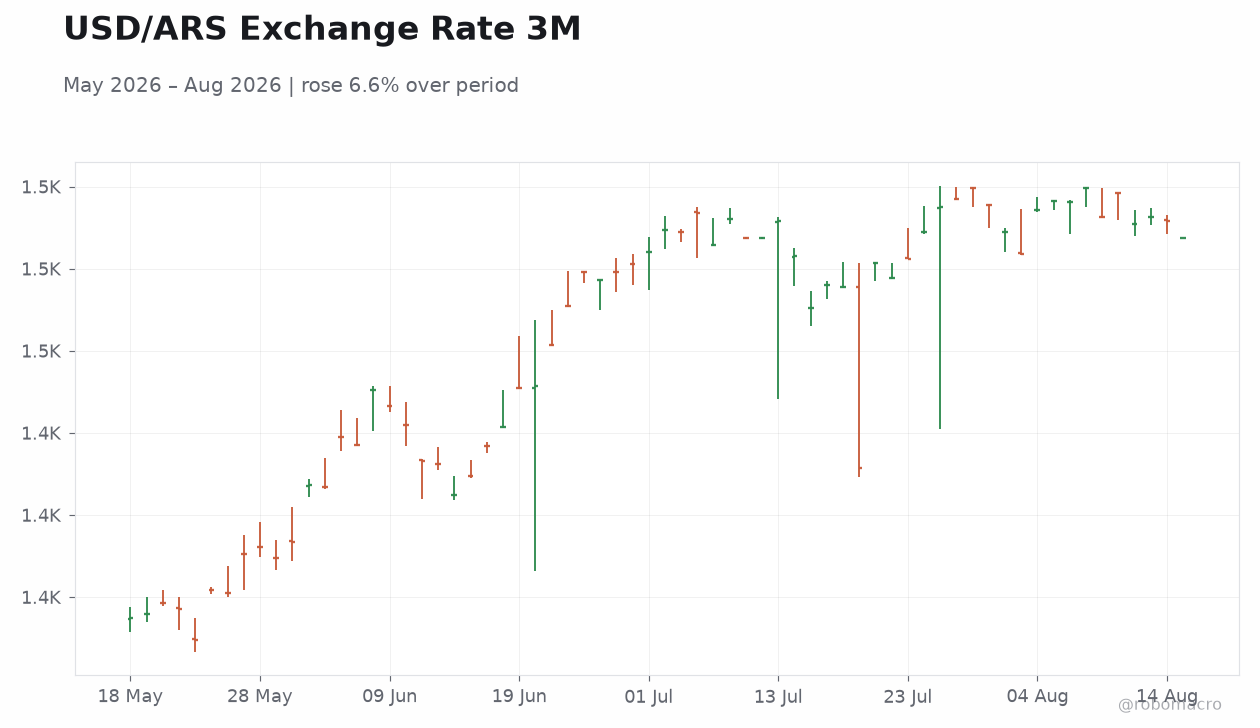
| USD/ARS | 1,487.50 | -0.33% |
| EUR/ARS | 1,722.51 | +0.11% |
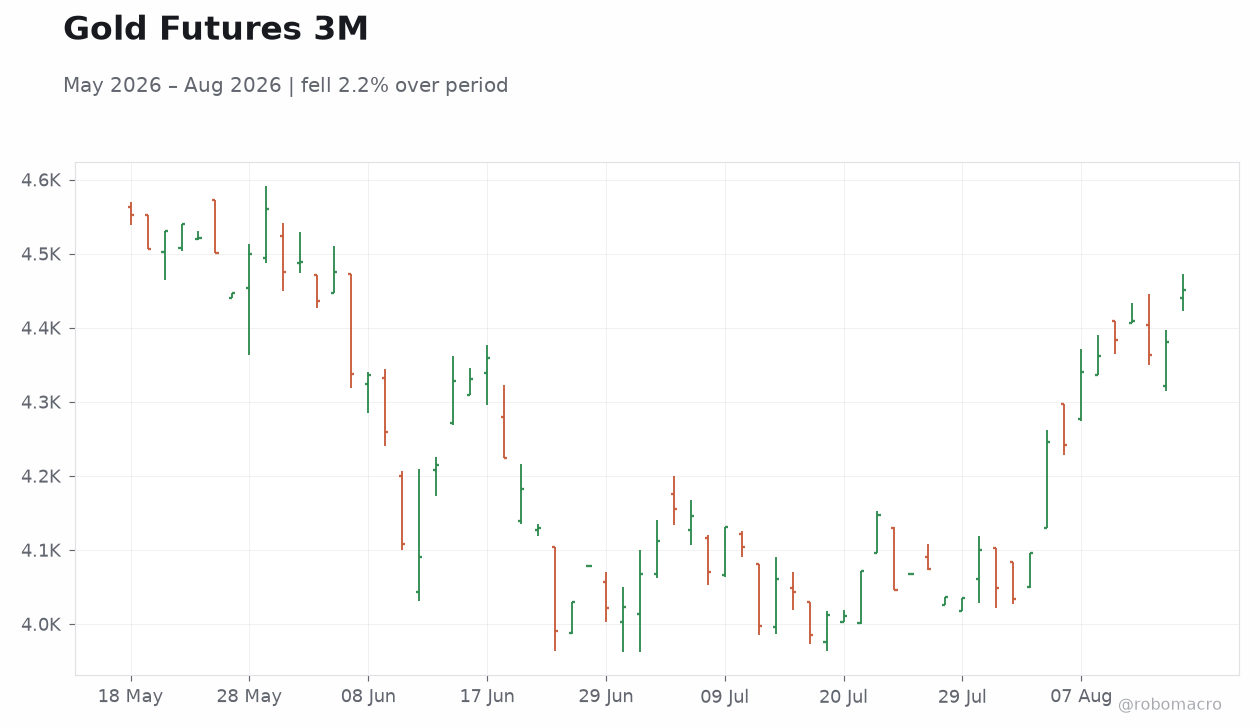
| Gold | 4,450.40 | +1.60% |
| Brent Crude | 88.93 | +0.46% |
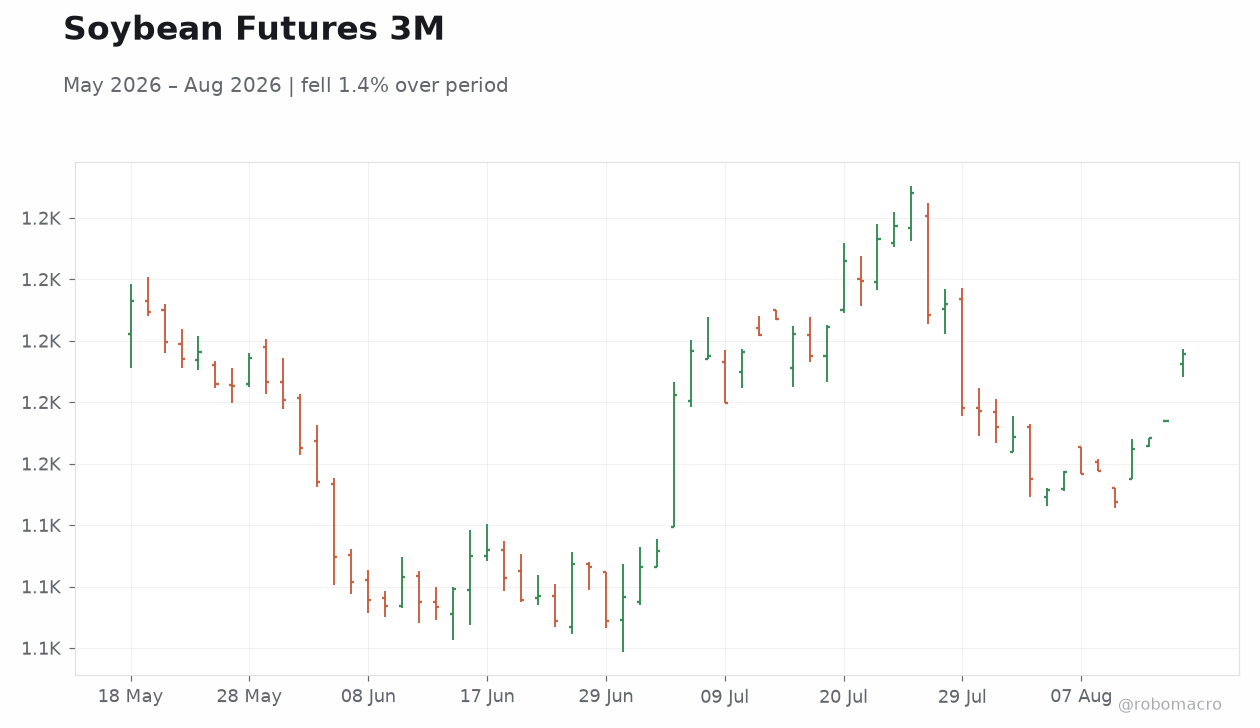
| Soybean | 1,195.50 | +1.85% |
| Bitcoin | 63,321.78 | +0.80% |
| Argentina 10Y | - | - |
Prior Economic Events
| Data | Prior | Cons | Actual |
|---|---|---|---|
| No events available | |||
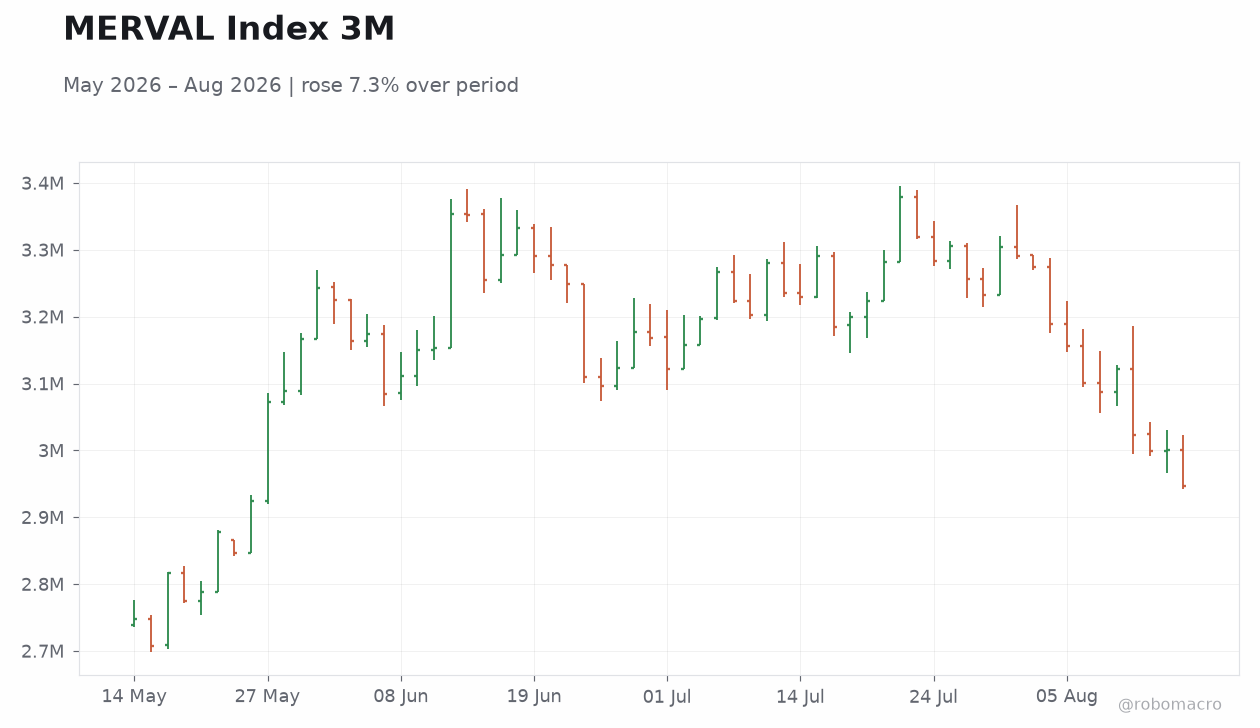 MERVAL Index 3M | Type: market_hloc | Index Level: 2.947e+06 (2026-08-14) | Range: 2.708e+06–3.38e+06 | Trend(5pt): 2.747e+06,3.112e+06,3.122e+06,3.284e+06,2.947e+06
Today's Economic Events
| Data | Prior | Cons | Time |
|---|---|---|---|
| No events available | |||
- MERVAL falls 1.77% to 2,947,349 on thin volumes
- USD/ARS eases 0.33% to 1,487.50, narrowing parallel gap
- Soybean prices jump 1.85%, bolstering export receipts
Yesterday's Recap
Equity markets closed lower as the MERVAL dropped 1.77% to 2,947,349 amid holiday-adjusted volumes and limited local participation. The peso firmed modestly, with USD/ARS declining 0.33% to 1,487.50 while EUR/ARS edged 0.11% higher to 1,722.51. Gold advanced 1.60% to 4,450.40 on safe-haven demand, and Brent crude rose 0.46% to 88.93.
Soybean futures gained 1.85% to 1,195.50, reflecting stronger Argentine export registrations. Bitcoin added 0.80% to 63,321.78, tracking global risk sentiment. The Argentina 10Y bond yield remained unchanged, indicating steady local demand for short-term LETRAS.
No major data prints altered the picture, leaving markets focused on reserve accumulation and fiscal signals. Thin trading reflected the empty economic calendar, with participants positioning ahead of potential BCRA updates and Treasury auctions rather than reacting to fresh releases.
The Day Ahead
No scheduled releases appear on the calendar for August 18, leaving focus on BCRA reserve updates and any Treasury bill auctions. Traders will monitor soybean export flows and IMF-related commentary for clues on reserve targets. Global risk appetite, driven by U.S.
yields and commodity prices, is expected to dictate peso and equity direction. The absence of fresh inflation or activity data keeps attention on forward guidance from the central bank. Market participants anticipate continued stability in the official FX rate ahead of the next policy statement.
Attention will also turn to any signals on multilateral disbursements that could further lift net international reserves beyond recent gains.
Other Economic Notes
Net international reserves have shown steady gains from soybean inflows and multilateral disbursements, supporting the BCRA’s ability to defend the currency band. Fiscal consolidation efforts remain central, with recent LETRAS auctions clearing at lower yields and signaling improved domestic appetite. Industrial production continues to contract year-on-year, highlighting the need for faster structural reforms to restore growth momentum.
IMF discussions on a new precautionary facility underscore the importance of credible medium-term fiscal targets. <i>↓ p.2</i>