Argentina Macro Daily(Beta Mode)
Carry Trade Persists as MERVAL Holds Steady
Market Snapshot
| Asset | Level | Change |
|---|---|---|
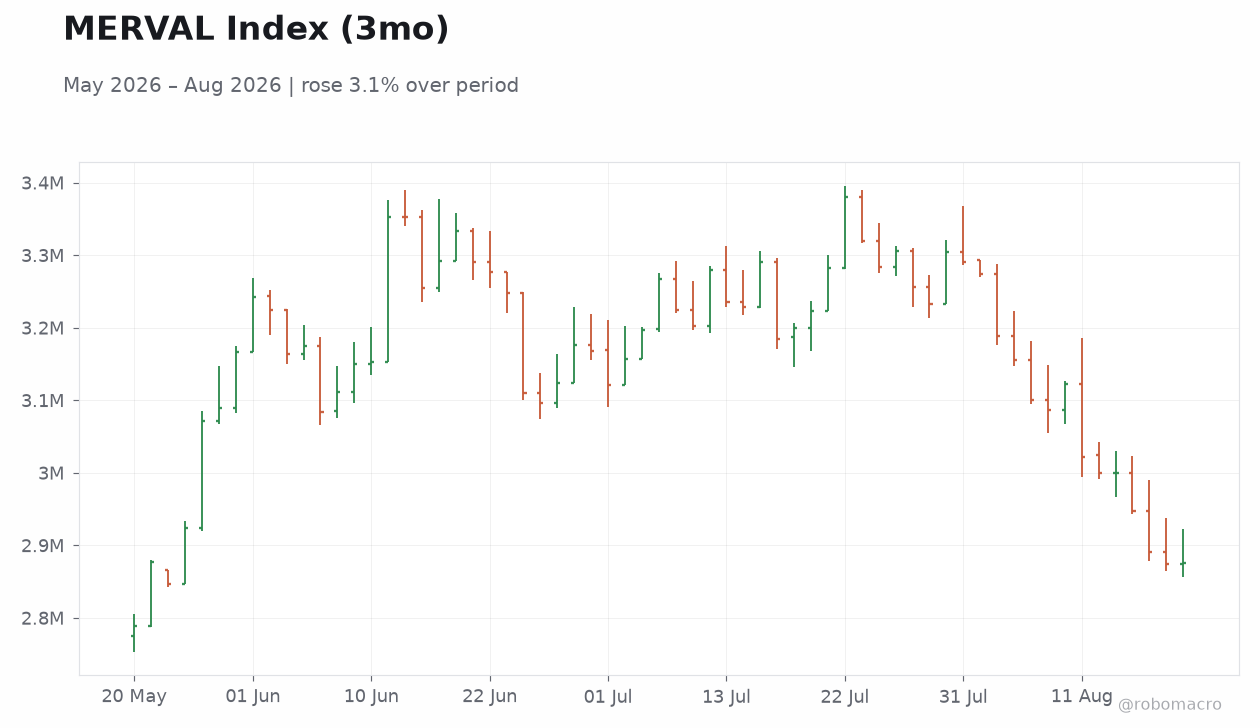
| MERVAL | 2,875,950.00 | +0.05% |
| USD/ARS | 1,497.25 | +0.15% |
| EUR/ARS | 1,747.81 | +0.99% |
| Gold | 4,639.50 | +2.73% |
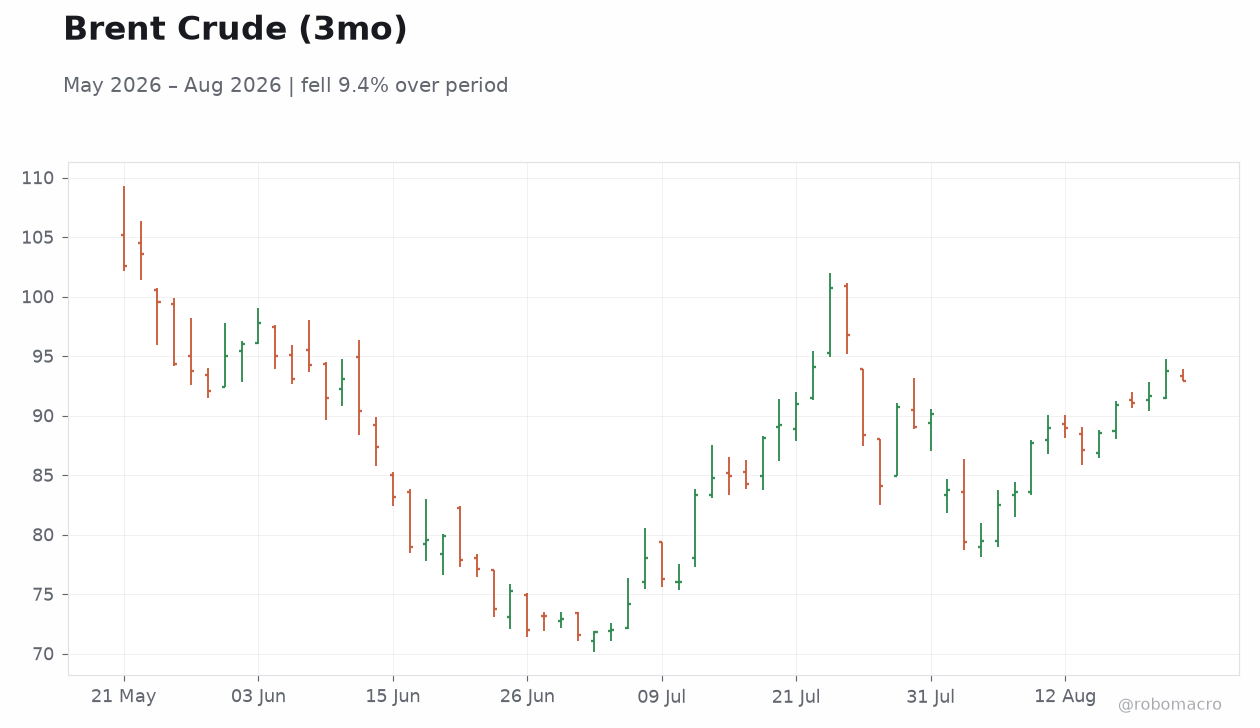
| Brent Crude | 92.98 | -0.85% |
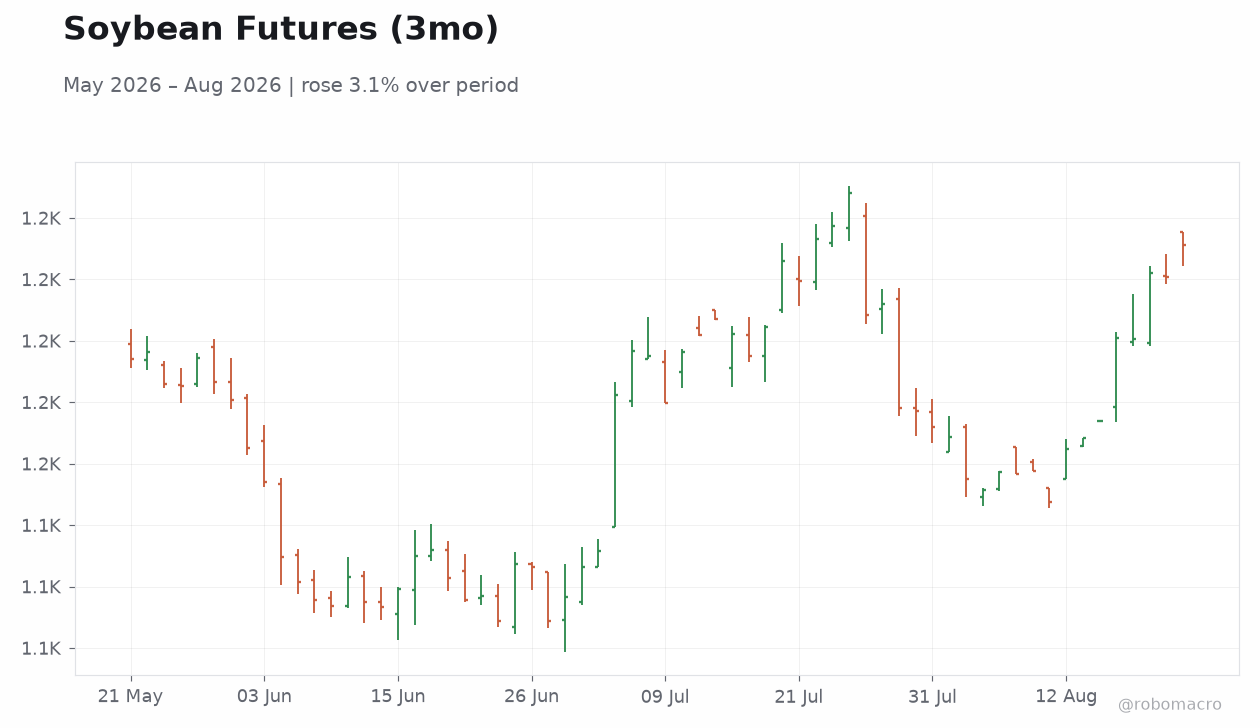
| Soybean | 1,231.25 | +0.86% |
| Bitcoin | 77,559.98 | +6.20% |
| Argentina 10Y | - | - |
Prior Economic Events
| Data | Prior | Cons | Actual |
|---|---|---|---|
| No events available | |||
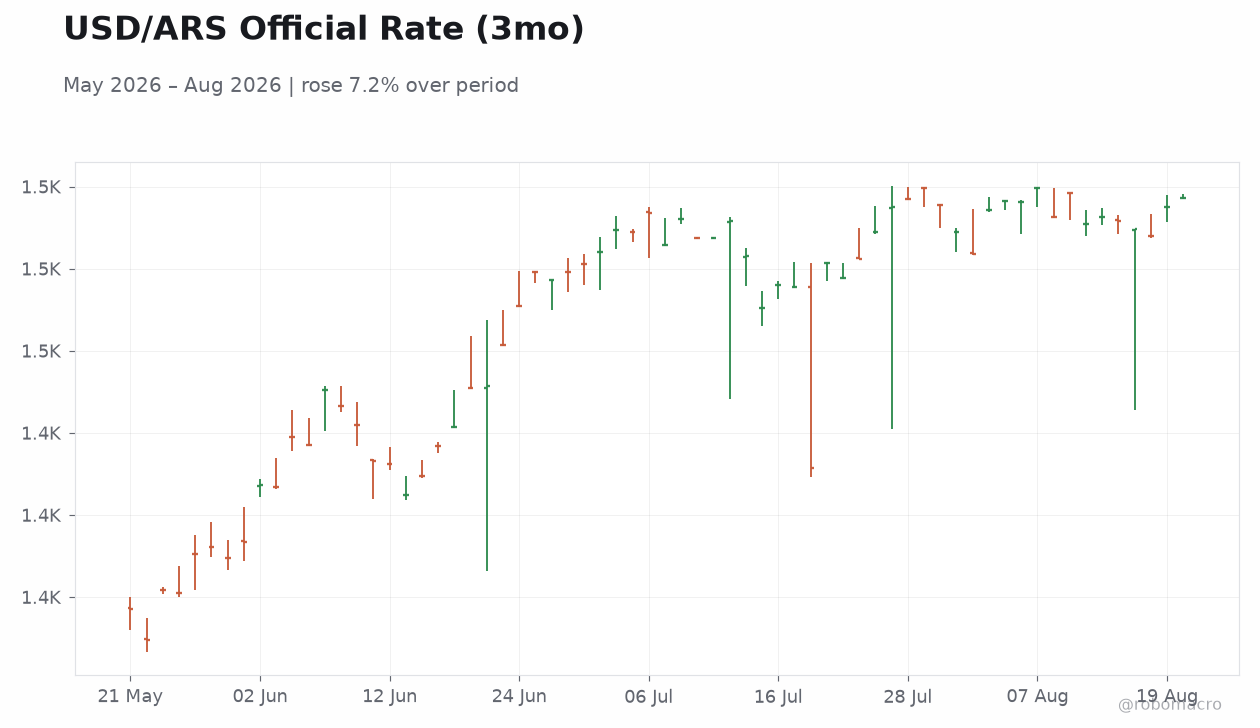 USD/ARS Official Rate (3mo) | Type: market_hloc | ARS per USD: 1497 (2026-08-20) | Range: 1390–1500 | Trend(6pt): 1397,1433,1494,1497,1495,1497
Today's Economic Events
| Data | Prior | Cons | Time |
|---|---|---|---|
| No events available | |||
- MERVAL rose 0.05% to 2,875,950 amid thin volumes and sustained peso carry positions.
- USD/ARS climbed 0.15% to 1,497.25 while EUR/ARS jumped 0.99%, widening cross-rate gaps.
- Soybean futures gained 0.86% as Brent crude fell 0.85%, supporting export revenue outlook.
Yesterday's Recap
Argentine markets recorded minimal movement on August 20 with no scheduled data releases. The MERVAL index advanced just 0.05% to close at 2,875,950 as investors maintained selective exposure to energy and financial names. The official USD/ARS rate increased 0.15% to 1,497.25, while the EUR/ARS cross surged 0.99% to 1,747.81, reflecting euro strength against the peso.
Gold prices rose 2.73% to 4,639.50 per ounce on safe-haven demand, and Bitcoin climbed 6.20% to 77,559.98. Soybean futures added 0.86% to 1,231.25, buoyed by weather concerns in key growing regions. Analysts noted that elevated peso rates continue to support carry-trade strategies despite the modest currency depreciation, with local debt auctions showing stable demand at shorter tenors.
Brent crude eased 0.85% to 92.98 amid higher U.S. inventories.
The Day Ahead
No economic releases are scheduled for August 21, leaving market focus on weekly BCRA reserve updates and any Treasury debt-auction notices. Traders will monitor global risk sentiment through U.S. PPI data and FOMC minutes releases.
Carry-trade positioning remains a key theme, with analysts assessing how long elevated peso yields can offset gradual official-rate crawl. External flows into Argentine assets may stay supported while global central banks signal extended holds. Attention also turns to soybean export volumes, which continue to underpin trade-surplus expectations and reserve accumulation.
Egypt’s central bank held its policy rate at 19% as inflation expectations improved.
Other Economic Notes
Sustained high peso rates have kept carry-trade returns attractive even as the official exchange rate edges higher. Fiscal consolidation efforts appear on track, with recent short-term debt placements clearing at yields below prior auctions. Soybean export proceeds remain the primary driver of reserve gains and current-account support.
Private-sector wage settlements have moderated relative to earlier inflation prints, easing pressure on the fiscal accounts. <i>↓ p.2</i>