Argentina Macro Daily(Beta Mode)
Merval Gains as ECLAC Upgrades Growth Outlook
Market Snapshot
| Asset | Level | Change |
|---|---|---|
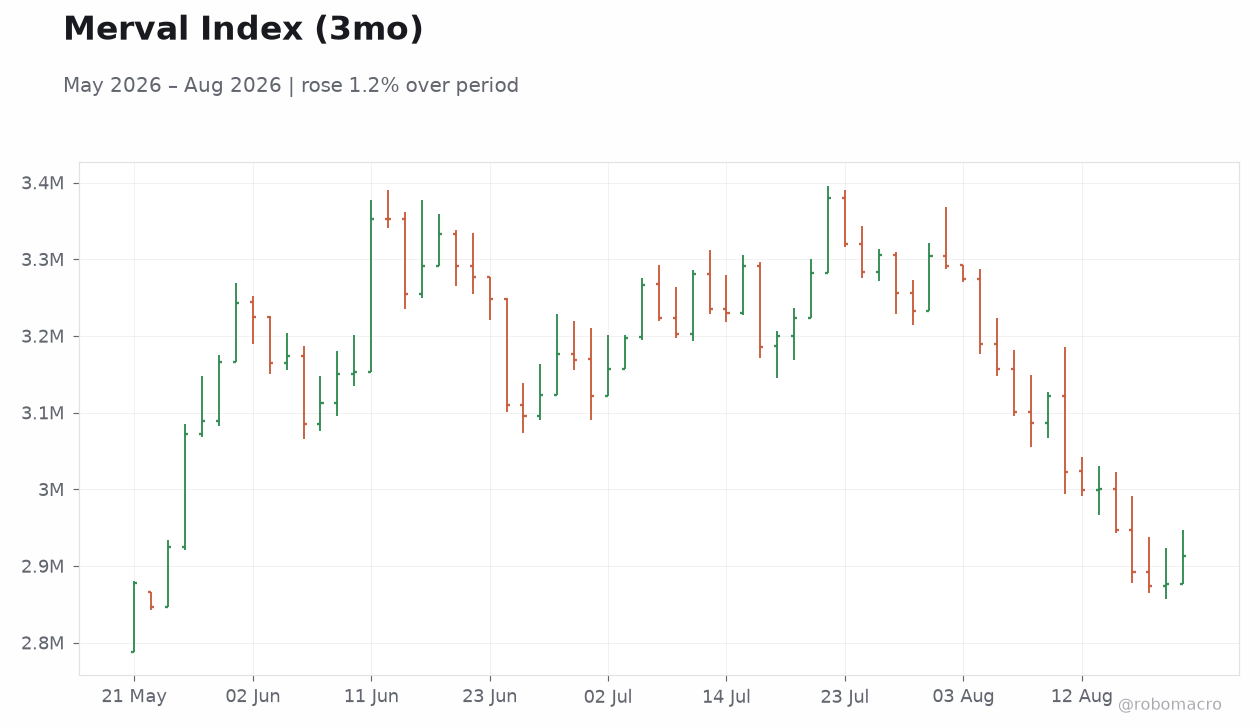
| MERVAL | 2,913,184.00 | +1.29% |
| USD/ARS | 1,499.00 | +0.12% |
| EUR/ARS | 1,751.25 | +0.07% |
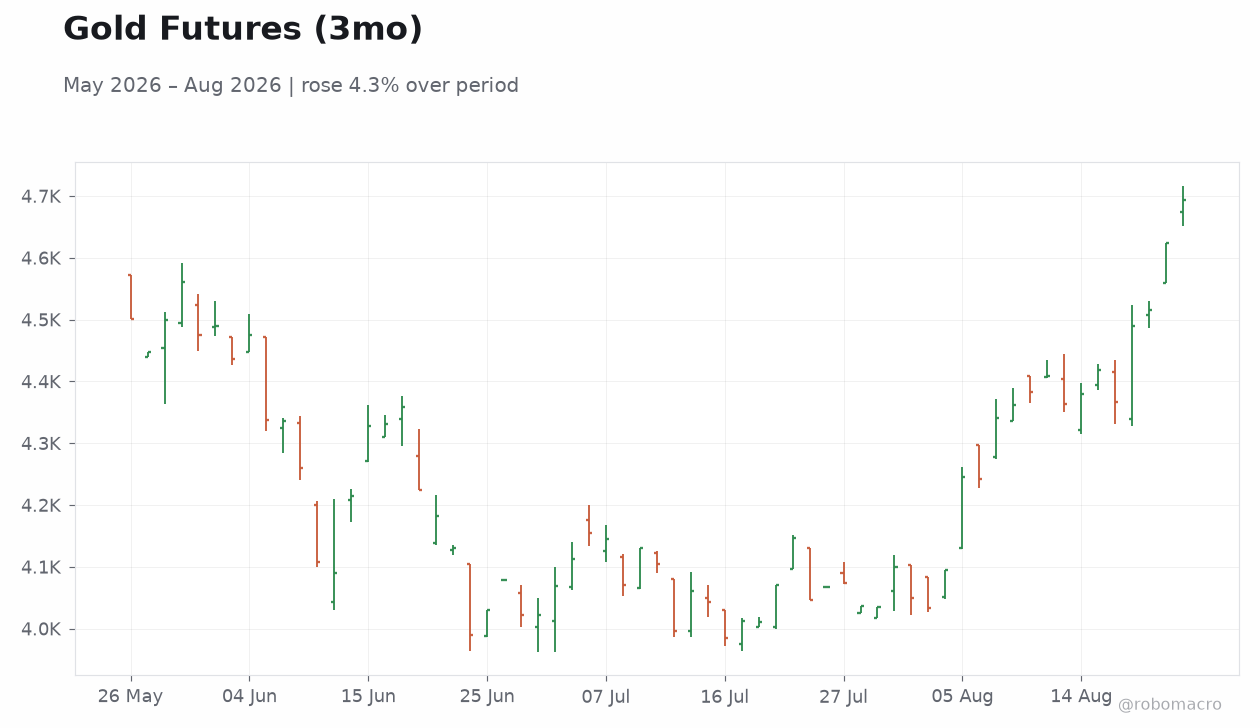
| Gold | 4,692.20 | +1.47% |
| Brent Crude | 92.65 | -1.84% |
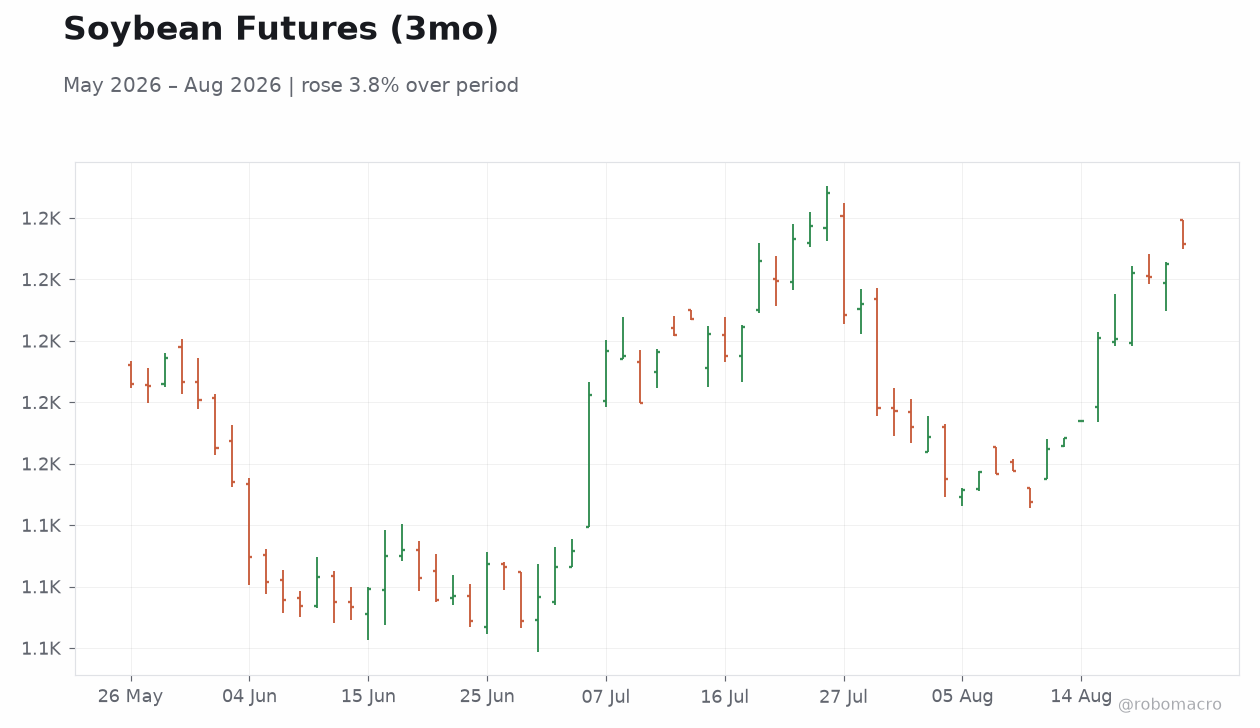
| Soybean | 1,231.50 | +0.53% |
| Bitcoin | 77,203.19 | -0.71% |
| Argentina 10Y | - | - |
Prior Economic Events
| Data | Prior | Cons | Actual |
|---|---|---|---|
| No events available | |||
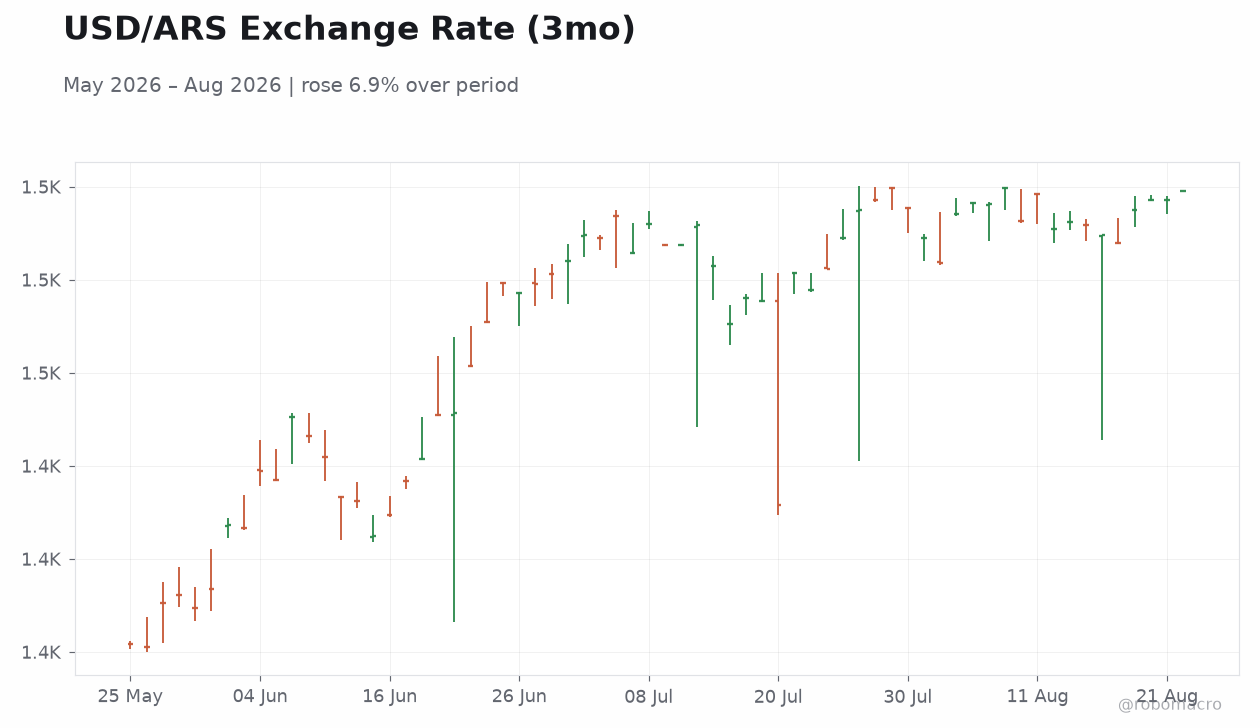 USD/ARS Exchange Rate (3mo) | Type: market_hloc | ARS per USD: 1499 (2026-08-24) | Range: 1401–1500 | Trend(6pt): 1402,1429,1492,1495,1497,1499
Today's Economic Events
| Data | Prior | Cons | Time |
|---|---|---|---|
| No events available | |||
- Merval rose 1.29% to 2,913,184 on improved risk appetite.
- ECLAC lifted 2026 GDP forecast to 4% and 2027 to 4.4%.
- USD/ARS advanced 0.12% to 1,499 amid steady peso pressure.
Yesterday's Recap
Argentine equity markets closed higher as the Merval index advanced 1.29% to 2,913,184, reflecting renewed investor appetite after recent commodity support. The peso weakened modestly, with USD/ARS rising 0.12% to 1,499 and EUR/ARS gaining 0.07% to 1,751.25. Soybean futures climbed 0.53% to 1,231.50, buoyed by steady export registrations that continue to support reserve accumulation.
Gold prices increased 1.47% to 4,692.20, providing a positive external backdrop for Argentine assets. Brent crude fell 1.84% to 92.65, easing import cost pressures. Analysts noted that external trade discipline and fiscal restraint remain in place, yet labor market weakness and subdued domestic demand continue to limit the pace of recovery.
No major data releases occurred, leaving market focus on ongoing reserve trends and external commodity flows.
The Day Ahead
No significant domestic economic releases are scheduled for the coming session. Attention will center on weekly BCRA international reserve updates and any fresh soybean export data that could influence peso liquidity. Markets will also monitor global commodity movements, particularly soybeans and crude, given their direct impact on Argentina’s trade balance.
Treasury bill auctions may provide further signals on local demand and funding costs. External developments, including any shifts in global risk sentiment, will likely dictate short-term peso and bond performance. Investors await clearer signals on fiscal execution and IMF program compliance ahead of the next review.
Other Economic Notes
ECLAC’s upward revision to 4% GDP growth for 2026 and 4.4% for 2027 underscores improving external conditions and fiscal consolidation progress. Yet analysts continue to highlight that the recovery remains fragile, with weak employment and consumption restraining the rebound despite solid trade surpluses. Soybean inflows have helped stabilize reserves, but sustained reserve accumulation remains essential to meet IMF targets.
Fiscal discipline has lowered short-term yields in recent auctions, supporting local debt markets. Broader confidence hinges on maintaining policy credibility while addressing structural labor market shortfalls.