Argentina Macro Daily(Beta Mode)
Inflation Overshoot Curbs BCRA Easing Bets
Market Snapshot
| Asset | Level | Change |
|---|---|---|
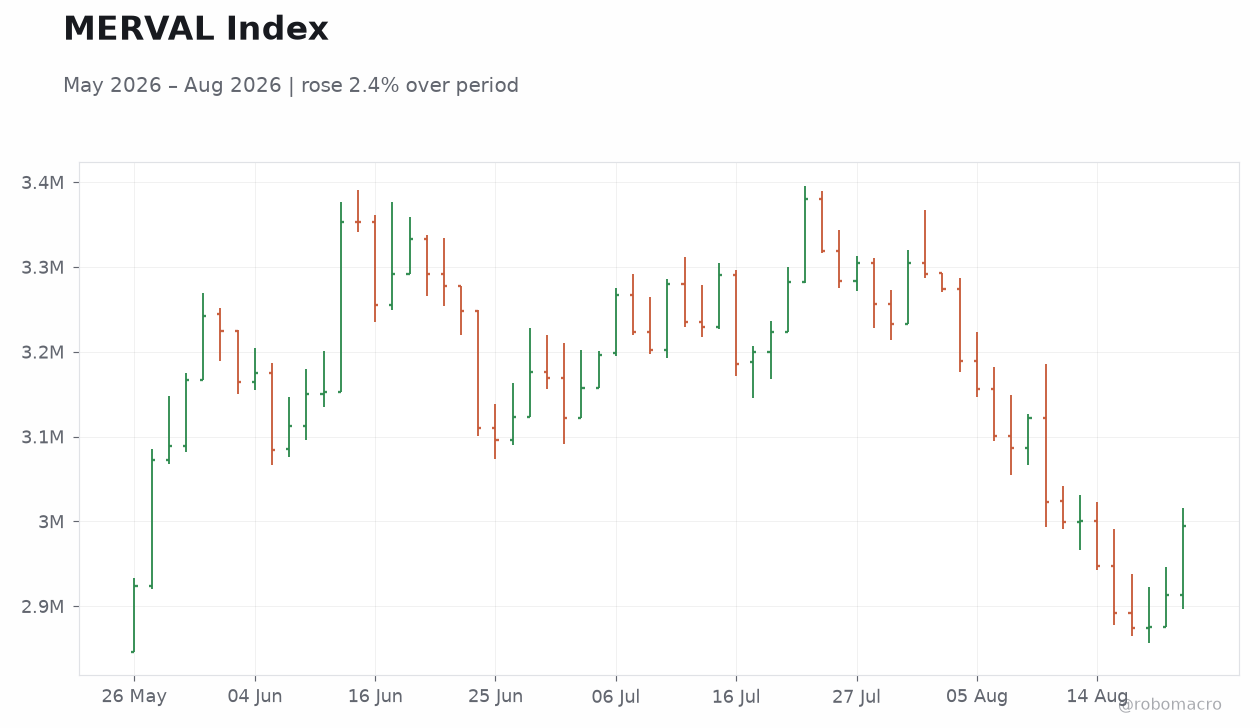
| MERVAL | 2,995,130.00 | +2.81% |
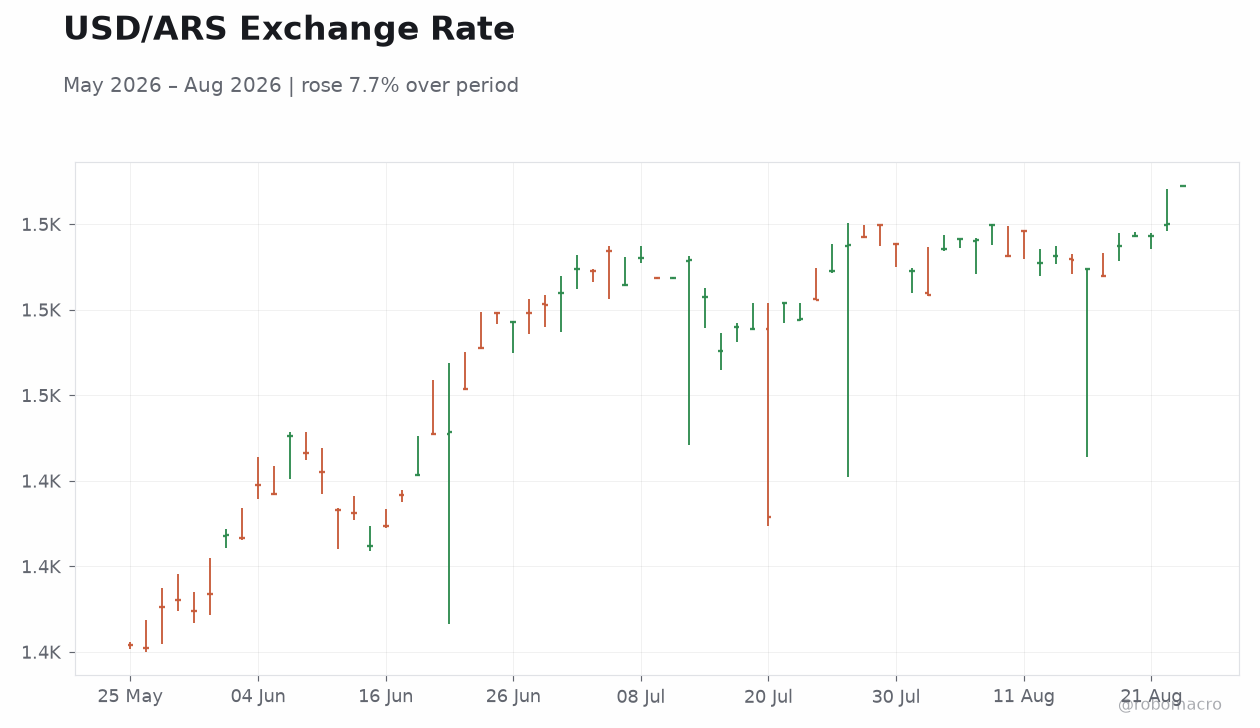
| USD/ARS | 1,509.00 | +0.60% |
| EUR/ARS | 1,759.60 | +0.42% |
| Gold | 4,682.70 | +0.90% |
| Brent Crude | 88.66 | -3.81% |
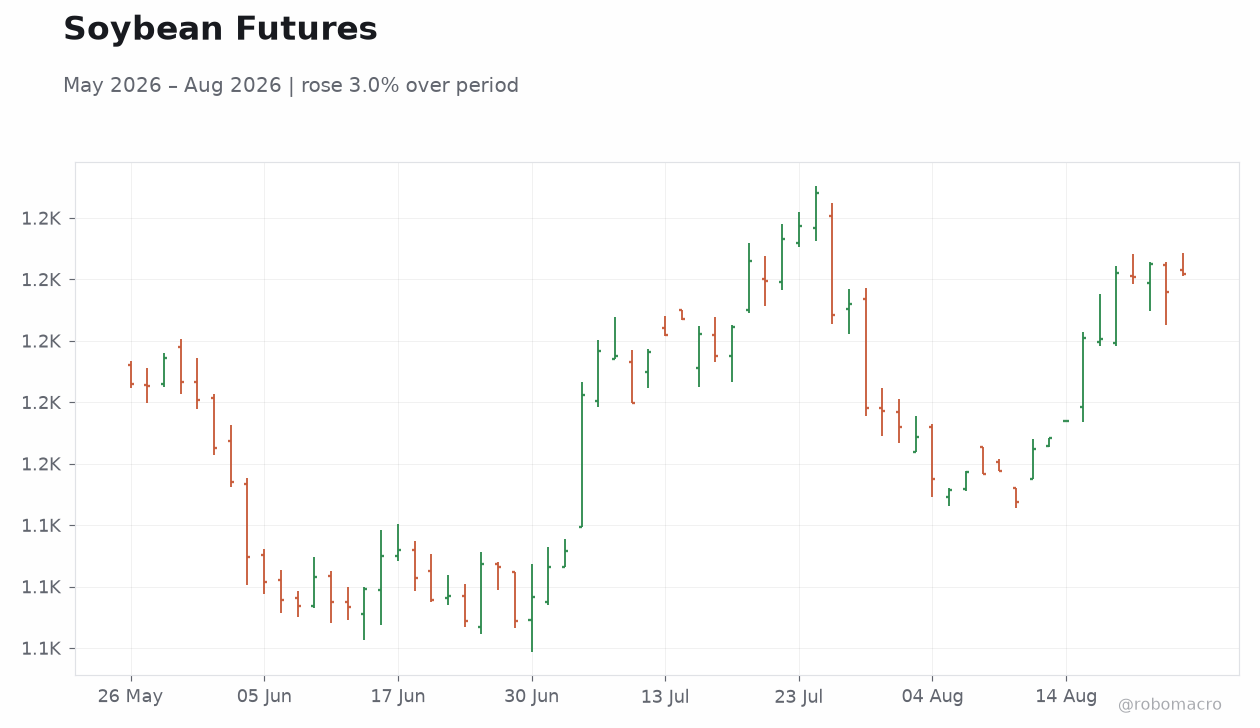
| Soybean | 1,221.75 | +0.47% |
| Bitcoin | 79,802.06 | +1.06% |
| Argentina 10Y | - | - |
Prior Economic Events
| Data | Prior | Cons | Actual |
|---|---|---|---|
| No events available | |||
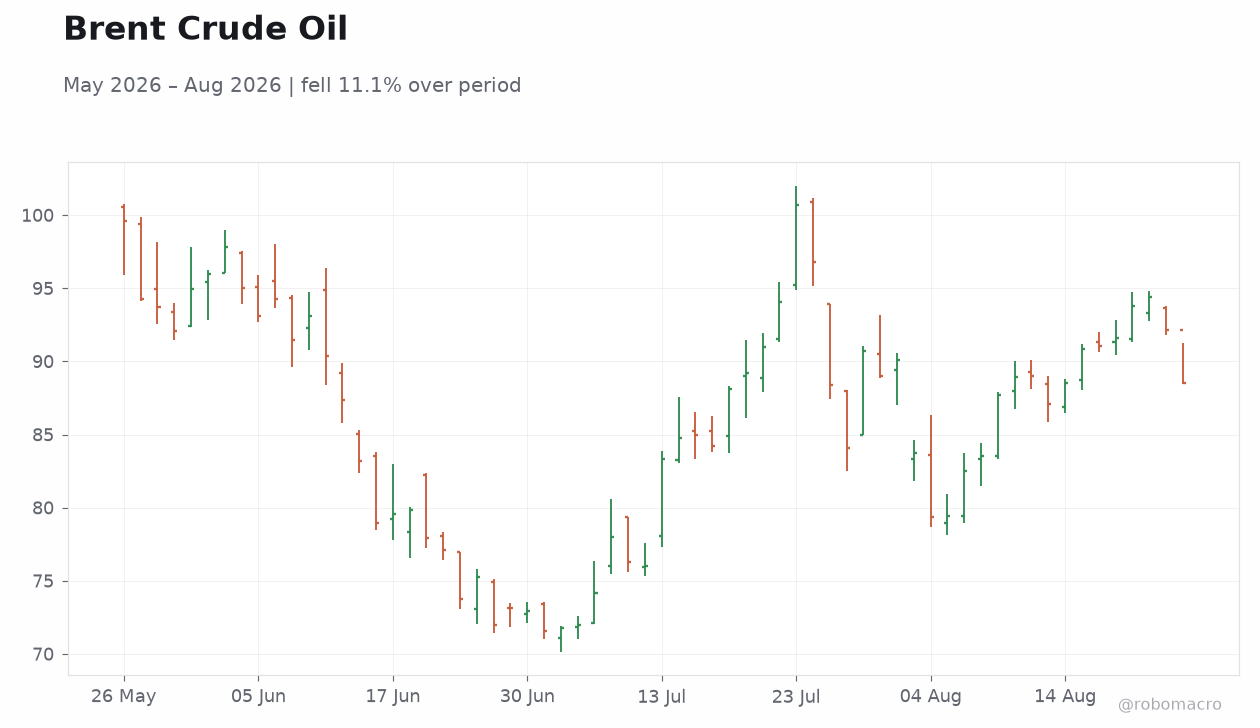 Brent Crude Oil | Type: market_hloc | USD/bbl: 88.49 (2026-08-25) | Range: 71.57–100.7 | Trend(5pt): 99.58,79.55,83.3,79.36,88.49
Today's Economic Events
| Data | Prior | Cons | Time |
|---|---|---|---|
| No events available | |||
- July CPI hits 4.3% MoM, lifting annual rate to 48.2%
- MERVAL climbs 2.81% while USD/ARS advances 0.60% to 1,509
- Net reserves rise $320 million to $27.4 billion on soy inflows
Yesterday's Recap
The MERVAL advanced 2.81% to 2,995,130, led by bank and energy shares on thin volumes. USD/ARS rose 0.60% to 1,509, extending the official crawl, while EUR/ARS gained 0.42% to 1,759.60. July inflation printed 4.3% month-on-month, above the 4.0% consensus, pushing the annual rate to 48.2% as core goods and services components surprised higher.
The Treasury posted a July primary surplus of ARS 1.8 trillion, or 0.4% of GDP, helped by reduced energy subsidies. Net international reserves at the BCRA increased $320 million to $27.4 billion, the first weekly gain in three weeks, supported by soy export pre-payments. Markets now price only a 25 basis point policy rate cut by year-end, down from 75 basis points prior to the print.
The peso’s daily crawl continues to lag inflation, widening the real appreciation gap. Gold rose 0.90% to 4,682.70 while Brent crude fell 3.81% to 88.66 and soybean futures gained 0.47% to 1,221.75.
The Day Ahead
INDEC will release July industrial production at 10:00 am ET, with consensus calling for a 1.8% year-on-year increase. The BCRA is scheduled to publish its weekly reserve and monetary base data at 11:00 am ET. The Treasury plans an auction of LETRAS and BONCER bonds at 4:00 pm ET.
No major international data releases are expected to directly influence the peso or Argentine commodity exports. Soybean futures, up 0.47% yesterday at 1,221.75, remain sensitive to weather developments in key growing regions and Chinese demand signals. Brent crude, which fell 3.81% to 88.66, could affect fiscal revenues if the decline persists.
Bitcoin traded 1.06% higher at 79,802.06, offering limited spillover to local risk assets.
Other Economic Notes
Congress approved the 2027 budget framework targeting a 1.8% primary surplus, slightly tighter than market expectations and reinforcing fiscal consolidation efforts. The IMF mission departed Buenos Aires without setting a new disbursement date, citing the need for firmer inflation convergence under the current programme. Lower energy subsidies helped deliver the July fiscal outperformance, freeing resources for debt servicing.
Steady Chinese soybean purchases continue to underpin export receipts and reserve accumulation despite global price volatility. <i>↓ p.2</i>