Argentina Macro Daily(Beta Mode)
MERVAL Climbs as Peso Weakens Modestly
Market Snapshot
| Asset | Level | Change |
|---|---|---|
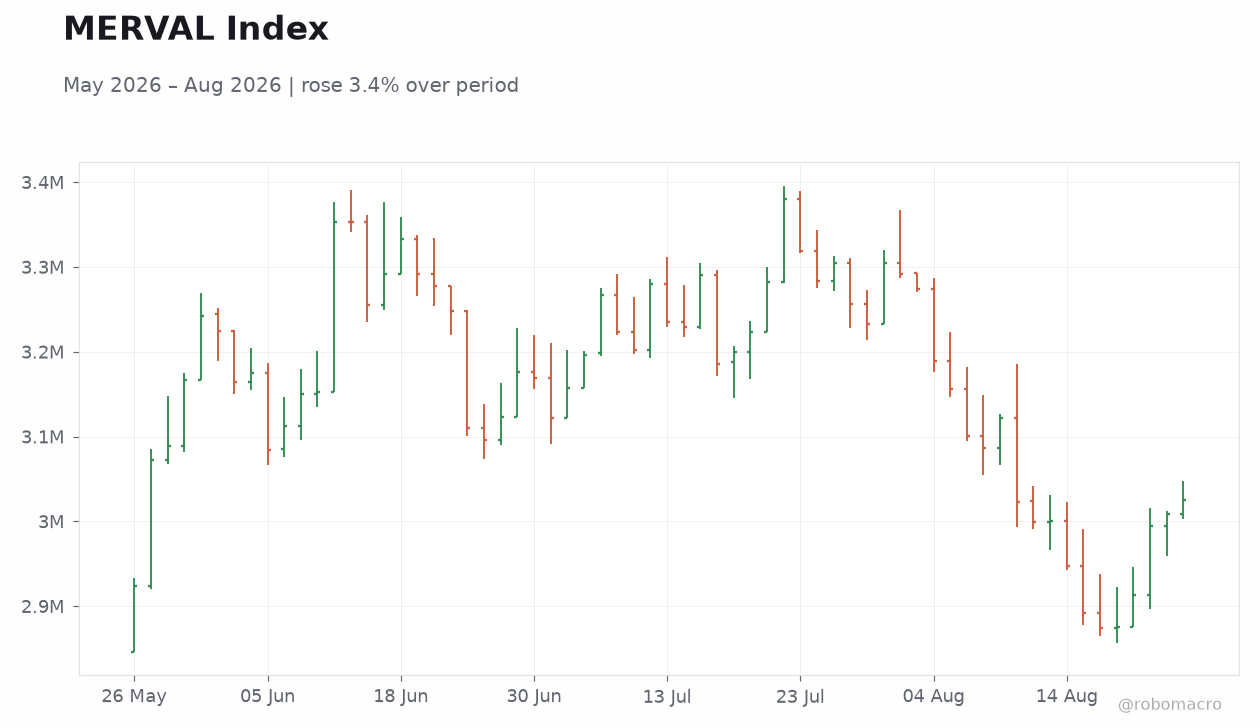
| MERVAL | 3,024,971.00 | +0.53% |
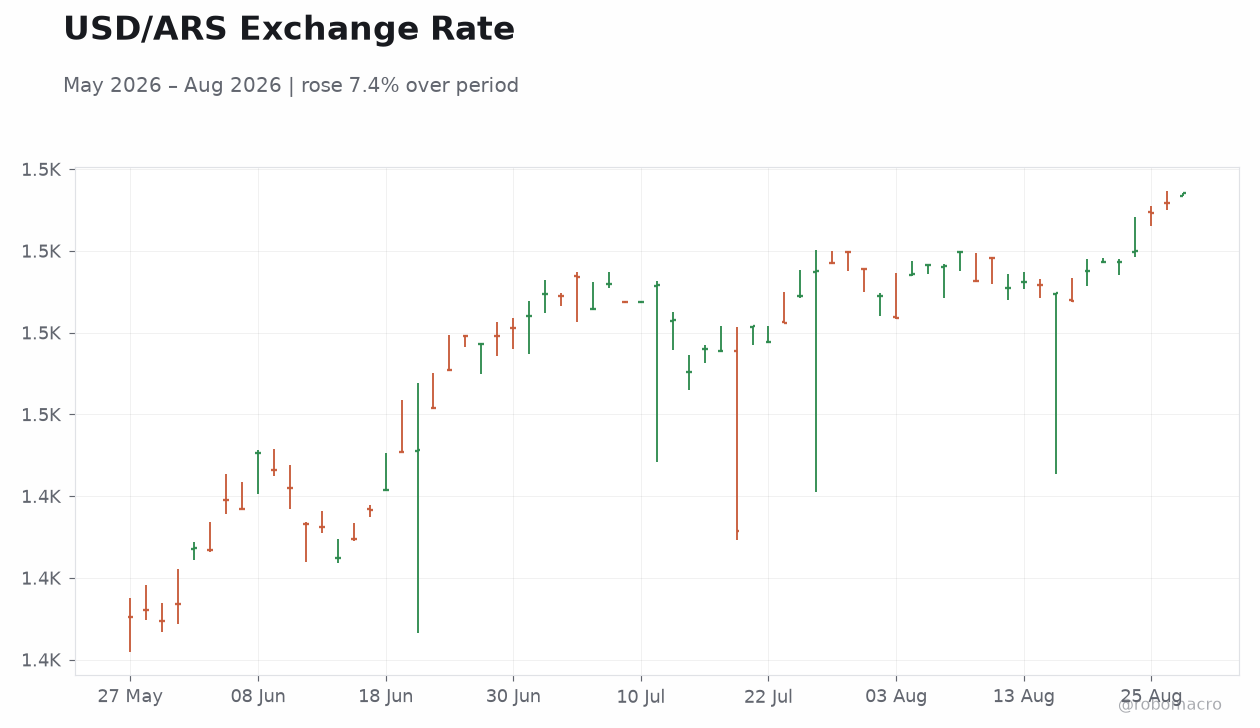
| USD/ARS | 1,514.25 | +0.17% |
| EUR/ARS | 1,764.94 | +0.00% |
| Gold | 4,648.10 | +1.09% |
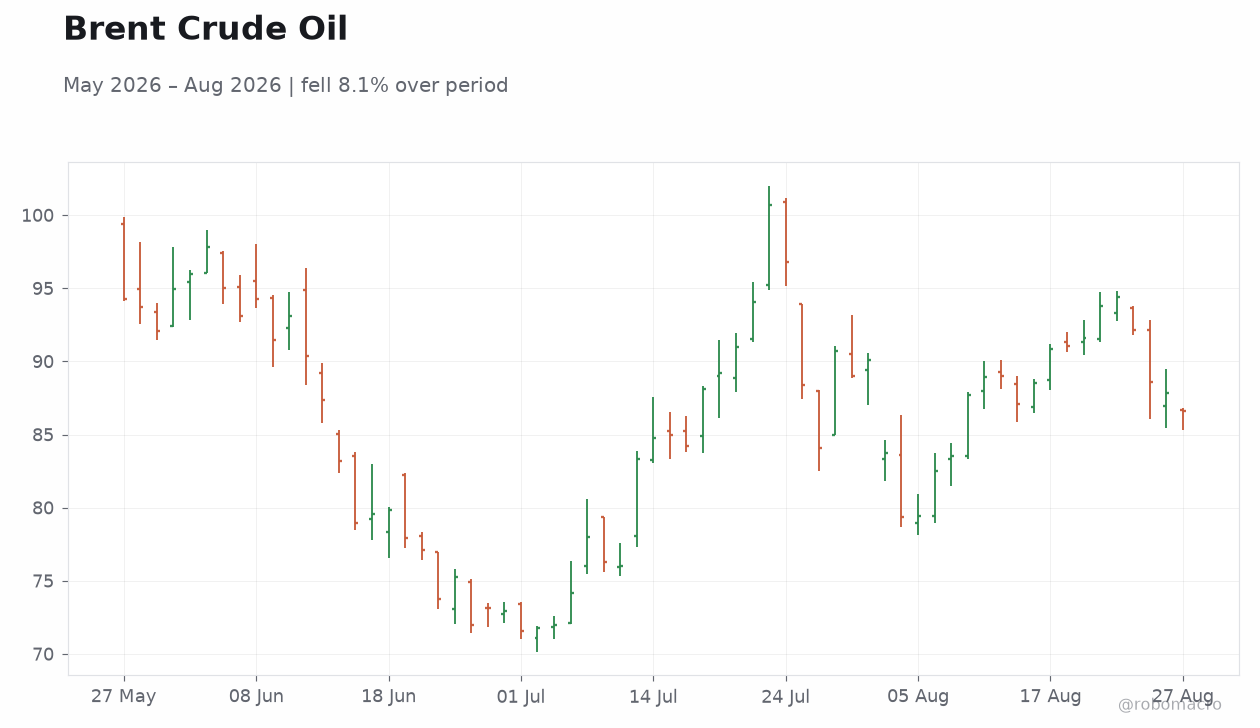
| Brent Crude | 86.59 | -1.42% |
| Soybean | 1,258.75 | +0.36% |
| Bitcoin | 79,846.48 | +1.04% |
| Argentina 10Y | - | - |
Prior Economic Events
| Data | Prior | Cons | Actual |
|---|---|---|---|
| No events available | |||
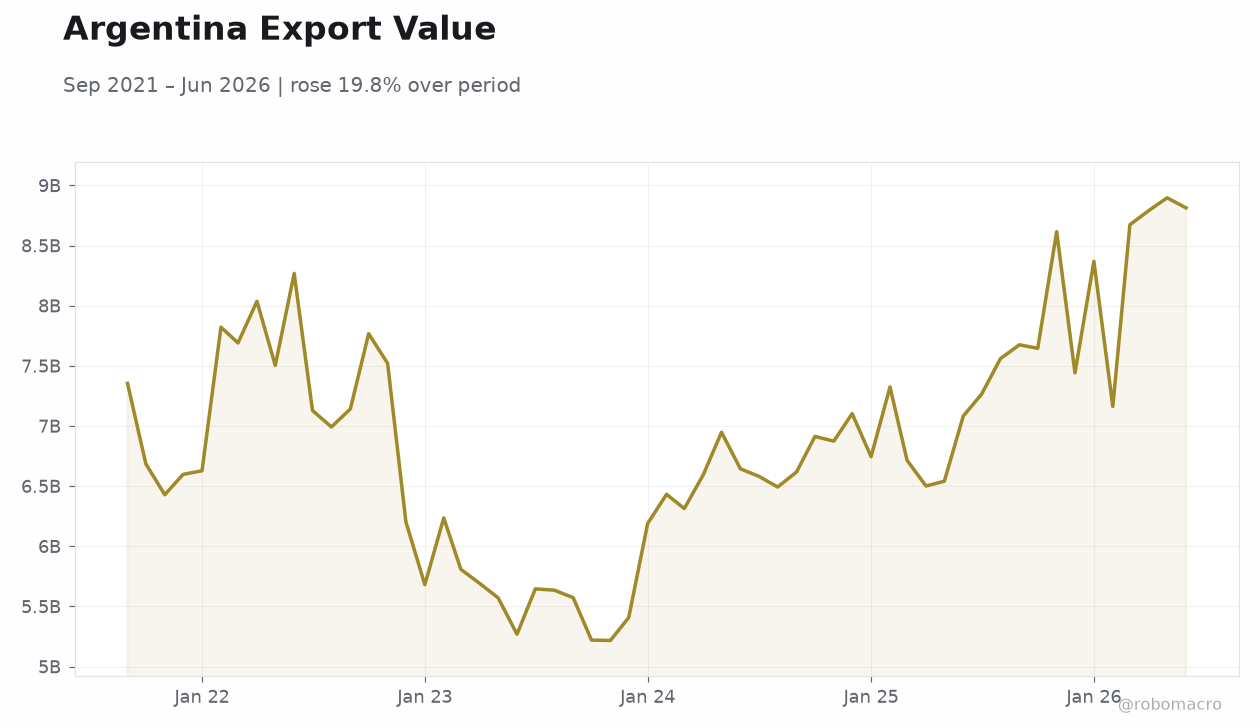 Argentina Export Value | Type: macro_line | Exports (USD mn): 8.813e+09 (2026-06-01) | Range: 5.217e+09–8.897e+09 | Trend(6pt): 7.354e+09,7.521e+09,6.189e+09,6.714e+09,8.897e+09,8.813e+09
Today's Economic Events
| Data | Prior | Cons | Time |
|---|---|---|---|
| No events available | |||
- MERVAL advances 0.53% with soybean support
- USD/ARS rises 0.17% to 1,514.25 on thin flows
- Brent drops 1.42% while gold gains 1.09%
Yesterday's Recap
No Argentina economic releases occurred on August 26, leaving market participants to react solely to price action and external commodity signals. The MERVAL index posted a 0.53% gain to 3,024,971, driven by selective buying in energy and agricultural names. USD/ARS ticked 0.17% higher to 1,514.25, reflecting mild official-market depreciation pressure.
EUR/ARS held steady at 1,764.94, indicating limited cross-rate movement. Gold climbed 1.09% to 4,648.10 on safe-haven demand, while Bitcoin rose 1.04% to 79,846.48. Soybean futures advanced 0.36% to 1,258.75, supporting export revenue expectations, whereas Brent crude fell 1.42% to 86.59 amid softer global demand signals.
Argentina 10Y bonds showed no quoted change.
The Day Ahead
August 27 features an empty domestic calendar with zero scheduled releases from INDEC or the BCRA. Traders will monitor any unscheduled Treasury bill operations that could affect short-term liquidity. Global commodity price swings, particularly in soybeans and crude, are likely to dictate peso and equity direction.
External risk sentiment from US inflation updates may spill into Argentine assets given the open capital account. Market participants await any BCRA spot interventions aimed at reserve management. Focus remains on peso stability after yesterday’s modest USD/ARS uptick.
Other Economic Notes
Argentina’s external accounts continue to hinge on soybean export proceeds amid elevated global prices. Fiscal consolidation remains a priority as authorities seek to rebuild reserves without fresh IMF disbursements. The peso’s gradual official-market softening highlights ongoing inflation pass-through risks despite the lack of fresh CPI prints.
Broader EM debt markets show mixed appetite, limiting carry-trade inflows into local instruments. Domestic liquidity conditions stay anchored by BCRA bill rollovers rather than outright rate shifts.
Global Macro News
The Philippine central bank delivered a third consecutive rate hike as inflation stayed elevated, underscoring EM tightening persistence. Thailand’s central bank kept its policy rate at 1% citing weak and uneven growth, a stance that contrasts with tighter peers. <i>↓ p.2</i>