Argentina Macro Daily(Beta Mode)
MERVAL Slips as Peso Firms on Thin Volume
Market Snapshot
| Asset | Level | Change |
|---|---|---|
| MERVAL | 3,001,209.00 | -0.79% |
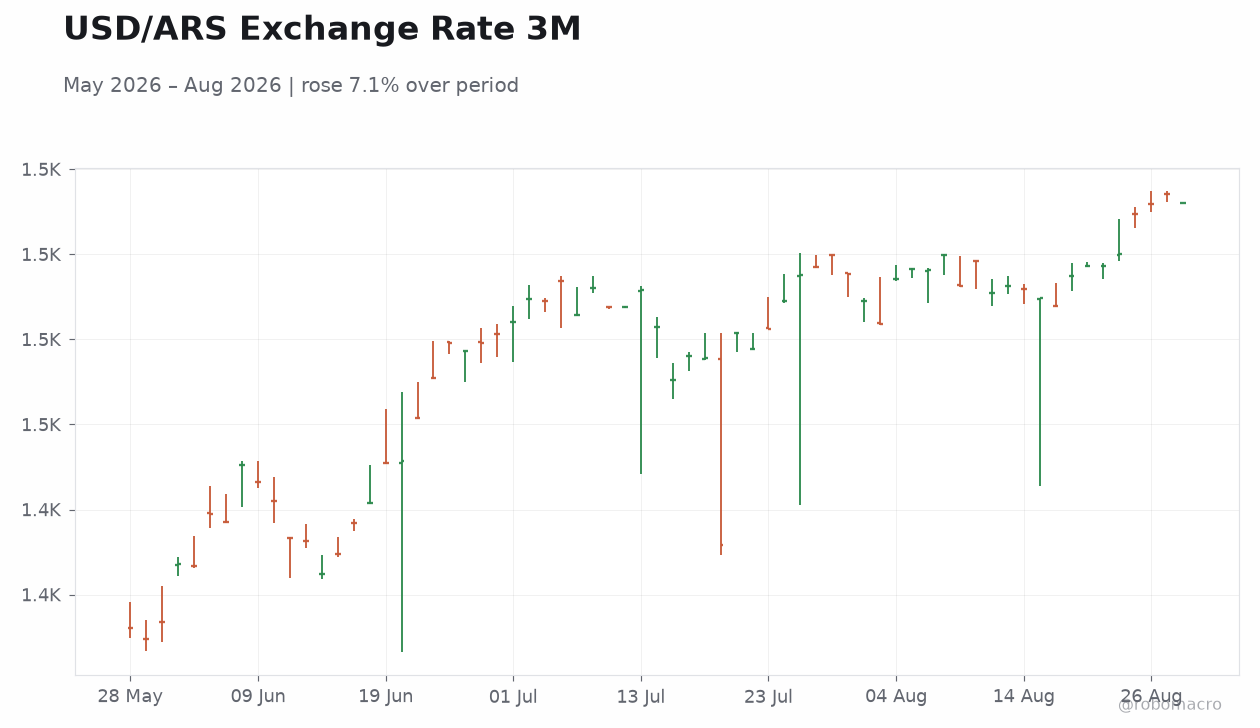
| USD/ARS | 1,512.00 | -0.15% |
| EUR/ARS | 1,761.39 | -0.19% |
| Gold | 4,658.10 | +1.05% |
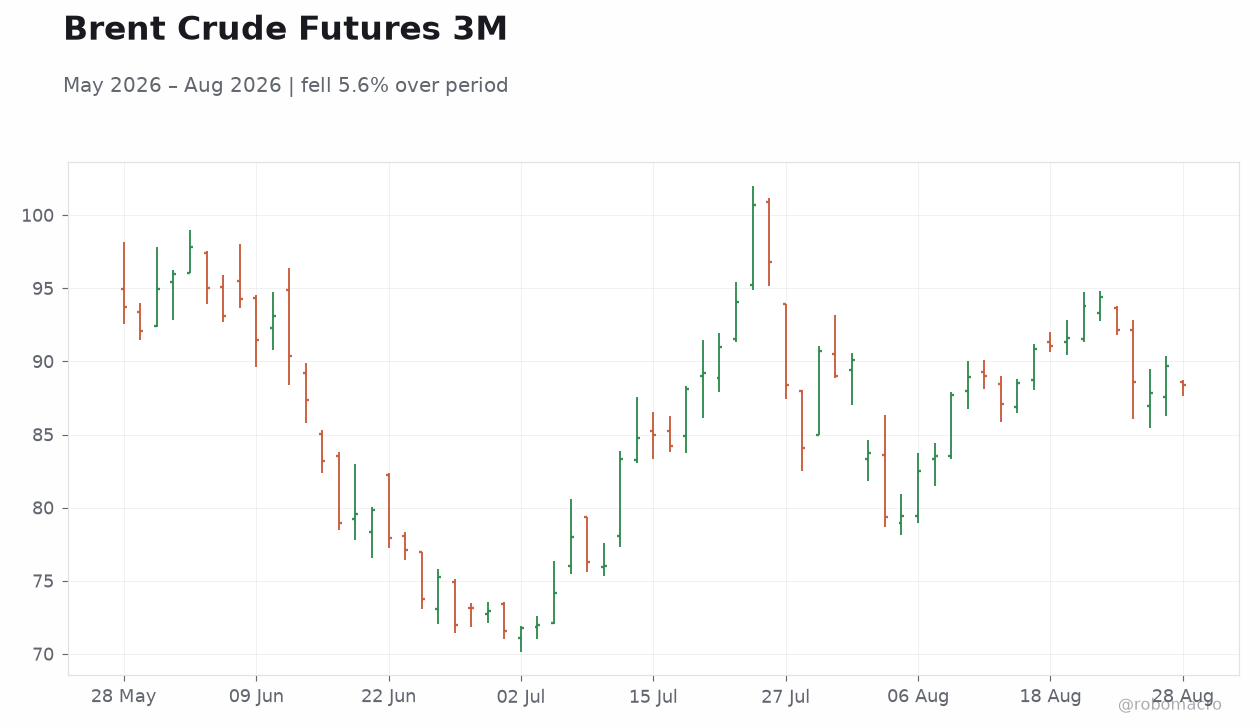
| Brent Crude | 88.22 | -1.65% |
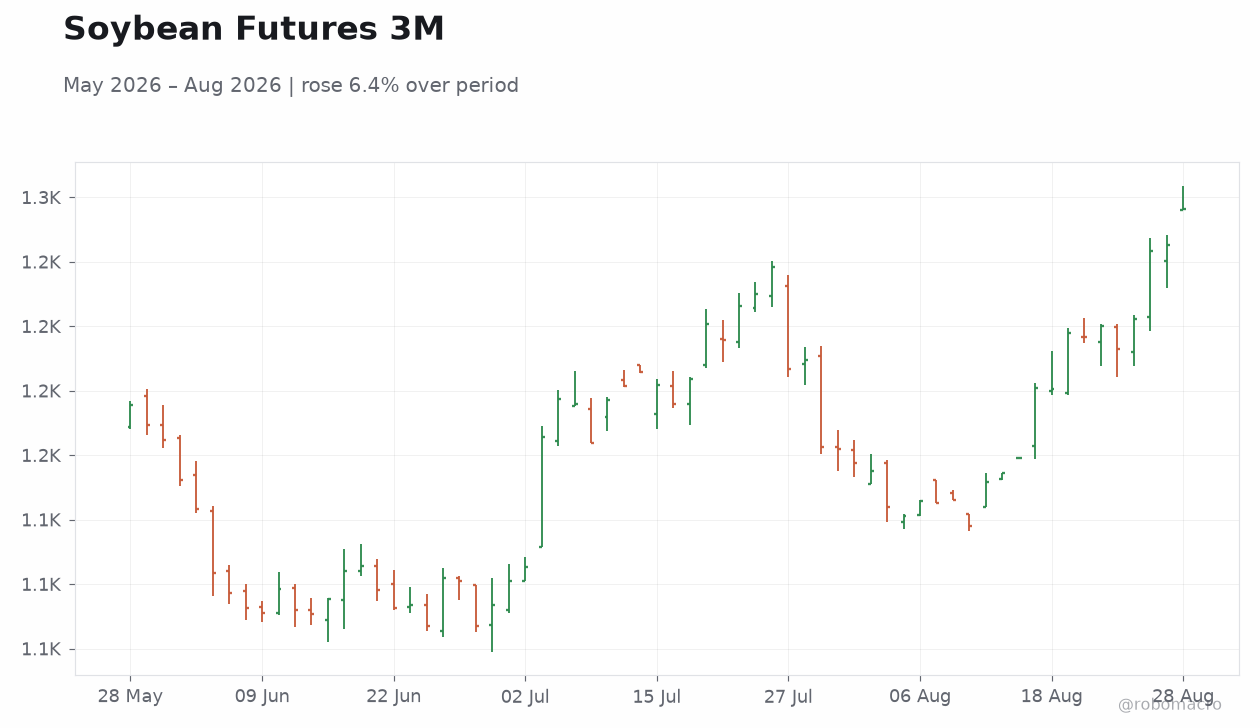
| Soybean | 1,270.25 | +1.09% |
| Bitcoin | 79,365.01 | -1.11% |
| Argentina 10Y | - | - |
Prior Economic Events
| Data | Prior | Cons | Actual |
|---|---|---|---|
| No events available | |||
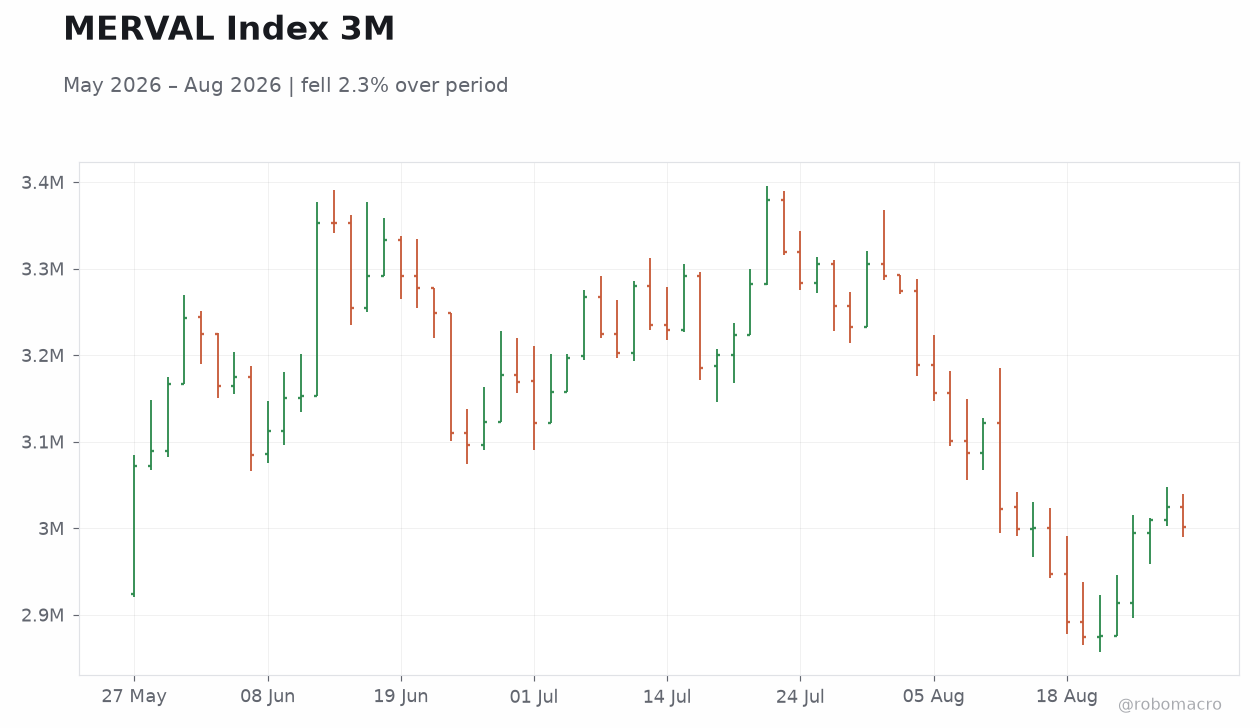 MERVAL Index 3M | Type: market_hloc | Index: 3.001e+06 (2026-08-27) | Range: 2.874e+06–3.38e+06 | Trend(5pt): 3.072e+06,3.291e+06,3.229e+06,3.156e+06,3.001e+06
Today's Economic Events
| Data | Prior | Cons | Time |
|---|---|---|---|
| No events available | |||
- MERVAL fell 0.79% to 3,001,209 with limited domestic catalysts
- USD/ARS eased 0.15% to 1,512.00 while soybean futures gained 1.09%
- Brent crude declined 1.65% to 88.22, trimming energy export upside
Yesterday's Recap
Argentine equity markets closed lower as the MERVAL index declined 0.79% to 3,001,209 amid subdued trading volumes and absence of local data releases. The peso strengthened modestly, with USD/ARS falling 0.15% to 1,512.00 and EUR/ARS dropping 0.19% to 1,761.39. Gold advanced 1.05% to 4,658.10, reflecting safe-haven demand that offered limited spillover to Argentine assets.
Soybean prices rose 1.09% to 1,270.25, supporting the outlook for export receipts and fiscal collections tied to agricultural shipments. Bitcoin fell 1.11% to 79,365.01, tracking broader risk-off sentiment across emerging-market currencies. The Argentina 10Y bond showed no price change, leaving yields anchored near recent levels.
Overall market moves reflected external commodity fluctuations rather than domestic policy signals. No events appeared on the FinanceFlow calendar for August 27.
The Day Ahead
No major economic releases are scheduled for August 28 according to the FinanceFlow calendar. Traders will monitor BCRA reserve and monetary aggregate updates expected later in the session. Attention remains on any follow-up commentary from central bank officials regarding recent peso stability.
Global commodity flows, particularly soybean and crude prices, will likely dictate intraday direction for export-linked equities. Markets also await any updates on IMF program compliance ahead of the September disbursement window. Positioning is expected to stay light until clearer domestic catalysts emerge next week.
Tomorrow’s calendar likewise shows zero events.
Other Economic Notes
Persistent peso strength at current levels supports the BCRA’s reserve accumulation efforts and reduces immediate pressure on import costs. Soybean export proceeds continue to anchor fiscal revenue, helping offset weaker industrial output trends observed in recent months. Capital flow data remain subdued, with foreign interest focused on commodity-linked names rather than broad market exposure.
Fiscal consolidation targets under the IMF program stay on track provided agricultural collections hold near current projections. External debt service obligations continue to weigh on reserve dynamics despite the recent stabilization in the official exchange rate. The empty event slate leaves commodity prices as the dominant near-term driver.