Argentina Macro Daily(Beta Mode)
MERVAL Slips as Peso Holds Steady
Market Snapshot
| Asset | Level | Change |
|---|---|---|
| MERVAL | 2,979,471.75 | -0.72% |
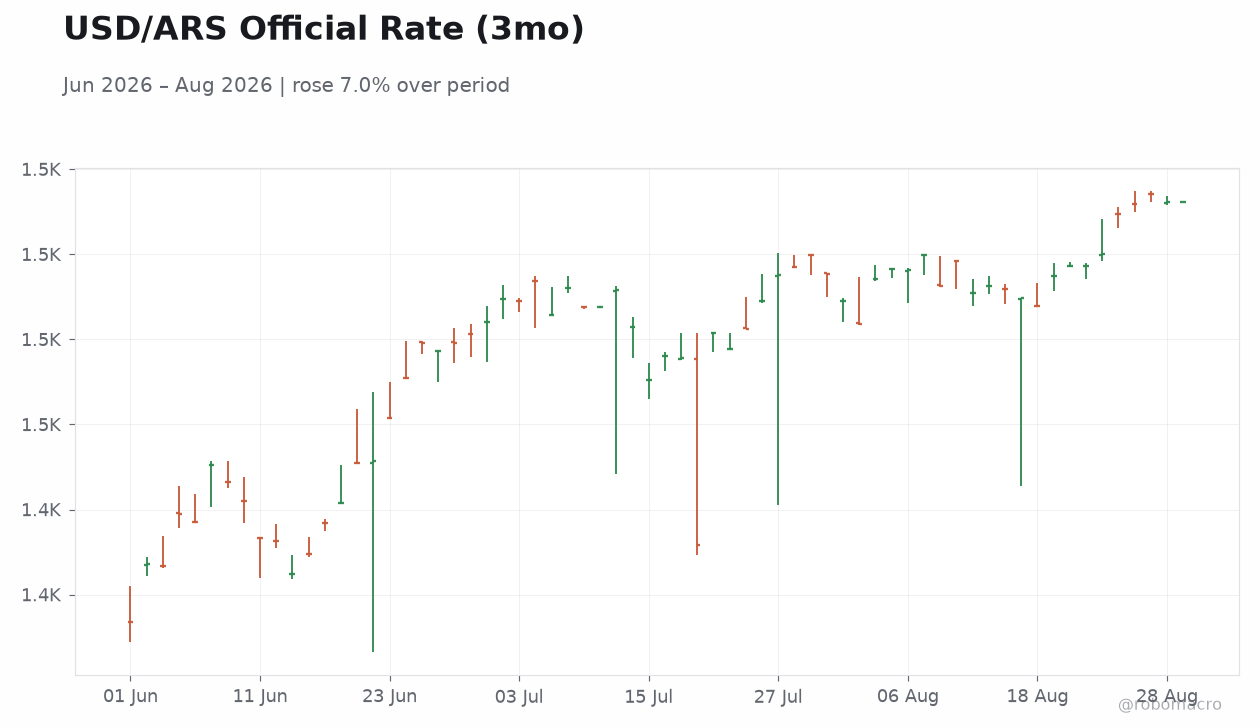
| USD/ARS | 1,512.25 | +0.00% |
| EUR/ARS | 1,753.07 | -0.52% |
| Gold | 4,486.00 | +0.18% |
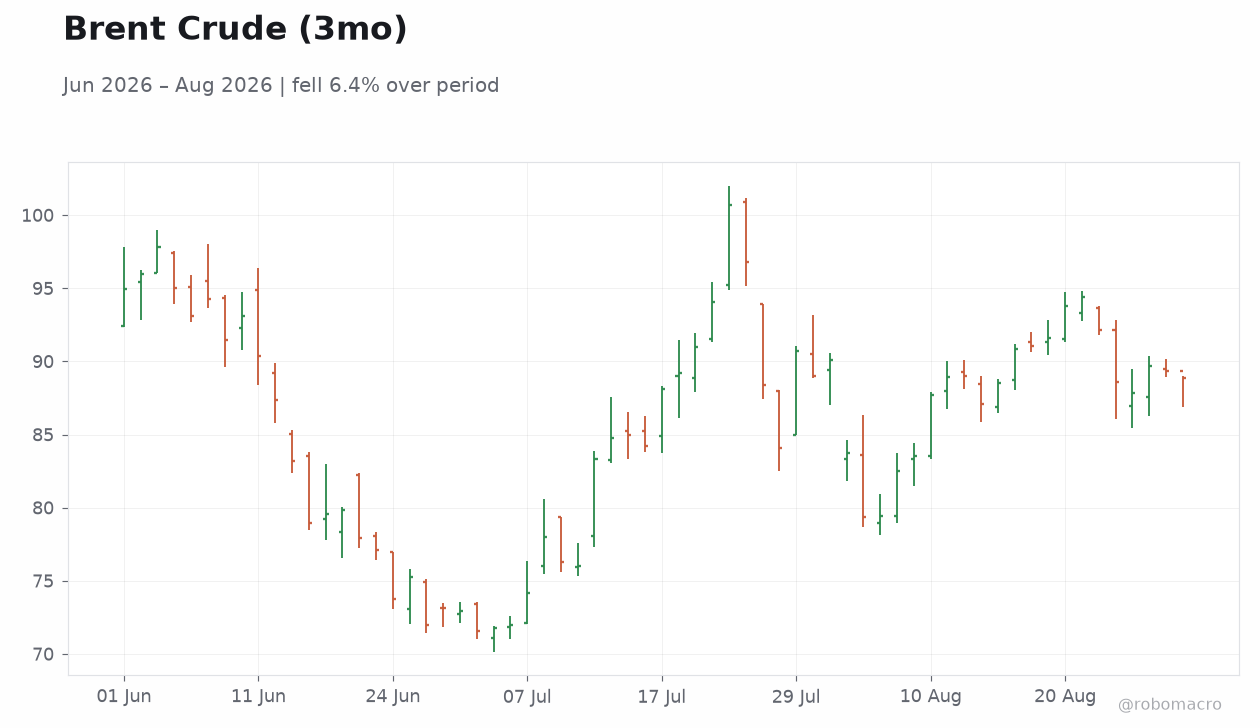
| Brent Crude | 88.85 | -0.52% |
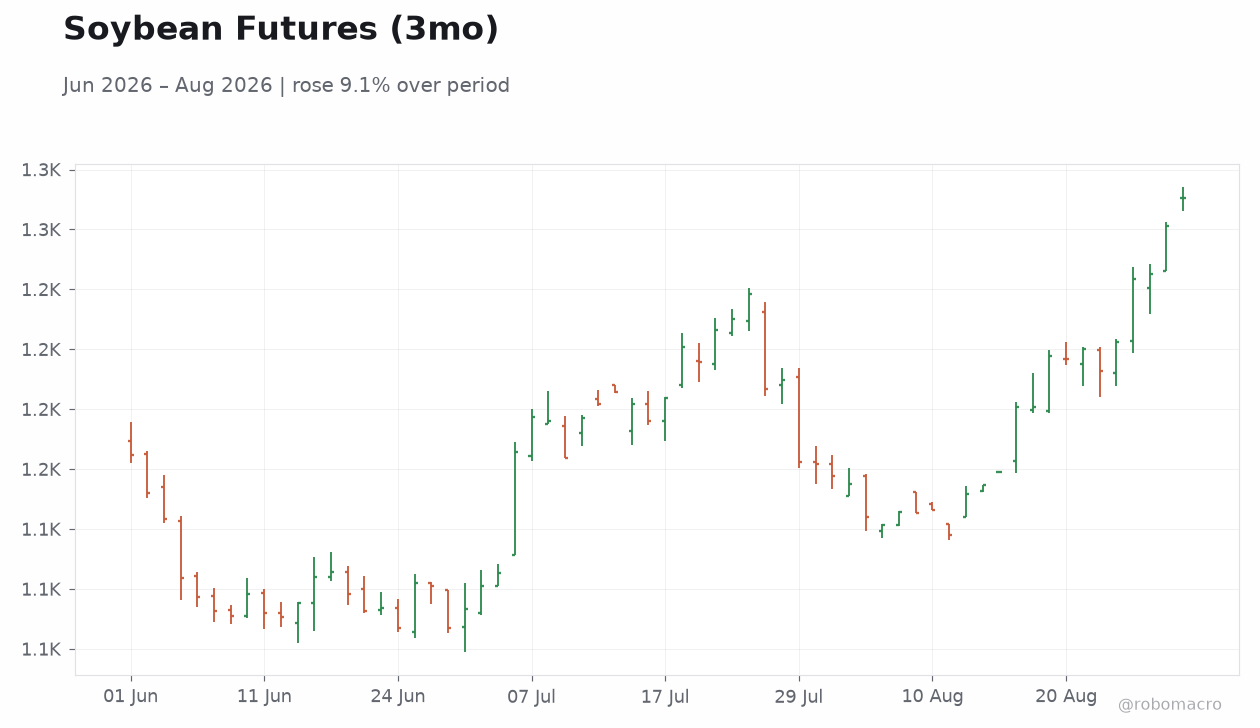
| Soybean | 1,287.75 | +0.90% |
| Bitcoin | 78,424.32 | +0.76% |
| Argentina 10Y | - | - |
Prior Economic Events
| Data | Prior | Cons | Actual |
|---|---|---|---|
| No events available | |||
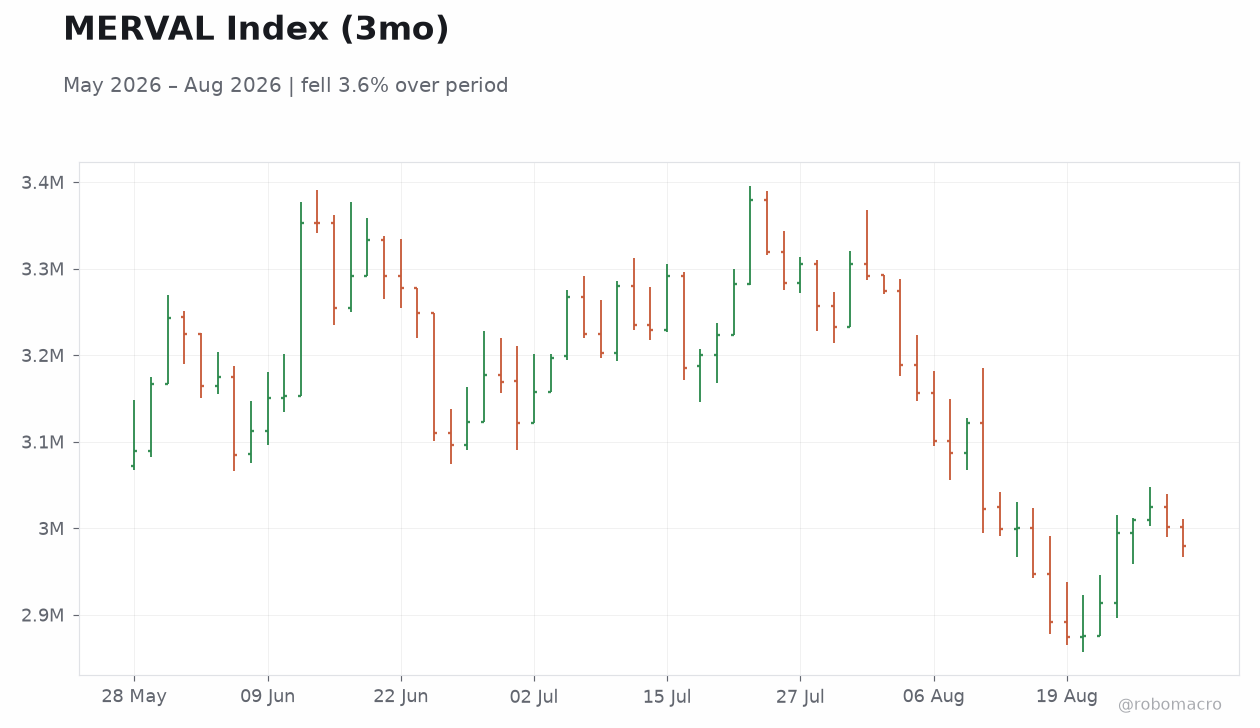 MERVAL Index (3mo) | Type: market_hloc | Index Level: 2.979e+06 (2026-08-28) | Range: 2.874e+06–3.38e+06 | Trend(5pt): 3.089e+06,3.278e+06,3.291e+06,3.101e+06,2.979e+06
Today's Economic Events
| Data | Prior | Cons | Time |
|---|---|---|---|
| No events available | |||
- MERVAL falls 0.72% to 2,979,471.75 on thin volume
- USD/ARS unchanged at 1,512.25 while soybean futures climb 0.90%
- Reserves and inflation data point to gradual BCRA easing
Yesterday's Recap
Argentina equity markets closed lower with the MERVAL declining 0.72 percent to 2,979,471.75 as banks and energy names saw profit-taking after recent gains. The official USD/ARS rate held steady at 1,512.25 with no movement, while the euro-Argentine peso cross eased 0.52 percent to 1,753.07. Soybean futures advanced 0.90 percent to 1,287.75, supporting export revenue expectations amid steady Chinese demand.
Gold rose 0.18 percent to 4,486.00 on safe-haven flows, and Brent crude slipped 0.52 percent to 88.85. No major data releases occurred, leaving market focus on the stable peso and commodity price movements. International reserves showed modest gains from net foreign-exchange purchases, reinforcing the central bank’s intervention capacity.
The Day Ahead
The local calendar remains quiet with no scheduled releases for September 1. Attention will center on the BCRA’s weekly foreign-exchange purchase report due in the afternoon. Market participants will monitor any signals on the crawling peg pace and reserve accumulation.
Global commodity prices, particularly soybeans and crude, will influence sentiment given Argentina’s export reliance. No IMF or multilateral meetings are flagged that could shift near-term financing views.
Other Economic Notes
Export-tax collections have risen year-over-year on higher commodity prices, providing fiscal breathing room. Formal employment posted a fourth consecutive monthly gain of 0.3 percent, signaling gradual labor-market recovery. A syndicated loan from regional development banks worth 1.2 billion dollars will fund infrastructure and ease immediate financing pressure.
The IMF Article IV mission highlighted progress on fiscal targets while stressing the need for continued reserve buildup to support peso stability.
Global Macro News
Central banks worldwide face conflicting pressures between protecting public finances and containing inflation risks. The Bank of Japan’s tightening path is adding strain to fiscal balances in emerging markets with external debt. BofA expects only a single ECB rate cut in October, keeping European yields elevated and limiting capital inflows to high-yield credits such as Argentina.
<i>↓ p.2</i>