Argentina Macro Daily(Beta Mode)
CPI Undershoot Fuels BCRA Easing Bets
Market Snapshot
| Asset | Level | Change |
|---|---|---|
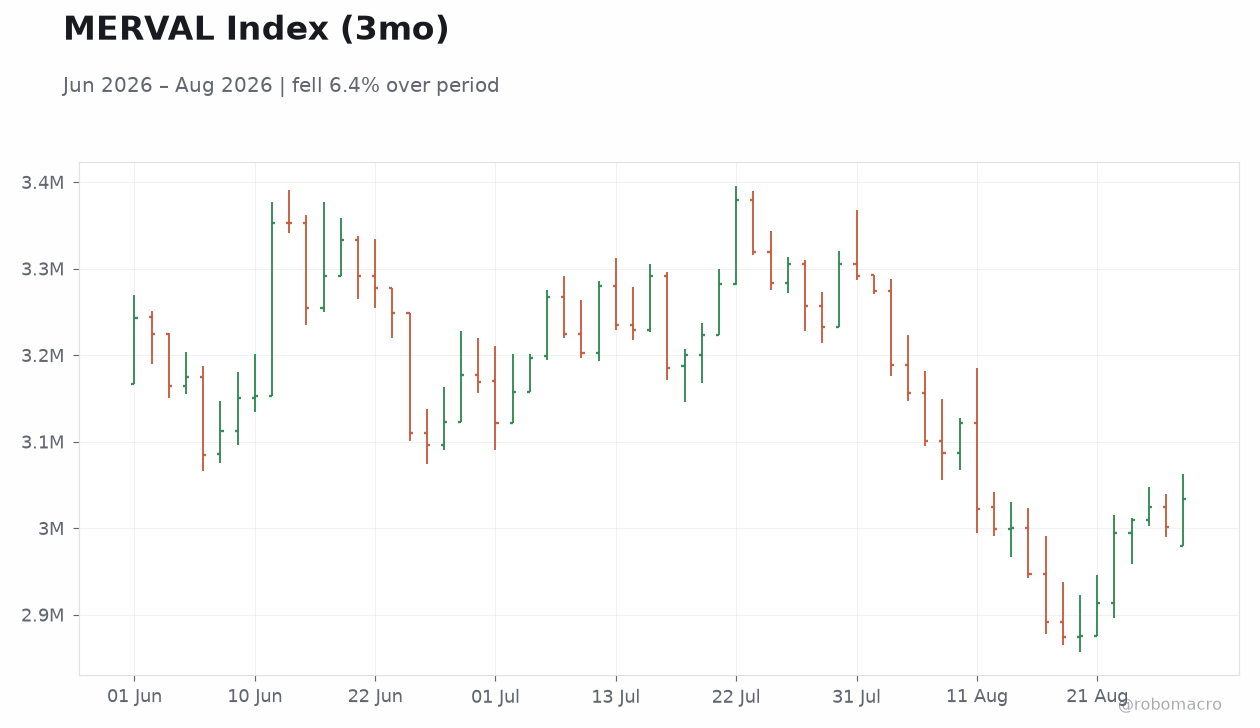
| MERVAL | 3,033,848.00 | +1.83% |
| USD/ARS | 1,508.50 | +0.65% |
| EUR/ARS | 1,750.90 | +0.81% |
| Gold | 4,423.30 | -0.18% |
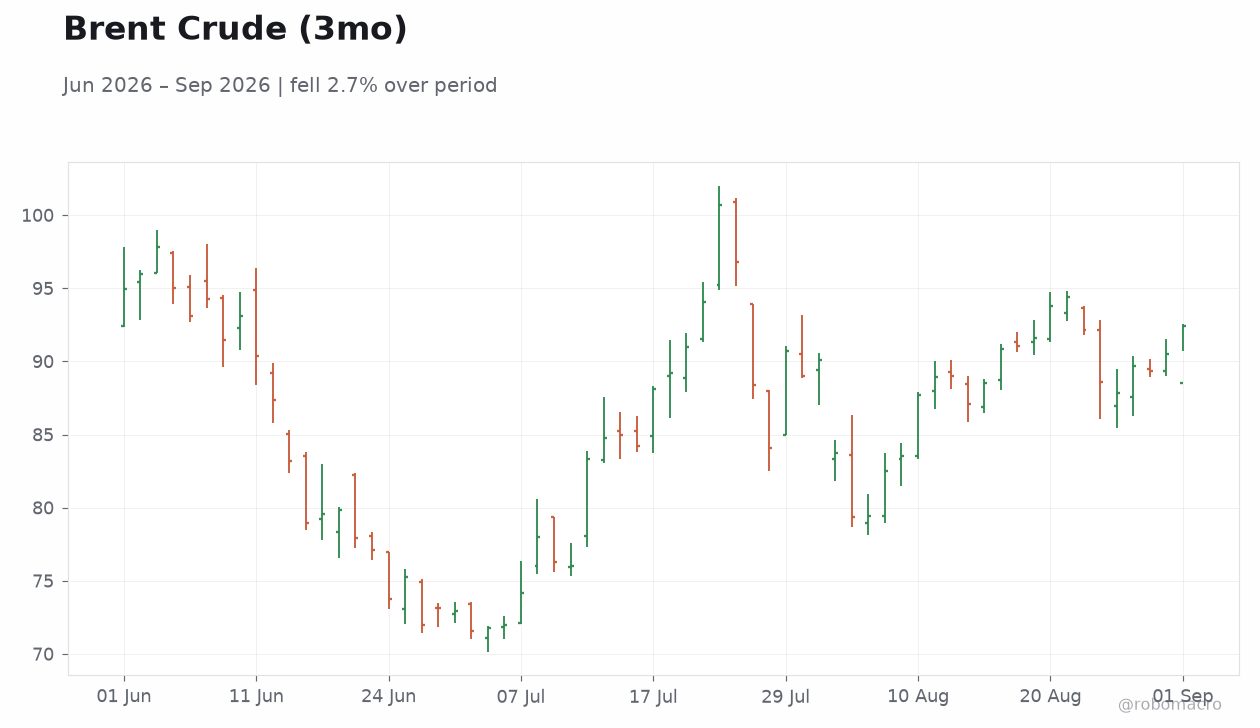
| Brent Crude | 92.46 | +2.18% |
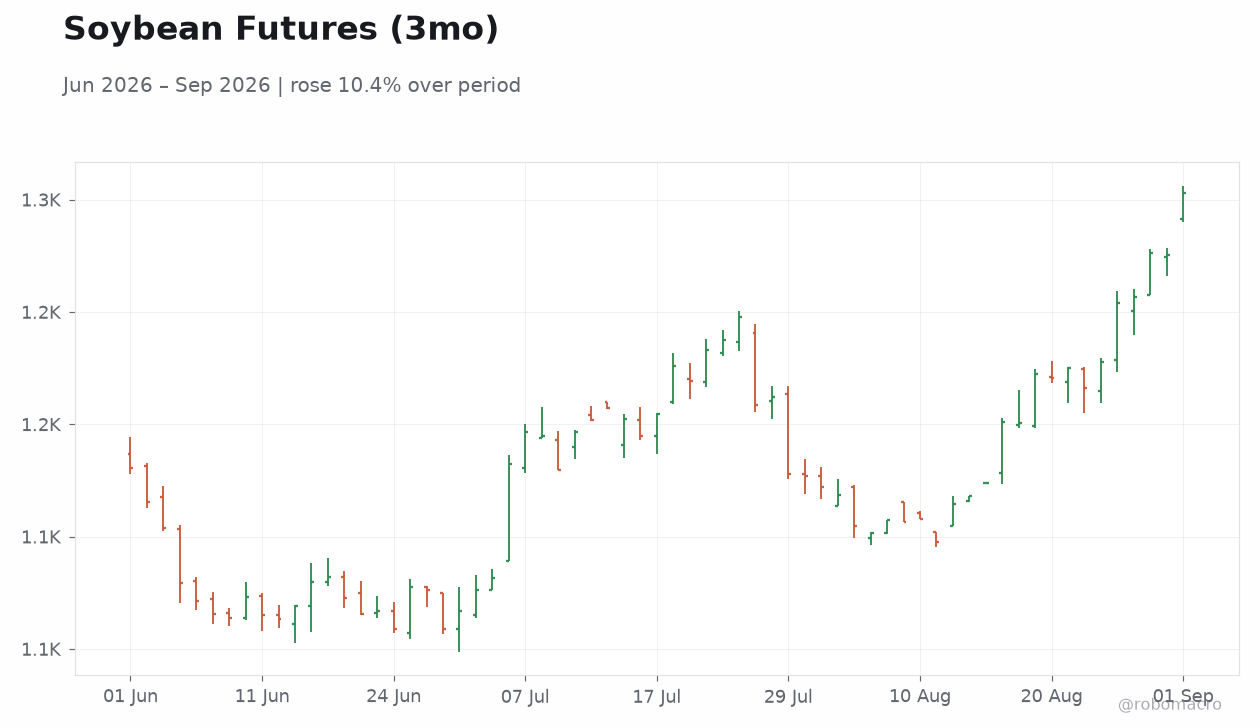
| Soybean | 1,302.75 | +2.16% |
| Bitcoin | 77,883.59 | -0.85% |
| Argentina 10Y | - | - |
Prior Economic Events
| Data | Prior | Cons | Actual |
|---|---|---|---|
| No events available | |||
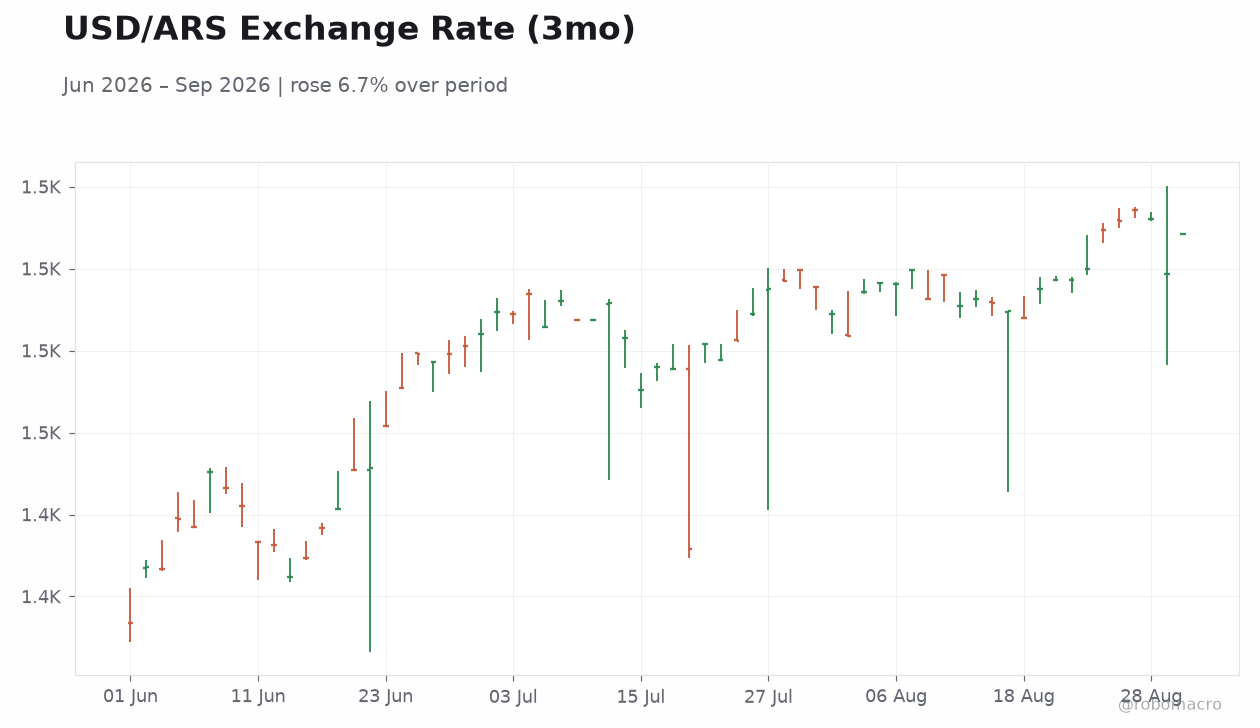 USD/ARS Exchange Rate (3mo) | Type: market_hloc | ARS per USD: 1508 (2026-09-01) | Range: 1414–1514 | Trend(6pt): 1414,1461,1470,1496,1512,1508
Today's Economic Events
| Data | Prior | Cons | Time |
|---|---|---|---|
| No events available | |||
- August CPI at 3.9% MoM beats consensus lower, annual rate falls to 48.2%
- MERVAL gains 1.83% while USD/ARS rises 0.65% to 1,508.50
- IMF releases $1.2 bn after third EFF review completion
Yesterday's Recap
The MERVAL index rose 1.83% to 3,033,848 amid selective buying in energy and financial names despite thin volumes. USD/ARS advanced 0.65% to 1,508.50 while EUR/ARS climbed 0.81% to 1,750.90. August CPI printed 3.9% MoM against a 4.3% consensus, pulling the twelve-month rate down to 48.2% as core goods inflation cooled to 3.4%.
Services inflation remained sticky at 4.7%, yet the overall undershoot prompted immediate repricing of BCRA cuts. Foreign-exchange reserves increased $180 million to $27.9 billion, supported by soybean dollar inflows. The government confirmed receipt of the $1.2 billion IMF disbursement following the third review under the current EFF program.
Industrial production expanded 1.8% YoY while the July trade balance recorded a $1.4 billion surplus. Gold fell 0.18% to 4,423.30 and Brent crude rose 2.18% to 92.46, with soybean futures up 2.16% to 1,302.75.
The Day Ahead
The BCRA will publish its monthly monetary policy survey together with July tax collection data on September 1. On September 2, INDEC releases final July industrial production and the Q2 unemployment rate, with consensus pointing to a 7.1% jobless figure. Traders will track BCRA interventions in the MEP dollar market and any signals on reserve-accumulation targets.
Market attention also centers on ongoing talks for a new FX regime covering mining exports. A potential 20% “export dollar” window for 2027 remains under discussion. No major data releases are scheduled for the immediate period according to the FinanceFlow calendar.
Other Economic Notes
The softer CPI outcome has already shifted market-implied year-end policy rates to 38% from 42%. Soybean export margins stayed resilient even as Chicago futures fluctuated. Fiscal consolidation under the IMF program continues to anchor credibility with multilateral lenders.
Reserve accumulation via commodity inflows remains the dominant near-term policy priority. Discussions on differentiated FX mechanisms for strategic sectors are advancing ahead of 2027. Bitcoin declined 0.85% to 77,883.59 while the Argentina 10Y yield data remained unavailable.
Global Macro News
Trump’s claim that U.S. GDP growth could reach 20% reinforced expectations that the Fed will hold rates steady, supporting risk assets in emerging markets. <i>↓ p.2</i>