Argentina Macro Daily(Beta Mode)
MERVAL Rises as USD/ARS Edges Higher
Market Snapshot
| Asset | Level | Change |
|---|---|---|
| MERVAL | 3,049,455.00 | +0.51% |
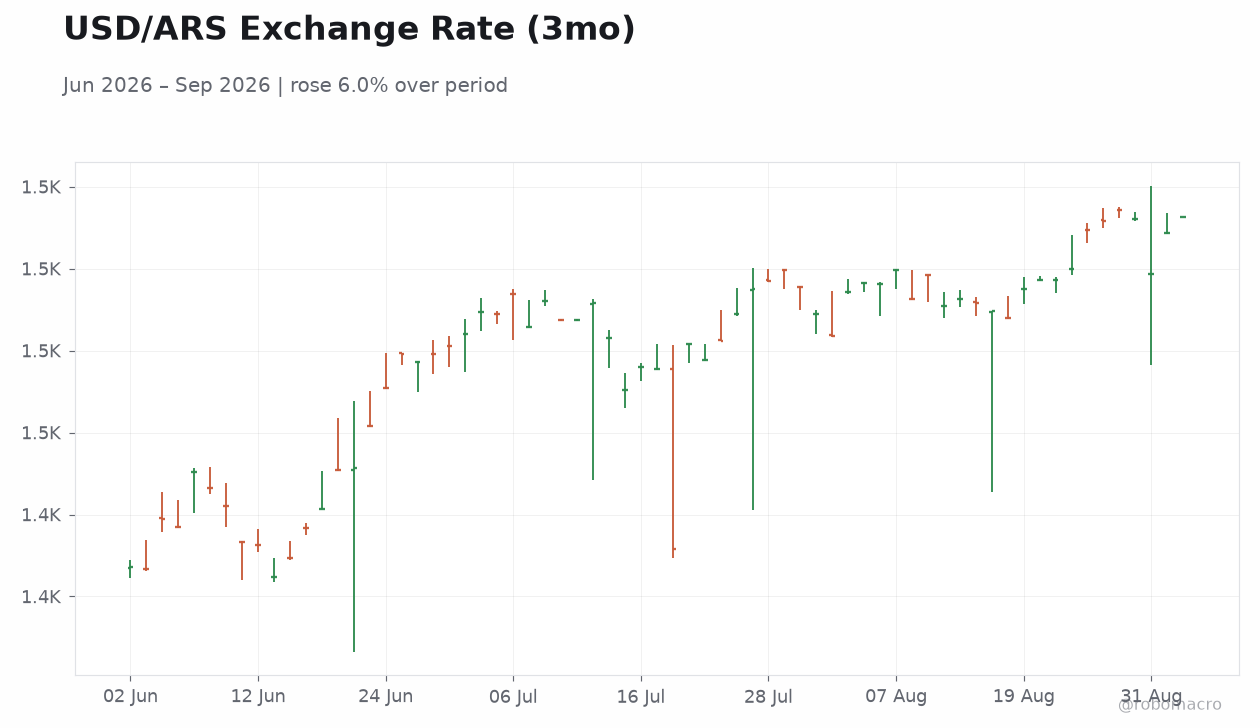
| USD/ARS | 1,512.50 | +0.25% |
| EUR/ARS | 1,751.76 | -0.06% |
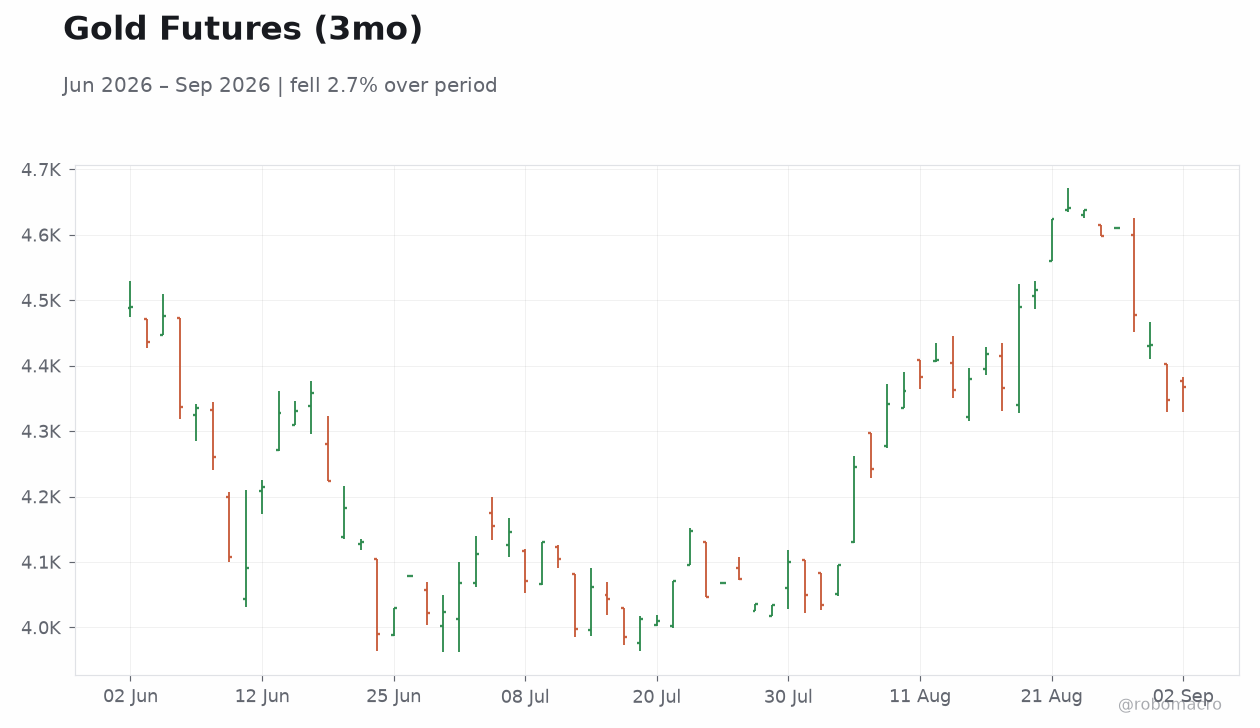
| Gold | 4,368.40 | +0.47% |
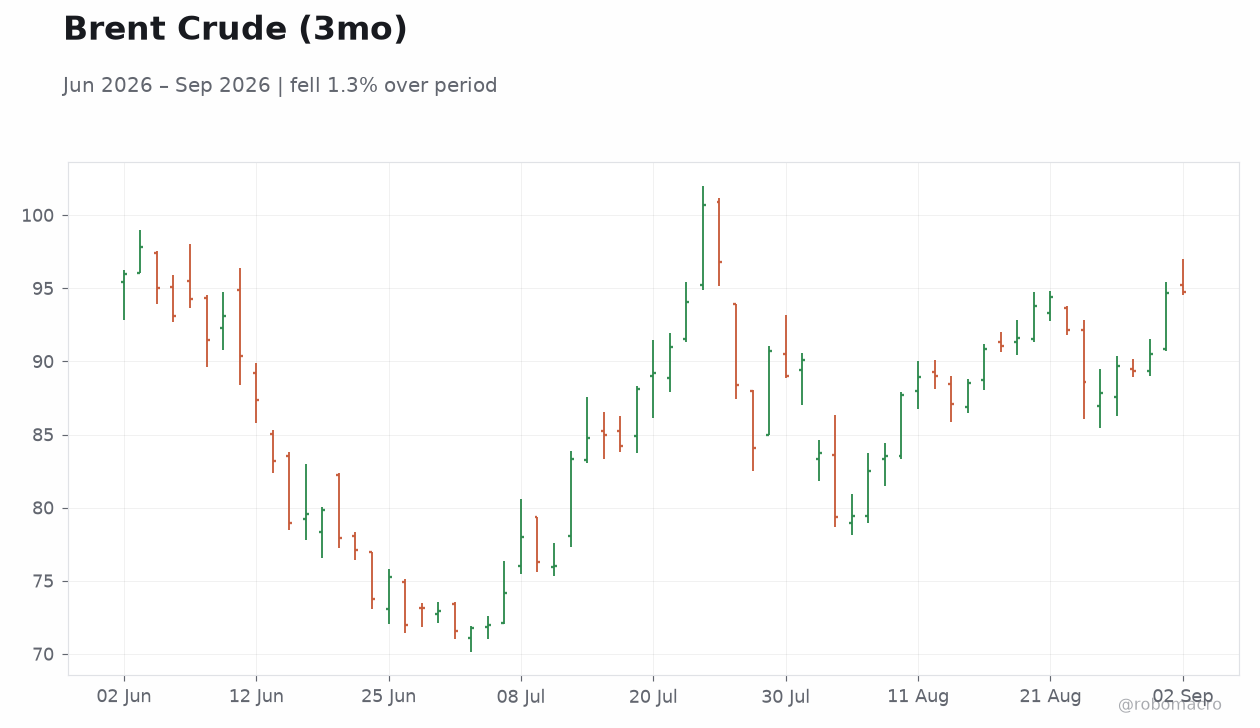
| Brent Crude | 94.68 | +0.03% |
| Soybean | 1,303.25 | -0.27% |
| Bitcoin | 76,891.63 | -0.66% |
| Argentina 10Y | - | - |
Prior Economic Events
| Data | Prior | Cons | Actual |
|---|---|---|---|
| No events available | |||
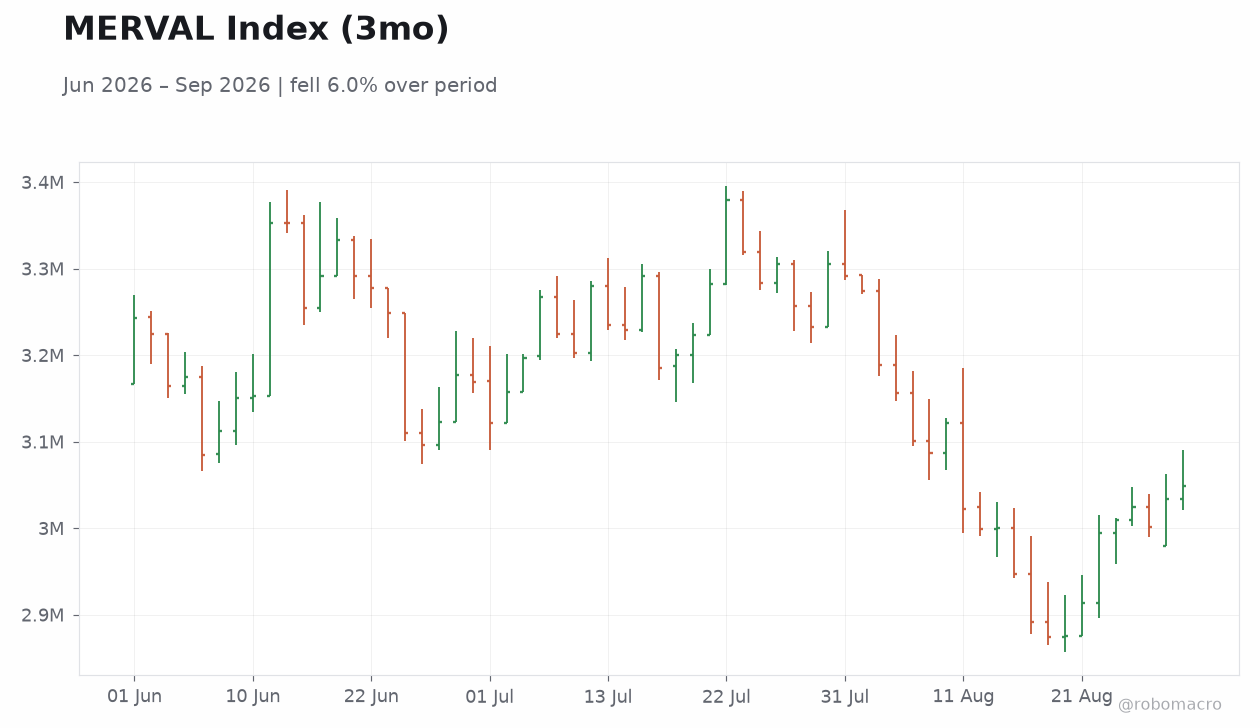 MERVAL Index (3mo) | Type: market_hloc | Index: 3.049e+06 (2026-09-01) | Range: 2.874e+06–3.38e+06 | Trend(6pt): 3.243e+06,3.248e+06,3.291e+06,3.156e+06,3.001e+06,3.049e+06
Today's Economic Events
| Data | Prior | Cons | Time |
|---|---|---|---|
| No events available | |||
- MERVAL gained 0.51% to 3,049,455 amid thin volumes.
- USD/ARS climbed 0.25% to 1,512.50, extending the crawl.
- Gold rose 0.47% while Brent held steady near $94.68.
Yesterday's Recap
Equity and FX markets posted modest gains on September 1 with no major data releases. The MERVAL index advanced 0.51% to close at 3,049,455, supported by energy and agribusiness names. USD/ARS rose 0.25% to 1,512.50 as the BCRA maintained its managed crawl pace.
EUR/ARS eased 0.06% to 1,751.76, reflecting limited euro demand. Soybean futures slipped 0.27% to 1,303.25 while Brent crude ticked up 0.03% to 94.68. Gold advanced 0.47% to 4,368.40 on renewed safe-haven demand.
Bitcoin fell 0.66% to 76,891.63. The absence of inflation or activity prints left markets focused on peso stability and fiscal flows ahead of September debt payments. Net international reserves showed no material change, consistent with steady export proceeds.
The Day Ahead
No domestic releases are scheduled for September 2-3. Attention will center on the BCRA’s weekly reserve update and any comments on the managed float. July industrial production and tax collection figures, previously flagged, are now expected later in the month.
Global cues from the ECB and Fed will likely influence local sentiment on rates and EM flows. Soybean export registrations and CAF-IDB loan disbursements remain the key domestic drivers for reserve accumulation. Markets will monitor any Treasury bond auctions for real-yield signals.
Other Economic Notes
Fiscal consolidation continues to anchor credibility, with primary surpluses supporting reserve rebuilding. Soybean exporters have accelerated shipments, lifting the trade surplus and providing steady USD supply. The government’s $1.2 billion syndicated facility with CAF and IDB bolsters buffers ahead of 2027 amortizations.
Labor unions have signaled openness to a moderated Q4 wage guideline, reducing pass-through risks to inflation. Inflation-linked bond placements at tighter real yields indicate improving domestic demand for Argentine paper.
Global Macro News
The ECB warned that Iran-related tensions could lift inflation trajectories, supporting higher-for-longer European rates. Fed Governor Michael Barr signaled possible rate hikes if U.S. inflation remains elevated, reinforcing dollar strength.
<i>↓ p.2</i>