Argentina Macro Daily(Beta Mode)
Milei Reviews Economy as MERVAL Dips
Market Snapshot
| Asset | Level | Change |
|---|---|---|
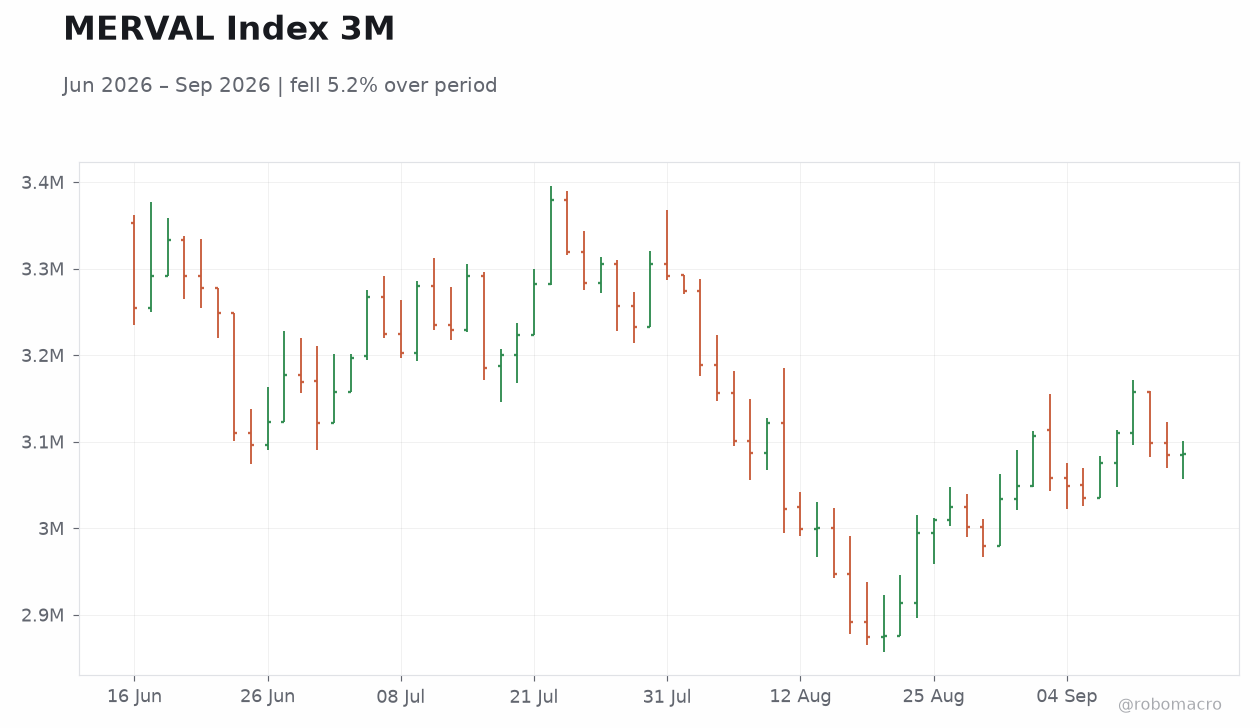
| MERVAL | 3,084,547.00 | -0.46% |
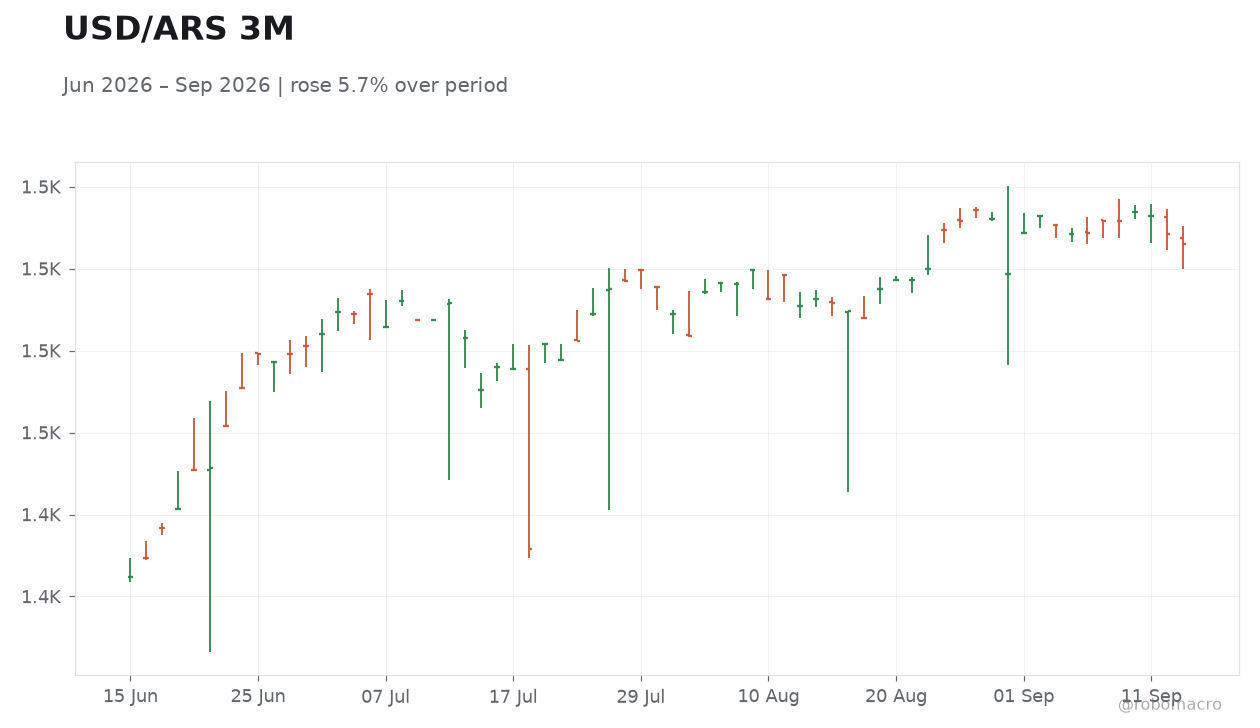
| USD/ARS | 1,506.00 | -0.16% |
| EUR/ARS | 1,738.37 | +2.05% |
| Gold | 4,345.00 | -0.16% |
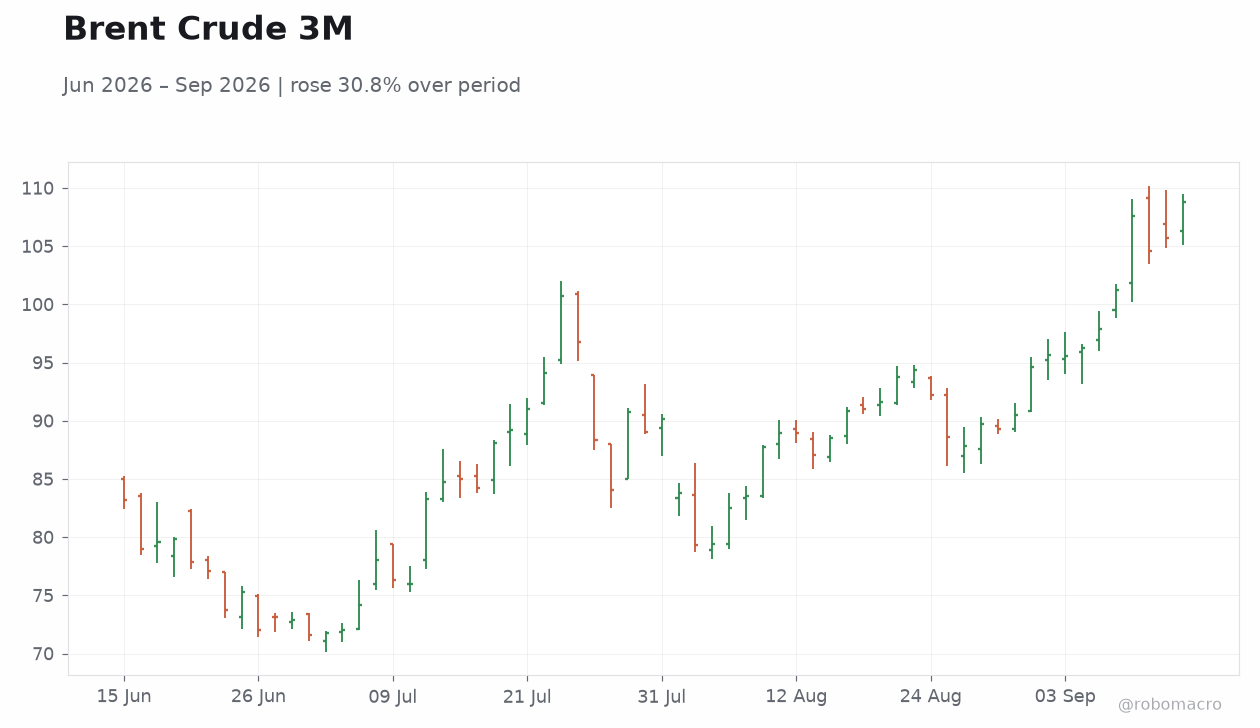
| Brent Crude | 108.82 | +2.97% |
| Soybean | 1,319.25 | +2.65% |
| Bitcoin | 76,773.10 | -1.78% |
| Argentina 10Y | - | - |
Prior Economic Events
| Data | Prior | Cons | Actual |
|---|---|---|---|
| No events available | |||
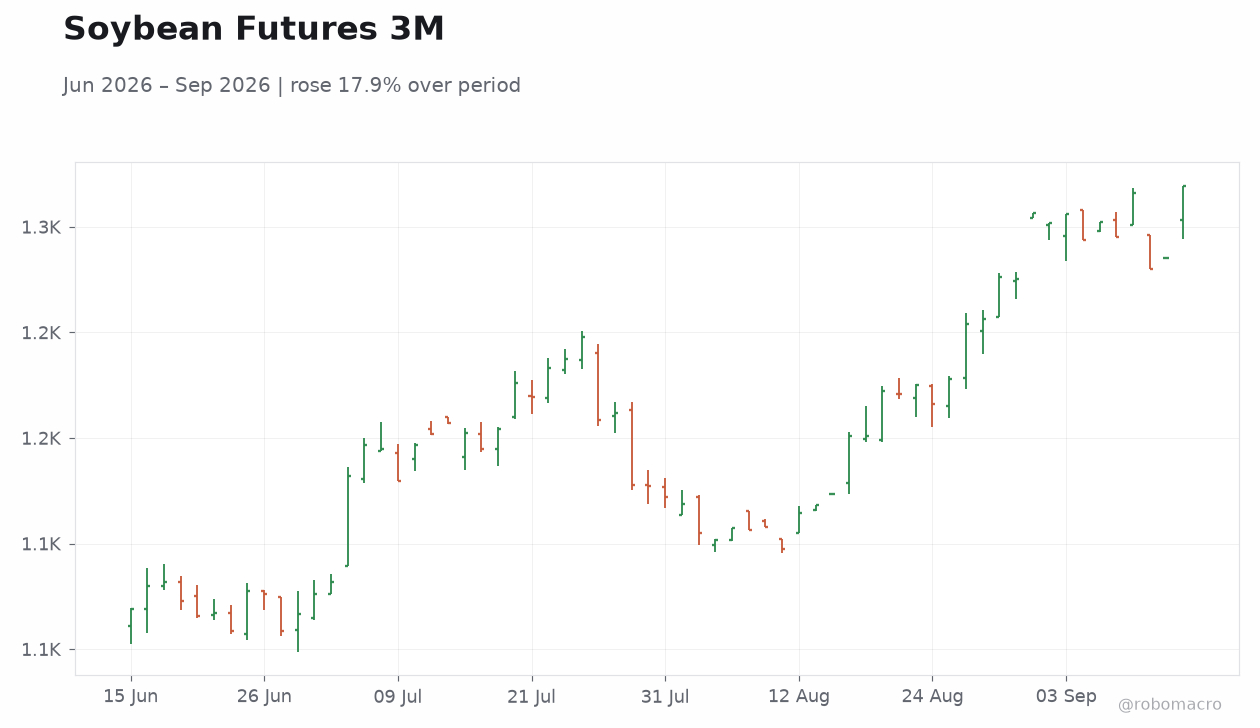 Soybean Futures 3M | Type: market_hloc | USD/bu: 1319 (2026-09-15) | Range: 1109–1319 | Trend(5pt): 1119,1180,1172,1216,1319
Today's Economic Events
| Data | Prior | Cons | Time |
|---|---|---|---|
| No events available | |||
- MERVAL slips 0.46% to 3,084,547 while USD/ARS holds near 1,506
- Soybean futures climb 2.65% to 1,319.25, bolstering export receipts
- Milei cabinet advances Falklands sanctions alongside fiscal review
Yesterday's Recap
Equity and currency markets posted modest declines on September 14 with no fresh economic prints to shift expectations. The MERVAL index eased 0.46% to close at 3,084,547.00 while USD/ARS fell 0.16% to 1,506.00, reflecting limited peso pressure. EUR/ARS advanced 2.05% to 1,738.37 as cross-rate flows adjusted.
Brent crude rose 2.97% to 108.82 and soybean prices gained 2.65% to 1,319.25, improving the terms of trade for Argentine exporters. President Javier Milei convened his cabinet to assess fiscal consolidation progress and tighten sanctions related to the Falkland Islands. Markets absorbed the absence of inflation or activity data without altering near-term policy assumptions.
Attention stayed on commodity price support for the trade balance and ongoing IMF programme compliance.
The Day Ahead
No macroeconomic releases are scheduled for September 15 or 16, leaving markets to focus on any follow-up statements from the Milei administration. Commodity price movements, particularly soybeans and Brent, will continue to influence export revenue forecasts and peso liquidity. Traders will monitor fiscal execution metrics and any signals on reserve accumulation targets.
External developments, including global oil shocks and emerging-market currency volatility, may transmit through the trade channel. Investor positioning is expected to remain cautious ahead of the next BCRA communication window.
Other Economic Notes
Fiscal consolidation remains the central pillar of the Milei programme, with primary surplus targets guiding spending restraint and revenue measures. Soybean export volumes continue to anchor the current-account surplus and international reserve rebuilding. IMF programme reviews hinge on timely fiscal data and monetary financing limits, keeping BCRA balance-sheet expansion in check.
Broader reform momentum, including deregulation steps, supports medium-term growth expectations despite near-term data gaps. Peso stability at current levels reflects the combination of high real interest rates and improving trade fundamentals.