Argentina Macro Daily(Beta Mode)
MERVAL Falls as Peso Edges Weaker
Market Snapshot
| Asset | Level | Change |
|---|---|---|
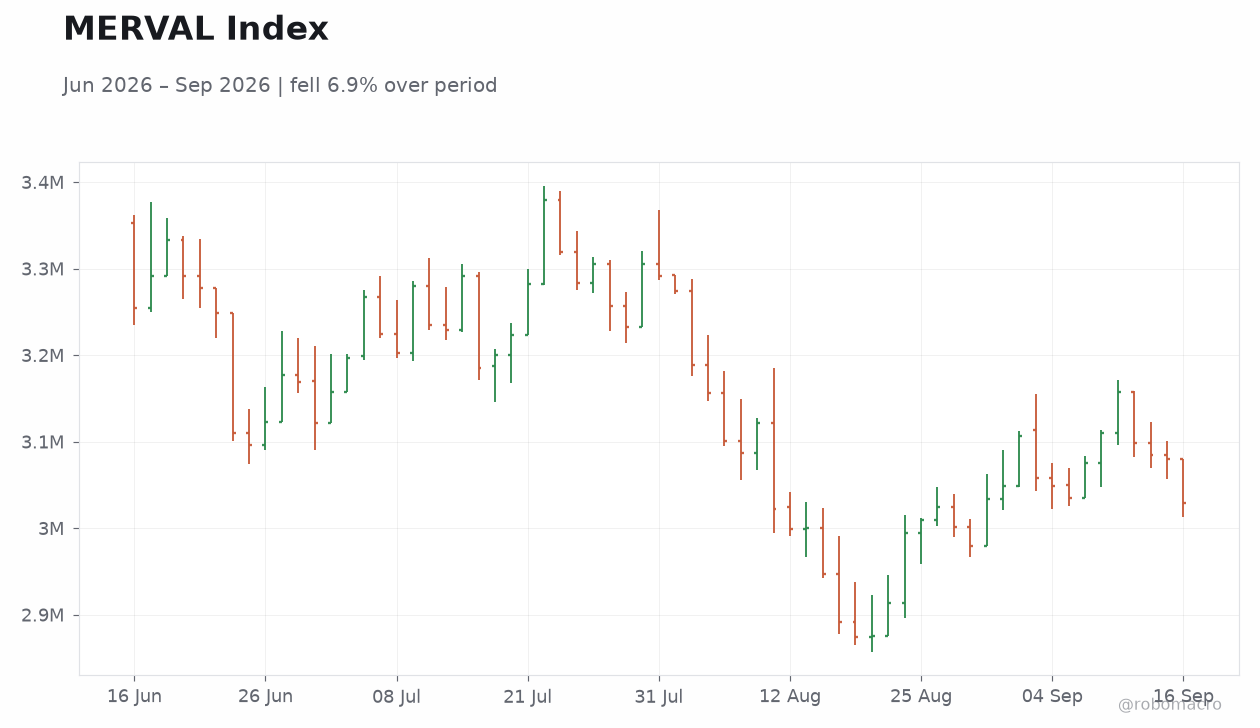
| MERVAL | 3,028,871.00 | -1.65% |
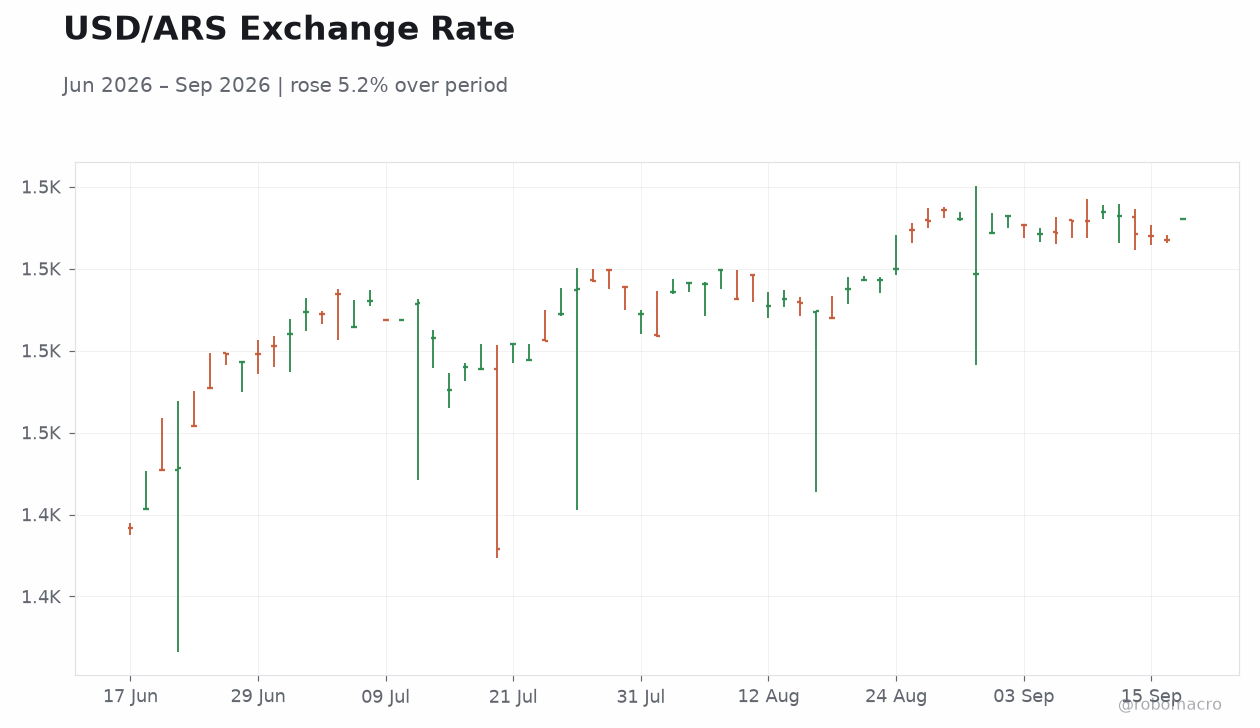
| USD/ARS | 1,512.00 | +0.34% |
| EUR/ARS | 1,732.88 | -0.30% |
| Gold | 4,353.10 | -0.78% |
| Brent Crude | 104.40 | -1.35% |
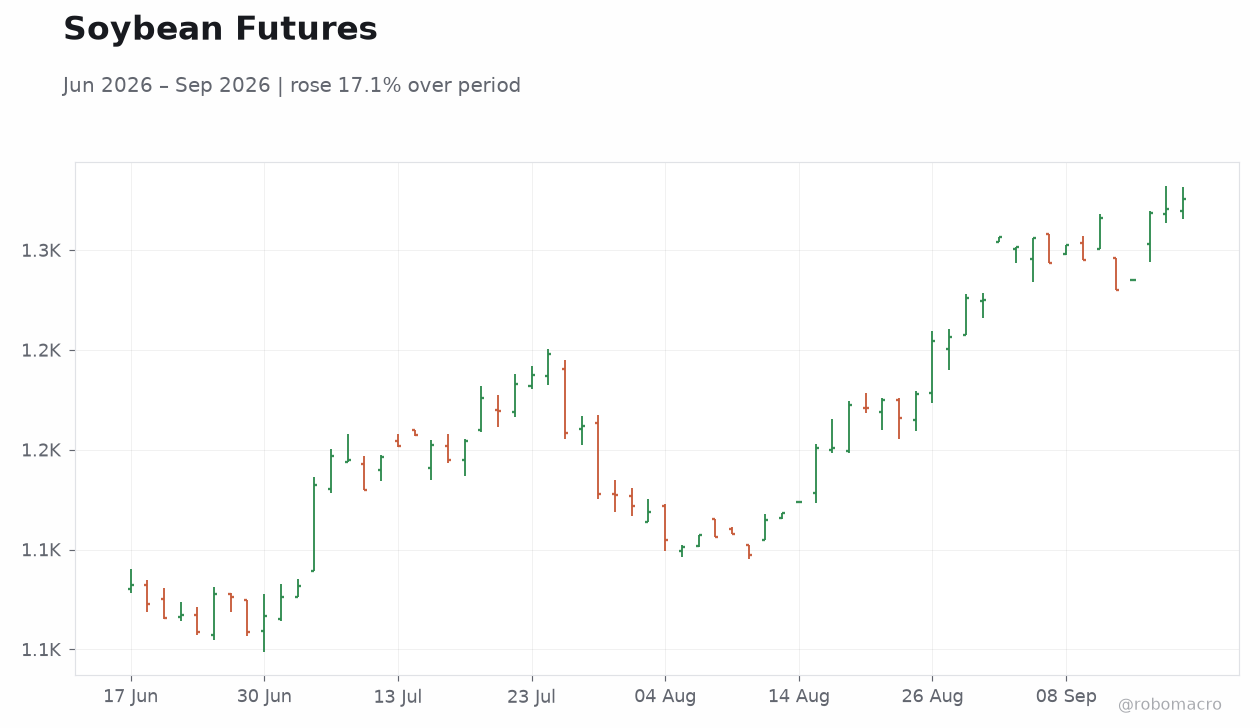
| Soybean | 1,326.00 | +0.42% |
| Bitcoin | 76,629.69 | +0.63% |
| Argentina 10Y | - | - |
Prior Economic Events
| Data | Prior | Cons | Actual |
|---|---|---|---|
| No events available | |||
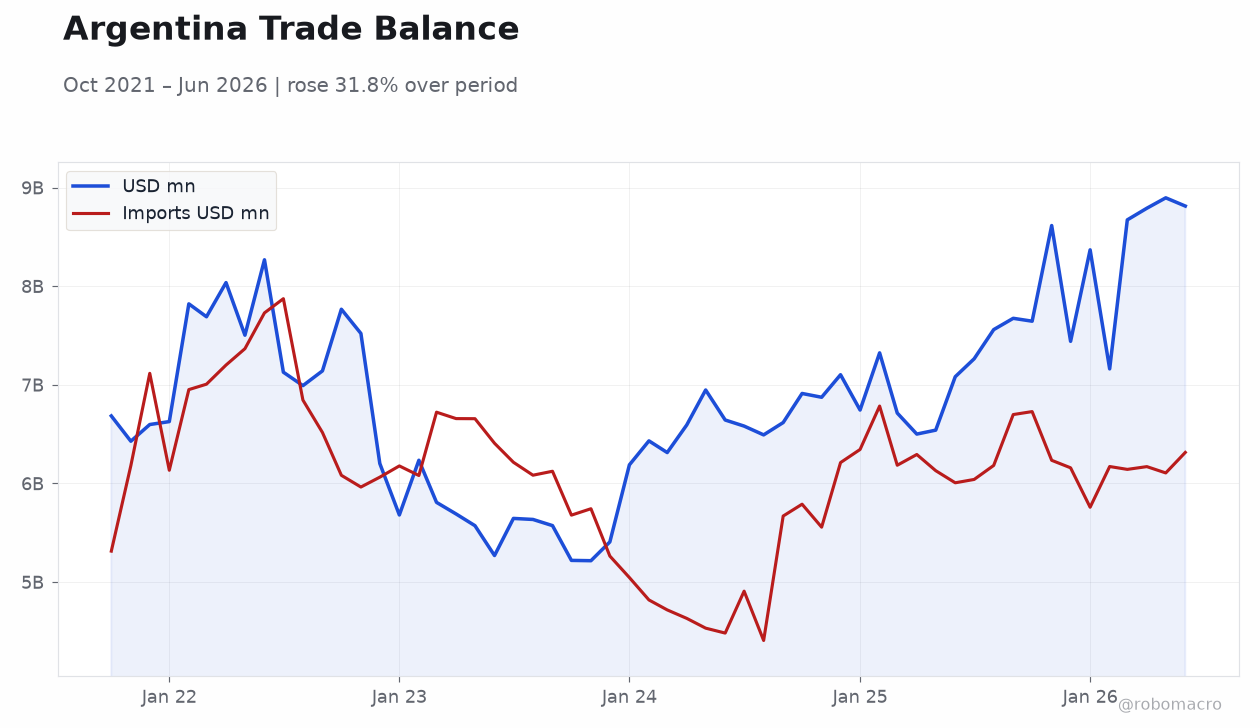
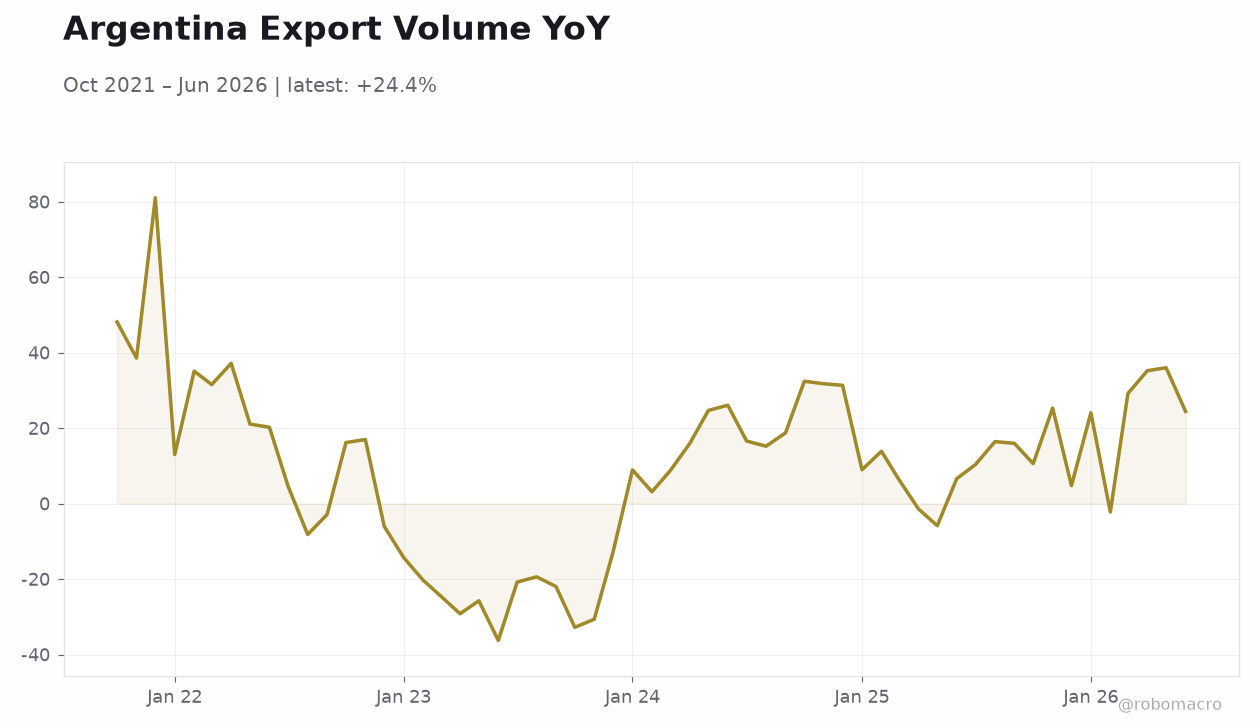 Argentina Export Volume YoY | Type: macro_line | YoY %: 24.44 (2026-06-01) | Range: -36.27–81.05 | Trend(5pt): 48.15,-5.989,3.154,-1.403,24.44
Today's Economic Events
| Data | Prior | Cons | Time |
|---|---|---|---|
| No events available | |||
- MERVAL declined 1.65% amid thin trading and absent data catalysts
- USD/ARS rose 0.34% to 1,512 while EUR/ARS eased 0.30%
- No economic releases scheduled through 18 September
Yesterday's Recap
Argentine equities closed lower on 16 September with the MERVAL index dropping 1.65% to 3,028,871. USD/ARS advanced 0.34% to 1,512.00, reflecting modest peso softening against the dollar, while EUR/ARS fell 0.30% to 1,732.88. Commodity prices moved lower, with gold declining 0.78% to 4,353.10 and Brent crude falling 1.35% to 104.40.
Soybean futures gained 0.42% to 1,326.00, offering limited support to export-linked sentiment. The calendar recorded zero releases, leaving investors without fresh inflation, activity or fiscal prints to reassess BCRA policy paths. Argentina 10Y yields were not reported, limiting visibility on local curve dynamics.
Bitcoin rose 0.63%, providing a minor risk-on offset in broader emerging-market flows.
The Day Ahead
No data releases or policy events are scheduled for 17 or 18 September. Markets will therefore focus on external drivers including US policy signals and global commodity prices. Soybean export flows and any updates on IMF programme disbursements remain the key domestic variables to monitor.
Traders will watch USD/ARS closely for signs of renewed pressure after yesterday’s modest widening. Liquidity in local fixed-income markets is expected to stay thin absent fresh fiscal or monetary news.
Other Economic Notes
Argentina’s external position continues to hinge on soybean export proceeds and the pace of fiscal consolidation under the current IMF-supported framework. The absence of inflation prints this week leaves the real policy rate trajectory dependent on prior monthly readings and BCRA reserve accumulation. Commodity price stability, particularly in soy and crude, will determine near-term current-account support.
Fiscal primary balance targets remain central to restoring market access and containing peso volatility.
Global Macro News
The US Federal Reserve raised rates for the first time since 2023, citing inflation that remains too high and signalling further tightening ahead. Brazil’s economy cooled again ahead of its own policy decision, adding to regional growth concerns. New Zealand Q2 GDP rose 0.2%, beating the central bank’s zero-growth forecast and reducing immediate rate-cut pressure there.
↓ p.2