Argentina Macro Daily(Beta Mode)
MERVAL Climbs as Peso Firms on Thin Data
Market Snapshot
| Asset | Level | Change |
|---|---|---|
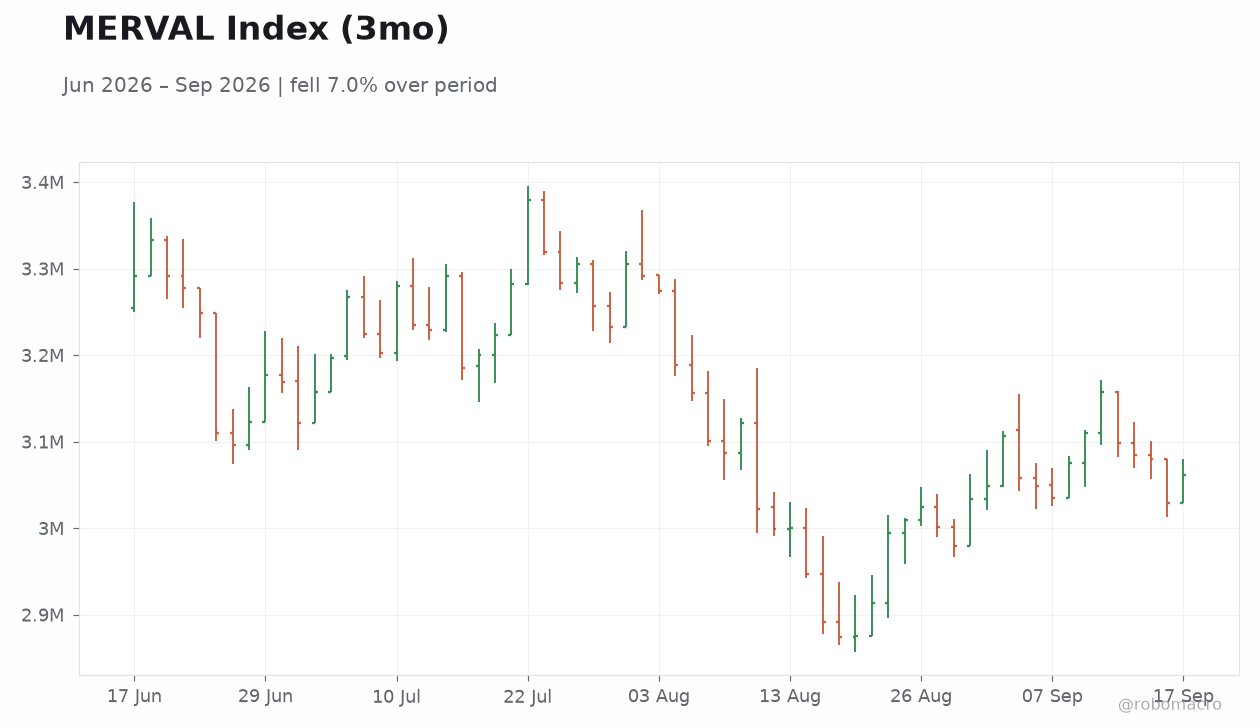
| MERVAL | 3,061,512.00 | +1.08% |
| USD/ARS | 1,509.50 | -0.21% |
| EUR/ARS | 1,734.27 | -0.05% |
| Gold | 4,432.90 | +0.75% |
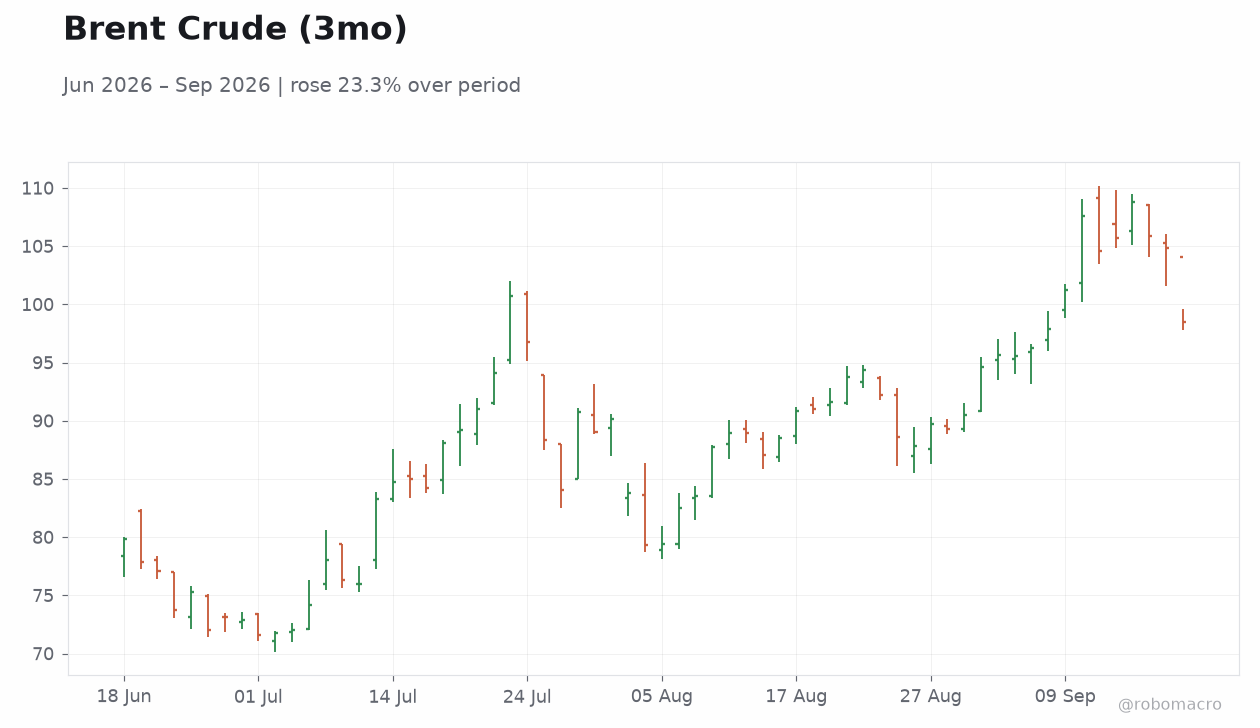
| Brent Crude | 98.53 | -6.00% |
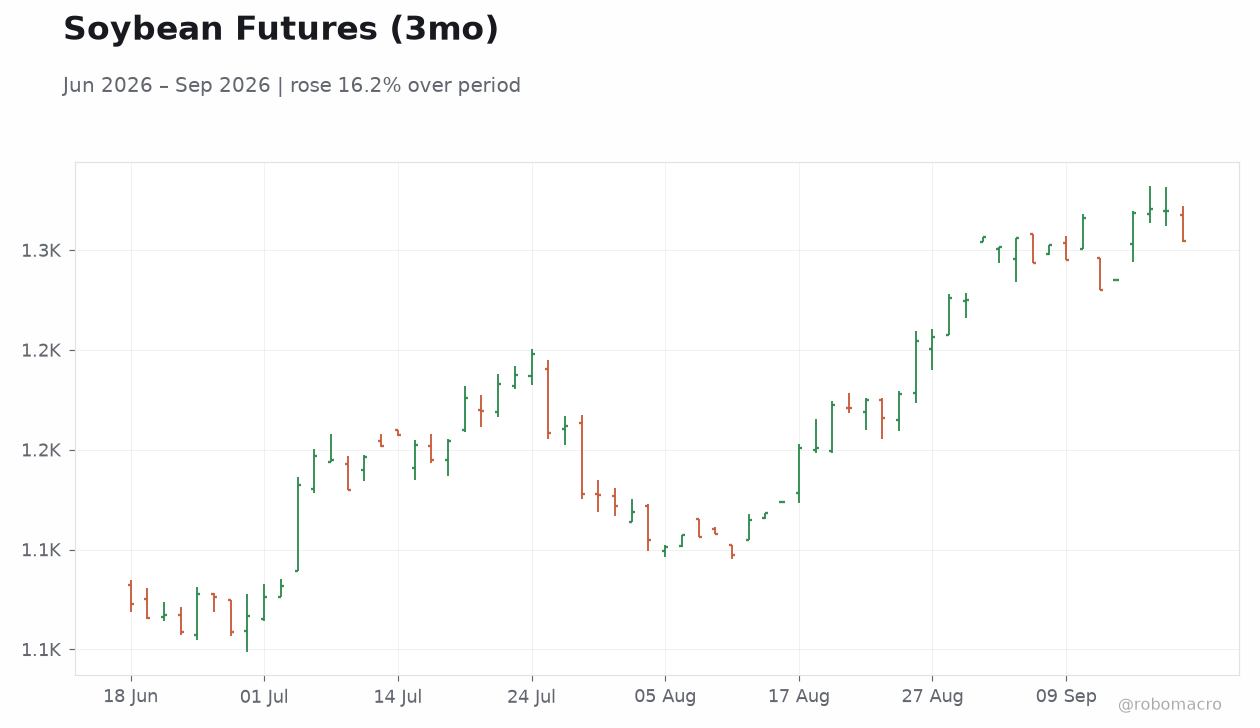
| Soybean | 1,304.25 | -1.17% |
| Bitcoin | 78,374.80 | +2.58% |
| Argentina 10Y | - | - |
Prior Economic Events
| Data | Prior | Cons | Actual |
|---|---|---|---|
| No events available | |||
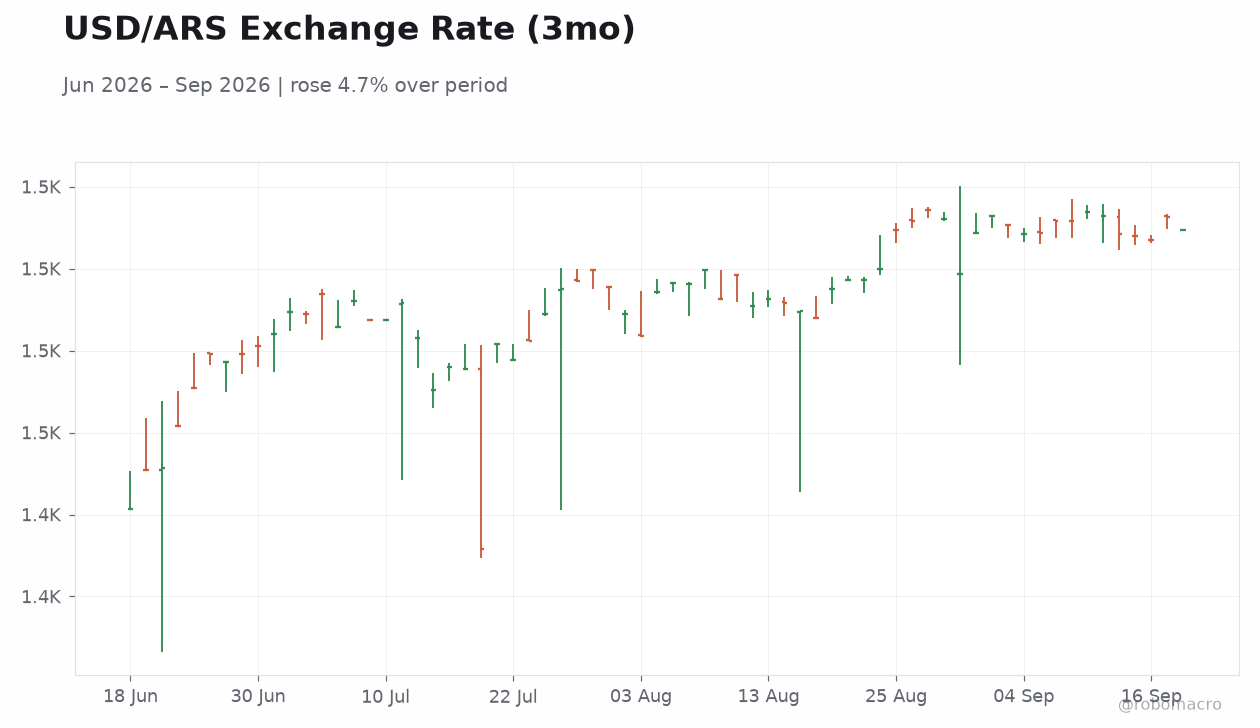 USD/ARS Exchange Rate (3mo) | Type: market_hloc | ARS per USD: 1510 (2026-09-18) | Range: 1432–1514 | Trend(6pt): 1441,1488,1484,1509,1507,1510
Today's Economic Events
| Data | Prior | Cons | Time |
|---|---|---|---|
| No events available | |||
- MERVAL rose 1.08% to 3,061,512 while USD/ARS fell 0.21% to 1,509.50, showing modest peso strength.
- Brent crude dropped 6% to 98.53 and soybeans fell 1.17%, weighing on export revenue prospects.
- No economic releases occurred yesterday or today, leaving markets without fresh inflation or activity signals.
Yesterday's Recap
Argentine equities advanced while the peso posted modest gains against the dollar and euro. The MERVAL index closed 1.08% higher at 3,061,512.00 with no domestic data prints to drive the move. USD/ARS eased 0.21% to 1,509.50 and EUR/ARS slipped 0.05% to 1,734.27, indicating contained depreciation pressure.
Gold rose 0.75% to 4,432.90 while Brent crude plunged 6% to 98.53 and soybeans declined 1.17% to 1,304.25, trimming potential export earnings. Bitcoin gained 2.58% to 78,374.80. The Argentina 10-year yield section remained unreported.
With zero events on the calendar, price action reflected thin trading and external commodity moves rather than local fundamentals. The environmental report on Reconquista River clean-up efforts provided the sole Argentina-specific item but carried no policy implications.
The Day Ahead
No official data releases are scheduled for September 18 or 19, leaving traders without new inflation, trade or activity figures. Markets will focus on global commodity prices and any BCRA reserve updates that may surface through secondary channels. Soybean and crude movements remain key for near-term peso flows given Argentina’s export profile.
Fiscal consolidation progress and IMF programme compliance will stay in focus absent fresh statistics. Liquidity conditions and any intervention signals from the central bank could influence USD/ARS trading ranges. Participants will monitor external rate decisions for spillovers into emerging-market currencies.
Other Economic Notes
The absence of scheduled releases keeps attention on structural themes such as fiscal balance and reserve accumulation. Soybean export proceeds continue to anchor hard-currency inflows, yet lower prices observed yesterday could trim monthly totals. Peso stability at current levels supports the gradual disinflation path but requires sustained fiscal discipline to avoid renewed pressure.
Broader credit conditions remain tight, limiting domestic demand while the government maintains primary surplus targets under the IMF framework. Environmental clean-up efforts along the Reconquista River highlight long-term infrastructure needs without immediate macroeconomic impact.