Argentina Macro Daily(Beta Mode)
Peso Weakens as MERVAL Drops on Thin Data
Market Snapshot
| Asset | Level | Change |
|---|---|---|
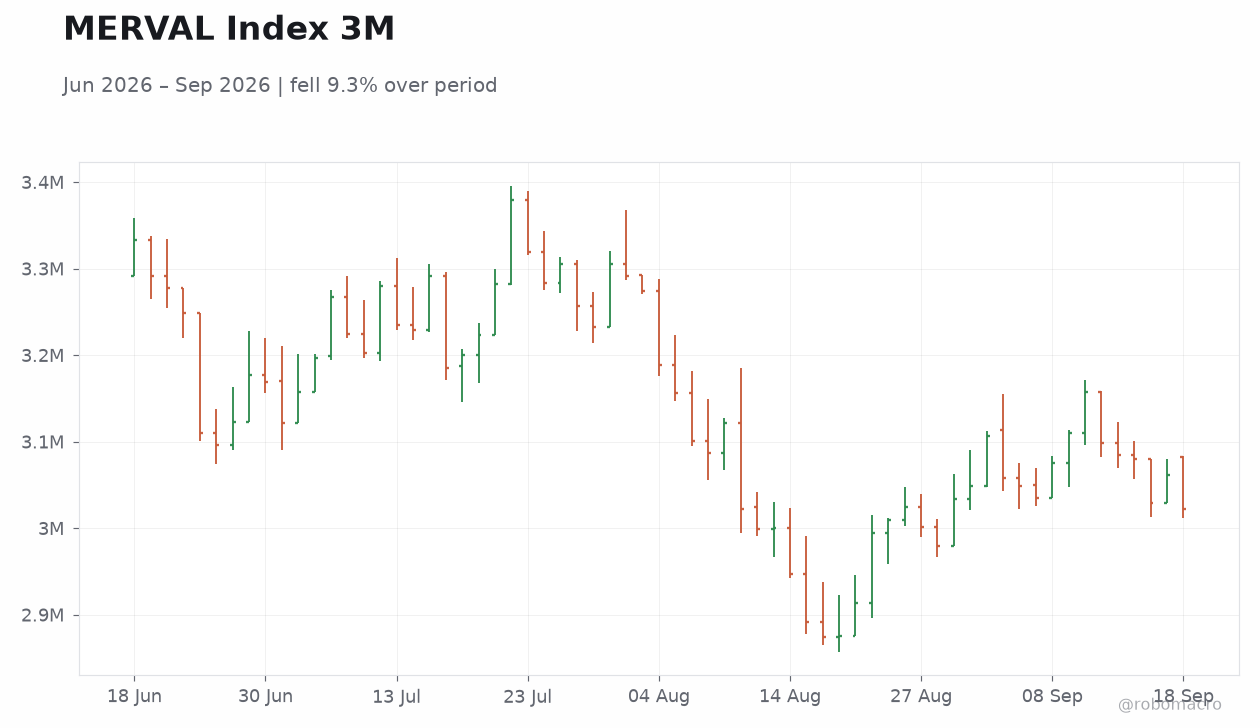
| MERVAL | 3,021,926.00 | -1.29% |
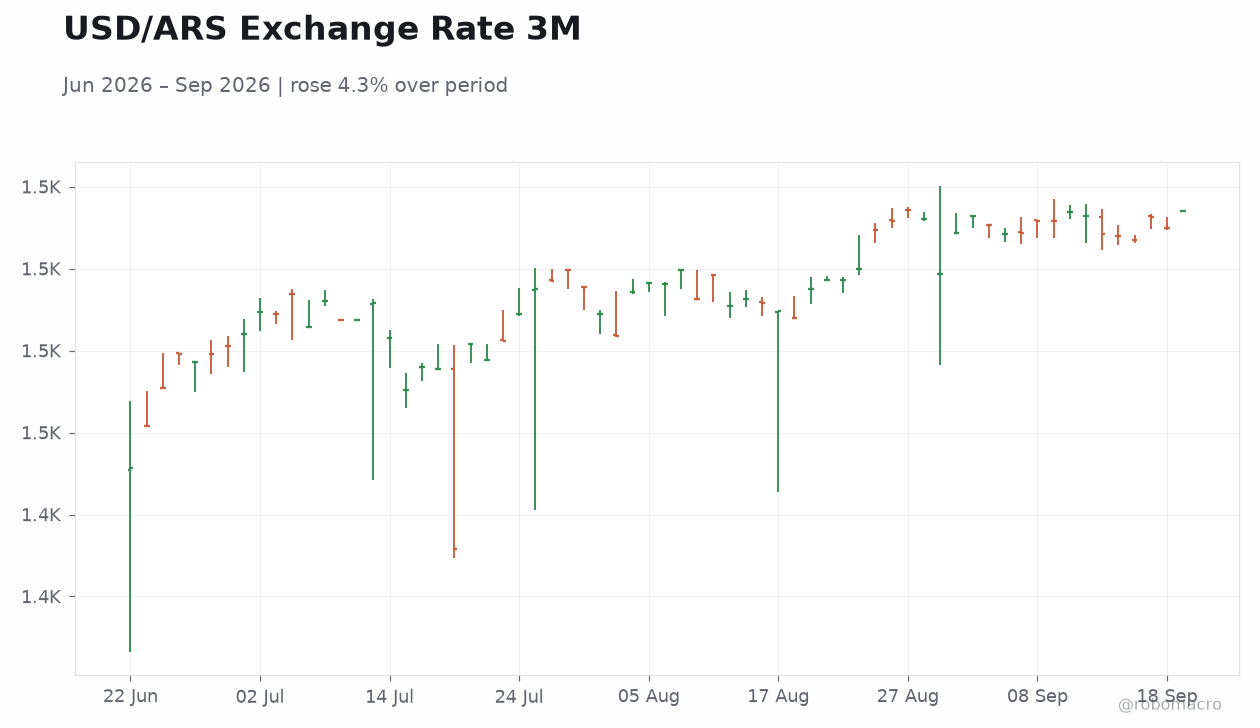
| USD/ARS | 1,514.00 | +0.27% |
| EUR/ARS | 1,737.56 | +0.27% |
| Gold | 4,391.00 | -0.77% |
| Brent Crude | 97.71 | -5.93% |
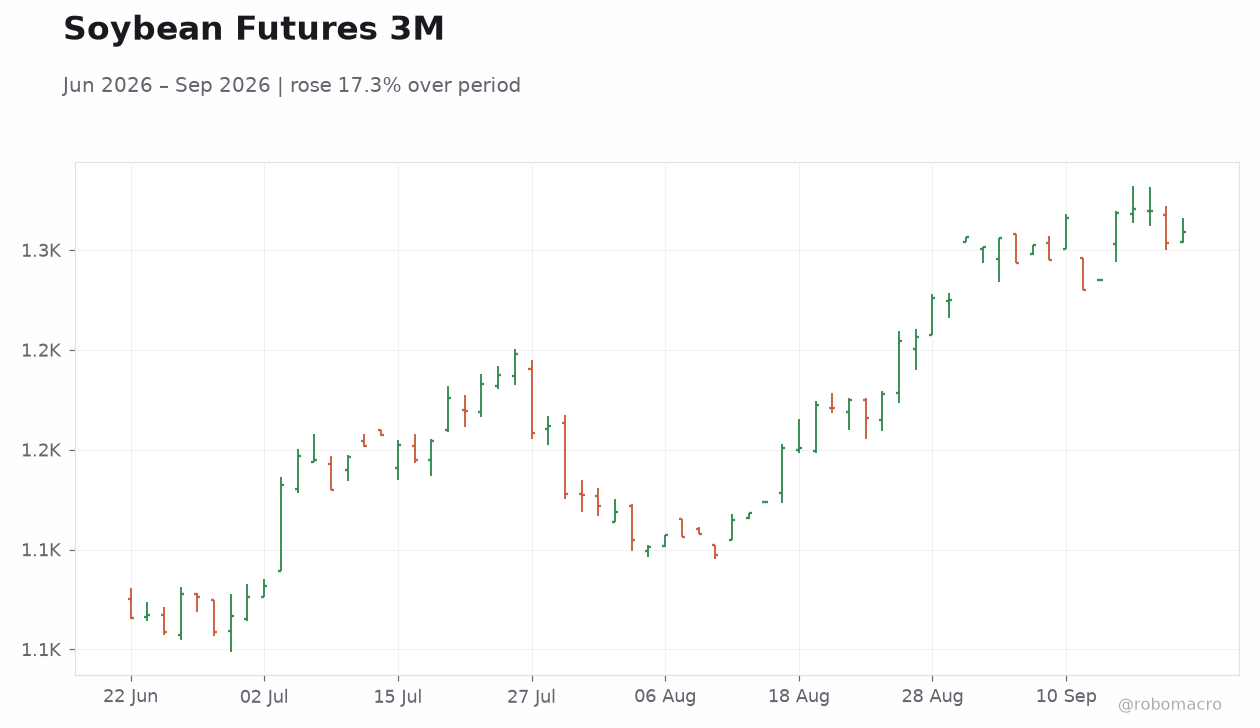
| Soybean | 1,309.75 | +0.48% |
| Bitcoin | 83,979.69 | +3.50% |
| Argentina 10Y | - | - |
Prior Economic Events
| Data | Prior | Cons | Actual |
|---|---|---|---|
| No events available | |||
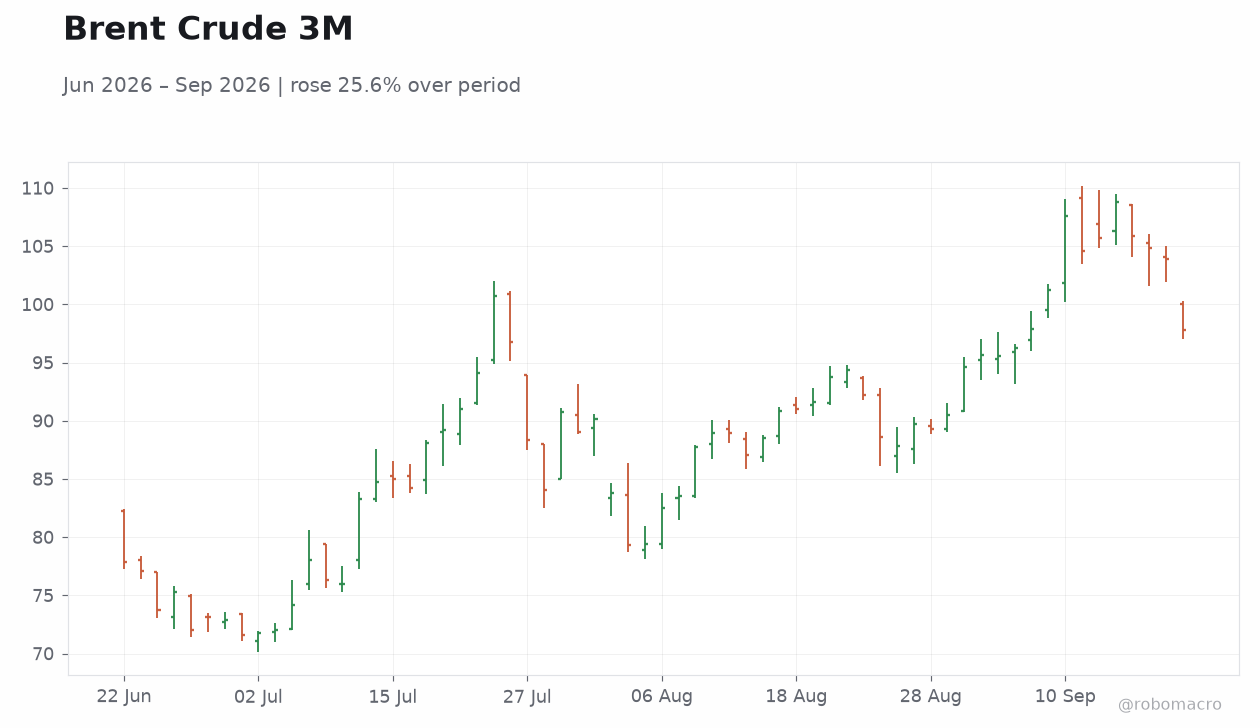 Brent Crude 3M | Type: market_hloc | USD/bbl: 97.82 (2026-09-21) | Range: 71.57–108.8 | Trend(5pt): 77.9,84.95,82.49,89.31,97.82
Today's Economic Events
| Data | Prior | Cons | Time |
|---|---|---|---|
| No events available | |||
- MERVAL declined 1.29% amid limited domestic catalysts and softer commodity prices.
- USD/ARS rose 0.27% to 1,514.00 as peso depreciation pressures persisted.
- Brent Crude dropped 5.93%, weighing on export revenue expectations for Argentina.
Yesterday's Recap
Equity and currency markets moved lower on 20 September with no fresh economic prints to shift sentiment. MERVAL closed at 3,021,926.00 after a 1.29% decline, reflecting thin trading volumes and lack of supportive news flow. USD/ARS advanced 0.27% to 1,514.00 while EUR/ARS matched the gain at 1,737.56, underscoring steady peso softening.
Gold fell 0.77% to 4,391.00 and Brent Crude plunged 5.93% to 97.71, pressuring terms of trade for soybean and energy exporters. Soybean futures edged 0.48% higher to 1,309.75, providing modest offset. Bitcoin rose 3.50% but offered little direct relief to local asset prices.
The absence of releases left fiscal consolidation and IMF programme expectations unchanged. Traders noted that the quiet calendar offered no new inflation or activity data to alter views on the pace of peso adjustment.
The Day Ahead
No scheduled releases appear on the calendar for 21 September, keeping market focus on external drivers. Traders will monitor global oil and soybean prices for signals on export earnings and fiscal receipts. Peso liquidity conditions and any BCRA intervention commentary may influence USD/ARS intraday swings.
Attention also turns to broader EM flows as multiple central banks signal tighter policy ahead. Investors await any updates on soybean export registrations or fiscal target compliance under the current IMF arrangement. With the data vacuum persisting, positioning is expected to remain light until clearer commodity or reserve signals emerge.
Other Economic Notes
Argentina’s CPI YoY stood at 33.5% as of end-August, underscoring the need for sustained fiscal discipline to anchor inflation expectations. Export proceeds from soybeans remain central to reserve accumulation and debt servicing capacity. Fiscal consolidation efforts continue to target primary balance goals set with the IMF, limiting room for expenditure growth.
Real wage trends and employment data will determine consumption resilience in coming quarters. Peso stability hinges on consistent reserve build-up and credible policy signals from the authorities. Lower Brent prices ease import costs yet reduce fiscal revenue from energy-linked royalties, adding pressure on the external accounts.